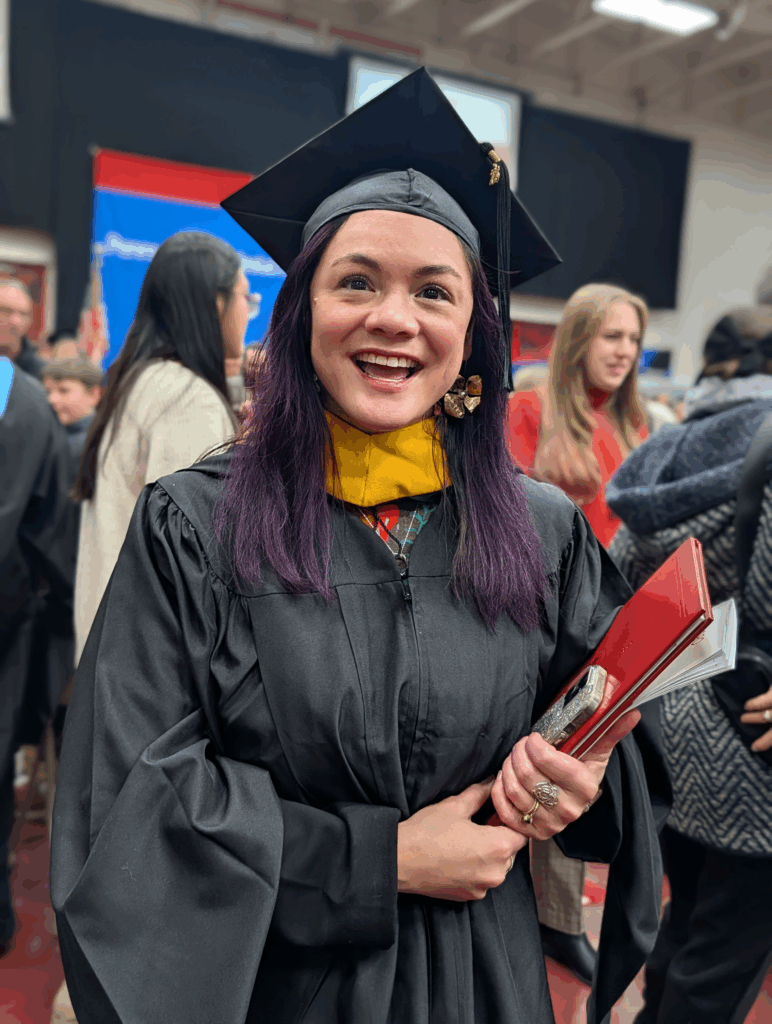
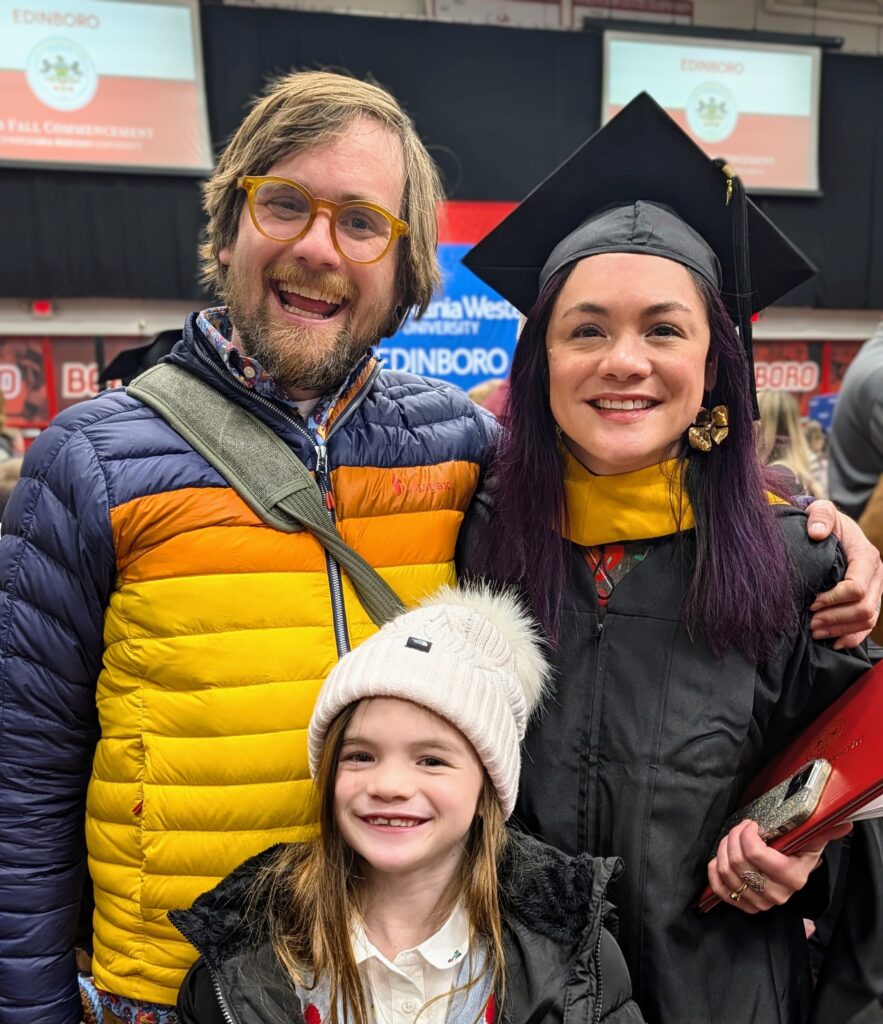
Our course now has over 16 hours of videos, which includes course lessons, community jam sessions, and other demonstrations. TJ, Ian, and I have been busting our asses, and are SUPER pleased with how these new chapters turned out!
Chapter 1 – Core Concepts: This is a huge chapter that covers the broad arc of technology, the history, value, and challenges of both design systems and AI, how AI & Design Systems together are a powerful combo, and a big orientation into DS+AI tooling & terminology.
Chapter 2 – Environments & Tools Setup: TJ demonstrates how to set up AI tooling and demystifies often confusing/hard-to-find things like API keys. And I recorded 20 (!) videos about using Git & GitHub to operate in this modern landscape. I’m really proud that we presented all of this in a way that’s equally useful for beginners and experts alike.
We’re now deep into recording lessons & demos for Chapters 3, 4, & 5, where we unpack AI & design systems in these areas:
Using AI to improve design systems (nearly done!)
Making better products with AI & Design Systems
Inventing the future with AI & Design Systems
Our growing community
While it feels so good to make substantial progress on the course, we feel even better about how our community is shaping up. We recently got a DM in our Slack community:
This community is the least toxic AI space I’ve encountered. It is so refreshing in that way; everyone seems so helpful and respectful.
It’s been tough to balance video production while simultaneously building the community, but it’s feedback like this that tells us we’re on the right path. We’re trying hard to create a place where people can ask questions, get & receive help, and share ideas, links, and interesting things. It truly feels like we’re all learning together!
Last chance for $500 super early-bird pricing!
The preorder price of $500 was established when we originally announced without anything in place. Now, the course has over 16 hours of video, a thriving community, and a slew of resources.To reflect this value, we’re increasing the course price to $995 after Monday, May 25th. So if your team has been on the fence, this is your last chance to get the biggest deal on the course!
We want to share a few important things alongside this announcement:
Purchase power parity is available for folks in different geographic regions, students, freelancers, and job seekers. We’re working hard to ensure anyone who wants to can join the course.
We’re donating a percentage of sales to organizations helping with sustainable development of AI. We want to put our money where our mouths are to do our part to mitigate the risks and harms of this technology. We’ll share more details soon!
So yeah! By purchasing the course, you get 16+ hours of video, access to our amazing Slack community, live bi-weekly jam sessions, a substantial discount on the full course price, and first access to new videos/resources/materials.
We’re looking forward to bringing this course home over the next month. Thanks a ton for your support!
]]>Brad Frosthttp://bradfrost.com<![CDATA[Grief in the AI Age]]>https://bradfrost.com/?p=255012026-05-18T13:31:23Z2026-05-18T04:48:50Z
I want to talk about this moment in time, this AI era, through the lens of grief. Grief is a powerful response to loss. When we think about grief, we often think about death, but it’s taken me a long time to understand that we grieve all sorts of non-death loss: relationships, community, home, money, dreams, expectations, identity, sense of purpose, and even the loss of ideals or ideas.
It’s taken a ton of time and a hell of a lot of work to understand my own grief as I’ve recovered from my many and varied traumas over the years. I’ve also learned a ton about grief from my wife, Melissa, who through her journey to become a professional counselor has worked in hospice and other really challenging environments involving grief, death, and loss. It’s through my own experience and awareness of grief that I start noticing it in other places.
AI and the 5 Stages of Grief
The explosion of AI onto the scene has caused a shock to the system has triggered a real grief response for many people —myself included. I see it in the conversations I have, and of course with the abundant opinions about it I see online.
The Five Stages of Grief, also called the Kübler-Ross model, are: denial, anger, bargaining, depression, and acceptance. I want to run through each one of these five stages through the lens of how you might be feeling about AI right now.
Stage 1: Denial – This is certainly something that I went through, especially when AI was still generating images with seven fingers and laughable code results. It was easy to dismiss it and just push it away. I still see this with a ton of people saying, “Ha, look at how crappy it is! Look at how many mistakes it makes!” to dismiss it entirely, effectively pushing it away so as not to confront it.
Stage 2: Anger – When we realize that denial isn’t viable anymore, we get frustrated and start looking around to find someone to blame and take our anger out on. I feel this myself a lot, and think about this stage when I see a lot of commentary levied at the people making this technology, inflicting it on all of us with seeming reckless abandon. We get angry the many real and potential harms & risks. These feelings are certainly valid, and a lot of that anger is real and justifiable. But it’s also hard because we tend to take this anger out on the people around us.
Stage 3: Bargaining – Here is where we say “I’ll use AI for this little thing, but not for these other bigger things. It’s never going to touch my production code.” Here we’re trying to negotiate our complex feelings around AI; we’re still angry and in denial in many respects, but we’re also beginning to understand that it’s here or maybe isn’t entirely bad. We feel confused and are trying to make sense of it all.
Stage 4: Depression – I see this a lot in many of the conversations that I have with professional designers and developers. They say something along the lines of, “What’s my entire career been for if these things could just come in and generate a website in a couple seconds?” “Nothing really matters anymore. What does craft mean? What does judgment mean?” “We’re all screwed; we might as well just pack it up and then go live in an underground bunker.” Again, those feelings come as a natural response to pouring your heart and soul into something and feeling a real sense of loss: a loss of stability, a loss of identity, a loss of livelihood, a loss of a lot of things. That depression is real.
Stage 5: Acceptance – Acceptance is really misunderstood because acceptance can be misinterpreted as, “Oh, suddenly I’m cool with all of the downsides, all of the harms, all of the risks around this technology.” When someone we love dies, this acceptance stage is ultimately where we understand that person isn’t coming back but you ultimately can make some form of peace with it.
Acceptance doesn’t mean that you no longer get sad or you no longer are angry that they’re gone. It just means that you accept the fact that the loss has happened and that you’re able to move forward with resolve. You can convert a lot of that grief into real commitment to live your life in a way that honors their memory and hopefully continues to make them proud.
Grief Is Personal and Isn’t Linear
I think I went through my own stages of grief around AI a bit sooner just because my circumstances had me working with it a little earlier. I distinctly remember many conversations “Screw all this stuff, this sucks.” But I’m also realizing that a lot of my grief training at a personal level has really helped me be able to navigate this moment with a better sense of clarity and understanding that I otherwise might not have had, had I not gone through a lot of that hard. Silver linings.
These five stages of grief come with a lot of caveats. Grief isn’t a linear process. Every single day, we might feel depressed, angry, in denial, bargaining, or we might be in a state of acceptance. This isn’t a linear step-by-step process that everyone goes through cleanly or on a uniform timeline. It’s a useful tool to help us reflect on how we feel.
Striving for Acceptance & Commitment
So here’s a little reflection for you with respect to your feelings about AI. Which stage of grief do you feel you’re currently in: denial, anger, bargaining, depression, or acceptance?
Once again, it’s important to stress that getting to acceptance doesn’t mean that you’re never also angry or depressed. It’s just an acknowledgment that AI is here; it’s a reality. And with that acceptance comes another real important word: commitment.
Acceptance and commitment therapy is a whole thing worth exploring. With acceptance, with the acknowledgment that AI is here, it’s likely not going away, despite my feelings and my grief around it. Making peace with that fact allows us to commit to doing our part to make sure that we’re putting good things out into the world. We’re able to do our part to ensure that it’s wielded in a safe and responsible way, and that we can do our part to move towards betterment rather than shittiness.
Just to underscore this once again, getting to this place doesn’t mean that you also aren’t still pissed off, you also aren’t worried, you also aren’t anxious, you also aren’t depressed. It’s a real willingness to address this reality head-on and realize that we are in a place of agency and empowerment, and that we can move forward with resolve and try to make the world a better place.
In Summary
Grief is a powerful response to loss.
We grieve things other than death like the loss of relationships, identity, sense of purpose, health, money, home, dreams, expectations, community, and even ideas and ideals.
These shocks to our system can elicit a really powerful response that are captured in these five stages of grief: Denial, anger, bargaining, depression, and acceptance.
These stages are really just labels and are not a rigid or linear process; everyone ebbs and flows in and out of each of these stages at any given moment.
While these stages can be helpful descriptors, it’s important to not fixate on them or feel like there’s anything wrong with you if you’re not further along in the stages of grief. We are complex emotional creatures and our emotional states change over time.
I hope you keep this in mind, and remember to go easy on yourself. Go easy on each other. Know that everyone’s in their own place in feeling and processing this complex moment in time. And the best thing we could do is to be kind to one another and support one another.
]]>Brad Frosthttp://bradfrost.com<![CDATA[The Boring Internet | Terry Godier]]>https://bradfrost.com/?p=254842026-05-12T03:24:53Z2026-05-12T03:24:53Z
I had a wonderful chat about design systems and AI with Donnie D’Amato on his wireframe show. We talked about all sorts of spicy topics, and I feel like this conversation captures a lot of where my head’s at lately and the picture we’re painting with our course.
]]>Brad Frosthttp://bradfrost.com<![CDATA[Building Healthy Community with Ben Callahan]]>https://bradfrost.com/?p=254702026-04-23T13:38:37Z2026-04-23T13:38:35ZOn the latest episode of Wake Up Excited!, I got to talk with my friend, fellow traveler, and recent collaborator, Ben Callahan. Ben and I met at BDConf many many moons ago, and since then we’ve shared many adventures together, including recently collaborating on an actual conversation. I have so much admiration for Ben and the community-oriented way he operates, so I’m incredibly pleased we got to spend a whole conversation digging deep into it.
We cover so much ground in our conversation: building healthy communities, the critical importance of values, humanizing work, how hard things force you to reevaluate things, the sharing culture of the web, lessons from music, the cosmos, and a whole lot more.
Lately, I’ve been talking websites into existence. Not metaphorically, but actually sitting in important meetings with people — clients, collaborators, my wife, friends, neighbors — watching real websites materialize in front of us as we converse.
I’ve been half-jokingly call it mouth coding, and the more I use that term the more I like it. Mouth coding is one of the things that has me most excited about this new era of digital creation: human beings getting together and actually collaborating. Actually making something together.Not just talking about the work (lord knows we’ve all had our fill of that), but literally talking the work into existence together.
What mouth coding looks like
My wife Melissa works as a counselor and arts therapist at a small private practice called Lucent Counseling in Pittsburgh. The owner, Andrea, is fantastic and is committed to helping people heal, move past trauma, explore multiple therapeutic modalities, and live healthier lives. Her passion for this mission is abundantly clear.
Like many small business owners, Andrea is spread thin juggling many-and-varied tasks. She created a Wix-powered website and did her best with the tools and time she had. The website exists, but she admits it needs some love to better align it with the practice’s mission.
Enter Melissa! In addition to her counseling role, Melissa is now helping with marketing, communications, and design work. (Melissa’s background designing digital experiences for Nike and other huge brands certainly doesn’t hurt here ). I offered to help with the website (trying to be a good partner haha), and had a great conversation with Andrea about her values, mission, and eventually goals for the website.
From there, Melissa and I found a time to sit down outside on a sunny afternoon to create the website. In the course of a single hour, Melissa and I mouth coded a website that was a vast improvement over the current website. Here’s the video of our session:
We cover a lot of ground in a short amount of time, pulling in context from our conversation (Melissa wanted to be off-screen and was at a distance so forgive the distant audio), the live website, Melissa’s design exploration work, best practices (including some I didn’t even know about!), and more to create the basis for a brand-new website for the practice. It starts as a specification that we refine together, and then eventually give the green light to generate the actual website.
What exactly is mouth coding?
Mouth coding requires a few ingredients:
An actual conversation between a person — or better yet multiple people — and an LLM to interpret the intention and facilitate the creation of the website.
Live transcription — Speech-to-text transcription during a conversation becomes essential for acting in real time. I’m now used to staring at a grid of funny-sounding faceless AI notetakers on Zoom calls. My personal favorite is Notion’s AI meeting notetaker/ Notion is already my home base for all of my operations, so meeting notes ooze into my workspace, enriching my knowledge base with each additional conversation.
Sturdy web infrastructure — While mouth coding with free-reign vibe coding is possible, if we’re trying to make something real we need to be able to answer “Is it good?” with a resounding “yes!” That’s the theme of our entire AI & Design Systems course: couple the generative powers of AI with hard-earned, high-quality UI infrastructure to create quality websites at speed and scale.
A live preview — actual pixels rendering as the conversation moves. This could be in Storybook like what Dom showed me, could be a contained artifact the agent produced in the context of a chat, could be in an experimental real-time UI environment, or could be in the actual product environment. But the point is to actually SEE what you’re collectively creating.
Additional context — Existing artifacts, agreed-on values, goals, context, constraints, are all helpful to have on hand before and during the conversation. This is where starting with a specification first can be really helpful. The spec is able to pull all of the different threads together into a coherent plan of attack that all takes place before the actual construction happens.
Human taste, judgement, critical thinking, and skills — And here is the sauce: humanity! Hooray humans! Everyone involved in the conversation uses their collective talents and discernment to make calls about what any result should be.
These ingredients set the conditions for a successful mouth-coding session, and underscores an important core value:
AI should facilitate human creativity, not replace it.
AI should facilitate human creativity, not replace it. AI should facilitate human creativity, not replace it. AI should facilitate human creativity, not replace it. AI should facilitate human creativity, not replace it. AI should facilitate human creativity, not replace it. AI should facilitate human creativity, not replace it. AI should facilitate human creativity, not replace it. AI should facilitate human creativity, not replace it. AI should facilitate human creativity, not replace it. AI should facilitate human creativity, not replace it. AI should facilitate human creativity, not replace it. AI should facilitate human creativity, not replace it.
Honest-to-goodness collaboration
For my entire career, I’ve been clamoring, begging, cajoling, prodding, and pleading to get people to collaborate with one another. But alas, the industry has moved into insular silos, building rigid walls built from Jira tickets. Cross-disciplinary collaboration between designers and developers has been relegated to a fucking toggle switch. Even in this new era, it feels like the real desire to wire all of these MCPs up is so we can avoid having to talk to one another.
Not only is this extremely depressing, it’s also terribly fragile, one-dimensional, and results in lackluster work. Genuine human collaboration has always been the answer, and these new AI tools can help facilitate that human collaboration in ways that are both old and new. I’ve noticed a few key things since the arrival of this new generation of tooling: fewer things slip between the cracks. context is able to be retrieved on demand, blind spots and areas for improvements are surfaced, and next steps become clearer. As someone who goes here, there, and everywhere over the course of a conversation, this added structure is extremely welcome.
But above all, here’s what excites me most about mouth coding: it is accessible. it is inclusive. It is participatory. It democratizes the design process. Mouth coding allows for a diversity of voices — all with unique, valid perspectives and crucial context — to actually participate in the creative process. To work together to collectively sculpt the work. I’m well aware of the irony: this AI-assisted process feels like the most human digital collaborative work I’ve experienced in years.
And because the website artifact is conjured out of the ether before our very eyes, most everyone recognizes it as a prototype. But the big a-ha moment for people is when we make the first iteration after the initial website generation. As soon as people see a little tweak happen (“Make the heading say ‘Better together'”), everyone lights up. They truly understand this is a wet ball of clay to be iterated over together. Ideation. Sculpting. Refining. Dialing things in. Honing. You just keep talking, and the thing keeps improving until either things feel really good or we run out of time.
Of course, mouth coding alone likely isn’t going to get you to the finish line. For Lucent Counseling’s website, we still need to write final copy (we have a rule not to let AI author copy. Scaffold and first draft? Sure. Final copy? Nope.), set up Netlify, transfer domains, and do the plumbing work to bring the website to life. But it is worth stating that even all of that work is a lot less intimidating, laborious, and time consuming than it once was.
Mouth coding for good
Mouth coding facilitates human collaboration and unlocks a more inclusive, accessible, and participatory design process that represents a diversity of perspectives.
For these reasons, I’m especially excited at the prospect of mouth coding to help non-profit organizations and community-oriented small business. These mission-driven organizations are tragically underfunded and their well-meaning teams are spread thin. They often don’t have funding for professional, full-time web staff. Their languishing websites tend to reflect that unfortunate reality.
While the people at these organizations may not be professional web designers & developers, they are able to clearly articulate their noble mission and know what the website should be in order to help them advance their mission. With mouth coding, they can articulate their vision and watch it come to life before their very eyes.
Here’s the thing: this still requires some degree of technical know-how. And guess what! Many of the professional designers and developers in my sphere are eager to help their communities, work with non-profits, and put their energy towards helping noble causes. Time and effort have always been the biggest legitimate blockers. This new era of tooling is making the means of production much faster, allowing for professional practitioners to help organizations without it needing to feel like an additional full-time job. This is great news for organizations and practitioners alike.
I’ll eventually be conducting workshops on mouth coding (amongst other things!), and if that sounds interesting you can sign up for my newsletter to stay in the loop.
In the meantime, I’d love to facilitate more mouth coding sessions with non-profits and post them publicly to help teach people how to do this. So if you know of amazing non-profit organizations who would be open to publicly mouth coding their website with me, feel free to send them my way!
]]>Brad Frosthttp://bradfrost.com<![CDATA[Adaptability, Curiosity, & Creative Breadth with Brendan Dawes]]>https://bradfrost.com/?p=254502026-04-13T17:46:17Z2026-04-13T17:37:11Z
Brendan Dawes is a brilliant multi-disciplinary artist, designer, and technologist. Just one of his many many many creative projects is working on the incredible Eno documentary (directed by one of my all-time favorite filmmakers, Gary Hustwit). Brendan created the technology so that the film is different every time it’s viewed. Which, C’MON. Creative generative systems for a generative film about a generative artist. Freaking incredible.
I was already thinking about Brendan a lot as we enter the creative infinite, so when I saw his name in the Eno credits, I literally screamed and reached out to him immediately. Brendan and I had a wonderful conversation about creativity, curiosity, and what it actually means to thrive as a maker right now. Brendan beautifully explains the importance at staying on the event horizon of your knowledge, why craft+judgement+people+time is the formula for escaping AI’s average output, and what Brian Eno figured out about technology that so many creative professionals are still struggling with.
]]>Brad Frosthttp://bradfrost.com<![CDATA[An update on life and work]]>https://bradfrost.com/?p=254462026-04-08T12:31:25Z2026-04-08T04:01:10Z
I’ve gone a lot of hard and scary experiences that’s made me deeply value stability. After enduring varied traumas, I really turned on the afterburners to make up for being ripped away from my own life and to rebuild a sense of forward momentum. That translated into a real drive to earn money to feed my family, which I’m sure is an instinct that we all share.
I’ve been head down grinding for over 13 years, and I’ve been able to reflect and came to a realization.
My goal is to be in a place where I can give as much of myself away as possible. I want to make things, help people, collaborate, learn new things, help people learn new things, collaborate, build community, riff, share, create, and help people live more creative, fulfilling lives. And have a good time while doing it. That’s what I’m here for.
I’ve always had a hard time taking a compliment, and would awkwardly bristle when people would describe me as inspiring. But ya know what? Fuck it. I’m now embracing it. If I’m decent at inspiring people to do creative things, to live better lives, I realized I want to do that as much as humanly possible.
Ian and I have been grinding hard to put the financial floor in place in order to take care of our families. If we can do that with the courses we’re building, that’s amazing.
A hard realization about client work
I’m doing a client consulting gig right now, and it’s been super rewarding. I’ve been working with heroes of mine and people that I really admire. The work’s interesting and we’re helping them and we’re doing a lot of good and meaningful work. I feel appreciated and confident in my own abilities to make a difference.
Which is why it’s bizarre to say this: I’ve come to the hard realization that I can’t do client work anymore.
It’s certainly not for lack of wanting. But as much as I love it, client work is very laborious and time consuming. You’re up close and personal, intimately getting to know how an organization operates at a human level, at a technology level, at all sorts of things. That’s what makes it meaningful. That’s also what makes it consuming.
The fact of the matter is I’ve been hard at work building this whole other thing now: courses, workshops, teaching, videos, creating, producing, publishing, mentoring, community building and more. I’ve got a whole freaking THING going!
I have full awareness of how lucky I am that technology companies call me asking how they should do technology. It’s crazy. I’m very privileged and I’m very honored.
As much as love helping one company do things better, I want everybody to be helped by what I’m putting out into the world. I want to connect with people from all over the world and teach them things and learn from them, and to create the conditions for people to connect and learn from each other.
So after 19 years of client work — my entire professional career — I think I need to commit to that instead.
Building community
Our courses aren’t just some cluster of videos; we’re truly putting all of ourselves into them. They’ve grown well beyond our initial vision and have become a living, breathing organism. We’re increasingly bringing everybody together into a vibrant, collaborative community — scheming with friends, building a center of gravity around learning cool and relevant stuff, having fun, treating each other well.
So yeah, that’s where I’m going! Building community. Giving things away. Teaching, connecting, learning from people. That’s what I want to commit my life to. That’s why I’ve been fighting so hard for: to put the financial foundation in place so I’m finally free to do this mission.
So here we go. Let’s see where this goes!
Thank you for coming along for the ride
I’ve met a lot of people from a lot of places now. We have these strange relationships that are 15+ years old because we said a thing to each other on the internet once. But even if that isn’t the case, if you’re reading this at all, thank you so much. It really means the world to me, and I truly want to connect with you.
“I want to connect with you” feels so weird and disingenuous to say. I feel like the landscape has gotten so polluted where everything feels transactional or grifty. But fuck all that influencer noise that’s been built up around social media and the web.
At its core, the web still just people connecting. I want to demonstrate that you can (still!) really wield the ideals of the web, connect with people, do that authentically, and to point it at good things.
So that’s what I’m here to do. It’s still a strange phenomenon talking through pixels and time and space, but I love connecting with people and knowing that there’s some people out there that are on the same wavelength as me. That makes me feel really good. I want to do more of that.
This has been a freaking journey, and I’m excited for what’s to come. Thanks.
]]>Brad Frosthttp://bradfrost.com<![CDATA[Storybook MCP with Dominic Nguyen]]>https://bradfrost.com/?p=254442026-04-06T02:50:16Z2026-04-06T02:50:14ZDominic Nguyen (Founder of Storybook and Chromatic) joins me to talk about Storybook MCP the long journey of design system quality.
We get into what it actually feels like to be “scaredcited” right now, and Dom shows off the newly-released Storybook MCP. He shows me a demo where AI generates a new search feature using sturdy existing design system components, run it through Storybook’s testing gauntlet, and catch a real accessibility issue in the process.
It was really awesome to see years and years of hard-earned knowledge & features come together to serve this new era. The freaking power of open source software! Just incredible.
If you’re want to learn how to actually wield Storybook MCP and the plethora of other tools out there to help you:
]]>Brad Frosthttp://bradfrost.com<![CDATA[My 8-year-old vibe-coded a video game about playing music with Michael McDonald]]>https://bradfrost.com/?p=254312026-03-27T11:24:37Z2026-03-26T19:32:44ZMy 8-year-old vibe-coded a video game called “Play With Michael McDonald”, and she wanted to present it. So here’s Ella!
The origin story
After playing some Mario Party minigames the other evening, my 8-year-old daughter said,
I wanna make a game where you are a backing musician for Michael McDonald on his world tour, and you traveled to the south pole and play music, and there are penguins dancing around.
…as you do. So we sat down with Claude Cowork and punched in the following:
We then sat down with Claude Cowork and spent the next 15 minutes iterating over the game, laughing all the way.
Into the Creative Infinite
This experience conjures up all sorts of thoughts and feelings, which I’ll save for another day. But I do think that this exemplifies what I’m calling The Creative Infinite.
We’re in a place where we can think of ideas, articulate them, and then seconds/minutes later be interacting with those ideas, seeing them come to life before our very eyes.
It’s truly stunning, and unlocks all sorts of big opportunities and challenges. But setting all of that aside, I’m just so incredibly excited to see what my daughter’s gonna come up with next.
]]>Brad Frosthttp://bradfrost.com<![CDATA[Coding Club]]>https://bradfrost.com/?p=254112026-03-26T02:15:17Z2026-03-26T01:56:21ZToday I trekked to my daughter’s school (a long walk across the street!) to speak at her after-school coding club that’s been meeting weekly over the last month.
It was really fun to see how they were learning to code. I knew they were using Scratch (which Ella has excitedly talked about over dinner), but I only learned about the little Dash robots as they swarmed around my feet while I was getting set up. The kids controlled them with iPads from across the room, and I slapped a sticky note containing the guest WI-FI password. The girls were grinning.
They reserved the last half hour for me to chat and have fun with the kids. I asked them how they liked coding club, and asked what their favorite thing they’ve coded so far. A girl in the back yelled:
I really like [THIS ONE], because Tinkercad hates me!
I laughed and exclaimed:
YES! Sometimes code hates you, and sometimes it feels like you hate the code. It can be frustrating when things don’t work, but when we persist and eventually the code works, it’s the best feeling! And that feeling of satisfaction never goes away.
That little quip prompted me to inadvertently describe the fuel that keeps me and countless others showing up to code day after day, year after year, decade after decade.
Demo time!
I mentioned that different code does different things, and that it’s possible to make code for a living. I said I get to make really fun websites and collaborate with people from all over the world.
I got to show and tell my website, and unsurprisingly the kids liked the dots.
I got to show off some of the cool demos and visualizations I’ve been working on. I was excited to show off the Emoji Transcript visualization I made that live-translates speech into emoji. The kids shouted out their favorite animals, and it wasn’t long before “Toilet () and Poop () were invoked. That one brought the house down.
We then went to Minecraft’s website and I cracked open the web inspector and explained, “This website is made of code. You can look at it and even change it!”
I kept looking over at Ella to see if she was comfortable with me sharing her game. She seemed excited about it the morning before school, but I know all that can change when your peers are actually looking at your creation. I could tell by her proud smirk she was alright with it.
It was a big hit! There were lots of shouts of “Where can I play this!?” from her classmates. Which then allowed me to explain about domains, URLs, that there aren’t special tools needed to make your own website, and all you need to do is make it available to launch it.
The grand finale demo involved a website I made at the last minute before leaving my house. I showed the shell of a web page, and then pulled up a JSON file in my IDE. I went around the room and asked each kid their name, favorite color, favorite animal, and a funFact about themselves.
I was thoroughly impressed by how patient the kids were as they attentively listen to each of their ~16-18 classmates take their turn. After the last kid shared their funFact, I switched back to the browser and said, “ok, do you want to see our website?!” I refreshed the page and showed off a website with their data populated.
Wooooaaahh! was the collective response. Each card opened up (using view-transitions for some extra flair) to show a detail view for each kid, equipped with the funFact and UI themed to their favorite color.
We didn’t stop until I clicked on every last one of those kids’ names hahahaha.
Excited for the future
I feel like we covered a lot of ground in a half hour, certainly more than I expected to cover. Ella’s teacher and the librarian who run the coding club were grateful and were happy that I actually showed them the code’s results and not just the code itself.
“You’d be surprised how many professionals with Masters’ degrees in Computer Science seem to forget to show the actual results.” was my response.
We said our goodbyes, and Ella and I walked home together back across the street to our house. We’re usually both pretty chatty (she is my daughter after all), but we mostly were quiet on our brief walk back.
The gravity of the day is only now sinking in, and I’m choking up as I write this. Ella generally knows what I do, and often sees me staring at a glowing rectangle far more than I’d like. But today I got to share my world — this world of code that I’ve been immersed in for nearly all of my life — with Ella, her peers, and teachers. I got to proudly show off Ella’s coded creations, and got to see everyone’s delight in collaborating to make something fun together.
There was no talk about business value, GitHub issues, stakeholder alignment, or developer handoff. I simply got to share the sheer magic that is coding, the magic that is the World Wide Web, the magic that is having ideas, the magic of bringing those ideas to life, and the magic of creating things with other people.
I found myself using the phrase “the Creative Infinite” when I’m talking about AI as a design material. I keep coming back to it because I don’t think we’ve fully grasped what this technology actually is, what it can do, and what it means for human creative potential.
I want to set aside the usual conversations — IP concerns, job displacement, college kids lazy term papers. All of that is real, valid, and concerns around it all are shared by me. But here I want to focus on this fact: never before in human history has it been possible for anyone to simply ask for something to exist, and then it just…exists. Where the inputs can be anything, the outputs can be anything, and the whole process can be repeated, iterated, combined, translated, and chained together indefinitely.
I don’t think we fully understand what that means.
There’s never been a better time to have the thought “wouldn’t it be cool if…”
After playing some post-dinner Mario Party minigames, my 8-year-old casually told me she wanted to make a video game. “What do you want the game to be about?” I asked.
You’re a musician on tour with Michael McDonald. You travel to the South Pole and play with penguins.
She knows that I think Michael McDonald is hilarious (and talented), and I could tell she was trying to make me laugh.
“Do you want to make that?” I asked, and she said yeah.
In 5 minutes, Ella vibe-coded a playable game (built in Three.js via Claude Cowork) running in the browser.
That’s just bonkers. At no point in human history has it been possible to simply describe a game in words and then just… play it 5 minutes later.
Ella and I spent the next 15 minutes iterating over it, adding an objective of rounding up audience members who express their enthusiasm accompanied by a Michael McDonald factoid. We added tour stops (to Myrtle Beach and Portugal), and character customizations to dress the part of a rockstar.
We headed upstairs for bath and bedtime, and she was already talking about other games she’d make with her friends.
I keep thinking about the phrase “wouldn’t it be cool if…” I don’t think there’s ever been a better time in history to have that thought rattling around in your head. Because now we actually have the ability to act on it with almost no friction.
The barriers to creation have fully eroded
Over the course of my life, I’ve watched the barrier to creation come way down. PCs, the internet, smartphones — each wave brought more people into the act of making things.
But there’s always been a gap. People who can code and people who can’t. People who can make movies and people who can’t. A lot of those divides are artificial stories we tell ourselves, but there are legit barriers as well.
But now, If you can utter your idea in a few simple words, you can begin the creative process. That’s genuinely new.
It’s not just about ease of access; I think there are a ton of people who don’t fit in with classical models of how we’re “supposed” to think or communicate. Now peoples can speak in the way that’s natural to them and have it translate directly into the thing they intend. This is transformative for both the sender and receiver.
I’ve talked to so many people who say: I used to play music. I can’t draw. I wouldn’t know how to do that. And I think: you might be surprised.
The compounding nature of new creative materials
When a new technology comes along and sucks the air out of the room, it can be easy to forget that new technologies don’t destroy the old technologies, but rather has a compounding effect.
And because our general-purpose technology with all the other creative materials already at our disposal? Boy oh boy. The door doesn’t just open wider — it comes off its hinges entirely.
Your existing creative fluency still matters, maybe even more than before? Just as being able to play piano puts you in a better spot to wield a synthesizer. Knowing how to design makes you better at prompting visual tools. Understanding code makes you better at architecting what you want to build with AI. Craft. Taste. Art. Authentic expression. Purpose.
Into the creative infinite
Once again, I’m not going to downplay the downright terrifying aspects of all of this; I’m fully aware of the myriad reasons to be concerned about AI, AI’s original sin, and these powerful tools can and will be used by shitty people for shitty reasons.
But the Creative Infinite remains a simple statement of fact. Inputs go in, and outputs come out. That exists now, and it didn’t before.
I’m still processing the fact that for the rest of my life — and for my daughter’s life — there will be the ability to say wouldn’t it be cool if this existed? and then actually bring it into existence. As someone who makes things for a living, as someone who’s always had far more ideas than time, that feels WILD. I’ve always been frustrated by the gap between my imagination and my ability to execute. I’m now in a place where I’m actually creating things I’ve wanted to make for years.
So yeah, we now live in the Creative Infinite. So the question becomes: what are we gonna do with it? What are we going to make? To what end?
Of course I can’t tell you what to make, but please make it good.
]]>Brad Frosthttp://bradfrost.com<![CDATA[I redesigned my website without touching my keyboard…all while painting a mural]]>https://bradfrost.com/?p=253902026-03-18T19:54:33Z2026-03-18T19:54:32ZOn Friday night, I needed a break from screens, so decided to work on a bathroom mural that our family has been chipping away at for the last 4 years.
But a lot was on my mind, so made the decision to work on a long-overdue redesign of my website while painting the mural. What started as an experiment turned into the most fun I’ve had in the 30 years I’ve been making websites.
The video is nearly three-hours long (sorry not sorry) because I want you to see the real-time process. Along the way, I reflect on the deeper questions and ramifications this radical new process unearths.
A genuine paradigm shift
The feelings of flow that I get when playing music or making art for hours on end never fully transferred over to my digital work, largely because of the mechanics of the process. Clacking away at a keyboard has always introduced a lag between my speed of thought and my creative output. I’d bump into the limits of my backend/config skills, hit a wall, and would give up. These limitations no longer exist.
With each passing day, I’m feeling my mindset shift around what’s possible. This truly is an existential moment of what it means to be a designer, a developer, a creator. I find myself asking questions like: what’s Good, what’s Bad, what’s essential, and what can be safely left behind? Gone are the days of any Right Way of doing things. Instead I’m leaning into what I’m calling The Creative Infinite.
We live in challenging times, and in so many ways that’s the unfortunate truth. But we also happen to live in a time of boundless creative opportunity. And we need to harness that creative potential to design a better world together.
Excited to create. Excited to help teach others to create.
As I’ve been evolving my own practice, I notice how much I depend on my knowledge of foundational concepts and fluency in design/technical language. Even as the means of production are rapidly transforming, the need for us to understand core concepts, design materials, and creative/technological opportunities matters more than ever.
How do you go about doing that? Well, that’s the question we’re answering with our online courses. We’re passionate about not just wielding these powerful new design materials ourselves, but also to teach the worlds’ creative professionals how to master them as well. I’d love it if you checked out our courses:
AI & Design Systems – Join me, Ian Frost, TJ Pitre, and our growing community of practitioners exploring the intersection between AI & Design Systems.
Subatomic: The Complete Guide To Design Tokens – the theming power of design tokens is proving to be a critical foundation to explore infinite design directions while still being grounded in sound systems.
Atomic Design Certification Course – This course covers foundational concepts around design systems, which I’m finding critical to getting the results I actually want
MEGABUNDLE – Get all three courses at a significant discount!
We care about teaching people foundational concepts and practical implementation. We care about helping people bring new magic down to earth and actually show how to implement this stuff in the real world. We care about empowering people to imagine better ways of making things, and then giving them the concepts, tools, and materials to then go do it.
Into the great wide open
I’ve spent over half my life creating for this beautiful and unique medium that is the World Wide Web. From the moment I made my first Dragonball Z Geocities website, I could feel its boundless potential. I can say without any hyperbole that I’ve never felt that boundless potential as much as I do right now.
But I think it’s important to it’s really important to not just wield this powerful new technology, but to give a shit about doing things right.
That’s why I love being a part of the World Wide Web community. That’s why I love being a part of the design systems community. We aren’t just pumping out shit work to make a quick buck. We value quality. We value thoughtfulness, craft, nuance, and collaboration. We value systems. We seek truth. We work in service of others, creating tools, processes, and standards. We compromise and make pragmatic calls for The Greater Good. We’re committed not just to betterment, but commitment for betterment for everyone.
I feel these qualities and attitudes is the world needs right now. We are at the forefront of showing the world how to wield this powerful new technology, but to do so responsibly and in pursuit of a better world. The founding values, principles, and ideals of the World Wide Web are still alive. Still out there. Still true. And I think it’s critical to rekindle those values and infuse them into this new technological era.
]]>Brad Frosthttp://bradfrost.com<![CDATA[Fine Specimens by Elliot Jay Stocks]]>https://bradfrost.com/?p=253872026-03-16T18:49:24Z2026-03-16T18:49:24Z
A curated collection of the best in contemporary type design
]]>Brad Frosthttp://bradfrost.com<![CDATA[A Designer’s Thoughts About This Moment in AI]]>https://bradfrost.com/?p=253802026-03-09T23:22:28Z2026-03-09T23:05:51ZI was walking my dog in the woods and decided to share my thoughts about the state of AI and the tension between the trajectory of AI companies and the designers/creators/makers of the world who are under a tremendous deal of pressure to wield this new technology.
We are people. We are people who use tools and technologies to make things, to advance things, to move things forward, to make the world a better place and help people become healthier, happier, and safe.
At least that’s the aspiration. We all fall short of it. But I fundamentally believe that most people working to create things and put them out into the world are doing it because they want to make the world a better place.
That is why this moment in time—this new technology, this AI landscape, and how it’s emerging and how it is being wielded and how it is being managed—is so incredibly diametrically opposed to this mission.
The alarming and reckless AI trajectory
As I see it, the transformation from the AI field as academic research—very carefully studied, more philosophical—into rapid commercialization has set off an arms race of the absolute worst kind.
It’s playing out even this week where we see OpenAI and Anthropic gussying themselves up, trying to position themselves to look attractive to win contracts with the conveniently renamed Department of War.
What’s so incredibly terrifying and galling about these efforts is that it’s right there in the name, right? This conveniently renamed Department of War—defense is one thing, right? But war is another.
War, my friends, is bad. War is not desirable. Killing people is not good. Killing people is antithetical to promoting the health, happiness, and safety of people on this planet and the world at large.
And I know that war is complicated. I know that societal factors, political forces, geopolitical conflict—war is not a cut and dry effort, but holy shit, what are we doing here?
What are we designing? What are we actively trying to accomplish in this world? What are we building the technology for? What are we doing here?
If your goal is to scale, to win, to profit, then you’ll be willing to take this massively powerful & unknown force and plug it into an apparatus that is out there developing weapons to kill other human beings.
The fact that’s even being entertained is galling and worrying and utterly and completely reckless and irresponsible. You create the most powerful and potent technology that the world has ever seen and inject it into the bloodstream of society without doing due diligence. Just holy shit. What do you think is gonna happen?
Even if you put guardrails in place, even if you thoughtfully and safely roll it out, bad things are gonna happen. Just due to the very nature of the technology. The grain of AI.
But what happens when you hook it up to things that have proven themselves to be not particularly great in the “caring about human beings” department? That’s where this truly feels so reckless and irresponsible.
Our Tension As Creators
And here we are: the people that are on the receiving end of this. The people who are ostensibly wielding these design materials to help in our pursuit to make the world better, to transform the world to be a more just and peaceful and loving and happy place. A place where people have their needs taken care of, everyone has abundance, everyone has health, safety, happiness, that we’re all able to learn from each other and grow with each other and to move on from so much of the bullshit of the past.
This is all available to us.
But the issue, and the dissonance, and the juxtaposition as I see it—that I’ve never felt before in my entire life—is this: of course, we’ve all used tools and technologies made by imperfect humans. We are all imperfect humans.
We see this lousy trajectory unfolding; this barreling commercial enterprise with lousy morals and motives. It’s terrible, yet it’s also inescapable. It puts us all in a really shitty spot. It puts us all in a really awful position.
And there’s a few things we can do. The first thing we need to do is acknowledge the shitty situation that we are all in.
As people who create things and put things out into the world, we have to acknowledge the fact that the core building blocks, its origin story, is built on stolen IP, right? But its ongoing impacts and effects on society, on the planet, on everything needs to be acknowledged.
“Just don’t use it” isn’t realistic
I’ve heard plenty of reactions, and one of those reactions, including from people I greatly admire, greatly respect, is: “just don’t use it.”
To which I say: good luck with that.
I equate this situation to being a vegan. These are undoubtedly noble pursuits and the planet would be much better off if everyone was a vegan. But of course, to convince everyone on the planet to become a vegan is a huge and herculean task.
And in the case of AI, the potential good that can come from this technology—curing cancer, detecting cancer earlier, giving people voice that didn’t have voice before—there are so many use cases for the application of this technology that can make a world a better place.
So saying “just don’t use it” really discounts that . But again, I understand the spirit of not using it as a form of protest against how this stuff emerged, how it’s currently being managed. I get that.
But not everyone has the luxury of just sitting this out, of closing the laptop lid.
My understanding—what I see across the entire industry—is an entire field under so much pressure to learn, get their head around this, to wield it, to figure out how to use it to improve their work, and to simply say “no, I’m not going to do this” out of principle is career suicide, right?
So this dynamic, this zeitgeist, this “you need to do this” is very, very strong. This is a very strong current.
And while this strong current shouldn’t be inflicted from afar from power structures, I believe that from a pure maker/creator perspective, this absolutely is a potent and potentially really beneficial technology to wield to make things better for people.
So sitting it out—just not using it—is not in the cards for the overwhelming majority of people.
Don’t dilute reality to sleep at night
The other thing we could do is dilute ourselves and make excuses for the morally bankrupt and reckless and irresponsible behavior of these companies who are putting this stuff out there.
I get it. It’s an important knee jerk reaction. We need to sleep at night. And also we see the upside, right? We see the benefits, we see the potential of this technology. In order to square that circle, we could just say, “Ah, it’s actually not that bad.”
I think that at no other moment in time, it’s so incredibly important to be able to hold multiple thoughts in our heads at the same time.
The radically transformative power of this technology is huge, and its potential to make the world a better place is real.
As I’ve been thinking about this, I keep coming back to Michael Jackson. Because Michael Jackson produced some of the most powerful, transformative, amazing, beautiful human art and expression that the world has ever seen. Truly the King of Pop.
And yet, when you look at his personal life and you look at the misdeeds and you look at the behaviors and you look at some of the absolute atrocities perpetuated by him—it’s very difficult to reconcile that.
Cause what do you do? Do you not listen to Billie Jean? Do you not listen to Thriller? Do you not say that those are good songs?
So I’ve been forced into a place that I ultimately think is a healthy attitude to cultivate: these things can both be true. Michael Jackson’s music is utterly and completely amazing, transformative, incredible, continues to transform the world even today. And also he did some horrible things in his time on earth.
And there’s no reconciliation of that, especially now that he’s gone.
So I bring that same tension to this moment in time.
Here is this technology that isn’t just pure art. I think it’s important to acknowledge that difference, that this isn’t just overwhelmingly and only a positive technology. It is a powerful technology that can be used for good and it can also be used for really bad things. So that’s one big difference to stress.=.
But unlike Michael Jackson, the people, companies, organizations that are creating this technology, releasing it out into the world are still here.
So what do we do?
I genuinely don’t know and certainly won’t pretend to have all the answers, but I do know that there are some places we can go for guidance.
I feel so incredibly fortunate to have come of age at the same time that the World Wide Web was coming of age as well.
They’re still intact. They are still a noble pursuit. They are still the vision. They’re still the North Star all these years later. All we have to do is realign ourselves and reintroduce that vision.
Those principles, those values, that commitment to betterment, that commitment to making the world a better place for more people using technology—has to be rekindled. They have to be translated into this new technology landscape. We have to reclaim that because the stakes are fucking high.
We have to align our technology to work in pursuit of the betterment of humankind and all life on this planet, and for the planet itself.
So obviously, there’s a lot of different actions we could take.
We can advocate. We can complain. We can apply pressure—although it seems sometimes quite futile to try to convince certain companies, organizations, and people to suddenly grow a conscience, grow a moral center.
But there’s lots of things we can do.
We can be adopting and looking for healthier alternatives. We could invent healthier alternatives, right?
Another important thing to do is to really take the time to reflect on and establish your own values and principles and how you wield this powerful new design medium.
And not just to do that on an individual level, but with all the other people that you create with.
What do you care about? What are you working towards? What are lines you won’t cross? What is all of this in pursuit of?
In the course we’re putting together, we lead with these values and principles and talk about the importance of being human-centric and working towards the betterment of humankind.
Not replacing people, but rather enhancing people. Being responsible. Being ethical. Thinking about sustainability, both in terms of environmental impact, but also in the durability of the things that we create, right? We need to care about quality. We need to care about the impacts that our work has on the world.
We need values and principles to guide every step of the way, especially as the models are changing every day, the tool landscape is this fast moving frenzied landscape and it’s exhausting, and we’re getting pulled in so many different directions. Values and principles serve as a solid foundation to stand on as the fast moving currents of this landscape continue to evolve with breakneck speed.
It doesn’t matter how you go about establishing your values and principles about this moment in time, but it’s fucking imperative that you have a perspective.
And that leads me to my last favor to ask of you, which is that as somebody who is creating and making and putting things out into the world, really recommit to whatever that is—whatever energy you’re putting out into the world—to have it be in pursuit of the betterment of humankind, of life on this planet, of nature, of everything.
This is a really consequential moment. I fundamentally believe in us. I fundamentally believe in humanity.
And so it’s gonna take us all—in our collective actions and decisions—to design a better world.
So let’s have at it.
Thanks.
]]>Brad Frosthttp://bradfrost.com<![CDATA[Old Music Friday]]>https://bradfrost.com/?p=253702026-03-03T19:34:53Z2026-03-03T19:34:52Z
I love this so much. We take so much for granted, so I freaking love to be reminded of the time-traveling magic of recorded music.
“If a picture is worth a thousand words, then a prototype is worth a thousand meetings.” – Tom & David Kelley
But what if the meeting is the prototype?
That’s the spirit of an idea I’m calling “Real-time UI” (the name of which I gave next-to-no thought, so forgive me). The tools and technologies now exist to generate UI in realtime, making it possible to convert a conversation into a working digital thing. All without touching a mouse or keyboard.
In this video, I introduce the concept to TJ and Ian, and we talk about the possibilities and ramifications of generating UI in realtime, as well as speaking to the infinite creative potential of using AI & design systems together.
As we’ve been putting together our AI & Design Systems course, I keep excitedly talking about the potential to make design a more collaborative, democratic, and participatory experience. Historically, it’s been really prohibitive for people to design and build digital interfaces, so half of our meetings are spent talking other people out of pursuing ideas because of the effort involved to produce artifacts.
As I see it, real-time UI can help accomplish a number of things:
Visualize UI components in real-time – surfacing design system components immediately as they’re referenced in conversation (design systems are a shared language!)
Visualize product design in real-time. Make abstract ideas real as soon as the words exit your mouth, and use the working prototype as a wet ball of clay the team can sculpt together over the course of a conversation.
Wield your design system’s infrastructure to make realistic things. The spirit is to have the conversation and infrastructure tuned to your specific team’s context. Create prototypes that are built using your organization’s best practices rather than whatever AI decides to randomly generate.
Minimize the friction involved in making prototypes
A visual accompaniment to a conversation can help teams unlock new ideas, expose weak spots, explore opportunities, and iterate collaboratively
Open the door to a more participatory design process. Diversity is critical to success, and it’s so important to make sure that digital products represent the best thinking from different disciplines & perspectives at a company. Historically, the design process was prohibitive to people who weren’t skilled in the mechanical aspects of creating designs & code. This is no longer the case. Of course professional designers or developers are still necessary (now more than ever!) to produce great results, but there’s now an opportunity to create more democratic, collaborative, participatory design workflows.
Real-time UI is a nugget of an idea. And it’s merely one nugget in a much broader, much vaster technological landscape. Who knows if this nugget of an idea will become a whole-ass idea. There will be many, many, many things created, and who knows what the future holds.
But I have an instinct that it’s a Good Thing to create the conditions that get human beings together to collaboratively make things that help people. That instinct is something we will continue to explore.
If you’re curious in joining us on exploring this future together and learning how to wield AI & Design Systems together to make great digital things, we’d love it if you joined our community by preordering our AI & Design Systems course!
]]>Brad Frosthttp://bradfrost.com<![CDATA[Ghostwriter by RJD2 Drum/Synth Cover]]>https://bradfrost.com/?p=253532026-02-19T03:44:01Z2026-02-19T03:44:01Z
For months and months, I’ve been rebuilding our music studio. I’m AAAAALLLLMOST done with it, but it’s close enough to start sharing things. Here’s Melissa and I playing along with a song with an incredible vibe: Ghostwriter by RJD2.
]]>Brad Frosthttp://bradfrost.com<![CDATA[Fostering Community]]>https://bradfrost.com/?p=253442026-02-17T17:43:52Z2026-02-17T17:43:51ZI shared this in our Slack this morning and wanted to share it here because this is the type of community we’re trying to foster.
Hey all! Hope you’re doing well. Thanks so much for being here; it really means a lot to us.
You’re likely here because you signed up for our courses, and we have our course-specific Slack channels to discuss and share around those specific topics.
BUT! While work is important, we’re also passionate about building a community for good human beings to connect, get inspired, share cool/fun/funny/random things, receive & give advice, and other activities to help live a positive, creative, and fulfilling life.
So in addition to the work-related channels, we have a bunch of other Slack channels we’d love you to check out and join if it floats your boat. Here’s a roundup of most of those channels:
#advice-welcome – A safe and helpful place to receive life advice from good human beings. For work-specific stuff, consider posting in #career-development
#career-development – A supportive place to talk career growth. Share wins and struggles, get resume/portfolio/website feedback, swap resources, and get/give advice!
#funny – A place to share funny things: links, stories, jokes, stand-up, comedy, and anything else that makes you laugh. We can all use some more laughter in our lives!
#inspiration – What do you find inspiring? A place to share beauty, nature, motivation, art, quotes, and other things to inspire and motivate others.
#job-board – A place to share job openings, job seekers to share their enthusiasms/skills/work. As always, no spammy stuff please!
#music – A place to share what music you’re digging, concerts you’re seeing, artists you think more people should know about, music you’re making, how music makes you feel.
#pets – SHOW US YOUR PETS!
#random – Weirdness welcome!
#useful-links – Share helpful resources! Could be about digital stuff, but also not. Did a video help you fix your sink? A blog post that articulates a helpful perspective? If you’ve found something useful, share it here!
We’re all here for a short time; so might as well make the most of it! If you have any suggestions, ideas, feedback, or more, don’t hesitate to reach out to me and Ian! And be sure to check out our community guidelines too; they’re here to make sure everyone has a good time.
Thanks again! We’re so incredibly grateful for you being here.
We want to
For now, the ticket for joining our community is purchasing one of our online courses on AI & Design Systems, Atomic Design, and Design Tokens. That said, we’re just getting started on the community front and have some really huge ambitions that we’re slowly-but-surely working towards. But whatever the shape, form, or status, we’re working hard to foster good community for good people.
]]>Brad Frosthttp://bradfrost.com<![CDATA[Announcing Live AI & Design Systems Jam Sessions!]]>https://bradfrost.com/?p=253372026-02-16T20:08:43Z2026-02-16T19:59:13ZIan, TJ, and I are excited to announce live AI & Design Systems Jam Sessions with our AI & Design Systems course community! Our first jam session will be Thursday, February 26 at 10AM ET.
In these recurring biweekly Zoom sessions, we’ll show off the latest and greatest demos and material from our emerging course, talk shop, answer questions, and give people the opportunity to show off what they’re up to. This is an opportunity to get connected, get inspired, get unstuck, get feedback, swap notes, and nerd out with other passionate practitioners.
It’s abundantly clear that this landscape is constantly evolving, which is why we’re taking a more communal approach to creating this course. We’re still making steady progress on the actual course videos; in fact, we just added videos framing the whole course and shared our principles and approach to working with AI. These live sessions will augment the videos, allowing us to both share our latest and greatest as well and to learn from the community to influence the course.
This live session is exclusive to people who preorder our AI & Design Systems course, so tell your friends/colleagues to preorder if they want to party with us! All sessions will be recorded in case you can’t make it. And in case they need convincing, here’s our very own TJ Pitre with an infomercial on the many ways AI & Design System can be used together:
]]>Brad Frosthttp://bradfrost.com<![CDATA[Angine de Poitrine – Mata Zyklek (Live on KEXP)]]>https://bradfrost.com/?p=253342026-02-10T03:36:44Z2026-02-10T03:36:42Z
The fact that A BUNCH OF PEOPLE have sent this to me makes me feel like I’m doing life right.
]]>Brad Frosthttp://bradfrost.com<![CDATA[Designing a Life That Excites You with Christine Vallaure | Wake Up Excited!]]>https://bradfrost.com/?p=253302026-02-02T18:42:40Z2026-02-02T18:42:40ZOn the latest episode of Wake Up Excited!, I talk with my friend Christine Vallaure. Christine is a designer, speaker, and the founder of moonlearning, an online learning platform for UI and product design. She’s also the author of the book Solo, which is a practical guide to building and running digital products as a company of one.
I first met Christine at a conference and immediately felt like I already knew her. Christine is a rare breed: highly ambitious yet also really grounded, human, and humble. As you’ll find out, she cares about work and life in equal measure, and her love for her family is inspiring.
In our conversation we talk about:
how a “good day” is one that feels balanced
agency, autonomy, and matching your personal style to the work you pursue
the difference between ambition and competition
finding fulfillment in the work rather than the promise of future goals
]]>Brad Frosthttp://bradfrost.com<![CDATA[Declaring Systems Bankruptcy]]>https://bradfrost.com/?p=253092026-01-21T16:53:19Z2026-01-21T16:47:53Z
For years and years, I’ve helped teams evaluate their systems, fix their systems, tweak their systems, and evolve their systems. And sometimes it’s even been necessary to help teams declare bankruptcy on their systems, blow them up, and start anew.
And now it’s my turn.
It started as a slow realization until it all came as a quick punch in the face: a whole bunch of systems across my life and work haven’t been working for me.
Fixing them with light adjustments, tweaks, or refinements was wholly inadequate; I needed to declare bankruptcy on many of my systems and start anew. That’s the journey I’m on.
There’s also my marriage, my daughter’s increasingly-active social life, other important relationships to maintain, grocery lists, home maintenance, taxes, and all sorts of other fun chores that come along for the ride.
It’s a lot! I know you know it’s a lot because you’re juggling your own version of this.
That’s why each and every paper cut causes just a little more compounded pain. I’m now at a point where:
Responding to text messages: hard.
Responding to Slack messages: hard.
Responding to emails: hard.
Finding & protecting head-down time to do deep work on my many important projects: hard.
Scheduling time with people: hard.
Catching up with people: hard.
Writing blog posts: hard.
Writing social media posts: hard.
Playing music: easy.
Sharing that music: hard.
Talking to people: easy.
Transforming that talking into real action: hard.
Finding time to rest and just be: hard.
You might be thinking to yourself: “Well, Brad, you’re doing too much! You’re spreading yourself too thin.” To which I reply, “Thanks for your concern, but respectfully, no.” Making many things happen concurrently across many different areas is where I thrive. I’m passionate, enthusiastic, excited I know what I’m capable of. I know in my soul it’s not the quantity or variety of my pursuits.
So then, what’s the issue? It’s the processes. The handoffs. The seams. The signal chain. The orchestration of technology, human beings, and processes to bring creative work to life.
It’s many of these processes that I’m declaring bankruptcy on and starting anew.
KonMari’ing my life
For the last few months, I’ve been hard at work overhauling software, overhauling hardware, overhauling systems, overhauling services, consolidating, shedding dead weight, shifting gears, shifting roles, shifting responsibilities, shifting all of the things in order to leave the gunk behind.
While many of these overhauls are still in progress, I’m already seeing some truly transformative and foundational improvements to my work and my life. I’m so incredibly excited to emerge from the quicksand, and am excited to share these shifts to hopefully help others get into more of a creative rhythm.
Flowing Freely
All of this is necessary, but I also know that it comes at a cost. I especially want to apologize to the people who have preordered my Atomic Design Certification Course; I wanted to be done with it by now and am a few months behind schedule. I’m 100% committed to getting it done and out the door; and I really appreciate your continued patience. I promise it will be complete soon!
I also know that this has been disruptive for our core team, who have endured a lot of whiplash and shifting sands. I’m sorry to you too. While everyone understands why things need to change and is starting to see the benefits of the new systems, it’s still been pretty jarring!
There’s a design systems parallel here: we’ve encountered so many teams who are under immense pressure to ship. “I know I should use the system, but I just need this quick tweak so I’ll detach it for now.” “I’m just going to copy and paste it for now; I’ll hook it up to the system later.” But in the words of John Fogerty, “Someday never comes.”
It’s a hard-earned lesson we all have to learn that sometimes you need to go slow in order to go fast. Doing things right takes time. Not always a lot more time than hurrying things out the door, but more time nonetheless. It’s worth building the muscles to override the pressure to move quickly in order to tackle things at the system level. Building this habit will prevent your future self from having to one day declare systems bankruptcy.
]]>Brad Frosthttp://bradfrost.com<![CDATA[Nuance and Garage Doors]]>https://bradfrost.com/?p=253072026-01-16T00:51:05Z2026-01-16T00:51:04ZI got some wonderful bit of Hemmingway-esque consulting advice from the garage door repair guy.
]]>Brad Frosthttp://bradfrost.com<![CDATA[Video: Brad Frost – We Are Here – Beyond Tellerrand]]>https://bradfrost.com/?p=252992026-01-07T23:04:09Z2026-01-07T23:04:09ZMarc shared his perspective on my Beyond Tellerrand performance, and Marc recounts the original discussion in the early hours in Antwerp 2024.
(Marc always seems to be the last man standing at a conference after party, and I’ve always been impressed by how he seems to have no problem putting in intensive work days before and after!)
Marc discusses the importance of trust when putting on a conference of this calibre:
That’s what I did. And that is part of me running the event. I trusted Tobi in 2013 with his idea of “Audio-Sketchnotes”. I always trust the artists I ask for t-shirt designs, event designs, opening titles (like Gavin with his live titles) and anything else. I guess part of the “beyond tellerrand” idea is exactly this. To be open for new and other things, not giving a briefing, but trusting the creating person.
Beyond Tellerrand is an extraordinary event, and so much of has to do with Marc’s ability to curate people, places, and things and then trust people to do their thing. It’s that trust that unlocks so much of the magic of the event.
The reaction to Brad’s and Ian’s performance onsite was split. I guess some people might have expected a little more practical output from the Brad Frost.
Ha! I had plenty of people (nearly everyone, really) say “I wasn’t expecting that!”, and I can certainly appreciate some people not digging it. But I can’t say I didn’t warn them! Here was my talk description:
Title: we are here.
If you have any expectations about what this talk will be, please set them aside and keep your mind open. In this deeply personal, “and now for something completely different” talk, I will explore themes and share lessons about life, love, work, and existence. We are here. We are alive.
So, yep!
Some people in the audience have been totally in tears
never seen so many audience members in tears at a conference in my life
While I couldn’t really see the audience when we were on stage (plus I pretty much black out while in the zone), I had a whole bunch of people yell at me afterwards for making them cry. Even got a few punches! I take it as a good sign that the message was received by at least a few audience members, and that’s all I could hope for.
Back to Marc:
In times of shitty AI slop flooding most of the internet it means even more, if someone creates something like this. With his hands. With passion. With soul. Something that wasn’t perfect, but which shouldn’t be. Something that means so much to someone, which it did to Brad.
He gets it. Whether it’s AI, macro-level issues, or just the increasingly-noisy nature of modern existence, it’s easy to forget our humanity. I wanted our performance to remind people of the absolute miracle that is our existence. To celebrate our humanity. To celebrate The Good.
]]>Brad Frosthttp://bradfrost.com<![CDATA[we are here. Performance at Beyond Tellerrand]]>https://bradfrost.com/?p=252462026-01-07T18:08:03Z2026-01-07T16:29:06Z
This performance has been years in the making. In a sense, you could say it’s been a lifetime in the making.
On November 6th, 2025, my brother Ian and I gave a “talk” at the amazing Beyond Tellerrand conference in Berlin, Germany. In this “talk”, I didn’t speak a single word. Instead, Ian and I performed music to serve as the live soundtrack to, well, my entire life.
My life, documented.
My mom spent my entire childhood with a camcorder mounted to her shoulder. Family gatherings, youth sporting events (holy crap, so many sporting events), and moments both mundane and extraordinary, my mom documented so much of my life.
I’m not entirely sure I knew it at the time, but VHS graphic design had a huge influence on my design & aesthetic preferences.
When I was in high school, my family got a VHS and DVD player/burner that had a “transfer VHS-to-DVD” function. I spent an entire summer converting every VHS tape into DVD format, storing them in a CD binder that was entombed in my childhood home for the next 20 years.
More life, more technology, more documentation
While the DVD binder remained stationary in my hometown, I went on living life. Turns out, I inherited my mom’s documentarian instincts, and throughout high school, college, and adulthood I found myself making funny videos with my friends, and capturing my lived experience through photos and videos.
Of course, as technology progressed it became easier and easier to capture these moments (aside: the only “hole” in my archives was from around 2006-2008, which was a post-point-and-shoot camera and pre-smartphone era. I had a phone with a weak camera and a memory card that has been lost to time. Facebook photos existed, but it was a pain to transfer from the phone to the computer, so my archives are slim). Technology continued to progress to “say, you wanna see 100,000 pictures of my great grandfather and everything he’s ever done?” levels.
A middle-aged man reflects on his life
In 2024 I turned 40, which makes me an Official Middle-Aged Man (depending on who you ask). Like so many, I used this milestone to reflect at the life I’ve lived so far to see what lessons I could extract.
And holy shit has there been a lot of life. A lot of good. A lot of bad. A lot of hard. Our life experiences shape how we think and act in the world. We have no choice in the matter.
I felt such a strong pull to share these reflections with more people and was on the hunt for opportunities to do so. The universe seemed to oblige when Marc reached out.
A unique opportunity at an important conference
Beyond Tellerrand is a really special conference to me. It’s where I first shared Atomic Design with the world, and changed the trajectory of my life. I’m so incredibly fortunate to have forged a close friendship with Marc over many years of conference adventures together. Marc is a uniquely amazing person, and I’ve heard him explain many times that “beyond tellerrand” translates from German to “beyond the perimeter of the plate.” So when he asked me back to speak at the conference in 2025, I knew this was an opportunity to do something special.
I’ve seen plenty of conference talks where a certain flavor of creative professional (especially graphic designers, animators, visual artists) take the audience through their career trajectory and portfolio, sharing lessons along the way. While I generally enjoy this format for learning from others, I knew that I wanted to do something different. Something unique. Something out there. Something “beyond tellerrand.”
Almost a year out from the November conference, I pitched Marc the idea. “I’ll give a talk where I don’t say a word. I’ll share a timeline of my life and play music along to it. It will culminate in a big climax at the end and get everyone in the audience to sing. It will be epic. Trust me!”
“Ehhhhhhhhhhhh, ok.” Marc is equal parts skeptical and willing to entertain my crazy shenanigans. That’s why I love him.
In the coming months, I brought the concept to life in my brain, and by the summer I realized I needed to really get to work. I dusted off the binder of DVDs only to realize I didn’t finalize the damn things over 20 years ago. Thankfully, my parents still had the VHS/DVD player, so I spent weeks chipping away at finalizing over 120 DVDs. I then hire my teenage neighbor to rip all of the DVDs and convert them to mp4 files. It’s a mundane-yet-tedious process, which ends up taking the whole summer to complete.
All the while, I worked on compiling the narrative, planning the musical motif, acquiring gear (including this crucial, amazing pedal!), and sifting through a literal lifetime’s worth of footage. Eventually, I realized I didn’t have enough time or bandwidth to do all of this, so I reached out to my pals Dusan and Dusan at Spirits Creative, who did a phenomenal job creating the intro animation for my Wake Up Excited! podcast.
Thankfully, they were willing to go down the rabbit hole with me, and they worked with me to create a visual system to represent a steady timeline to represent the entirety of my life. Turns out, the talk time slot is about 40 minutes long, and I’m 41 years old. So the math worked out where 1 minute of video representss each year of my life. Pretty wild.
Off to Germany
Like any ambitious creative project, there’s always a scramble at the date gets closer. I bought a flight case for my bass guitar (I’ve never flown with music gear before!), and Marc had people wrangle an ENTIRE FREAKING BACKLINE for all of our musical shenanigans.
Me, Ian, and our dad traveled together to Berlin. As soon as we arrived, we started playing tourist and quickly sent Dusan and Dusan some video footage to serve as one of the last nodes of the talk’s timeline. After all, this trip is part of my life’s journey and serves as an important bridge between my past and the present moment with the audience.
Ian, Dad, and myself at the Berlin Wall
Ahead of the conference, we have a blast catching up with friends old and new. Ian and I conduct a full-day Advanced Design Tokens workshop, and we have a ton of fun with the attendees working through a lot of the architecture and concepts we cover in our Subatomic Design Tokens course. It was great, and the workshop made me feel better about not giving a practical talk at the actual conference.
On the day of the conference, it was go time. We got to the amazing venue, which primarily serves as an actual music venue. This is fantastic news for us as it means the sound system is amazing and the sound engineer is a seasoned veteran live sound technician.
Tobi gets the audience amped with his amazing DJ energy, Marc as always plays the gracious host, and all of the speakers give absolutely stellar performances. It’s an inspiring day, but we’re a bit distracted as we’re assembling an incredible (and incredibly high-end!) Roland electronic drum kit that was arranged for us. Ian and I get our gear set up and sound check at lunch. Shortly after, it’s show time.
Ain’t no party like an after party
Immediately after we completed our set, we scrambled to move our musical gear into another room at the venue that served as the home of our after party jam session! We encouraged people to show up ready to play music, and sure enough that’s what we did! Despite plans to put a little structure to it, everything went out the window and we ended up having an absolute blast playing anything and everything we could. Attendees and speakers alike jumped behind the instruments and mics and let ‘er rip. It was SO MUCH FUN.
we are here. we are alive.
In my life, I’ve experienced some of the best triumphs a human being can experience. I’ve also experienced some utterly awful things I wouldn’t wish upon anyone. I could articulate those experiences verbally, and it wouldn’t come close to capturing the nature of these experiences. I wanted the audience to FEEL those experiences. I wanted to take the audience on a journey. I wanted to go on that journey myself.
Above all, I wanted to bring everyone into the present moment. To be in the present moment. To celebrate the present moment. To help everyone understand that every single thing that’s happened to them in their own unique timeline has led them to the present moment. Everything that’s ever happened in your life — good, bad, and ugly — has brought you to this present moment.
We are fundamentally different organisms, and each of us have lived a truly singular life. AND YET. We are all also fundamentally the same organisms: comprised of the same atomic elements, needing the same things, and containing an infinite potential and capacity for love & creativity. we are here. we are alive.
Thank you Ian for playing music for decades, and as always for participating in these increasingly-crazy projects.
Thank you Spirits Creative for all of your amazing animation/visual prowess, collaboration & ingenuity, and for enduring rounds of feedback and tweaking up until the 11th hour.
Thanks to Hybrid Lab Studio for mixing our performance into something that sounds really fantastic!
Thanks to all of the venue staff who helped arrange the gear and accommodated our uniquely weird thing.
Thanks to Tobi for all of your energy and joining me to sing at the very end of the performance.
Thanks to the audience for coming on this journey with me and being cool with receiving something a lot different than a web design talk.
Thanks to Dad for traveling with us to Berlin, helping us wrangle gear and logistics, for manning the GoPro during the performance, and for all of your love and support.
Thanks to Mom for documenting so much of my life, and for all of your love and support.
And thanks to all of my family and friends for a lifetime of love and experience.
we are here. we are alive.
]]>Brad Frosthttp://bradfrost.com<![CDATA[I’m live-streaming a redesign of my website]]>https://bradfrost.com/?p=252282025-12-26T16:36:25Z2025-12-26T16:36:25Z I’m live-coding a redesign of my website! You can watch me here.
]]>Brad Frosthttp://bradfrost.com<![CDATA[They have to be able to talk about us without us – Anil Dash]]>https://bradfrost.com/?p=252162025-12-19T03:41:48Z2025-12-19T03:41:48Z
They have to be able to talk about us without us. What this phrase means, in its simplest form, is that you have to tell a story so clear, so concise, so memorable and evocative that people can repeat it for you even after you’ve left the room.
Beautiful words from Anil about the power of successful communication.
]]>Brad Frosthttp://bradfrost.com<![CDATA[Agentic Design Systems in 2026]]>https://bradfrost.com/?p=252132025-12-16T20:01:44Z2025-12-16T20:01:44ZI had the opportunity to participate in a discussion with my pals at Storybook to show off the powerful formula of Design Systems + AI (we’ve been using the abbreviation “DS+AI” as “AI+DS” is ). The Storybook team demonstrated their brand-new Storybook MCP that helps teams generate UI by wielding their sturdy, well-considered design system component libraries.
“Mouth Coding” and Collaborative Workflows
In our work, we always love using coded prototypes to short-circuit the circular, unproductive back-and-forth of design review meetings. That’s why I feel that combining the generative power of AI with the well-considered structure of your design system is such a powerful combination. I paint a picture of it’s possible to use DS+AI to create more collaborative workflows:
This unlocks the opportunity for brand-new kinds of collaborations between disciplines and teams. Non-technical team members can “mouth code” a product feature during a collaboration session and collectively we can see things come to life using the production-grade foundations of the design system.
This is what distinguishes DS+AI from vibe coding; the AI is deliberately constrained to using the high-quality design system materials to ensure what’s being generated adheres to the organization’s established standards.
You can watch the whole video here:
And if you’re interested in learning how to wield design systems and AI together, we’d love it if you checked out our new course, AI & Design Systems:
]]>Brad Frosthttp://bradfrost.com<![CDATA[Melissa Graduated!]]>https://bradfrost.com/?p=252092025-12-15T14:18:20Z2025-12-15T14:18:19ZMY WIFE GRADUATED AND GOT HER MASTERS IN MENTAL HEALTH COUNSELING AND ART THERAPY! I am so massively proud of her!
Melissa has busted her ass and has demonstrated superhuman levels of grit and determination over the last four and a half years. She’s endured more hardship since the start of her journey than some people do in an entire lifetime, and she’s done it all while continuing to be an utterly exemplary human being. She is such an inspiration to me, and our daughter is so lucky to have such a role model for a mom.
Melissa is so gifted in so many areas, and it’s been so inspiring to see her deploy all of her talents and amazing qualities for such a noble mission. I’m so excited for her next chapter, and also excited for her to get some well-deserved rest!

 ). I offered to help with the website (trying to be a good partner haha), and had a great conversation with Andrea about her values, mission, and eventually goals for the website.

 ) and Poop (
 ) were invoked. That one brought the house down.
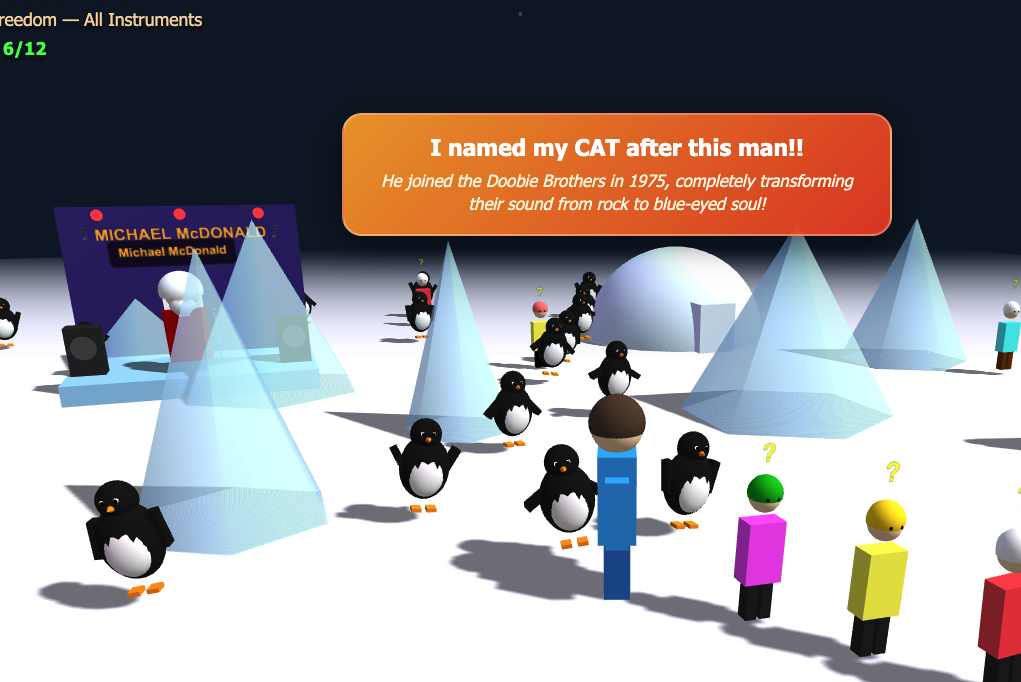


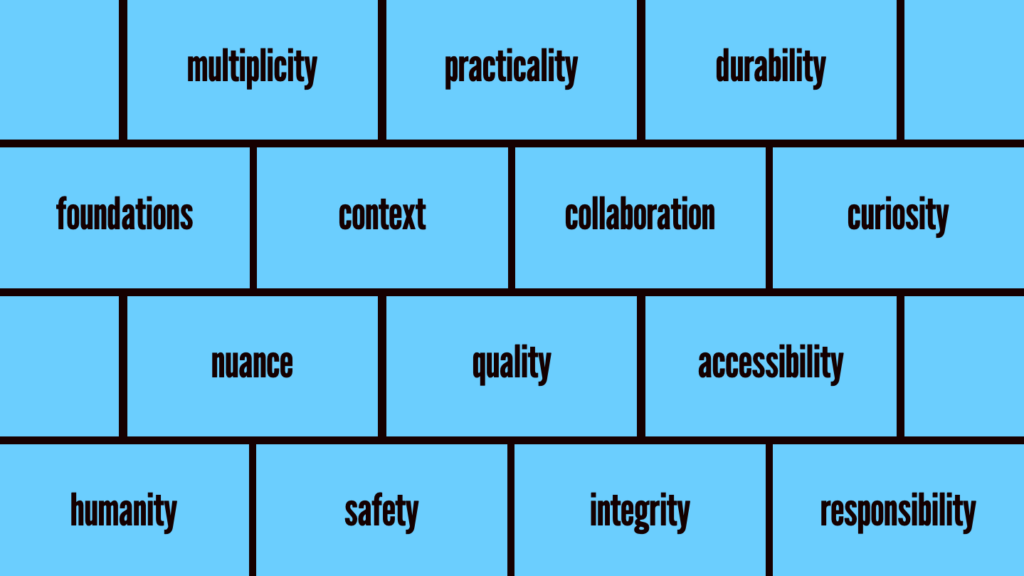


 I’m live-coding a redesign of my website! You can watch me here.
]]>
I’m live-coding a redesign of my website! You can watch me here.
]]> ). The Storybook team demonstrated their brand-new Storybook MCP that helps teams generate UI by wielding their sturdy, well-considered design system component libraries.