tag:gain.nd.edu,2005:/newstag:gain.nd.edu,2005:/latestNotre Dame Global Adaptation Initiative | News2026-07-15T10:00:00-04:00tag:gain.nd.edu,2005:News/1829892026-07-15T10:00:00-04:002026-07-10T15:12:34-04:00Latest ND-GAIN Country Index integrates new World Bank Business Ready data set
The University of Notre Dame's Global Adaptation Initiative (ND-GAIN) has adopted a new measure of economic readiness in its latest update of its flagship Country Index. As a result, the Index’s climate readiness rankings of economies around the world have shifted. This year’s release replaces the World Bank's discontinued Doing Business (DB) Index with the organization's new Business Ready (B-READY) Index as the Country Index's new economic readiness indicator.
Updated annually, the Country Index quantifies the climate vulnerability and readiness of more than 180 countries by aggregating 45 core indicators. The ND-GAIN Country Index’s economic readiness indicator measures a country’s capability to attract adaptation investment: funding that enables improved community and business resilience to the impacts of climate change.
The newly integrated B-READY Index assesses the investment climate across three pillars — regulatory framework, public services, and operational efficiency — and 10 topics: business entry, business location, utility services, labor, financial services, international trade, taxation, dispute resolution, market competition, and business insolvency. The B-READY Index’s assessment of the regulatory framework focuses on policy and law, while primary data collection is employed to evaluate public services and operational efficiency for each topic.
The previously-integrated DB indicators were determined by assessing the investment climate across similar topics; the DB report was discontinued by the World Bank after an internal review found evidence of data manipulation by some governments. B-READY was developed in response, built around a more transparent methodology and two data sources rather than one.
“Where Doing Business relied heavily on interpretations of policy and regulatory law, B-READY combines this approach with direct surveys of business operating in that economy to measure what happens in practice,” said Danielle Wood, director of ND-GAIN and associate professor of the practice at the Environmental Change Initiative. “What’s actually happening on the ground can be quite different from the legal and regulatory frameworks.”
With the integration of B-READY data, the economic readiness score of Bangladesh, Benin, Cambodia, Colombia, Italy, and Jordan saw the greatest rise. In contrast, Armenia, Bhutan, Samoa, Seychelles, Tunisia, and Uruguay saw a decline.
To date, the World Bank has released B-READY data for 101 countries across world regions and economic strata, with analysis for most of the remaining economies to come later this year. For the current Country Index update, ND-GAIN researchers generated placeholder estimates from regional counterparts for those countries awaiting official B-READY data.
“We’re excited about the quality of the B-READY approach and look forward to strengthening the economic readiness indicator of the Country Index as more data is released and updated in the years to come,” Wood said.
Free and open source, the ND-GAIN Country Index helps decision-makers in governments, nongovernmental organizations, corporations, and academia prioritize investments for a more effective response to the global challenges ahead, such as migration, water conflict, food insecurity, and energy planning. To learn about ND-GAIN or the Country Index, visit ND-GAIN’s website. For more detailed information about the methodology of the Country Index, view the technical document.
The University of Notre Dame is a leading global Catholic research university located in South Bend, Indiana (USA). Inspired by its Catholic mission and founder Rev. Edward Sorin, C.S.C.’s vision for the University to be “one of the most powerful means for doing good” in the world, Notre Dame’s faculty and students pursue globally significant research, scholarship, and creative endeavor that advances discovery, fosters innovation, and drives lasting positive impact. For more information, please visit NDR's website or NDR's LinkedIn.
]]>
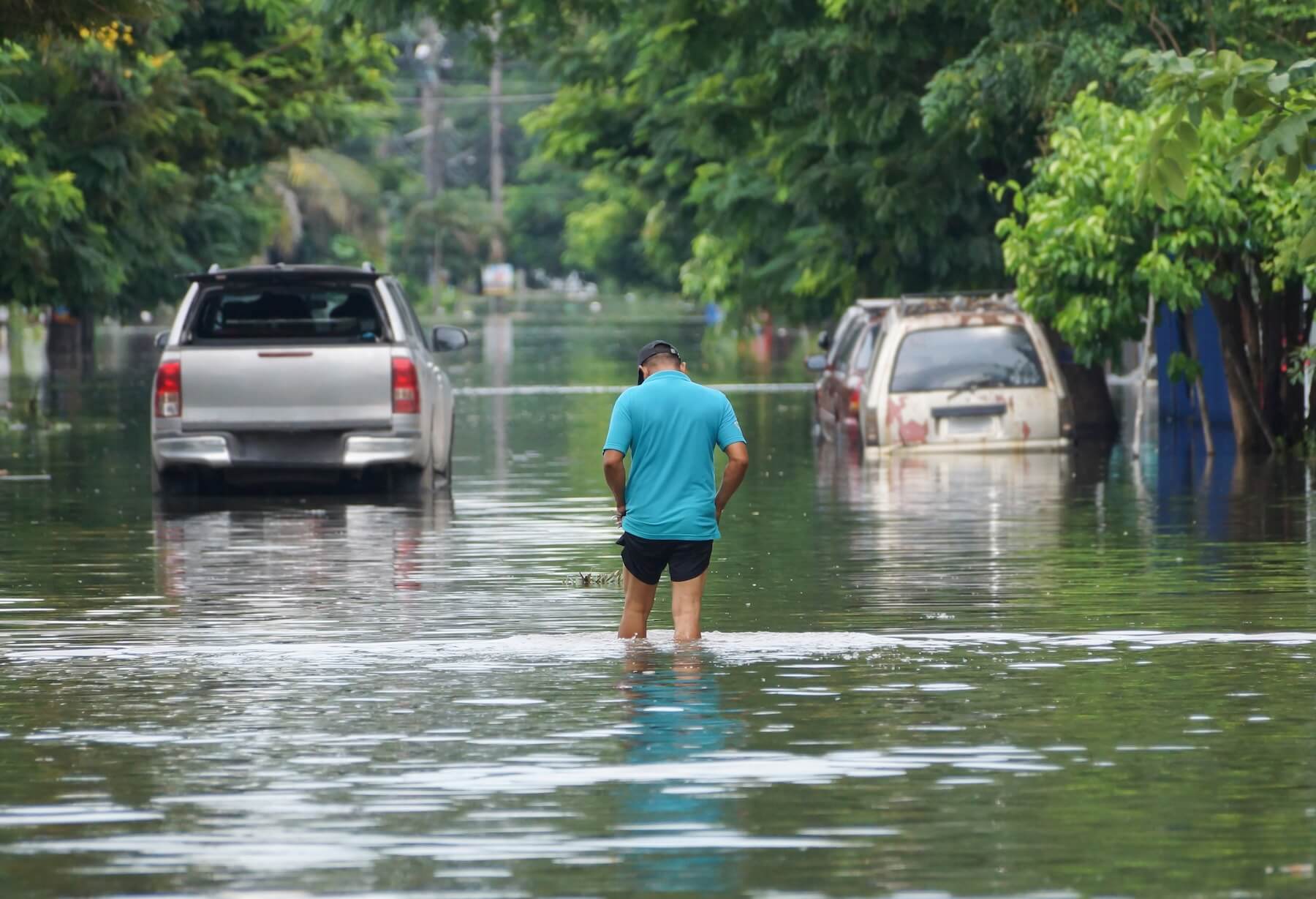
Erin Fennessy Lawlortag:gain.nd.edu,2005:News/1826022026-06-18T09:28:00-04:002026-06-18T09:29:41-04:00ND-GAIN looks to usher in a new era of decision-support, building on more than a decade of international leadershipAs shifts in climate occur worldwide, different regions will experience them through extreme weather events, such as localized flooding. Photo credit: weerapat1003, Adobe Stock #301920750.
In recent years, billions of dollars have been pledged worldwide for climate adaptation: taking action to prepare for and adjust to the current and projected impacts of climate change. But key questions remain on where and how that funding should be spent. As a pioneer in tools that support the decision-making of governments, NGOs, and the private sector, the Notre Dame Global Adaptation Initiative (ND-GAIN) has provided critical information on vulnerability and readiness to inform analysis, investment, and policy for more than a decade.
Launched in 2011 by the Global Adaptation Institute in Washington, D.C., the Global Adaptation Index (GAIN) moved to the Environmental Change Initiative at the University of Notre Dame two years later. Revamped as ND-GAIN’s Country Index, the tool has been used across the highest levels of global policy and international finance, becoming a standard reference tool for organizations looking to invest their resources for the greatest impact.
Today, ND-GAIN’s free and open-source tools include not only the Country Index, but also city-focused tools, case-based information, and independent studies. With more than 2.5 million views, hundreds of thousands of downloads, and thousands of citations, ND-GAIN users span diverse sectors within national and international organizations.
ND-GAIN is now poised to usher in a new era of advanced decision-support, which will deliver dynamically updated multiscalar data and sector weighting estimates built on machine learning models. This advancement would include the application of measurement techniques from ND-GAIN’s latest pilot, the Global Urban Climate Assessment (GUCA), using remotely sensed data and analysis to bring ND-GAIN to the subnational scale.
“Here at Notre Dame, we believe that 'caring for our common home' requires more than just good intentions; it requires the best possible tools to protect the most vulnerable,” said Danielle Wood, director of ND-GAIN and associate professor of the practice at the Environmental Change Initiative. “Ushering in a new era of ND-GAIN will ensure that our commitment to protecting communities is backed by the kind of dynamic, actionable insights that turn vulnerability and adaptation information into policy, action, and community resilience."
Country Index as a revolutionary tool, for 15 years and counting
ND-GAIN’s flagship tool, the Country Index, was specifically designed to help decision-makers identify both where adaptation projects were most needed and most likely to succeed. Using more than two decades of data across 45 indicators, it annually ranks 185 countries based upon their climate vulnerability and their readiness to successfully adapt to climate-related stressors.
Vulnerability is evaluated across six life-supporting sectors: food, water, health, ecosystem services, human habitat, and infrastructure. Readiness is measured through economic, governance, and social indicators. Together, these scores help decision-makers identify not only where the greatest risks lie but also where there are opportunities for strengthening adaptation capacity.
“The ND-GAIN Country Index was the first and is still one of the only global indices to include environmental and socio-economic indicators to capture the many dimensions of climate vulnerability,” Wood explained. “As such, it is designed to capture the relationship between the environment and human flourishing.”
The reach of the Country Index is extensive, informing the strategies of influential organizations across the globe. ND-GAIN metrics buttress widely-used knowledge dashboards maintained by the World Bank and the International Monetary Fund (IMF), two specialized agencies of the United Nations (UN) with a focus on raising the global standard of living.
The IMF applies Country Index data as key indicators for macroeconomic risk assessment, evaluating how climate change affects national budgets, debt sustainability, and economic growth.
The World Bank integrates ND-GAIN's vulnerability and readiness scores into its Climate Risk Country Profiles for the Climate Change Knowledge Portal, a central hub for climate data used by global development practitioners. By layering this data alongside projected physical climate changes, policymakers can assess how shifts will intersect with a nation's existing social and economic infrastructure.
Additional UN programs consult ND-GAIN data to inform global adaptation strategies, moving beyond disaster response and toward proactive resilience-building.
The UN Development Programme (UNDP) integrates the Country Index’s climate vulnerability rankings into country profiles related to its “Climate Promise” initiative, the world’s largest offer of support to countries on their national climate pledges.
Several non-governmental organizations also turn to the Country Index to inform their humanitarian efforts. To manage a vast portfolio spanning nearly 100 countries, Catholic Relief Services (CRS) has consulted the Index’s vulnerability and readiness scores to categorize and prioritize their efforts. With access to high-level data, local CRS chapters are empowered to advocate for their communities in matters of food and water security as well as health risks.
"What strikes me isn't just how many organizations consult ND-GAIN data, but how it is woven into their work,” Wood reflected. “Whether it is UNDP embedding our metrics into national climate profiles or Oxfam utilizing our insights to push for equitable climate finance, these applications underscore the vital role our research plays in the global response to climate change."
Zooming in to the city level
As the Country Index matured, it became clear that in order to measure how climate risk varies within a country, national-level data needed to be supplemented by local information. In 2015, with funding from the Kresge Foundation, ND-GAIN built a new tool to help address the need for city-level analysis — the U.S. Urban Adaptation Assessment (UAA).
Researchers designed the UAA to measure the climate risks and social vulnerabilities, including flooding, extreme heat, extreme cold, drought, and sea-level rise, at the city and subcity level, collated within a visual platform. Covering 278 urban areas across the United States and Puerto Rico, the UAA allows users to explore the connection between vulnerabilities to climate disasters, adaptive capacities, and how these are distributed within a city. As the first urban decision-support in this space, the UAA has served as a framework modeled by others in the U.S. and beyond.
Building on this work, ND-GAIN’s most recent pilot tool extends city-level analysis to urban areas around the world. The Global Urban Climate Assessment (GUCA) assesses climate vulnerability and resilience using both remote sensing and secondary data, providing comparable metrics across multiple global cities.
The 12 cities selected for the Global Urban Climate Assessment (GUCA) pilot.
Within the GUCA framework, vulnerability is evaluated through physical hazards like flooding, extreme heat, and landslides, and the city's sensitivity to those hazards, including potential vulnerability from specific populations—such as children, seniors, migrants, or low-income residents—as well as characteristics of the urban area itself, such as the rate of urban expansion. Resilience, on the other hand, is measured through a city's ability to withstand shocks and adapt over time. Key factors include disaster planning, critical infrastructure, strong governance, and economic stability — recognizing that well-prepared cities can respond more effectively to climate-related challenges.
ND-GAIN is currently looking to scale the GUCA measurement techniques around the globe, enabling a better understanding of hotspots for climate risk worldwide.
“As more people migrate to urban environments, the need to identify and target funding for climate adaptation in the most impacted cities is becoming an even more widespread and urgent concern,” Wood said. “Based on feedback gathered from our worldwide partners, our team at Notre Dame is eager for the pilot to evolve into a tool with greater reach and application.”
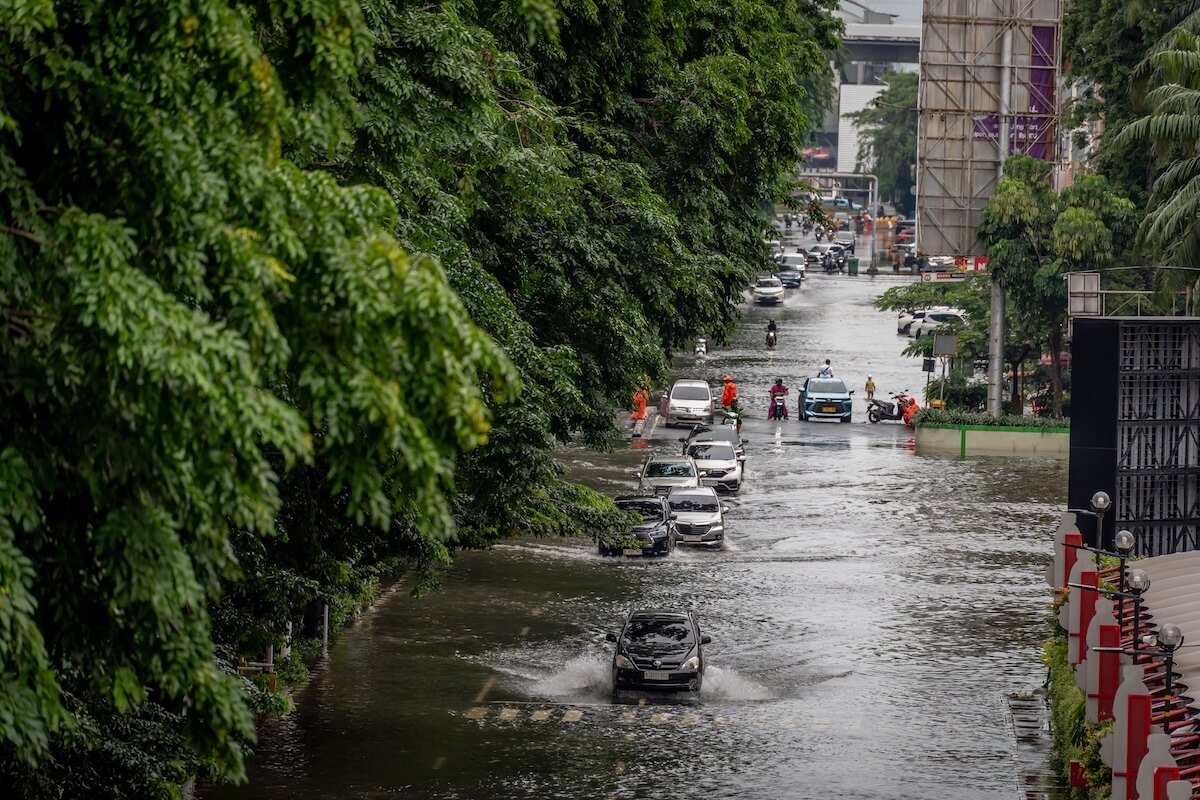
An urban flooding event in Jakarta, Indonesia, which is one of the cities selected for ND-GAIN’s GUCA framework pilot. Photo credit: GHArtwork, Abode Stock #1886137849.
In addition to building new tools and maintaining existing analysis, ND-GAIN also conducts bespoke analyses for external partners and produces adaptation briefs that showcase successful adaptation interventions.
What’s coming next
ND-GAIN is looking to enter a new phase: a future of decision-support informed by insights from both GUCA and the Country Index and enabled by machine learning and automation advancements. By moving toward dynamic updates, multiscalar estimates, integration of social information, and outcome-anchored modeling on critical issues like migration pressure, economic stability, and food security, ND-GAIN will continue to advance understandings of adaptation globally.
In the short term, the Country Index will receive an update this summer, incorporating the new Business Ready data from the World Bank, an updated quantitative assessment of the global business environment.
“While looking toward the future, ND-GAIN remains committed to its role as a steward of open-access data to ensure that those serving the world’s most vulnerable communities have the information they need,” Wood said. “By integrating remotely sensed data and advanced modeling, we can give global leaders the clarity to invest where it will have the greatest impact. It’s a natural extension of Notre Dame’s mission to be a powerful means for doing good in the world: using world-class innovation to foster a more resilient, just, and sustainable future.”
To learn more about ND-GAIN’s work and how to get involved, please visit the ND-GAIN website, or contact the ND-GAIN team by emailing ndgain@nd.edu.
The University of Notre Dame is a private research and teaching university inspired by its Catholic mission. Located in South Bend, Indiana, its researchers are advancing human understanding through research, scholarship, education, and creative endeavor in order to be a repository for knowledge and a powerful means for doing good in the world. For more information, please visit NDR's website or NDR's LinkedIn.
Originally published by Erin Fennessy at research.nd.edu on June 18, 2026.
]]>
Erin Fennessy Lawlortag:gain.nd.edu,2005:News/1814712026-05-06T13:01:00-04:002026-05-06T13:05:09-04:00Building Adaptive Capacity: ND-GAIN Findings from Latin America and the Caribbean
Across Latin America and the Caribbean, communities are living in the realities of climate disruption. From hurricanes in Haiti to droughts in Central America, these events test infrastructure and the systems that enable people to adapt, recover, and thrive.
To better understand what drives resilience, the Notre Dame Global Adaptation Initiative (ND-GAIN) undertook a two-stage study focused on five countries: Guatemala, Honduras, Nicaragua, Colombia, and Haiti. The goal was to identify what strengthens a country’s adaptive capacity, what relevant measurements already exist, and where gaps remain.
In Stage One, the research team identified past climate events and how they appear in ND-GAIN national data. Following extreme events, certain health and governance-related metrics captured impacts. Yet, at the national scale, many impacts were not reflected in existing indicators.
Stage Two focused on identifying key factors of adaptive capacity and its measurement. The team identified assets and organization as two factors that consistently stood out across countries and contexts. Assets – such as income, savings, and access to capital – act as a buffer in times of crisis, giving households and communities the flexibility to respond, recover, and rebuild. Organization reflects the strength of institutions, networks, and community structures that enable coordinated action throughout disruption, recovery, and adaptation planning.
The study also highlighted the importance of preconditions, underlying challenges like inequality, corruption, and weak state capacity. Poor preconditions can limit progress even when strong programs or interventions are in place.
Across the analysis, several high-impact approaches emerged. Programs that provide income – such as Payment for Environmental Services (PES) programs – show strong links to improved outcomes. Expanding access to capital can help households build wealth and resilience over time. Community-driven efforts are often important for long-term success. Local organizations, like cooperatives, can serve as hubs for market access, knowledge sharing, environmental management, and community empowerment. By strengthening these local systems, investments can create ripple effects across multiple dimensions of resilience.
"Resilience is built from the ground up,” said Danielle Wood, ND-GAIN Director. “This research reinforces that assets, organization, and strong local institutions are not just supporting factors; they are the foundation communities need to adapt and thrive in the face of climate uncertainty."
As part of understanding adaptive capacity, the study inventoried and mapped available measurements. Two key challenges emerged: mismatches in scale and missing data. As a result, several adaptive capacity factors remain difficult to measure with existing tools. By defining the qualities of adaptive capacity first, this research opens the door to developing metrics in the future.
Building adaptive capacity is not a one-size-fits-all effort. While the core drivers may be consistent, effective solutions must be tailored to local contexts. In a world of increasing climate uncertainty, this study shows that resilience is about building the foundations that allow communities to adapt, grow, and thrive, regardless of what comes next.
This research team included Danielle Wood, ND-GAIN Director, Thomas Mustillo, Associate Professor of Global Affairs, Brian Wanbaugh, ND-GAIN Program Manager, and Master of Global Affairs students Eduardo Pages Jimenez, Mikaela Bona, and Mohammad Farrae.
]]>
Reese Calalangtag:gain.nd.edu,2005:News/1790162026-02-06T13:32:00-05:002026-02-06T13:33:03-05:00Notre Dame faculty members bring lessons from COP30 back to their classrooms and research
The Notre Dame faculty members who attended COP30 all had their own reasons for wanting to attend the annual United Nations climate summit. Daniele de Almeida Miranda (Biological Sciences) wanted to see how research like hers was put into action. Sandra Vera-Muñoz (Mendoza College of Business) wanted to be “in the room where it happens,” Hamilton-style, and link what she’d learn back to her research and teaching. For Marcio Bahia (Arts & Letters), it was about updating and enhancing his courses, and it helped that the conference was happening in his hometown—Belém, Brazil.
The international conference was a packed, 12-day event. Despite being a long way from South Bend, Our Lady’s University had an interdisciplinary representation through Miranda, Vera-Muñoz, and Bahia. “It was a nice combination because I am interested in the social side of the discussion, Professor Miranda is interested in the more ecological side of the discussion, and Professor Vera-Muñoz is on the business side of things. And they all go together,” Bahia says.
Notre Dame has been attending the Conference of the Parties (COP) of the United Nations Framework Convention on Climate Change (UNFCCC) on and off since 2017, when the Notre Dame Global Adaptation Initiative (ND-GAIN), a program within the Notre Dame Environmental Change Initiative, first became ratified as an observer. Notre Dame Global now holds the Observer Status passes, and ensures that interested faculty have the opportunity to attend each year. And as Bahia points out, it’s important that they take that opportunity. “If Notre Dame wants to be the Catholic global university leader, it has to be on the forefront of this discussion. We cannot be outside that discussion. So professors from different areas, they have to go there and they have to see what the world is doing and be part of that process.”
While the purpose of the conference is to gather countries together to negotiate and agree on plans for addressing climate change, for Notre Dame attendees, it’s an important opportunity to not only represent the University but make connections. As the conference attracts experts from all over the world, COP30 presented an excellent environment to network and meet people in their related fields. “What was really nice was the shared understanding that we all have common goals in protecting the Earth,” Vera-Muñoz shares. “I was really pleasantly surprised at that sense of solidarity, collegiality, and intellectual curiosity about what everybody was doing.”
The Notre Dame faculty members got to attend lectures at the pavilions hosted by countries from around the world, connect with NGOs from the US, and sit in on negotiations for the different climate decisions and initiatives. “It was really awesome to see how the topics that I'm discussing in the classroom are real topics that are being discussed in the negotiations,” says Miranda.
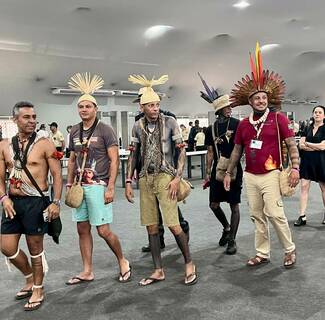
Just as important as their presence at the conference is what these faculty members bring back to campus. For Bahia, he left with what he was looking for—and more. Not only does he have the knowledge and resources to update his course that features a section on land conflict in the Amazon, but he also left inspired to create a new course about the human side of the climate crisis. “Going to COP was a perfect opportunity to see how those two things, the land conflict and the human side of the land conflict, go with climate change.” The significance of the “human side” was made especially clear to Bahia by the presence of so many indigenous communities leading peaceful protests at COP. Vera-Muñoz assented, emphasizing how their presence was a revelation. “You can read all you want about it, but until you see with your own eyes the gravity of this situation, that's the only way that you can really appreciate how everything is interconnected.” For her, the message of climate justice rang loud and clear witnessing their stand.
As a Brazilian, something that was an important takeaway for Miranda was maintaining and building her connection to her home country in her research—and tying it more closely to climate work. “COP30 and the pre-COP conference brought me this wish to be more connected to Brazilian researchers,” she says, reflecting on the conversations she had and the knowledge she gained. “I realized that my work with environmental contaminants has to be combined with climate change because with natural events being stronger now, they're going to spread more contaminants. They're going to cause more issues to the environment that will impact not only the environment, but the people. I want to bring this all to my research.”
Vera-Muñoz hit the ground running when she returned to her classroom this semester. “I started talking about COP30 on the first day of class, and I will continue to do that for the rest of the semester.” She shares that one of the most impactful talks she attended was one given by former US Vice President Al Gore. He was there to introduce Climate TRACE, an online greenhouse gas (GHG) emissions inventory portal that uses satellite technology and AI to estimate where GHG emissions are coming from at the facility level worldwide “The best part is that the data is free, which is a big deal,” she says. Not only is this data that Vera-Muñoz could benefit from, but it will be an excellent tool for her students in their capstone projects.
In addition to offering them tools, a lesson she wants to impart on her students is the importance of information integrity—a constant challenge when it comes to matters of reporting on the impacts of climate change, and COP30 was no exception. “My job is to make sure that the generations who are going to be dealing with these challenges know how to address disinformation and misinformation.”
Ultimately, the summit proved to be eye-opening and impactful, the faculty members concurred. “It was a privilege to attend this COP specifically because it was in the Amazon,” Bahia says, “Talking about the Amazon in the Amazon with Amazonian actors in and around—that was very important, that was historic.”
As the world around us continues to experience the impact of climate change, it’s encouraging to know that Notre Dame leaders are gathering with others at the frontlines—and bringing what they learned back to their classrooms and research to inform and inspire the next generation of changemakers.
Originally published by Jessie Carson at global.nd.edu on January 30, 2026.
]]>
Jessie Carsontag:gain.nd.edu,2005:News/1787872026-01-29T09:51:00-05:002026-01-29T09:51:17-05:00New tool tracks cross-border pollution, revealing unequal distribution of risk, responsibility
Microscopic airborne particles known as PM 2.5 contribute to 100,000 premature deaths in the United States each year. A new University of Notre Dame study finds that 40 percent of these deaths can be attributed to pollution that crosses state lines, highlighting the impact of the problem and pinpointing which states are responsible.
The study, published in Environmental Research Letters, provides a tool to quantify responsibility for PM 2.5 pollution, a type of fine particulate matter. It comes amid renewed debate over pollution regulations in the United States. In January, the Environmental Protection Agency said it will stop calculating the economic value of health benefits — including lives saved and health care costs avoided — from air pollution rules targeting ozone and PM 2.5.
“Our analysis gives states an evidence-based way to demonstrate when cross-state pollution exceeds safe thresholds and threatens public health,” Marcantonio said. “Rather than relying solely on an economic evaluation, policymakers can use clear data on health risks to guide decisions that protect vulnerable residents and communities.”
The new study translates the concept of an airshed — a geographical area where air moves together as a single unit, similar to hydrology’s concept of a watershed— into a practical framework that regulators around the world can use.
“Our study introduces a simpler, data-driven framework that policymakers and regulators can readily adapt,” Crippa said. “This is an important improvement upon previous studies, which have had limited scalability and adaptability.”
Findings underscore pollution’s unequal impact
The study highlights the inequality of pollution in the United States. Researchers found that:
The percentage of premature deaths attributed to cross-state PM 2.5 pollution has remained constant at approximately 40 percent since 1998, even though air pollution has fallen by 35 percent in the same time period.
More than half of U.S. states are net exporters of air pollution; roughly a third are net zero contributors, meaning they are neither importers nor exporters; and the remainder, less than a fifth, are net importers.
Florida stands out as the largest exporter of cross-state pollution (affecting Georgia and the Carolinas), followed by Vermont and Iowa.
Exporters include a number of states across the Upper Midwest, the Mid-Atlantic and the Southeast — including Wisconsin, Michigan, Indiana, Ohio, Kentucky, West Virginia, Virginia, Tennessee, Mississippi, Alabama and South Carolina — as well as California, Oregon and Washington on the West Coast.
Instead of relying primarily on complex chemical transport models, the authors drew on the concept of an airshed to design a simpler, data-driven approach. They highlighted concentrations of PM 2.5 that exceed established safety thresholds and mapped how these particulates, pushed by prevailing winds, cross state lines, harming communities in which they did not originate.
The research builds upon previous work, which has documented that major air polluters are more likely to be located near a state’s downwind borders than other types of polluters. This dynamic allows states to economically benefit from industry while avoiding the health issues that come with it.
“Our findings underscore the unequal distribution of both health risk and responsibility across state lines,” Marcantonio said.
Informing policy to address pollution
Crippa and Marcantonio want their work to inform policy both in the United States, where legal challenges are the main barriers to regulation, and in other global contexts, where a lack of resources is the main barrier.
“Ultimately, we want to provide an evidence-based approach to protecting public health and supporting human dignity.”
In the United States, air pollution regulation faces legal and political challenges. Traditionally, it has been decentralized and the Clean Air Act’s “Good Neighbor” provision has been the strongest regulatory tool. In 2024, the Supreme Court paused an updated Environmental Protection Agency plan aimed at strengthening that provision and addressing shortcomings in state plans.
In lower-resource contexts outside the United States, regulators often have limited access to complex, resource-intensive air quality models. But they face a similar public health problem: pollution that crosses political boundaries and harms other communities.
Whether the regulatory challenges are legal or technological, Crippa and Marcantonio said their work can provide a more timely and complete picture of pollution’s impact, furnishing policymakers with data that can help them protect vulnerable downwind communities.
Regulators can use new research by Paola Crippa and Drew Marcantonio to measure responsibility for deadly air pollution that crosses political boundaries.
The researchers are extending their work globally through a multi-year project co-led with Danielle Wood, director of the Notre Dame Global Adaptation Initiative, focused on how pollution that originates in mega-cities affects other communities.
“Our research can inform policy and help regulators prioritize permitting, monitoring and enforcement activities,” Marcantonio said. “Ultimately, we want to provide an evidence-based approach to protecting public health and supporting human dignity.”
Contact: Tracy DeStazio, associate director of media relations, 574-631-9958 or tdestazi@nd.edu
How PM 2.5 harms public health
Each year, PM 2.5 contributes to 4 million deaths globally.
Particles are 30 times thinner than a strand of human hair — small enough to enter the lungs and bloodstream.
PM 2.5 affects the lungs, heart and brain, contributing to cancer, COPD, stroke and cognitive decline.
It disproportionately affects vulnerable communities worldwide.
Pregnant women, children, seniors, and people with asthma, diabetes, obesity, or kidney disease face higher risks.
Originally published by Josh Stowe at keough.nd.edu on January 28, 2026.
]]>
Josh Stowetag:gain.nd.edu,2005:News/1760642025-10-27T13:36:00-04:002025-11-06T18:20:57-05:00On the eve of COP30 in Brazil, Notre Dame convenes faculty in São Paulo
Since its founding, the University of Notre Dame has sought to address the world’s most pressing challenges through scholarship, partnership, and service. Responding to the growing urgency of environmental change requires precisely this kind of collaboration, bringing together universities, researchers, and communities to create solutions that are just, sustainable, and grounded in shared responsibility for our planet.
This November, COP30 will convene in Belem, Brazil. Capitalizing on Notre Dame’s presence in São Paulo, Notre Dame Global and Notre Dame São Paulo will host a conference together with Notre Dame Research, the Notre Dame Environmental Change Initiative (ND-ECI) and the Notre Dame Deloitte Center for Ethical Leadership (NDDCEL), the week before the international climate summit.
The two-day program is titled “Bridging Worlds: Cultivating Research Partnerships for Climate Hope,” a nod to the University’s 2025-26 forum theme of “Cultivating Hope”, and it aims to bring together faculty from across departments at Notre Dame and universities in Brazil to explore the role of research in shaping just and hopeful climate solutions. The conference will be held at the University of São Paulo (USP), one of the leading universities in Latin America,and will feature representatives from several Notre Dame units including the Notre Dame Global Adaptation Initiative, Environmental Change Initiative, Notre Dame Research, the Center for Research Computing, the Keough School of Global Affairs, the Mendoza College of Business, the College of Engineering, and the College of Science. Panelists and speakers include the following Notre Dame faculty: Alvaro Acosto Serrano, Diogo Bolster, Jessica McManus Warnell, Jarek Nabrzyski, Ray Offenheiser, Sandra Vera-Munoz and Danielle Wood.
Notre Dame São Paulo Director Thaïs Burmeister de Campos Pires shares: “Hosting the ‘Bridging Worlds’ program here in São Paulo highlights the University of Notre Dame’s commitment to building meaningful global partnerships. Notre Dame São Paulo serves as a bridge between Notre Dame and leading Brazilian institutions, enabling faculty and students to connect and collaborate on innovative solutions for pressing global challenges. We are proud to provide a space for shared research, dialogue, and impact.”
Notre Dame faculty and faculty from preeminent institutions across São Paulo and Brazil will have the opportunity to build and strengthen research partnerships through working sessions and networking events. The sessions will prioritize collaborative work between the faculty members, while alumni and other friends of the University from the region will engage around the conference themes and stakeholder partners.
The evening before the conference begins, the Notre Dame Alumni Association and the Notre Dame Club of Brazil are sponsoring a Hesburgh Lecture on the theme of ethical leadership and sustainability will be held at Insper. The lecture will feature Rex and Alice A. Martin Faculty Director of the Notre Dame Deloitte Center for Ethical Leadership Jessica McManus Warnell and Director of the McKenna Center for Human Development and Global Business Ray Offenheiser. An Insper faculty member will serve as a respondent, offering reflections and local perspectives on the themes of ethical leadership and sustainability.
The lecture will provide the ideal introduction to the conference, inspiring conversations about climate risk assessment, sustainability, adaptive livelihoods, just transitions, and more in the days to follow. Ultimately, the “Bridging Worlds” program hopes to be a catalyst for impactful research and partnerships between Brazil and Notre Dame.
“Notre Dame’s identity as a global Catholic research university compels us to engage in these conversations. Our faculty members and those of our partner institutions possess a wealth of knowledge on the subject of climate and sustainability, and by bringing them together, we are working towards a deeper understanding of how our local and global systems are intertwined,” says Michael Pippenger, vice president and associate provost for internationalization at the University of Notre Dame.
Originally published by Jessie Carson at saopaulo.nd.edu on October 27, 2025.
]]>
Jessie Carsontag:gain.nd.edu,2005:News/1757492025-10-14T16:00:00-04:002025-10-14T16:03:28-04:00New data analysis tool from researchers at Notre Dame sheds light on city-level water-related climate risksThe 12 cities selected for the Global Urban Climate Assessment (GUCA) pilot.
As the reality of a changing global climate manifests in severe flooding and intensifying droughts, the risk and preparedness for these extreme weather events is distributed unevenly worldwide. Panama City, Panama, for example, is becoming increasingly vulnerable to floods, while Amman, Jordan, is becoming more susceptible to droughts. Before local stakeholders can address these water-related vulnerabilities, however, they must know about them.
A new study from researchers at the University of Notre Dame addresses a critical gap in the development of globally comparable, usable knowledge to prioritize investment and planning to increase overall water security and reduce vulnerability to extreme events. The pilot study, published in the journal Earth Systems and Environment, developed a comprehensive, scalable method for assessing a city’s vulnerability and resilience to water-related climate trends.
“In developing countries, not only is the data inconsistent, its reliability is limited and not suitable for rigorous analysis,” said Mohamed Aboelnour, postdoctoral scholar at Notre Dame’s Environmental Change Initiative (ND-ECI) and lead author of the study. “The challenge was to find accessible, reliable precipitation data that included all major cities across the globe, and then make sure the analysis we did was replicable.”
To address the first challenge, Aboelnour and colleagues turned to reanalysis data produced by the European Centre for Medium-Range Weather Forecasts (ECMWF). Reanalysis data combines historical weather observations from sources like satellites, weather balloons, and weather stations with physics-based climate models to create a consistent record of past weather conditions. The team selected the ECMWF’s ERA5-Land precipitation dataset for its fine resolution and inclusion of surface water data.
“You get the many advantages of a physically based climate model implemented at global scale, combined with the reliability and specificity of on-the-ground, or in this case, in-the-atmosphere, observations,” explained Alan Hamlet, associate professor in the Department Civil and Environmental Engineering and Earth Sciences and co-author. “These global simulations of historical weather are updated regularly, and bring the data together in one self-consistent global package, including places that are typically data-scarce, or suffer from poor data quality. Reanalysis products also save time and human resources by putting everything in one comprehensive package in a common archival format.”
Replicability and city-wide comparability are crucial dimensions for the GUCA framework, a pilot decision-support tool aimed at tracking climate vulnerability and resilience for cities around the world. The GUCA pilot study selected 12 cities with varying climate and socioeconomic characteristics to explore differences in measuring climate-related hazards across contexts.
“The main goal with the GUCA pilot was to develop an approach to providing equivalent vulnerability and resilience data so that you could compare cities,” said Danielle Wood, associate professor of practice at the ND-ECI and faculty director of ND-GAIN. “Although the purpose is comparison, we’ve designed it so that low-capacity cities would have valuable core information for analysis.”
With this design aim in mind, Aboelnour and Hamlet set out to develop a water resilience index based on the selected data. In this index, flood hazard risk serves as a measure of vulnerability, and water security serves as a measure of adaptive capacity.
Changing flood hazards were quantified by analyzing changes in peak annual precipitation over time, proximity to a river or a stream, and the magnitude of the historic 25-year daily precipitation event— an extreme daily event occurring once every 25 years on average.
Water security was assessed by taking into account average annual precipitation, trends in annual precipitation, rate of population change, as well as freshwater withdrawal rates at the country scale.
To calculate the latter two dimensions, the ERA5-Land reanalysis data was supplemented with country-level data from WorldPop. Aboelnour also verified the ERA5-Land precipitation metrics with other online sources, as well as ground truth precipitation data from the National Oceanic and Atmospheric Administration (NOAA) for Berlin, the only city not in the Global South in the pilot study.
In the GUCA framework, 13 dimensions inform the measure of urban vulnerability and resilience.
The results, published in the journal Earth Systems and Environment, can be viewed alongside other GUCA indices for the 12 cities on the pilot dashboard: Abuja (Nigeria), Amman (Jordan), Beijing (China), Berlin (Germany), Bogotá (Colombia), Jakarta (Indonesia), Kinshasa (DR Congo), Mogadishu (Somalia), Mumbai (India), Panama City (Panama), Rio de Janeiro (Brazil), and Shenzhen (China).
“We hope that the GUCA pilot can be a conversation starter for the next iteration and expansion,” Wood said. “We’re interested in collaborating with stakeholders to better understand the strengths and limitations of its applications to make it a more effective tool.”
Publications on other dimensions of the GUCA framework, including methodologies for measuring heat and governance capacity, are in process as well. Similar to Aboelnour and Hamlet’s work on water, these took into account the aim of replication and expansion when designing and implementing the pilot analysis.
“We now have a robust code structure that can pull data, run the analysis, and generate outputs for any city by simply inputting its latitude and longitude,” Aboelnour explained. “In order to make expansion feasible, replicability is essential, and we’ve done that work already.”
Wood reflected, “For more than a decade, ND-GAIN has served as a trusted data source, providing updated, reliable, and accessible information for decision-makers. We’re excited about the potential that a GUCA expansion has to become a resource for the common good by serving the needs of those investing in climate adaptation, including identifying the most vulnerable cities.”
About ND-GAIN
ND-GAIN is a program of the Notre Dame Environmental Change Initiative (ND-ECI). At ND-ECI, more than 60 faculty across several disciplines are pursuing research solutions for many of the key environmental challenges of our time. ND-ECI focuses on globally significant, multidisciplinary research that can be translated into management and policy solutions to help make the world a better place for humans and the environment upon which people depend.
The GUCA pilot is the latest addition to ND-GAIN’s already robust suite of climate tools and intervention resources, which also includes the ND-GAIN Country Index and the U.S. Urban Adaptation Assessment, a tool assessing over 270 U.S. cities’ climate risks and social vulnerabilities by neighborhood.
The University of Notre Dame is a private research and teaching university inspired by its Catholic mission. Located in South Bend, Indiana, its researchers are advancing human understanding through research, scholarship, education, and creative endeavor in order to be a repository for knowledge and a powerful means for doing good in the world. For more information, please visit NDR's website or NDR's LinkedIn.
]]>
Erin Fennessy Lawlortag:gain.nd.edu,2005:News/1755942025-10-07T13:57:00-04:002025-10-07T13:59:29-04:00ND-GAIN Adaptation Briefs: Showcasing Global Progress and Strategies for Climate Resilience
The Notre Dame Global Adaptation Initiative (ND-GAIN) is proud to release a new Adaptation Brief in its ongoing series of highlighting what works in climate interventions across the globe.
The latest ND-GAIN Adaptation Brief highlights the Supporting Vulnerable Communities in the Maldives to Manage Climate Change-Induced Water Shortages project from the Maldives, funded by the Green Climate Fund, the Maldives Ministry of Environment and Energy (MEE) and the United Nations Development Fund and implemented through the Ministry of Environment, Climate Change and Technology of the Government of the Maldives, UNDP, and the Maldives Meteorological Service. This project successfully improved infrastructure and technical capacity to secure year-round, safe, reliable, and uninterrupted water supply to the nearly 105,000 residents of the most vulnerable outer islands/atolls of the small island state.
With a focus on policy or investment strategies, ND-GAIN’s Adaptation Briefs aim to highlight in-country progress toward adaptation. Cases are selected based on general screening criteria, including time frame of the intervention, location of implementation, and sufficient validated outcomes. Each brief includes rationale for selection, context and description of the intervention, funding sources, implementation partners, relevant intermediate and impact outcomes, and considerations for generalization of the intervention approach. The Adaptation Briefs seek to highlight ‘what works’ in adaptation for complex challenges - and across a diverse set of projects and geographies. Examples range from alleviating food insecurity in South Sudan, securing clean water in Bangladesh, and greening interventions in low income neighborhoods in the United States.
If you are interested in sharing a good example for our Adaptation Brief series, please email the ND-GAIN team at ndgain@nd.edu.
]]>
Brian Wanbaughtag:gain.nd.edu,2005:News/1735592025-06-25T16:30:00-04:002026-01-07T10:20:50-05:00ND-GAIN releases latest Country Index update
The lastest update to the University of Notre Dame’s Global Adaptation Initiative's (ND-GAIN) Country Index is now live.
Free and open-source, the ND-GAIN Country Index ranks 185 nations according to how vulnerable they are to climate change and how prepared they are to deal with climate change’s effects. The Index aggregates 45 core indicators using more than 25 years of data.
The Country Index provides data and insights to enable governments, businesses, and communities for more informed adaptation planning and to better prioritize investments across critical environmental, economic, and social sectors. It has been cited by more than 2,000 peer-reviewed publications and used in hundreds of government reports.
ND-GAIN is a program within Notre Dame’s Environmental Change Initiative, with more than 60 faculty across several disciplines pursuing research solutions for some of the key environmental challenges of our time.
]]>
ND-GAIN Teamtag:gain.nd.edu,2005:News/1684142024-11-21T16:13:00-05:002024-11-21T17:33:58-05:00New global tool measures climate resilience at the city level
Jakarta, Indonesia, faces a paradox. Its economy and population are soaring, but the city itself is sinking. Excessive groundwater use is causing land subsidence of up to ten inches annually. Experts warn that by 2050, the subsidence, combined with rising sea levels and extreme weather, could leave a third of the city underwater. In response, the Indonesian government is weighing plans to relocate the capital at an estimated cost of $35 billion.
Jakarta’s climate-related conundrum may be extreme, but the underlying question it raises is relevant to urban areas around the world: What is the best use of limited resources for cities to adapt to climate change?
To help answer this question, governments and organizations now have a critical new resource developed by a team at the University of Notre Dame: the Global Urban Climate Change Assessment (GUCA). It is a decision-support tool that offers leaders a way to understand and compare city vulnerabilities, assess adaptation plans, and develop resilience.
"Cities are realizing the question isn’t ‘if’ they’ll face the effects of climate change—it’s ‘when’ and ‘how,’" explains Danielle Wood, associate professor of practice at the University of Notre Dame’s Environmental Change Initiative.
According to Wood, who leads the Notre Dame Global Adaptation Initiative (ND-GAIN), what those investing in climate adaptation need is evidence-based guidance.
"The challenge for investment is a lack of reliable, comparable data, making prioritizing difficult for those managing climate investment," she explains.
A more granular approach to climate resiliency
GUCA builds on the foundation of ND-GAIN’s Country Index, which measures climate vulnerability and readiness for over 180 countries. The GUCA pilot provides city-level metrics for 12 cities, incorporating data from multiple sources, including remote sensing. Like ND-GAIN, GUCA is free and open-source, so stakeholders across the public, private, and NGO sectors can identify priorities and direct funding where it is most needed.
GUCA measures vulnerability and resilience across a number of globally comparable metrics. Vulnerability includes specific hazards such as flooding, extreme heat, and landslides. It also measures sensitivity to climate change, which can refer to potential impacts on people (such as children, seniors, migrants, or low-income residents) as well as features of urban areas, such as the rate of urban expansion.
Resilience, on the other hand, is the capacity of a city to withstand shocks and adapt over time. It includes disaster planning, water access, governance systems, and economic stability, recognizing that cities with robust systems can respond more effectively to climate-related challenges.
A tool with global implications
GUCA’s 12-city pilot phase focused on Abuja (Nigeria), Amman (Jordan), Beijing (China), Berlin (Germany), Bogotá (Colombia), Jakarta (Indonesia), Kinshasa (DR Congo), Mogadishu (Somalia), Mumbai (India), Panama City (Panama), Rio de Janeiro (Brazil), and Shenzhen (China). With additional funding, ND-GAIN aims to expand the GUCA framework, enabling a deeper understanding of vulnerabilities and resilience in more cities across the globe.
Wood emphasizes that this expansion is critical because as more people migrate to urban environments, the need to identify and target funding for climate adaptation in the most impacted cities is becoming an even more widespread and urgent concern.
“At the start of the 20th century, only 13% of the world’s population lived in urban areas. By 2050, that number is expected to rise to 60%, with an estimated 4.9 billion people living in cities,” she points out. “Our team at Notre Dame is eager to see the tool evolve with feedback from partners around the world."
GUCA is the latest addition to ND-GAIN’s already robust suite of data-driven climate tools and resources, which includes the U.S. Urban Adaptation Assessment, a tool assessing over 270 U.S. cities’ climate risks and social vulnerabilities by neighborhood.
ND-GAIN is a program of the Notre Dame Environmental Change Initiative (ND-ECI). At ND-ECI, over 60 faculty across several disciplines are pursuing research solutions for some of the key environmental challenges of our time. ND-ECI focuses on globally significant, multidisciplinary research that can be translated into management and policy solutions to help make the world a better place for humans and the environment upon which people depend.
Contact:
Brett Beasley / Content Strategy Program Director
Notre Dame Research / University of Notre Dame
bbeasle1@nd.edu / +1 574-631-8183
research.nd.edu / @UNDResearch
About Notre Dame Research:
The University of Notre Dame is a private research and teaching university inspired by its Catholic mission. Located in South Bend, Indiana, its researchers are advancing human understanding through research, scholarship, education, and creative endeavor in order to be a repository for knowledge and a powerful means for doing good in the world. For more information, please see the Research website or @UNDResearch.
]]>
Brett Beasleytag:gain.nd.edu,2005:News/1678332024-10-29T11:31:00-04:002024-10-29T11:31:35-04:00Arun Agrawal to lead Notre Dame’s new University-wide sustainability initiative
Arun Agrawal, a renowned scholar of environmental politics and sustainable development, will join the University of Notre Dame on Jan. 1, 2025, as the inaugural director of the Just Transformations to Sustainability Initiative, a key priority in the University’s strategic framework.
An elected member of the National Academy of Sciences, Agrawal is currently the Samuel Trask Dana Professor of Governance and Sustainability at the School for Environment and Sustainability at the University of Michigan. At Notre Dame, he will be the Pulte Family Professor of Development Policy in the Keough School of Global Affairs and director of the new University-wide strategic initiative for sustainability.
Drawing inspiration from Pope Francis’ encyclical Laudato si’, the Just Transformations to Sustainability Initiative aims to transform how students and faculty at Notre Dame engage with sustainability research and practice. It also seeks to transform the field of sustainability itself through high-impact, multidisciplinary research and knowledge creation, curricular innovations and global engagement.
“The accelerating challenges posed by climate change and its impact on food security, energy, water systems and the built environment threaten the ability of people around the world to live lives of dignity,” said John T. McGreevy, the Charles and Jill Fischer Provost. “As a leading global Catholic research university, Notre Dame has an opportunity and an obligation to marshal our expertise across the disciplines to advance sustainability solutions that will not leave behind the most vulnerable.”
The Just Transformations to Sustainability Initiative will coordinate and amplify sustainability research, education and engagement efforts across Notre Dame’s eight colleges and schools as well as a wide array of centers, institutes and programs. It will develop an agenda for leading-edge research that focuses on place-based and partner-connected solutions and train a new generation of sustainability champions dedicated to caring for our common home and enabling the flourishing of people and nature for a common future.
“I am grateful to the many faculty and staff who have worked on our sustainability efforts, and to the deans of the Keough School of Global Affairs and the Colleges of Architecture, Engineering and Science for articulating a vision for this work,” McGreevy said. “We are thrilled that Arun Agrawal has agreed to lead this initiative as inaugural director. He is an exceptional scholar-teacher and a visionary leader who will significantly enhance Notre Dame’s role and influence in advancing sustainability efforts on a global scale.”
As a leading researcher and professor in sustainability, Agrawal investigates the political economy of institutional change, sustainability and conservation. He has written on Indigenous knowledge, community-based conservation, common property and commoning, agrarian change, and governance of environment and sustainability. His fieldwork has taken him to more than 20 countries in Asia, Africa and Latin America, with current research focusing on India, Nepal, Indonesia, the Philippines, Kenya, Ghana, South Africa and Brazil.
He has led research with support from both public and private foundations around the world, including the National Science Foundation, the John Simon Guggenheim Memorial Foundation, the MacArthur Foundation, the Ford Foundation, the Moore Foundation and the United Kingdom’s development cooperation agency. His current projects include a $3.1 million grant from the U.S. Department of Defense Minerva Research Initiative to examine the effects of demographic and climate change on sociopolitical stability in Africa and a grant from the NSF to support international undergraduate training.
Agrawal’s work has appeared in Science, the Proceedings of the National Academy of Sciences (PNAS), American Political Science Review, Current Anthropology and various Nature Portfolio journals. He serves as a member of the editorial board of the PNAS and was the editor-in-chief for the journal World Development from 2013 to 2020.
He received his doctorate in political science from Duke University and he holds an MBA from the Indian Institute of Management in Ahmedabad. He has held teaching and research positions at the University of Michigan; Yale University; University of Florida; McGill University; University of California, Berkeley; Indiana University; and Harvard University.
Agrawal said he was drawn to Notre Dame’s mission and University-wide commitment to a more just and sustainable world.
“The opportunity Notre Dame presents — to me and to higher education institutions in sustainability — is special. The Just Transformations to Sustainability Initiative represents the perfect integrative design for the triptych of research, curriculum and engagement that real-world impact by any university requires,” he said.
“I felt complete alignment with what I want to do at this stage in my life.”
Mary Gallagher, the Marilyn Keough Dean of the Keough School of Global Affairs and a member of the initiative’s executive committee, said she was honored to welcome Agrawal to the Keough School faculty.
“His scholarship in environmental governance, sustainability and community-based conservation aligns seamlessly with our mission and our commitment to an integrated approach,” she said. “With his leadership and expertise, Professor Agrawal will inspire and enrich our academic community and help propel our sustainability work in the Keough School and across the University.”
To learn more about the Just Transformations to Sustainability Initiative, visit go.nd.edu/sustainability.
Originally published by Kate Garry at news.nd.edu on October 29, 2024.
]]>
Kate Garrytag:gain.nd.edu,2005:News/1670942024-09-30T15:50:00-04:002024-09-30T15:50:36-04:00Environmental governance mitigates human displacement caused by weather-related disasters, study shows
Weather-related disasters such as earthquakes, hurricanes, floods and droughts displace about three times as many people as conflicts and violence do worldwide. From 2008 to 2018, around 263 million people were forced by extreme weather events to move within their own countries’ borders, a number that is expected to rise as climate change increases the frequency and intensity of weather-related disasters.
A new study by University of Notre Dame researcher Sisi Meng shows that environmental governance — policies, rules and norms that govern human behavior and scientific information needed for decision-making — can mitigate this displacement.
“Environmental governance builds a critical long-term resilience to natural disasters,” said Meng, assistant teaching professor of economics and technology for development in the Keough School of Global Affairs and a core faculty affiliate of the school's Pulte Institute for Global Development. “With the impact of climate change, disasters are going to be more frequent, and just responding to a single event every time is no longer feasible.”
Meng’s study, which was published in Communications Earth & Environment, an open-access Nature journal, showed that environmental governance is critical for reducing human displacement due to weather-related events.
Sisi Meng, assistant teaching professor of economics and technology for development
To measure environmental governance, Meng used the Notre Dame Global Adaptation Initiative (ND-GAIN) global country index, which measures 192 countries’ resilience to climate change across 45 indicators ranging from water security to economic opportunity to governmental corruption. Meng specifically examined countries’ readiness score, which measures their ability to leverage investments and convert them to climate adaptation actions. A country’s readiness score is determined by its government, its economy and its social structures — the three primary actors in environmental decision-making and behavior.
Overall, Meng’s analysis underscores the pivotal role of environmental governance, as measured by the three ND-GAIN readiness scores. The findings are strong and consistent across both large- and small-scale events and hold true for countries at various income levels. Government readiness — the capacity of a state actor to manage risk — was identified as the most crucial component for mitigating weather-related disaster displacements in higher-income countries. (Government readiness is measured by variables such as political stability and nonviolence, corruption control, regulatory quality and rule of law.)
Middle-income countries relied on both government and economic readiness, and lower-income countries depended on government, economic and social readiness — socioeconomic conditions that can enable climate adaptation efforts.
“Our findings provide compelling evidence supporting the need for enhanced environmental governance to minimize the human impact of disaster shocks,” Meng said. “This study also uniquely emphasizes a humanitarian perspective, highlighting the impact on displaced populations and the critical need for governance structures that address the social and human costs of weather-related events.” The study is the first to investigate links between environmental governance and displacement from a global perspective and was funded by the Notre Dame Environmental Change Initiative, which houses the ND-GAIN program.
This research highlights several key policy implications, Meng said. First, the findings highlight the critical importance of capacity-building for government readiness. Second, countries must prioritize economic development to adequately respond to disaster displacement, Meng said. Finally, in low-income countries, enhancing social conditions by addressing social inequality, improving communications infrastructure and promoting education also can mitigate displacement.
Meng said that by highlighting the magnitude and complexities of disaster displacement on a global scale, she hopes to spur the development of international policies and cooperation strategies.
“Climate change and its effects do not adhere to national boundaries,” Meng said. “Coming together to create comprehensive strategies across diverse regions is critical.”
Top photo by Dibakar Roy on Unsplash.
Originally published by Renée LaReau at keough.nd.edu on September 27, 2024.
]]>
Renée LaReautag:gain.nd.edu,2005:News/1646152024-08-01T08:06:48-04:002024-08-01T08:06:48-04:00Downwind states face disproportionate burden of air pollution
A recent Supreme Court decision to block a federal rule curbing interstate air pollution further complicates efforts to reduce emissions and adds to an already disproportionate burden on “downwind” states, according to researchers at the University of Notre Dame.
Paola Crippa (Photo by Wes Evard / University of Notre Dame)
“Toxic air pollution is really not as well known by the general public as you would hope, given its impact on human health,” said Paola Crippa, assistant professor in the Department of Civil and Environmental Engineering and Earth Sciences. “Most studies peg it as the, or at least one of the top three, largest causes of early human mortality. It cuts off about three years from global life expectancy. This is especially important for urban communities, where air pollution tends to be the highest.”
Air pollution poses a significant threat to respiratory health, is associated with asthma and can lead to chronic disease, cancer and premature death, according to the National Institutes of Health.
“Each year, air pollution kills 7 to 9 million people worldwide, including 200,000 Americans. And in the United States, much of this toxic pollution crosses state borders,” said Richard Marcantonio, assistant professor of environment, peace and global affairs in the University of Notre Dame’s Keough School of Global Affairs. “The Supreme Court’s decision pressed pause on a plan to help regulate this cross-state pollution.”
The ruling blocked the Environmental Protection Agency’s “Good Neighbor Plan,” housed under the Clean Air Act, which requires “upwind” states to implement improvement plans to reduce ground-level ozone and nitrogen oxide emissions from power plants and other industrial sources. Three states — Indiana, Ohio and West Virginia — along with various large industrial companies and trade organizations sued the EPA after the agency rejected those plans, which it determined to be insufficient, and moved to enforce its own plan. The EPA has stated that nitrogen oxide emissions decreased by 18 percent across 10 states where its plan was enacted in 2023.
Richard Marcantonio (Photo by Barbara Johnston/University of Notre Dame)
Crippa and Marcantonio, with co-authors Danielle Wood, program director of the Notre Dame Global Adaptation Initiative, and Alixandra Underwood at the International Food Policy Research Institute, recently published a study exploring the Clean Air Act in the journal Environmental Management. Their study focuses particularly on Section 126, a measure by which downwind states can take action and petition the EPA to directly regulate sources of interstate air pollution.
The researchers examined all 13 petitions filed through Section 126 by downwind states between 2000 and 2022.
The study showed downwind states face several challenges in using the measure, ultimately rendering it ineffective. Downwind states can petition the EPA to directly regulate sources of air pollution, such as nitrogen oxide, sulfur dioxide and particulate matter, across state lines. However, those states experience lengthy response times, petitions are accepted infrequently and petitioners are required to collect proof showing improvement plans have failed — the kind of internal information from the source facilities that downwind states are not likely to get.
“In order to actually apply the good neighbor rule as it stands today, the burden of proof in court has been placed on the downwind states, and to date, they have been unsuccessful in court,” Crippa said. “If an upwind state is producing pollution that unequally affects a downwind state, they should be able to easily and effectively do something about it — that is the idea behind the federal government supporting federalism amongst the states. Right now, that’s not happening.”
Danielle Wood (Photo by Barbara Johnston / University of Notre Dame)
Measuring and attributing air pollution across state lines is a challenge, Crippa said. How a region determines the source or sources contributing to poor air quality comes down to air quality models able to track the wind flow and pollution transport — critical to developing informed air quality assessments. These assessments play a significant role in alerting the public to poor conditions and increasing public awareness.
But, Crippa said, “This information is insufficient when the goal is to develop policies and implementation strategies to reduce local air pollution.” High pollution levels experienced in a local neighborhood may be only partially dictated by nearby emission sources, she said. “We are developing a new way of thinking about air quality management where regulations are not enforced based on political boundaries, but on dynamical physical boundaries that reflect the actual pollution dispersion boundaries.”
Crippa explained that new regulatory boundaries should be defined to include areas experiencing similar air quality conditions, rather than left to political and state boundaries. This type of boundary could ensure that current practices of exporting pollution to neighboring states through energy production and industry are significantly reduced. The research team is currently working on a companion study outlining proposals for air quality management based on these new boundaries.
The Supreme Court’s decision put the plan on hold, leaving the EPA and affected states without an immediate solution.
“It underscores how our regulatory system continues to be hamstrung when attempting to address some of the biggest challenges to its mission: to protect human health and the environment,” Marcantonio said. “Going forward, I hope policymakers will address this issue through an approach that centers human health first and protects the rights of downwind states.”
Contact: Jessica Sieff, associate director of media relations, 574-631-3933, jsieff@nd.edu
Originally published by Jessica Sieff at news.nd.edu on July 31, 2024.
]]>
Jessica Siefftag:gain.nd.edu,2005:News/1588262023-12-18T11:37:00-05:002023-12-18T11:37:33-05:00New ND-GAIN data shines spotlight on small islands’ climate vulnerability and adaptation effortsPalau, which lies in the western Pacific, is one of several island countries added this year to ND-GAIN
“We will not sign our death certificate,” said Toeolesulusulu Cedric Schuster this week at the United Nations Climate Change Conference (COP 28), calling for a clear commitment to phasing out fossil fuels.
Schuster was representing the Alliance of Small Island States (AOSIS) and drawing attention to the fact that rising sea levels, tropical storms, droughts, and dwindling freshwater supplies pose existential threats to life on many small islands around the world.
Despite these vulnerabilities, islands often have little influence in shaping major climate resolutions. But researchers at the University of Notre Dame say there is something that could lend islands more influence: data.
“We have lots of data on the vulnerability and preparedness of wealthy nations with highly developed infrastructure,” says Danielle Wood, director of the Notre Dame Global Adaptation Initiative (ND-GAIN) and an associate professor of the practice in Notre Dame’s College of Engineering. “But having routine data collection is expensive. Low-income countries are usually data scarce, with islands often lacking the resources to collect it. What this means is that we often have the most information on the countries likely to be the least impacted,” she says.
Wood points out lack of data can deepen existing disparities and create a vicious cycle. “Many small islands contribute a negligible amount to greenhouse gas emissions, but we quite often don’t have a clear picture of where the most critical vulnerabilities lie or how the situation might worsen without action. That lack of data can discourage investment on the part of governments and philanthropists—including the investments that would help collect better data,” she says.
ND-GAIN is a signature climate change adaptation tool that has long been central to conversations at COP and other climate change conferences. Updated annually, ND-GAIN’s Country Index ranks more than 180 nations according to how vulnerable they are to climate change and how prepared they are to deal with climate change’s effects.
Until this year, measurements specific to islands were largely absent from ND-GAIN. This year’s update, however, includes data on Nauru, Palau, and the Marshall Islands. It also includes updated vulnerability indicators that reflect the core concerns of islands, such as how dependent the country is on imported energy.
“Before the recent addition of these islands, we have routinely received questions about data for islands and representation in ND-GAIN,” says Brian Wanbaugh, program manager for ND-GAIN.
“This update is a step in the right direction,” Wood cautions, “but it helps make the case that the data needs to be part of a larger conversation about justice in climate adaptation.”
Camile Cleveland, a policy manager at Hua Nani Partners, which relies on ND-GAIN in its climate policy, strategy, and advocacy efforts, welcomed the updates.
“Donors and agencies are very data-driven. Without solid evidence, it’s tough to make a case for funding, and this data will help show why islands need attention and investment,” Cleveland says, “And although all islands are vulnerable to climate impacts, they are vulnerable in different ways; we need a clearer picture of who is most at risk now.”
Cleveland also emphasizes that we should see islands not just as vulnerable places on the “front lines” of climate change but also as leaders developing innovative solutions to climate adaptation.
“Island communities were thriving on their own for centuries before colonizers reached their shores, so they have cultures and indigenous practices that reflect an impressive mastery of natural systems,” Cleveland says. “These cultures combined with the need to adapt to climate impacts are leading to innovations that should be given more attention on the global stage.”
The updated ND-GAIN Country Index is available to download at gain.nd.edu. Free and open source, the ND-GAIN Country Index helps decision-makers in governments, nongovernmental organizations, corporations and academia prioritize investments for a more efficient response to the global challenges ahead, such as overcrowding, food insecurity, inadequate infrastructure, and civil conflicts.
ND-GAIN is a program within Notre Dame’s Environmental Change Initiative, with more than 60 faculty across several disciplines pursuing research solutions for some of the key environmental challenges of our time.
Contact:
Brett Beasley / Writer and Editorial Program Manager
Notre Dame Research / University of Notre Dame
bbeasle1@nd.edu / +1 574-631-8183
research.nd.edu / @UNDResearch
About Notre Dame Research:
The University of Notre Dame is a private research and teaching university inspired by its Catholic mission. Located in South Bend, Indiana, its researchers are advancing human understanding through research, scholarship, education, and creative endeavor in order to be a repository for knowledge and a powerful means for doing good in the world. For more information, please see research.nd.edu or @UNDResearch.
Originally published by Brett Beasley at research.nd.edu on December 15, 2023.
]]>
Brett Beasleytag:gain.nd.edu,2005:News/1583932023-11-30T12:16:00-05:002024-11-22T11:49:28-05:00Measuring Climate Resilience at the City Level
The Global Urban Climate Assessment (GUCA) is a pilot decision-support tool aimed at tracking the progress of climate vulnerability and resilence in cities around the world. Using both remote sensing and secondary data, GUCA provides the first assessment tool across multiple global cities on consistent resilience measures. The team identified a suite of environmental, economic and social indicators that are delivered through an interactive platform.
The pilot includes 12 cities: Abuja, Nigeria; Amman, Jordan; Beijing, China; Berlin, Germany; Bogotá, Colombia; Jakarta, Indonesia; Kinshasa, Democratic Republic of the Congo; Mogadishu, Somalia; Mumbai, India; Panama City, Panama; Rio de Janeiro, Brazil; and Shenzhen, China.
The GUCA pilot is a free and open-source tool designed to help governments, nongovernmental organizations and investors direct funding where it’s most needed, identify opportunities for adaptation and determine where cities are most vulnerable.
With funding, ND-GAIN would refine and expand the GUCA framework and platform, providing insights into the vulnerabilities and resilience of additional cities worldwide. If you have interest in partnering with ND-GAIN to support an expansion or other related projects, please contact us.
]]>
Erin Blasko and Jessica Siefftag:gain.nd.edu,2005:News/1582122023-11-21T15:44:00-05:002023-11-21T15:44:28-05:00Former ND-GAIN Research Associate brings food systems into focus at UN climate summit
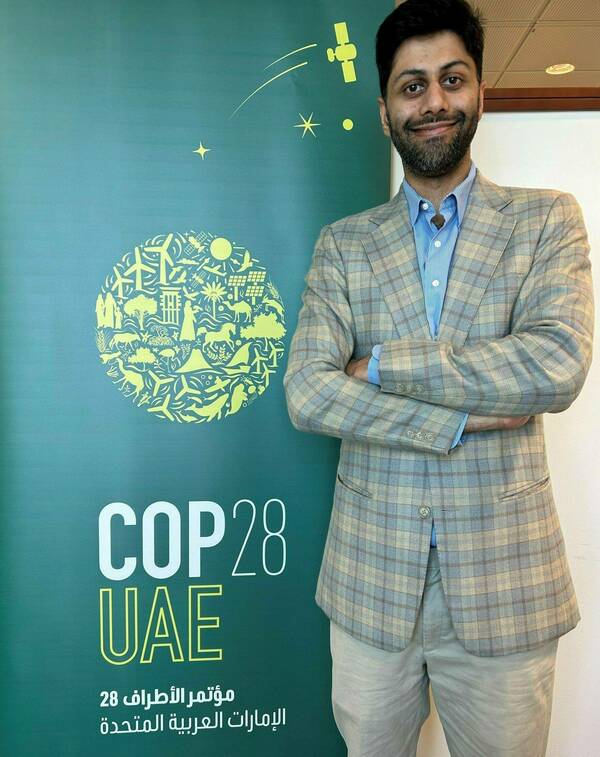
Later this month, more than 70,000 participants will attend the UN climate summit in Dubai. In the months leading up to the summit, known as COP28, Mohammed Farrae, a Master of Global Affairs graduate (2022) from the Keough School of Global Affairs and former ND-GAIN Research Associate, has been preparing to convene key groups that will showcase climate-smart strategies for agricultural food systems. This effort is critical because agriculture contributes to climate change while simultaneously being hurt by its effects.
“Some 10 billion people will live on our planet by 2050, and collectively we must figure out a way to feed them while also protecting and restoring our ecosystems,” said Farrae, a food systems and climate specialist for COP28. “We’re bringing climate and agricultural experts into the conversation so we can reduce emissions without compromising food security and small-scale producers’ livelihoods.”
Based in Abu Dhabi, Farrae has been working to mobilize both climate and agriculture-focused organizations for a series of side events that will take place adjacent to the UN summit. Participating partners range from global research centers to financial institutions to government officials to civil society groups, and include representatives from the World Bank, the Food and Land Use Coalition; the World Resources Institute, a global research nonprofit; and CGIAR, a global research partnership dedicated to transforming food, land, and water systems. Session topics will include regenerative agricultural practices, methane emission reduction, the role of cities in food systems, malnutrition, and food waste reduction.
“The pace of innovation that we’re seeing across both sectors is encouraging, and we’re trying to maximize these events to create as much momentum as possible towards innovations with the greatest promise of scaling,” Farrae said.
Farrae joined COP28 in May after hearing about the open position from Paul Winters, Keough-Hesburgh Professor of Global Affairs. Farrae had enjoyed serving as a student research assistant for Winters, a food systems expert who serves as executive director of the Innovation Commission for Climate Change, Food Security, and Agriculture.
“Having access to Paul’s expertise, mentoring, and professional network have been transformational for me, as a student, as a research associate and now as a professional,” Farrae said.
On a personal note, Farrae also said that COP28’s location has enabled him and his spouse, Hafsa Sheikh— also a master of global affairs graduate—to live closer to their home country of Pakistan.
Farrae came to the Keough School with an academic background in mechanical engineering and experience leading a Bill and Melinda Gates Foundation-funded project focused on childhood environmental education through interactive projects focused on bee and bird rehabilitation in Pakistan. He became interested in rural food systems while working with Winters, and gained valuable research and project management skills while participating in the Keough School’s Integration Lab, (i-Lab).
“I learned how to organize a project that isn’t well-defined at the beginning, how to work closely with external and internal partners, and also learned how to use different communication styles as tools.” Farrae said. “I now use all of these skills and also am able to incorporate the multicultural perspectives of my classmates, who came to Notre Dame from around the world.”
While he’s still new to the food systems sector, Farrae is learning on the go while planning for the high-stakes international climate summit.
“It’s been challenging to develop a depth of knowledge quickly, as I’m fairly young in the food space compared to my colleagues,” Farrae said. “But the Keough School has prepared me well, and I am up for the challenge.”
]]>
Renée LaReautag:gain.nd.edu,2005:News/1580542023-11-08T15:10:00-05:002023-11-15T15:10:33-05:00Keough School expert to play key role in COP28 climate talks on food systems
Climate change research has typically focused on the energy sector and the need to adopt cleaner technologies to power homes, cars and factories. But a growing awareness of how our food systems contribute to global warming has brought increasing numbers of agriculture experts to the discussion table.
Known as the world’s highest decision-making conference on climate issues, COP28 is expected to host more than 70,000 delegates to discuss climate action among 197 countries, plus the European Union and thousands of nongovernmental stakeholders. This year’s conference takes place Nov. 30 through Dec. 12 in Dubai, United Arab Emirates.
“Agriculture is one of the industries that both contributes to climate change and is also most impacted by it,” Winters said. “But this has not traditionally been recognized by those addressing the issue. Having a global platform that includes people from multiple sectors is a game changer when it comes to addressing climate change while also protecting some of our most vulnerable populations.”
Prior to presenting at COP28, Winters will discuss agriculture and climate change at “The Road to COP28: Agricultural Innovations to Address Climate Change and Food Security,” a public event taking place from 9 to 10:15 a.m. Nov. 16 (Thursday) at the Keough School of Global Affairs Washington Office. He will be joined by Sen. Debbie Stabenow; Cary Fowler, special envoy for global food security in the Office of Global Food Security at the U.S. Department of State; Chavonda Jacobs-Young, under secretary for research, education and economics at the U.S. Department of Agriculture; and William R. Sutton, global lead for climate smart agriculture and lead agricultural economist at the World Bank.
Furthermore, around 1.23 billion people are employed in the world’s agricultural food systems, and almost half of the world’s population lives in households linked to these systems, according to research conducted by Winters and his collaborators.
While researchers have now begun to report on the impact agriculture has on climate change, Winters said previous solutions proposed for addressing climate change could negatively impact some of the world’s poorest populations whose livelihoods depend on agriculture.
With research showing that climate change continues to push millions of people into extreme poverty — the majority due to the impact on agriculture — Winters said researchers and activists focused on climate change, and those working in agriculture, are now starting to converge around the idea of food system transformation.
“The goal is to scale agriculture and climate innovations globally that will both address climate change and help people and countries who rely on agriculture,” Winters said.
The COP28 presidency will call on leaders to sign the Declaration on Resilient Food Systems, Sustainable Agriculture and Climate Action, which calls on countries to address the interlinked challenges across climate change and the food system in their climate action plan.
“The food space can be very political, with different points of views across countries,” Winters said. “But the one thing that can bring them all together is innovation. By using innovation to address food systems and climate change, we can tackle some of our biggest climate issues while not only avoiding negatively impacting some of the world’s poorest populations, but actually helping them.”
Alongside these efforts, in conjunction with COP28, Winters and members of the Innovation Commission for Climate Change, Food Security and Agriculture have identified seven innovation areas with evidence-based pathways to benefit the millions of farmers whose lives and livelihoods are impacted by climate change.
The seven innovation areas include:
Improved weather forecasts to help farmers manage increased weather variability and improve agricultural decisions.
Digital agricultural extension services to provide customized and timely information to farmers at a low cost.
Climate-responsive social protection programs to help households anticipate weather shocks, overcome extreme poverty and develop resilience.
Training to promote rainwater harvesting techniques to help reduce land degradation, increase crop yields and combat desertification.
Microbial fertilizers to reduce emissions from synthetic fertilizer production while helping farmers increase productivity.
Innovations to reduce livestock methane emissions through improved feeding management, feed additives and genomic selection.
Alternative proteins to provide a low-emissions, low-cost and high-quality source of proteins.
Winters said he is heartened by the fact that food systems will play such a prominent role in the discussions leading up to and during COP28. He hopes that the high-level climate talks taking place in Dubai will draw additional attention to the need for making food systems more sustainable and equitable while also alleviating the negative environmental effects.
“Food systems play a crucial role in society and should be at the forefront of global conversations around climate change,” Winters said. “The fact that agriculture is a part of COP28 is an important step in the right direction.”
Contact: Tracy DeStazio, associate director of media relations, 574-631-9958 or tdestazi@nd.edu
Originally published by Renee LaReau and April Toler at news.nd.edu on November 08, 2023.
]]>
Renee LaReau and April Tolertag:gain.nd.edu,2005:News/1580552022-11-01T15:14:00-04:002023-11-15T15:14:34-05:00Bridging knowledge with action: Notre Dame climate experts discuss the future of our planet
At the 27th Conference of the Parties (COP27), hosted this month by the United Nations Framework Convention on Climate Change (UNFCC), world leaders plan to “demonstrate a new era of implementation by turning their commitments under the Paris Agreement into action” to reduce greenhouse gas emissions and improve global adaptation and mitigation efforts through enhanced funding.
But a UNFCC report released ahead of the conference showed that while participating nations made some progress in reducing emissions — in the hope of limiting warming to 1.5 degrees Celsius by the end of the century — the world remains well behind this goal.
The consequences of inadequate action — catastrophic storms, flooding, wildfires and widespread drought — leave populations to face an uncertain future from coastlines to the corn belt, in densely populated cities and developing nations.
At the University of Notre Dame, climate change researchers and their students are bringing real-world solutions to communities worldwide, providing perspective on policy issues and encouraging shifts in human behavior to face that uncertainty with resilience.
“The bridge between knowledge and action is vital and requires community-engaged research, and sincere and respectful partnerships,” said Jennifer Tank, the Ludmilla F., Stephen J., and Robert T. Galla Professor of Biological Sciences and director of the Notre Dame Environmental Change Initiative. “Notre Dame is uniquely poised to do more in the world in that regard because this kind of thinking is nurtured here.”
Collaborating with Indiana University, researchers at Notre Dame seek to gain a deeper understanding of how cover crops impact carbon, nutrient, water and energy cycles; address knowledge gaps; and identify the social and environmental factors that determine the climate mitigation and adaptation potential of cover crops for Midwestern U.S. croplands.
Notre Dame joins a multi-institutional team advancing urban climate science as part of Argonne National Laboratory’s recently established Urban Integrated Field Laboratory in Chicago. The Community Research on Climate and Urban Science (CROCUS) laboratory will focus specifically on how climate change affects urban areas at local and regional levels to inform adaptation efforts and build more resilient cities.
Research by Debra Javeline, associate professor of political science shows insurance companies play a pivotal role in how homeowners perceive risk and could be doing far more to encourage action to minimize losses.
Originally published by Jessica Sieff at news.nd.edu on November 01, 2022.
]]>
Jessica Siefftag:gain.nd.edu,2005:News/1483082022-10-05T15:39:00-04:002022-10-05T15:39:58-04:00Climate-prepared countries are losing ground, latest ND-GAIN index shows
The most climate-prepared countries in the world are losing ground, according to the latest update of the University of Notre Dame’s Global Adaptation Initiative (ND-GAIN) Country Index. Updated annually, ND-GAIN’s Country Index quantifies the climate vulnerability and readiness of more than 180 countries by aggregating 45 core indicators over 20 years.
This year’s ND-GAIN leaderboard appears similar to previous years, with Norway, Finland, Switzerland, Sweden, Denmark, Singapore, Austria, Germany, Iceland and New Zealand situated as the highest-ranked countries. A closer look reveals that although these countries retained their top standing, there is a general decline of ND-GAIN scores among the leaderboard.
The decline of ND-GAIN leader scores is driven by the index’s measurement of climate readiness, which consists of economic, governance and social components. At the same time, many of the highest-ranked countries saw an increase in vulnerability to the effects of climate change. ND-GAIN measures vulnerability across six components — including food, water, health, human habitat, infrastructure and ecosystem services — for sensitivity, exposure and adaptive capacity to climate risks.
According to Danielle Wood, the project director of ND-GAIN, there are similarities among leaderboard countries. “Many do face moderate exposure to climate change, but they have good capacities to deal with the potential climate risks,” Wood said. “In general, they are also better prepared for natural disasters and practice good governance, which is essential to adaptation.”
At the same time, Wood noted that the drop of ND-GAIN scores among the highest-ranked countries should serve as a critical reminder. “The decline of the top-ranked countries underscores that no country is immune to potentially extreme impacts of climate change,” she said.
Free and open source, the ND-GAIN Country Index helps decision-makers in governments, nongovernmental organizations, corporations and academia prioritize investments for a more efficient response to the global challenges ahead, such as overcrowding, food insecurity, inadequate infrastructure and civil conflicts. To learn about ND-GAIN or the Country Index, visit gain.nd.edu.
Contact: Jessica Sieff, Assistant Director, Media Relations, 574-631-3933, jsieff@nd.edu
Originally published by Brett Beasley at news.nd.edu on September 22, 2022.
]]>
Brett Beasleytag:gain.nd.edu,2005:News/1473162022-08-18T15:15:00-04:002022-08-18T15:15:16-04:00Research collaboration brings an international perspective to local floods
This summer, a team of undergraduate researchers from the University of Notre Dame and Dublin City University (DCU) joined together to analyze a subwatershed in the St. Joseph River Basin to better understand barriers and opportunities to climate adaptation in the region.
Spanning 4,685 square miles—including Notre Dame’s campus—the basin experienced record-breaking floods in 2016 and 2018. The international research exchange sponsored by the Notre Dame Environmental Change Initiative (ND-ECI), DCU, and Notre Dame’s Dublin Global Gateway enabled the students to explore the underlying causes of the flooding—and to propose their own solutions for managing the area more effectively.
"Water management remains a challenge in communities around the world,” explained Danielle Wood, faculty advisor and Program Director for the Notre Dame Global Adaptation Initiative (ND-GAIN), a program within ND-ECI. “Climate change is exacerbating the problem. We need to better understand how to both mitigate and adapt to these dynamic challenges.”
The students gathered in South Bend for a period of eight weeks. Notre Dame undergraduates Maggie Barrett (Economics and Global Affairs) and Daniel Ringrose (Civil Engineering) worked alongside DCU Climate and Environmental Sustainability student Leo Carroll and were mentored by Wood and Brian Wanbaugh, program manager of ND-GAIN. ND-ECI encouraged the students to propose win-win solutions that could benefit the environment and its inhabitants in several different ways at once.
“Water is a great focus for seeking out co-benefits,” explained Wood. “It connects everything. Smart interventions can improve green spaces, provide temperature regulation, increase biodiversity, provide carbon capture, improve flood control, and reduce nutrient and sediment load at the same time.
Over the course of the summer, the students met with community partners from several organizations, including the St. Joseph River Basin Commission, Nature Conservancy, Shirley Heinze Land Trust, and South Bend Public Works, as well as key Notre Dame faculty. These meetings helped the students learn about key issues, stakeholders, and initiatives in the St. Joseph River Basin, as well as current research that may inform nature-based solutions for nearby communities affected by flooding (e.g. FEMA buyouts in the Jewel Woods neighborhood of South Bend) and water quality issues.
The students’ report, “Exploring Barriers & Opportunities for Co-Benefits of Climate Adaptation in the St. Joseph River Basin” identifies challenges in our region’s adaptive capacity and highlights the potential value of nature-based solutions. It notes that limited investment in restoring the area’s wetlands or introducing two-stage drainage ditches to reduce flooding and sedimentation requires careful consideration of the location of the restoration efforts for reaping maximum benefits. Well-placed interventions, the students argue, could keep more nutrients in the soil, improve water quality, and boost biodiversity in the basin all at the same time.
The students hope their work will inspire change both in the St. Joseph River Basin and beyond. DCU student Leo Carroll said, “We hope that by highlighting the interconnected nature of the St. Joseph River Basin to the Midwest and Great Lakes regions as a whole, we can promote large-scale action across communities.”
The students also agree that the opportunity to collaborate with international partners enriched their work. “The DCU team brought an invaluable perspective to our meetings,” said Notre Dame student Maggie Barrett. “Global issues like climate change remind us that we don't live in a vacuum, and these problems aren't unique to us. Programs like this one make progress feel possible.”
The University of Notre Dame is a private research and teaching university inspired by its Catholic mission. Located in South Bend, Indiana, its researchers are advancing human understanding through research, scholarship, education, and creative endeavor in order to be a repository for knowledge and a powerful means for doing good in the world. For more information, please see research.nd.edu or @UNDResearch.