tag:harpercancer.nd.edu,2005:/news-events/newstag:harpercancer.nd.edu,2005:/latestMike and Josie Harper Cancer Research Institute | News2026-06-05T11:29:00-04:00Investigators in the Harper Cancer Research Institute (HCRI) are dedicated to conducting innovative and integrative research that confronts the complex challenges of cancer.tag:harpercancer.nd.edu,2005:News/1823332026-06-05T11:29:00-04:002026-06-05T11:45:21-04:00HCRI Celebrates Professor Michael Kerin’s Election as President of RCSI
The Harper Cancer Research Institute is pleased to congratulate Professor Michael Kerin, a member of HCRI’s Industry Advisory Board, on his election as President of RCSI, the Royal College of Surgeons in Ireland.
Professor Kerin has long been a leader in cancer research, surgical care, and academic medicine. He is Chair of Surgery at the University of Galway and Director of the Cancer Managed Clinical Academic Network for the Saolta University Health Care Group. His clinical and research work has focused especially on breast and endocrine cancer, with an emphasis on improving how cancer is diagnosed, treated, and understood.
In addition to his clinical leadership, Professor Kerin serves as Research Director of the National Breast Cancer Research Institute and is a principal investigator with Precision Oncology Ireland and the All-Island Cancer Research Institute. His work has helped advance cancer research in Ireland and internationally, and his election as President of RCSI reflects the respect he has earned as a surgeon, researcher, educator, and mentor.
Professor Kerin is also an important partner in the Biseach Initiative, a growing collaboration between the University of Notre Dame and the University of Galway. The initiative brings together cancer researchers, clinicians, faculty, and trainees from both institutions to build new research connections and work toward better outcomes for patients.
Biseach, an Irish word meaning “to heal, make better, or improve,” reflects the shared spirit behind the partnership. Through research exchanges, collaborative projects, symposia, and new opportunities for trainees and faculty, the initiative is helping strengthen ties between Notre Dame and Galway while advancing cancer research across international borders.
At HCRI, Professor Kerin’s involvement on the Industry Advisory Board has brought valuable perspective and international insight to the institute’s work. His leadership has helped support the kind of collaboration that is central to HCRI’s mission: bringing people and ideas together to better understand cancer and improve care for those affected by it.
HCRI extends its warmest congratulations to Professor Kerin on this well-deserved honor. We are grateful for his continued partnership and look forward to seeing the impact of his leadership in this new role.
]]>
Khoa Huynhtag:harpercancer.nd.edu,2005:News/1820692026-05-27T10:45:00-04:002026-05-27T10:45:33-04:00First comprehensive look at breast cancer in Native American women reveals key genetic differences
Researchers from the University of Notre Dame have published the first known detailed study of breast cancer tissue from Native American women. The study, published in npj Precision Oncology, reveals important molecular differences that may impact the efficacy of therapies for female, Native American breast cancer patients.
Breast cancer rates in Native American women are low compared to white women, yet Native American women have higher mortality rates. Although the overall breast cancer death rate has declined, it has remained stagnant for Native American women.
“The largest breast cancer database in the world, The Cancer Genome Atlas, contains more than a thousand breast cancer patients — and only one of them is Native American. That means today’s treatments and tests have effectively been built using data from other populations, and then assumed to work equally well for everyone,” said Jun Li, a corresponding author of the study and professor in the Department of Applied and Computational Mathematics and Statistics at Notre Dame. “Our study is the first to look closely at the biology of breast tumors in Native American women, and it's overdue.”
Researchers compared the genetic makeup of 17 Native American breast cancer tumor tissues to nearly 700 breast cancer tissues from white women from The Cancer Genome Atlas. Breast cancer tissue from Native American women in the study showed differences in which genes carried mutations, how the tumors used their DNA and which genes were turned on or off.
Many of those differences pointed to the immune system. Li said that tumors from Native American women compared to those from white women appeared to “hide” from the body’s immune defenses in fundamentally distinct ways. Researchers also found differences in the genes that protect against DNA damage.
Professor Jun Li (Photo by Matt Cashore/University of Notre Dame)
“We found differences at every level we looked at. Several genes were mutated much more often in tumors from Native American women than white women, including some that are critical for the immune system to recognize cancer cells. A few of these immune-related genes were mutated only in Native American patients,” Li said.
Overall, these differences may affect how patients respond to immunotherapies and chemotherapies. However, Li explains the study is meant “to generate hypotheses, not change treatment guidelines.” More research is needed to determine the multiple factors that may impact Native American mortality rates including genetic, environmental, socioeconomic or other determinants.
This is the first study part of a new research focus from Notre Dame’s Harper Cancer Research Institute that aims to collect tumor tissues from populations typically underrepresented in cancer research. The goal is to help fill gaps in the understanding of cancer biology.
“This research focus goes really hand in hand with the University’s mission to be a powerful means for doing good by working with underserved communities with worse cancer outcomes,” said Sharon Stack, the Kleiderer-Pezold Professor of Biochemistry at Notre Dame, the Ann F. Dunne & Elizabeth Riley Director of the Harper Cancer Research Institute and a corresponding author of the study. “While there may be many social determinants of health at play, at Harper we want to investigate if there are differences on the molecular level that impact cancer incidence and outcomes.”
Sharon Stack, Kleiderer-Pezold Professor of Biochemistry at Notre Dame (Photo by Barbara Johnston/University of Notre Dame)
The program will also continue collecting cancer tissues from partnering Native American communities, focusing on the cancer types that may be most prevalent for them, as well as collecting breast cancer tissues from other underrepresented populations such as Panamanian and Kenyan women.
The tissues will be sent to the Harper’s biosample repository and processed through their tissue banking service, which serves as a resource for researchers and doctors in South Bend and beyond.
“When you study a population that has been left out, you often discover biology that nobody knew was there,” said Li, also affiliated with the Harper Cancer Research Institute. “Those discoveries sharpen our understanding of cancer and ultimately, improve care for everyone.”
The lead author of the study was Fangfang Guo, a graduate student in Jun Li’s lab. Laurie Littlepage, the Campbell Family Associate Professor of Cancer Research at Notre Dame, also co-authored the study.
The study was funded by the Ryan Gee Excellence Fund for Cancer Research with additional support from the National Cancer Institute and Department of Defense Breast Cancer Research Program Breakthrough Award.
Contact: Brandi Wampler, associate director of media relations, 574-631-2632, brandiwampler@nd.edu
Originally published by Brandi Wampler at news.nd.edu on May 27, 2026.
]]>
Brandi Wamplertag:harpercancer.nd.edu,2005:News/1802502026-03-24T12:59:00-04:002026-03-24T12:59:16-04:00Steven Corcelli named William K. Warren Foundation Dean of the College of ScienceSteven A. Corcelli, professor of chemistry and biochemistry at the University of Notre Dame, has been appointed the William K. Warren Foundation Dean of the College of Science by University President Rev. Robert A. Dowd, C.S.C., effective April 1.
Corcelli, who has served as interim science dean since July, was selected through a comprehensive national search launched after his predecessor, Santiago Schnell, was appointed as Dartmouth’s provost.
“In multiple roles at Notre Dame, including associate dean, department chair, and most recently as interim dean, Steve has consistently earned the respect of his colleagues and proven to be a wise and visionary leader who is deeply dedicated to our Catholic mission,” Father Dowd said. “I am confident that under his leadership, the College of Science will continue to play an essential role in Notre Dame’s pursuit of excellence as a global Catholic research university.”
As dean, Corcelli will lead six departments comprising more than 280 faculty, more than 600 doctoral students, and 1,726 undergraduate student majors. He will guide the college in its mission to prepare the scientific leaders of tomorrow, seek greater understanding of the natural world and foster discoveries that answer the world’s toughest questions and solve its most enduring problems.
John T. McGreevy, the Charles and Jill Fischer Provost, said Corcelli rose to the top of a highly qualified pool of candidates. “Over the past two decades at Notre Dame, he has shown a commitment to collaboration and innovation in the laboratory and the classroom,” McGreevy said. “Steve’s leadership experience, his background as a first-generation college student, his distinction as a nationally recognized computational chemist and his commitment to the University’s Catholic mission will make him a superb dean of the College of Science.”
Corcelli leads a research program focused on the molecular-level understanding of aqueous acids, bases and salts, as well as on the mechanisms of biomolecular binding. His lab uses advanced simulations to investigate ion transport in aqueous electrolytes — relevant to battery technologies — and the binding interactions critical to biological function and drug development.
He has received national recognition for his research, including an NSF CAREER Award, a Sloan Research Fellowship, and the Camille and Henry Dreyfus New Faculty Award. Corcelli is a fellow of the American Chemical Society and a Kavli Fellow of the National Academy of Sciences. He has authored over 90 publications and given more than 100 invited talks.
He earned his bachelor’s degree in chemistry from Brown University and his doctoral degree in chemistry from Yale University. After completing a postdoctoral research position at the University of Wisconsin-Madison, he joined Notre Dame’s faculty as an assistant professor in 2005.
Prior to his appointment as interim dean, Corcelli served as chair of the Department of Chemistry & Biochemistry from 2022 to 2025, and as the associate dean for interdisciplinary studies and faculty development in the College of Science from 2019 to 2022.
“I am deeply honored to serve as the William K. Warren Foundation Dean of the College of Science,” Corcelli said. “Notre Dame has a unique opportunity to integrate scientific discovery with its Catholic mission in ways that serve both the University and the broader world. I look forward to working with our community to strengthen partnerships across the University and beyond; support our faculty, students and staff in their pursuit of discovery and learning; and advance an intellectually ambitious vision for science in service to the common good.”
McGreevy thanked the search committee for its work over the past several months. “Members represented the University well and were diligent in identifying, evaluating and recruiting an excellent pool of candidates,” he said. “I appreciate their steady work and discernment throughout the search process.”
Contact: Brandi Wampler, associate director of media relations, brandiwampler@nd.edu, 574-631-2632
Originally published by Kate Garry at news.nd.edu on March 24, 2026.
]]>
Kate Garrytag:harpercancer.nd.edu,2005:News/1801992026-03-23T09:30:00-04:002026-03-25T14:46:08-04:00Notre Dame researchers uncover the molecular driving force behind hallmark of aggressive, metastatic cancers
To invade healthy tissues and continue growing, aggressive cancers mimic and circumvent the body’s native piping system of veins and arteries. Through this process, known as vasculogenic mimicry (VM), tumor cells form fluid-conducting channels that transport blood, oxygen, and nutrients directly to the growing tumor.
This behavior enables tumor metastasis and tissue invasion, lowering patient survival rates. But despite VM’s wide-ranging consequences in one-third of all cancers, its exact mechanism is unknown, which makes it difficult to target as a treatment for the disease it enables.
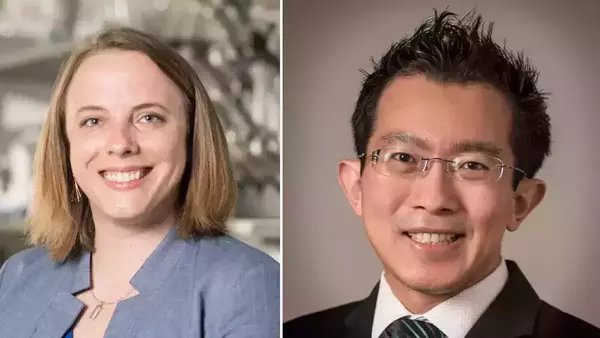
Katharine White and Donny Hanjaya-Putra have joined forces to study a phenotype of aggressive cancers.
A recent study from researchers at the University of Notre Dame remedies this knowledge gap. Katharine White, a cancer biologist, and Donny Hanjaya-Putra, a biomolecular engineer, teamed up to investigate the cancer microenvironment that drives VM formation and found that the microenvironment altered pH inside cancer cells, and VM formation is pH-dependent.
Further, the White research group identified the molecule responsible for VM’s pH-dependent formation: Beta-catenin, a multi-functional protein that controls gene expression, cell-cell adhesion, and development. The work opens the door to the discovery of new, life-saving treatments for VM. Their findings were published in Cell Death & Disease.
“Ultimately, this work can pave the way for new therapeutic strategies that target VM’s pH-sensitivity, offering a novel approach to cancer treatment that complements existing therapies,” White said.
In gel models, VM depends on pH, not tumor stiffness
White, the Clare Boothe Luce Assistant Professor in the Department of Chemistry and Biochemistry, studies how pH dynamics regulate proteins, pathways, and cell behaviors. As specialists in the role of pH in driving disease, researchers in the White Lab study how changes in proton concentration affect the behavior of proteins, cells, and whole tissue environments.
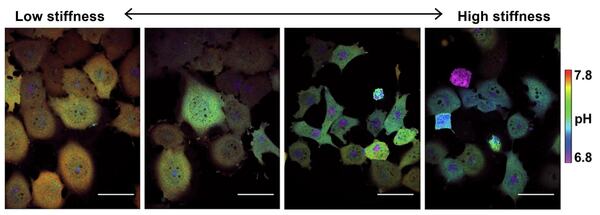
The pH of single lung cancer cells decreased as the researchers increased the stiffness of the hydrogel models. Red fluorescence indicates high pH, while purple fluorescence indicates low pH.
“It’s now widely accepted that pH is dysregulated in cancer cells compared to healthy cells, and pH differences could drive many of the behaviors that are hallmarks of cancer,” said White, who is a faculty affiliate of the Harper Cancer Research Institute.
To study VM outside of the body, however, White needed a good model – a system that could imitate the behavior of the cancer microenvironment, to the extent possible, outside of patient tissues while being more reproducible and controllable for research. Hanjaya-Putra, an associate professor in the Department of Aerospace and Mechanical Engineering and affiliate of the Bioengineering Graduate Program and the Harper Cancer Research Institute, contributed his expertise in biomimetic materials—substances that imitate biological tissues—to help develop these lab-bench models.
A known driver of VM is an increased stiffness of the structure that holds cells together. To form tissues, cells are surrounded by the extracellular matrix (ECM): a three-dimensional network of proteins and sugars that provides necessary support. In cancer, this ECM is stiffened, which is one reason why tumors are harder than the surrounding normal tissue and can be felt as a lump. In order to investigate the effect of matrix rigidity on VM, the researchers developed two gel-based models that could be tuned across the spectrum of soft, mimicking normal tissue, to stiff, mimicking the cancer microenvironment.
With the hydrogels prepared, the White Lab added cancer cells to both soft and stiff gels and measured the pH of the cells on each. They found that pH was significantly lower for the cells on the stiff gel compared to the soft gel.
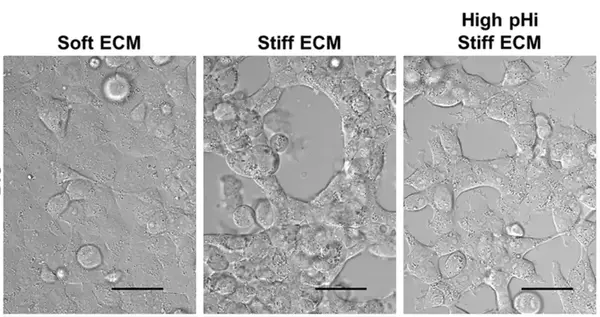
The vasculogenic mimicry phenotype, characterized by tightly packed cell networks, is observed in cells on a stiff matrix and not observed in cells on a soft matrix. When the low pH of cells on a stiff matrix was increased, the cells lost the ability to form the tightly packed networks of VM.
Further, the cells on the stiff model squished together to form craters and hills, a precursor to full-fledged VM, while the cells on soft matrix remained flat and smooth, appearing like cobblestones. While promising, the correlation between low pH and stiffness-driven VM did not reveal pH as the cause.
“If there exists a direct causal relationship between matrix stiffness lowering the pH of the cancer cells and driving VM, then we should be able to raise the pH of the cells and see the stiffness response, VM, disappear,” said Leah Lund, a recent doctoral graduate from the White Lab, who led the study. “And so we tested that.”
The researchers raised the pH of the cells plated on the stiff matrix with a special ionic treatment. As pH was raised, the tense, uneven VM precursor relaxed into a flat pane of cells. The reverse was true, too. When the pH of cells plated on the soft model was lowered, the cells formed the same proto-VM peaks and crevices seen when plated on the stiff model.
“If VM only depends on the stiffness of the environment around the tumor, changing the pH would have had no effect on the shape of the cells,” Lund said. “Instead, pH appears to be responsible for the change in cell arrangement.”
A single protein is a key controller of VM
When pH changes drive major reorganization of cells, as was observed in the study of VM, a specific protein is likely responsible. To determine the culprit for the pH-sensitivity of VM, the researchers zeroed in on two proteins that previous studies had linked to VM formation: FOXC2 and beta-catenin.
Lund and colleagues repeated a previous experiment, placing lung cancer cells on stiff gel and increasing the pH, but this time, they also measured activity of Beta-catenin and FOXC2, respectively. While a loss of VM-like peaks and valleys was again observed, FOXC2 activity remained unchanged, while beta-catenin activity plummeted.
“It appears that pH regulates beta-catenin, which in turn regulates the level of VM,” White said. “We saw a decrease in VM formation at high pH because beta-catenin ceases to function above a certain pH point and, in turn, that loss of function wipes out the ability of the cells to achieve VM.”
To verify this link between VM formation and beta-catenin, the researchers repeated the original pH-raising experiment again, but this time introduced a molecule that rescues the beta-catenin activity even when the protein’s activity is dampened by pH. At high pH, with beta-catenin activity restored and unable to be repressed by the high pH of the cells, VM formation remained high.
“A rigid environment alone is not enough to drive the formation of vasculogenic mimicry,” White said. “In reality, low pH stabilizes beta-catenin and is necessary for the VM behavior to develop and persist on stiff environments.”
"Beta-catenin is the final piece in this puzzle of VM activity that will really have an impact,” added Lund. “Correlation is one thing, but we managed to find the link between pH and VM via the actual protein responsible.”
Next steps: Graduating from 2-D models to cancer treatments
With the link established between beta-catenin and VM, the protein can be targeted to treat the aggressive cancers that change their shape to mimic vascular networks. For example, a drug that modulates the pH of cancer cells or eliminates beta-catenin activity could reduce VM and the key pathways it provides for the tumor to receive nutrients, thereby weakening the tumor itself.
In addition, “tumors that develop VM are more resistant to chemotherapeutic drugs and traditional immunotherapies, so finding a way to change how these cells respond to that stiff and dysregulated environment is very important for patients,” White said.
The White Lab, which is affiliated with the Harper Cancer Research Institute, studies how changes in proton concentration affect the behavior of proteins, cells, and whole tissue environments, and drive diseases like cancer. (Photo by Matt Cashore/University of Notre Dame)
For lead author Lund, the translation of experiments in the lab to treatments in the clinic is personal. Lund’s mother was fighting her second battle against breast cancer while Lund was discerning which lab to join as a new doctoral student at the University.
“At the time I was doing rotations and deciding which lab and what research I wanted to devote my PhD studies to, cancer was at the forefront of my personal life,” Lund said. “She's now in remission two times over, but my mom’s second diagnosis was a huge motivator for this research.”
In order to reach the treatment stage, however, the interaction between beta-catenin, stiffness, and pH needs to be better understood. The White and Hanjaya-Putra Labs are developing three-dimensional models for these interactions, which will more closely mimic patient tumors. They will use these models to better observe how the VM networks form and interact with the surrounding normal cells and immune cells that come to fight the cancer.
“Aggressive cancers have devastating effects on patients and families,” White said. “With a better understanding of the complicated processes that drive metastasis and drug resistance, we can develop better treatments and deliver better outcomes.”
The National Institutes of Health and American Cancer Society provided funding support for this study.Learn more about cancer research at Notre Dame by visiting the Harper Cancer Research Institute's website.
Modified images from the study appear courtesy of the White Lab, University of Notre Dame. Originally published in Cell Death & Disease (2025) under CC BY 4.0.
The University of Notre Dame is a private research and teaching university inspired by its Catholic mission. Located in South Bend, Indiana, its researchers are advancing human understanding through research, scholarship, education, and creative endeavor in order to be a repository for knowledge and a powerful means for doing good in the world. For more information, please visit NDR's website or NDR's LinkedIn.
Originally published by Erin Fennessy at research.nd.edu on March 23, 2026.
]]>
Erin Fennessytag:harpercancer.nd.edu,2005:News/1801822026-03-20T14:11:00-04:002026-03-20T14:11:36-04:00Notre Dame ranks among top 100 US universities granted utility patents for third straight year
The University of Notre Dame has earned a spot on the Top 100 U.S. Universities Granted Utility Patents in 2025, a list published annually by the National Academy of Inventors (NAI).
The Top 100 U.S. Universities ranking highlights and celebrates U.S. academic institutions that play a large role in advancing innovation through the critical step of protecting their intellectual property through patents. A strong patent portfolio enables and empowers researchers to translate their inventions: bringing important technologies to the marketplace, bolstering the economy and creating impactful societal solutions.
Patents awarded to Notre Dame over the past year include new printable electronics and biosensing devices; highly specific insecticides; new methods for cancer drug development, single-cell capture and nanoparticle assembly; new systems to enable fast flight; novel dyes for bioimaging; new technologies for making wireless communication more secure and more energy-efficient; and more.
“Securing a place among top patent grantees requires a robust research and innovation ecosystem, one which we have cultivated here at the University,” said Karen Deak, executive director of the University’s IDEA Center. “We’re proud to empower our researchers to translate their discoveries into impact, and ensure that Notre Dame’s research does not merely exist in the lab, but is positioned to drive economic growth and improve lives through commercialization.”
“These universities and their inventive faculty are at the forefront of driving national innovation and competitiveness,” said Paul R. Sanberg, president of the NAI. “By moving their ideas to market and protecting their IP with patents, these institutions are ensuring that the U.S. not only remains competitive on the global stage, but directly shapes the future of innovation.”
The NAI has published the Top 100 Worldwide Universities list since 2013 and introduced the Top 100 U.S. Universities list in 2023 to provide a more focused view of the national innovation landscape and the contributions made by U.S. academic institutions.
In addition to its institutional rankings, the NAI also recognizes individual academic inventors through its fellows and senior member programs. Current Notre Dame faculty who have also been elected NAI fellows include Nosang Myung, the Bernard Keating-Crawford Professor of Engineering and the faculty director of the Analytical Science and Engineering at Notre Dame (ASEND) core facility and the Materials Characterization Facility; Edward Maginn, the Keough-Hesburgh Professor of Engineering and associate vice president for research; Ashley Thrall, the Myron and Rosemary Noble Collegiate Professor of Structural Engineering; Hsueh-Chia Chang, the Bayer Corporation Professor of Chemical and Biomolecular Engineering; and Gary Bernstein, the Frank M. Freimann Professor of Electrical Engineering.
Contact: Brandi Wampler, associate director of media relations, 574-631-2632, brandiwampler@nd.edu
Originally published by Erin Fennessy at news.nd.edu on March 19, 2026.
]]>
Erin Fennessytag:harpercancer.nd.edu,2005:News/1793132026-03-18T09:00:00-04:002026-02-27T08:37:42-05:00Called to Care: Josh Lloyd’s Path to Oncology
Josh Lloyd knew he wanted to practice medicine as a high schooler. While he once considered approaching science and medicine from the research side, his personal experiences with cancer have solidified his plans to attend medical school to fight cancer.
“It was around the time that I was applying for the Hahn-Pflueger Brain Cancer Scholar Program that my uncle passed away from glioblastoma,” Lloyd said.
Cancer diagnoses in Lloyd’s family—including his grandfather and sister—convinced him that he is called to make a difference through clinical work in the field of oncology. He wants to have the interpersonal connection that comes with being a physician, so that he can help, firsthand, families like his own.
On the path to medical school, Lloyd has committed both school year and summer to researching cancer. Throughout his sophomore year at Notre Dame, Lloyd studied ovarian cancer as an undergraduate researcher in the Stack Lab. While balancing classwork, extracurriculars, and research, he felt a pull to dive even deeper into the study of cancer.
The Hahn-Pflueger Brain Cancer Scholar Program allowed him to do so.
In the summer of 2025, Lloyd studied in the Tumor Immune Microenvironment & Mechanics (TIME) Lab at the University of Notre Dame under the mentorship of Meenal Datta, the Jane Schoelch DeFlorio Collegiate Professor of Aerospace and Mechanical Engineering, an affiliated faculty member of the Harper Cancer Research Institute. The TIME lab advances the knowledge of brain models so that future research can be done to study how drugs affect, and can eventually treat, brain tumor cells. With a grant from the BCSP, Lloyd tackled projects involving microgravity and cancer-immune organoids, studying how mechanical forces affect tumor microenvironments.
Lloyd’s work saw great results, which was very rewarding on a matter so pertinent to him. His experience helped enrich his contributions to such personal research, and helped “push the needle closer to a breakthrough.”
Now, Lloyd has applied to medical schools and is beginning the interview processes that will bring him closer to chasing his passion of fighting cancer. He still believes that the field of oncology is where his medical passion will take him, as he seeks to bring care and comfort to brave patients like his uncle, grandfather, and sister.
“I am proud of my motivation to pursue a medical career,” said Lloyd, “and I’m excited for any opportunities that can positively impact other people’s lives.”
]]>
Kile, Gabrielletag:harpercancer.nd.edu,2005:News/1798632026-03-11T09:10:00-04:002026-03-11T09:10:29-04:003D-bioprinted model offers new way to study and treat obesity-related heart disease
Heart disease is the leading cause of death among people with obesity, a condition affecting one in eight people worldwide. Studies show that fat around the heart can fuel inflammation, damage heart muscle cells, disrupt heart rhythm and increase the risk of heart failure, but the precise mechanisms remain unclear.
To better understand how obesity affects the heart, Pinar Zorlutuna, the Roth-Gibson Professor of Bioengineering at the University of Notre Dame, and her lab have developed a 3D-printed model that integrates heart and fat cells to mimic obesity’s effects and test potential therapies.
Doctoral student Lara Çelebi (left) and Pinar Zorlutuna
Their results were published in Advanced Science. Lara Çelebi, doctoral student in bioengineering at the University of Notre Dame, is the paper’s first author.
“The fat cells that surround the heart are different from those that surround the body’s other organs in that they share blood vessels,” said Zorlutuna. “Substances released by the fat—such as hormones or inflammatory chemicals—can move directly into the heart muscle. This close connection enables fat around the heart to affect heart health more than fat stored elsewhere.”
While some fat around the heart is necessary since it supplies energy, supports blood vessels and aids metabolism, fat cells in obese people behave differently. When these cells are overloaded with too much fat, they enlarge and malfunction chemically.
Using mice and rats to study this relationship is not effective because rodent fat does not touch the heart. To replicate how heart tissue behaves in obese patients, Zorlutuna’s team needed a 3D structure where heart and fat cells could interact.
First, her team reprogrammed stem cells so that they developed into fat and heart cells, specifically from the atria, the heart’s upper chamber, since obesity increases the risk of atrial fibrillation by about 50%. Then, with the aid of a 3D bioprinter, the team layered the heart and fat cells into a gelatin and collagen scaffold that mimicked human tissue.
Preserving the enlarged nature of the fat cells was key, but it also made them too fragile to print. To resolve this, the team 3D printed “baby” fat cells, growing them to their problematic size within the 3D engineered tissue.
Bioprinting heart and fat cellsHeart and fat cells in a gelatin and collagen scaffold that mimics human tissue
Ultimately, the team’s 3D printed model, not only accurately demonstrated the dysfunctional relationship that can develop between heart and fat cells, but the efficacy of metformin (a common diabetes medication) in reversing some of the harmful effects of enlarged fat cells. The drug improves both how strongly heart cells contract and how efficiently heart cells use energy.
“For the first time, we’ve built human heart tissue that includes real fat, giving us a lifelike model to study how obesity drives heart disease,” said Zorlutuna. “This platform allows us to identify and prioritize the most effective treatments before they ever reach animal or clinical trials.”
This research was supported by the National Institutes of Health and the National Science Foundation.
]]>
Karla Cruisetag:harpercancer.nd.edu,2005:News/1793142026-03-11T09:00:00-04:002026-02-27T08:37:12-05:00Understanding Cancer in Context: Kat Lauinger’s Path to Medicine
Prior to the fall of 2024, Kat Lauinger did not know much about cancer, either academically or personally. However, when her mom was diagnosed with grade 2 meningioma, her studies and personal life collided, bringing her biomedical anthropology background to the study of brain cancer through the Hahn-Pflueger Brain Cancer Scholar Program.
Practicing medicine has been Lauinger’s goal since she was young.
“Both of my parents are doctors, and playing doctor was always my favorite game growing up,” said Lauinger.
Even though she has always had this vision for her life, Lauinger vouched that her summer research opportunity with the Hahn-Pflueger fellowship solidified her desire to go to medical school and become a physician.
For the duration of her research at the University of Pennsylvania’s Medical School, Kat researched data to contribute to a publication for a clinical trial testing a combination of immunotherapy drugs and radiotherapy to treat recurrent glioblastoma in patients. In this trial, researchers were studying how immunotherapy drugs synergised together and whether surgery played a role in patient outcomes.
Lauinger spent half of each week shadowing the clinical side of the trial, while the other half of each week was spent doing research and data collection. “It was very interesting to see both sides of the research,” Lauinger said, “and to see how the lab work was directly impacting patient care.”
While the patient interaction was rewarding for her, Lauinger also witnessed the difficult reality of studying a cancer with no known cure. Many of the patients that she met at the start of the summer had passed away by the end of her fellowship. Lauinger noted that while this was a challenging aspect of the program, it has helped shape her understanding of how to be a caring physician in the future.
Lauinger also participates in the Culture of Medicine Lab at the University of Notre Dame throughout the school year. In this lab, where she studies women’s health care and public health challenges such as insurance and language barriers, Lauinger is able to incorporate her biomedical anthropology background into research work, studying social factors of medicine that are often overlooked.
“This summer I was able to see how everything came together. I saw how the socio- anthropological barriers that I have learned about in class actually play out in a clinical setting,” said Lauinger.
Those barriers to clinical care have stuck with Lauinger, and she intends, with her future in medicine, to help reconcile these hindrances to medicine so that all patients can be treated with care.
]]>
Kile, Gabrielletag:harpercancer.nd.edu,2005:News/1793092026-03-04T09:00:00-05:002026-02-27T08:36:21-05:00Where Engineering Meets Hope: Sarah Nano’s Journey Through Interdisciplinary Cancer Research and Personal Loss
“It will be interdisciplinary projects that help us achieve breakthrough treatments for cancer,” said Sarah Nano. “Collaboration will make it happen.”
Her belief in integrated cancer research is part of what led Nano to pursue the Interdisciplinary Interface Training Program (IITP) Grant, an award which has allowed her to focus on her research, engage in the collaborative work against cancer, and fight the disease that has afflicted so many, including her mother.
Nano is a bioengineering PhD candidate studying breast cancer bone metastasis through the Tissue Mechanics Laboratory at the University of Notre Dame. Under the advisement of Professor Glen Niebur, Nano works in partnership with the Tissue Bank at the Harper Cancer Research Institute, which allows researchers to study human tissue mechanics.
“We use bioreactor systems and bone samples from hip surgeries to create metastatic models of breast cancer in bone,” Nano explained.
As an interdisciplinary project, Nano studies model systems to discover how mechanical forces impact cancer environments, work which is integrated with the biological knowledge of other experts, such as Professor Laurie Littlepage.
“It’s important to have someone with biology knowledge to catch where an engineering lab might have gaps,” said Nano.
Nano’s experience with cancer, however, has not been isolated to her research lab. “It was very serendipitous,” Nano said of her application to and receiving of the IITP Grant, “as my mom had just been diagnosed with cancer.”
As cancer’s impact on Nano’s life moved outside of academia, her drive for research was amplified, especially as she saw how painful and exhausting her mother’s cancer journey was.
“I was really compelled by the breast cancer metastasis work being done at Notre Dame,” she said about her inspiration for joining the IITP, “and it’s very fulfilling to work with new people to design creative solutions on how to fight cancer.”
Now in her fifth year of graduate school, Nano has been able to contribute greatly to that collaborative and innovative work.
In the future, Nano is excited to remain in the world of academia, continuing her research and study of women’s health.
“I’m passionate about teaching classes, mentoring students, having a lab, and being a professor,” said Nano. The same curiosity and intellectual spirit that brought Nano to Notre Dame will be driving her dissertation defense in the spring of 2026, just as her mother’s memory has driven her fight against cancer through the IITP.
]]>
Kile, Gabrielletag:harpercancer.nd.edu,2005:News/1800652026-02-25T09:00:00-05:002026-03-25T09:30:49-04:00From Spokane to South Bend: How the EMMF Program Shaped Simon Yan’s Path to Notre Dame
“I fight cancer to help improve the difficult process of patients’ journeys — finding it earlier, treating it faster, and giving patients the quality of life that they deserve. I feel an obligation to the people who have been affected by cancer and to the people who have trusted me with the resources to use my intellect and research for good.”
Simon Yan, a first year engineering student at the University of Notre Dame, has been fighting cancer since high school, when his experience in the Ella McKeirnan Memorial Fellowship (EMMF) program fostered his intellectual development, his drive toward societal good, and his love for Notre Dame.
In the summer between his junior and senior years in high school, Yan traveled from his hometown of Spokane, Washington to South Bend, Indiana, seeking an enriching experience to make an impact both on his own life and the lives of others.
During his time in the EMMF program, Yan was working in a chemical engineering lab where the work intersected the concepts of engineering with cancer research. His project was focused on 3-D design aimed toward developing bioreactors for cell stimulation. Aside from working alongside PhD students and researchers in the lab, he attended poster presentations and collaborated with peers in an environment of learning and growth– both intellectual and personal. For eight weeks, as Yan lived thousands of miles away from his hometown, he gained valuable skills, both in living independently and in pursuing academic excellence in the fight against cancer.
Before the EMMF program, Yan did not know much about Notre Dame, but after being a part of the Notre Dame initiative to be a “force for good,” he knew that the people-focused values of the university aligned with his educational and career goals. “The work we were doing was impactful and tangible,” said Yan, “and I wanted to continue to be in such a human-centered environment.”
Yan has not slowed down in his pursuit for good — even amongst the pressures and adjustments of being a first-year student, Yan has found time to continue fighting cancer through research. In the lab of Hsueh-Chia Chang, the Bayer Corporation Professor of Chemical and Biomolecular Engineering — the same lab that he worked with through the EMMF program — Yan’s research now includes working with microRNA to find new methods for early cancer detection and diagnostic technologies. Such intersections between engineering and medicine, Yan explained, will be crucial for increasing access to healthcare and allowing lower-income communities to diagnose, and subsequently treat, cancer at earlier stages in its progression.
As Yan continues his academic journey, learning indispensable skills and values for fighting cancer and advancing medical technologies, he feels great gratitude for the abundance of opportunities that have allowed him to use his intellect for good, especially the EMMF program and its role in his trajectory toward Notre Dame.
“You can’t know how profound the impact is until you experience it,” Yan advocated for anyone considering the EMMF program. “It’s such a unique and amazing opportunity to be part of such a human-centered program for good.”
]]>
Kile, Gabrielletag:harpercancer.nd.edu,2005:News/1796872026-02-20T08:42:00-05:002026-03-04T08:42:36-05:00Leading biomedical engineer John Fisher to direct Notre Dame’s Bioengineering & Life Sciences Initiative
Internationally recognized biomedical engineer John Fisher will join the University of Notre Dame as director of the campus-wide Bioengineering & Life Sciences Initiative (BELS) and Arthur J. Schmitt Professor in the Department of Aerospace and Mechanical Engineering. His appointment begins Aug. 1.
Fisher is currently chair of the Fischell Department of Bioengineering at the University of Maryland, where he is Distinguished University Professor, MPower Professor, and Distinguished Scholar-Teacher. At Notre Dame, he will succeed Paul Bohn, who retired in December as inaugural director of BELS and Arthur J. Schmitt Professor of Chemistry and Biochemistry.
The Bioengineering & Life Sciences Initiative is a joint effort of the College of Engineering and the College of Science and is a key priority in the University’s strategic framework. The initiative advances human health and wellness through interdisciplinary biomedical research and training — from fundamental discoveries through detection, prevention and treatment of disease. Emphasizing accessible health care solutions, BELS brings together researchers from a variety of fields to create transformative solutions for health.
“This appointment reflects both the strength of the foundation already in place — thanks to Paul’s superb leadership — and our aspirations for the future of Bioengineering & Life Sciences at Notre Dame,” said John T. McGreevy, Notre Dame’s Charles and Jill Fischer Provost. “John Fisher is a visionary leader and excellent scholar-teacher whose experience aligns perfectly with the initiative’s trajectory and Notre Dame’s ambitions as the leading global Catholic research university.”
Fisher holds bachelor’s degrees in chemical engineering and biomedical engineering from Johns Hopkins University, a master’s in chemical engineering from the University of Cincinnati and a doctorate in bioengineering from Rice University. He joined Maryland’s Department of Chemical Engineering in 2003 and three years later became a founding member of the bioengineering department he now chairs. During his two decades at Maryland, Fisher has won a variety of awards for teaching excellence, graduate student mentorship and scholarship, including a National Science Foundation CAREER award and a Fulbright. In 2024, he was appointed Distinguished University Professor, the institution’s highest honor for a tenured faculty member, recognizing excellence, impact and significant contribution to the field both nationally and internationally.
“We are thrilled to have John, who is an extraordinary biomedical engineer, join us in the college and lead the BELS Initiative,” said Patricia Culligan, the Matthew H. McCloskey Dean of the College of Engineering. “Advancing research and training in bioengineering is among our highest priorities for the College of Engineering, and I look forward to working with him to elevate collaborations within our college and across science, engineering and other units on campus.”
As director of the Tissue Engineering and Biomaterials Lab, Fisher leads a research team that focuses on computational modeling and tissue engineering, bioprinting, and bioreactors for the regeneration of lost tissues. He also directs the Center for Engineering Complex Tissues, which aims to create a broad community focusing on 3D printing and bioprinting for regenerative medicine applications.
Fisher has served in numerous leadership positions in his field, including as the 2025 chair of the Council of Chairs, a national assembly of bioengineering and biomedical engineering department chairs, and as 2018-20 chair of the Americas Chapter of the Tissue Engineering and Regenerative Medicine International Society. Fisher is a fellow of the International Academy of Medical and Biological Engineering, the American Institute for Medical and Biological Engineering and the Biomedical Engineering Society. He is currently a member of the society’s board of directors and co-editor-in-chief of Tissue Engineering. His work has been supported by the National Science Foundation, the National Institutes of Health, the Department of Defense and the Food and Drug Administration, among others.
“What attracted me to Notre Dame is the excellence and rigor of the research,” Fisher said. “The types of questions people in science and engineering are exploring, and the execution of their research programs, is really top-notch. I’m also a big believer that we’re here to educate as well as to do research. I love teaching, and I love Notre Dame’s commitment to teaching.
“What really speaks to me is the mission — the commitment to pursue research and to educate at the highest level, but doing it in a way that positively impacts society. There are some personal things as well. I grew up in the Midwest, our family is Irish Catholic, so it’s wonderful to bring that aspect of who I am together with my work.”
Fisher joins the University at a pivotal moment for the Bioengineering & Life Sciences Initiative, as it accelerates efforts to expand research, training and shared infrastructure.
Since its launch in 2024, the initiative has gained significant momentum. It has identified core research themes and awarded nearly $1.25 million in seed funding to support multidisciplinary teams working in areas such as cancer, cardiovascular disease, global health and emerging infectious threats. It has also expanded training opportunities for graduate students and postdoctoral fellows and made major investments in shared research infrastructure — including the acquisition of a Glacios 2 cryo-TEM microscope, the first of its kind at Notre Dame, scheduled for installation in April, along with complementary efforts to restructure flow cytometry resources.
To learn more about the Bioengineering & Life Sciences Initiative, visit go.nd.edu/BELS.
Originally published by Kate Garry at news.nd.edu on February 19, 2026.
]]>
Kate Garrytag:harpercancer.nd.edu,2005:News/1792062026-02-13T20:14:00-05:002026-02-13T20:14:06-05:00Physical pressure on the brain triggers neurons’ self-destruction programming
To think, feel, talk and move, neurons send messages through electrical signals in the brain and spinal cord.
This intricate communication network is built of billions of neurons connected by synapses and managed and modified by glial cells. When neurons die, this communication network is disrupted and since this loss is irreversible, neuron death causes sensory loss, motor impairment and cognitive decline.
An interdisciplinary team of researchers from the University of Notre Dame is investigating the mechanisms of neuron death caused by chronic compression — such as the pressure exerted by a brain tumor — to better understand how to prevent neuron loss.
Published in the Proceedings of the National Academy of Sciences, their study found that chronic compression triggers neuron death by a variety of mechanisms, both directly and indirectly. The research is helping lay the groundwork for identifying therapies to prevent indirect neuron death.
“The impetus for this project was to figure out those underlying mechanisms. In cancer research, most researchers are focused on the tumor itself, but in the meantime, while the tumor is sitting there and growing, it’s damaging the organ that it’s living in,” said Meenal Datta, the Jane Scoelch DeFlorio Collegiate Professor of Aerospace and Mechanical Engineering at Notre Dame and co-lead author of the study. “We fully believe that these growth-induced mechanical forces of the tumor as it expands is part of the reason we see damage in the brain.”
As an engineer, Datta studies the mechanics of tumors and the microenvironment, specifically for glioblastoma, an incurable brain cancer. She had found in prior work that tumors damage the surrounding brain. But to understand the mechanisms by which tumors kill neurons from compression alone, Datta needed a “hardcore neuroscientist.”
Imaging of neurons from an experiment with the control group neurons on the left and the neurons impact by chronic compression on the right. (Provided by the Patzke lab.)
That neuroscientist is Christopher Patzke, the John M. and Mary Jo Boler Assistant Professor in the Department of Biological Sciences at Notre Dame and co-lead author of the study. Patzke utilizes induced pluripotent stem cells (iPSCs), which are either obtained from external sources or generated directly in his lab. Unlike cells derived from fetal tissue, iPSCs are created by reprogramming a donor's blood or skin cells — often collected during a routine medical visit.
These cells function like embryonic stem cells and can be differentiated or changed in the lab into any cell type in the body, including neurons.
For this study, iPSCs were used to create neural cells and develop a model system of neurons and glial cells that behave as a neuronal network would in the brain. Researchers grew the cells and then applied pressure to the system to mimic the chronic compression of a glioblastoma tumor.
After compressing the cells, graduate students Maksym Zarodniuk and Anna Wenninger, from Datta and Patzke’s labs respectively, compared how many neurons and glial cells died versus lived.
“For the neurons that are still alive, many of them have this programmed self-destruction signaling activated,” Patzke said. “We wanted to understand which molecular pathway was responsible for this; is there a way to save neurons from going down the drain to this cell death mechanism?”
By sequencing and analyzing all messenger RNA from the living neuronal and glial cells, the researchers found an increase in HIF-1 molecules, signalling for stress adaptive genes to improve cell survival, which leads to inflammation in the brain. The compression also triggered AP-1 gene expression, a type of neuroinflammatory response.
Both neurological reactions are indicators that neuronal damage and death is underway.
An analysis of data from the Ivy Glioblastoma Atlas Project shows that glioblastoma patients also reflect these compressive stress patterns and gene expression changes as well as synaptic dysfunction in line with the experiment’s results. The researchers confirmed these results by mimicking force via a live compression system applied to preclinical models of brains.
Student demonstrates the experiment of placing a weight on top of a model system of neurons and glial cells in the Patzke Lab. (Photo by Michael Caterina/University of Notre Dame)
Overall, the findings may help explain why glioblastoma patients experience cognitive impairments, motor deficits and elevated seizure risk. Additionally, the signaling pathways offer opportunities for researchers to explore as drug targets to reduce neuronal death.
“Our approach to this study was disease agnostic, so our research could potentially extend to other brain pathologies that affect mechanical forces in the brain such as traumatic brain injury,” Datta said. “I’m all in on mechanics. Whatever it is that you’re interested in when it comes to cancer, above your question of interest, mechanics is sitting there and many don’t even know they should be considering it.”
The mechanics of compression and its effect on neuron loss is key for future research.
“Understanding why neurons are so vulnerable and die upon compression is critical to prevent excessive sensory loss, motor impairment and cognitive decline,” Patzke said. “This is how we will help patients.”
Contact: Brandi Wampler, associate director of media relations, 574-631-2632, brandiwampler@nd.edu
Originally published by Brandi Wampler at news.nd.edu on February 09, 2026.
]]>
Brandi Wamplertag:harpercancer.nd.edu,2005:News/1788132026-01-29T19:46:00-05:002026-01-29T19:49:44-05:00Supporting Pediatric Cancer Patients at Una Nueva Esperanza
Cancer is not only devastating to a patient’s body or to their physiological health. It also causes psychological anguish for patients and their families, decreasing their quality of life and creating mindsets of negativity and despair. At Una Nueva Esperanza, researchers are working to change that, to fight the psychological warfare that cancer, specifically pediatric cancer, creates.
The program gives support to patients and their families as they endure the hardships of cancer treatments. An effort that combines therapeutic care with methodological research, Una Nueva Esperanza evaluates patient and caregiver quality of life, tests what aspects of life are improved throughout the program, and finds why this might be so. With the knowledge and data gleaned from the program and its participants, Una Nueva Esperanza can be a leading force in fighting the psychological tolls of cancer.
Over the past six years, Una Nueva Esperanza’s efforts have made a profound impact on families who are battling pediatric cancer. “We have seen very promising results so far, but we want to see an even more significant increase in quality of life,” said Dr. Rocío Baños, the Director of Oncology Research at Una Nueva Esperanza. Participants’ increase in quality of life (QOL) is evaluated using three initial steps: evaluation survey before treatment; treatment sessions, as well as assistance with transportation, shelter, and meals; then a secondary evaluation after the first five treatments. This system, Dr. Baños explained, allows depression, anxiety, and happiness scales to measure QOL not through “thank yous” or subjective impressions, but through objective data analysis.
Of course, the struggles of cancer are deeply personal experiences that should not be reduced down to numbers on a page. Una Nueva Esperanza beautifully navigates the balance between finding improvements for QOL through methodological data while also showing compassion, empathy, and care for the patients and families who are facing unbelievably difficult circumstances, pressures, and fears in the face of cancer.
Una Nueva Esperanza takes several approaches to improving the psychological wellbeing of patients and caregivers– providing logistical support for the transportation and housing of families; organizing groups for discussion of fears, anxieties, and expectations; and adapting the program to the needs of its participants. “As long as the patient is undergoing treatments and is attending programs at Una Nueva Esperanza, we continue to help them and evaluate how their QOL is improving,” Dr. Baños explained.
Una Nueva Esperanza is made possible by collaboration with the University of Notre Dame, a collaboration which will eventually allow the current measures at Una Nueva Esperanza to be implemented in more places, to increase the number of sessions, and to find the best methods for augmenting the mental health of cancer patients and caregivers. This project has, and will continue to, rely on the hard work of researchers such as Alfonso González, Elizabeth Mainou, Fátima Sosa, Danya Tello, Yelitza Toscano, Brandon Peña, Jesús Meneses, Alfonso Carús, Martha Juárez, Samantha Ramos, Rosalba Barrera, Thomas Merluzzi, and Rosaura Sánchez.
Oncopediatric patients, and those who take care of them, face dark and troubling times throughout their journeys with cancer. Una Nueva Esperanza, however, is making huge strides in alleviating some of this darkness. “We want to improve the mindset of patients and caregivers,” said Dr. Baños, “and show how important psychological health is for these families.” Cancer’s toll on the body is profound, but the ‘New Hope’ of Una Nueva Esperanza is that cancer’s toll on the mind does not have to be quite so devastating.
]]>
Kile, Gabrielletag:harpercancer.nd.edu,2005:News/1786942026-01-26T11:29:00-05:002026-01-26T11:29:40-05:00Senior Jacob Finley named 2026 Churchill Scholar
University of Notre Dame senior Jacob Finley has been named a 2026 Churchill Scholar. He is one of 16 selected for the award from a pool of nearly 160 applicants. He is Notre Dame’s fifth Churchill Scholar overall and second in the past three years.
A 2025 Goldwater Scholar, Finley is an honors track physics-in-medicine major from Kentucky with research and clinical interests in radiation oncology — an orientation shaped by witnessing family members and hospice patients undergo cancer treatments.
He will pursue a Master of Philosophy degree in pathology next year at the University of Cambridge, where he will conduct research under the tutelage of David Fernandez-Antoran in the School of the Biological Sciences.
“I feel both blessed and humbled to be selected as a Churchill Scholar — an opportunity through which I intend to carry forward Notre Dame’s commitment to being a ‘force for good’ by advancing cancer treatments for patients who need them,” Finley said.
Active in research, Finley is an assistant to Sylwia Ptasinska, professor of physics and astronomy, in the Ptasinska Research Laboratory, where he contributes to research related to various aspects of radiation. He is also a junior scholar-in-training with the Radiation Research Society.
He previously worked as a CPRIT CURE fellow under Steven Lin, professor of radiation oncology, at MD Anderson Cancer Center in Houston and as an Amgen Fellow under Todd Aguilera, assistant professor of radiation oncology, at UT Southwestern Medical Center in Dallas-Fort Worth.
Around campus, he is an associate news editor for Scientia, the undergraduate journal for scientific research for the College of Science; president of the Quiz Bowl Club; a member of the College of Science Council and the College of Science Honor Code Committee; and a resident assistant at Morrissey Hall.
“Beyond his impressive accomplishments, (Finley) actively stimulates and motivates our scientifically grounded discussions that often extend to broader aspects of college life, continually pushing me to be a better professor. Working with him has been both a privilege and an inspiration.”
In his free time, he volunteers for Heartland Hospice and Saint Joseph Mishawaka Medical Center. He has completed extensive medical shadowing across various specialties, experiences that further affirmed his desire to aid those afflicted with cancer.
“Receiving this scholarship would not be possible without the loving support of my family and the invaluable tutelage of my professors and research mentors,” Finley said. “I am especially grateful to Sylwia Ptasinska, Ian Carmichael, Steven H. Lin and Todd Aguilera for stoking my love of science while equipping me with the skills necessary to initiate real change.”
He also thanked Emily Buika Hunt with the Flatley Center for Undergraduate Scholarly Engagement (CUSE) at Notre Dame “for her assistance with navigating my future goals and with applying for the Goldwater and Churchill scholarships.”
“It has been a pleasure working with Jacob over the past two years as he applied for the Goldwater Scholarship and the Churchill Scholarship,” said Buika Hunt, assistant director of scholarly development at CUSE. “His dedication to research and improving the experience of those undergoing cancer treatments is evident.”
She continued, “Conducting a year of research with Dr. David Fernandez-Antoran at Cambridge University prior to pursuing an M.D./Ph.D. is an unparalleled opportunity to expand on the research training he has received at Notre Dame. I look forward to following his career and witnessing the positive impact his research will have on countless lives.”
Ptasinska expressed pride in “Jacob’s achievement in receiving such a prestigious scholarship,” calling him “an exceptionally capable young individual with remarkable intellectual ability and a strong work ethic.”
“He is a distinguished student with multifaceted capabilities and a strong foundation in the core sciences, consistently demonstrating outstanding dedication and academic excellence,” Ptasinska said. “Beyond his impressive accomplishments, he actively stimulates and motivates our scientifically grounded discussions that often extend to broader aspects of college life, continually pushing me to be a better professor. Working with him has been both a privilege and an inspiration.”
Established in 1963, the Churchill Scholarship fulfills its namesake’s vision of deepening the U.S.-U.K. partnership while advancing science and technology on both sides of the Atlantic. It encompasses 18 scholarships — 16 Churchill Scholarships in science, math and engineering and two Kanders Churchill Scholarships in science policy.
The award covers tuition, roundtrip airfare to the United Kingdom, visa fees and health surcharge, plus a stipend exceeding the UK Research Council standard. Recipients can also apply for a $4,000 special research grant.
It is considered one of the most prestigious and competitive international fellowships available to American graduate students, alongside the Marshall, Rhodes, Gates Cambridge, Fulbright and Mitchell scholarships. Eight Churchill Scholars have gone on to win the Nobel Prize.
For more on this and other scholarship opportunities, visit cuse.nd.edu.
Originally published by Erin Blasko at news.nd.edu on January 23, 2026.
]]>
Erin Blaskotag:harpercancer.nd.edu,2005:News/1784262026-01-20T10:00:00-05:002026-01-14T15:12:44-05:00Bridging the Gap: Brighton Miller’s Fight to Unite Cancer Research and Community Care
“My passion is to establish community education and cancer prevention based on the current research that is being done, especially bringing that education to underrepresented communities. I want to fight a bigger battle–the disconnect between research and clinical care.”
Brighton Miller, doctoral candidate at the University of Notre Dame, aims to bridge the gap between the way cancer is studied and the way it is treated, mending the broken path between research and community education. She is seeking a Ph.D. in Integrated Biomedical Sciences, but even greater than that, she is seeking to advance scientific knowledge of cancer so that it can be translated into education, prevention, and treatment in the wider community.
Throughout Miller’s adolescence, cancer was omnipresent. As diagnoses afflicted her classmates, coaches, and family, and claimed the lives of people close to her, Miller began to feel the weight of cancer’s presence and its devastating consequences. These consequences were especially prevalent within her family’s Native American community, a group which has long been underserved in the realm of cancer prevention and education. It was in high school that Miller began to question how she could make an impact not only in the fight against cancer itself, but also against the lack of cancer education that burdens many marginalized communities.
Early on, Miller considered going into medicine and working directly with cancer patients. Upon beginning her research journey, however, Miller realized that the field of research and exploration was the path for her. “I love the meticulousness of research,” she explained, but beyond her obvious passion for scientific inquiry, Miller realized that research, not bedside treatment, would “better address the root of the issue,” the disconnect between research and clinical care.
Once she chose to pursue the former, Miller participated in research internships, studying medical science in early diagnostic techniques for pancreatic cancer as well as inhibitors and vaccines for COVID-19.
These internships helped prepare Miller for the current work that she is doing at Notre Dame: studying the way that aging affects the prognosis for women with ovarian cancer. Miller’s lab is studying aging and senescent cells, and the feasibility of combating these risk factors using senolytic drugs
Miller’s affinity for meticulousness works in her favor in her current studies. “It doesn’t matter if I’m sick or tired or busy, I need to be there,” said Miller. But no matter how arduous her research is, the organization and discipline that she has learned and gained through her work is paying off.
“I feel like my work is very close to the next step: the bridge to actual clinical practices,” says Miller, “Science is so rewarding. You always feel like your work means something.”
To Miller, her work means everything. Teaching members of her Native American community about cancer prevention means everything. Working to save them, and other marginalized communities, from life-threatening knowledge gaps means everything. Fighting cancer through research, so that it cannot claim any more innocent lives, means everything.
As she looks forward to a profession in clinical research, Miller is proud to be where she is today: in a prestigious graduate program at Notre Dame, in a lab designing her own studies, and in a position where she can truly “fight a bigger battle” against cancer.
]]>
Kile, Gabrielletag:harpercancer.nd.edu,2005:News/1784532026-01-15T16:46:00-05:002026-01-15T16:47:10-05:002026 Harper Cancer Research Day - Call for Abstracts AND Exceptional Trainee Nominations!
Call for Abstracts
HCRI invites you to submit research abstracts for poster and oral presentation sessions. Oral presenters will be selected from submitted abstracts, and prizes will be awarded for outstanding posters.
To participate, please submit your abstract using the link below by 11:59 pm on Monday, February 23, 2026.
Prizes!
All abstracts selected for an oral presentation will automatically receive a $400 travel grant.
Poster winners in each category (Undergraduate, Graduate, and Postdoc) receive the following:
Now accepting nominations for Exceptional Trainee Awards
Graduate students and postdoctoral trainees at HCRI have established a reputation for excellence. Harper will honor these outstanding trainees during Cancer Research Day.
The deadline for nominations is 11:59 pm on Friday, February 20, 2026.
Awards available for nomination:
Exceptional Mentor: For exceptional leadership in mentoring others.
Exceptional Team Science: The trainee who exemplifies HCRI's foundation in interdisciplinary research through their commitment to collaboration.
Eligibility:
Anyone affiliated with an HCRI lab can submit nominations for these awards.
There is no limit to the number of nominations an individual can make.
All graduate students or postdoctoral trainees affiliated with HCRI are eligible for nomination.
]]>
Aviva Wulfsohntag:harpercancer.nd.edu,2005:News/1764442025-11-13T08:00:00-05:002025-11-11T13:36:31-05:00As an international research collaboration, the Biseach Initiative aims to improve cancer outcomes
A transatlantic effort is transforming cancer research and care. The University of Notre Dame's Harper Cancer Research Institute is conducting collaborative, cutting-edge research with the University of Galway's Cancer Centre. The initiative is aptly titled Biseach — an Irish word meaning “to heal, make better, or improve.”
In a new video, explore the outcomes and future of the Biseach Initiative. To learn more about how the Initiative unites researchers across an ocean, read a story about last summer's Biseach Symposium.
Video by Angelic Rose Hubert.
]]>
Harper Cancer Research Institutetag:harpercancer.nd.edu,2005:News/1764712025-11-11T15:50:00-05:002025-11-11T15:50:42-05:00New computational process could help condense decades of disease biology research into days
At 10 one-millionths of a meter wide, a single human cell is tiny. But something even smaller exerts an enormous influence on everything a cell does: proton concentration, or pH. On the microscopic level, pH-dependent structures regulate cell movement and division. Altered pH response can accelerate the development of cancers and neurodegenerative diseases such as Alzheimer’s and Huntington’s.
Researchers hope that pinpointing pH-sensitive structures in proteins would help them determine how proteins respond to pH changes in normal and diseased cells alike and, ultimately, to design drugs to treat these diseases.
Now, in a new study out today in Science Signaling, researchers at the University of Notre Dame present a computational process that can scan hundreds of proteins in a few days, screening for pH-sensitive protein structures.
Katharine White
“Before even picking up a pipette or running a single experiment, we can predict which proteins are sensitive to these pH changes, which proteins actually drive these critical processes like division, migration, cancer development, and neurodegenerative disease development,” said Katharine White, the Clare Boothe Luce Assistant Professor in the Department of Chemistry and Biochemistry. “No more searching for the needle in the haystack.”
Determining exactly how pH changes affect the behavior-driving proteins on a molecular level has been a challenge because researchers must laboriously test individual proteins in a signaling pathway for pH sensitivity one by one.
For example, actin cytoskeleton remodeling, a key aspect of cell migration, was shown to be pH dependent in 1993. Since then, scientists in the field have characterized only four pH-sensitive proteins among the many suspected to be involved in the process. Across biology, only 70 cytoplasmic proteins have been confirmed as pH-sensitive — though researchers hypothesize that there are many, many more — and of those, the molecular mechanisms of only 20 are known.
The new study, supported by funding from the National Science Foundation and the National Institutes of Health, developed and validated a modular, computational pipeline that predicts the location of pH-sensitive structures based on existing structural and experimental data.
“Their interior pH is an important feature of cells, but it has been largely ignored because of difficulties in measuring and manipulating it,” said Daniel DiMaio, deputy director of the Yale Cancer Center. “Because Dr. White has developed a viable path to analyze the role of intracellular pH, her work provides the incentive to search for more cellular activities that respond to this feature—and I predict that there will be many.”
In the process of developing the pipeline, White’s research group predicted and validated the pH sensitivity of a distinctive binding module known as the Src homology 2 (SH2) domain, which appears in proteins crucial for cell signaling, immune response and development, as well as the pH-dependent function of c-Src, an intensively studied enzyme that is activated in many cancers.
“These proteins are central to cell regulation in addition to being mutated in certain cancers, and in addition to showing that they are pH-sensitive, we’ve also found exactly where on the protein the pH regulation is occurring,” explained Papa Kobina Van Dyck, the lead study author and a recent doctoral graduate in biophysics. “We’ve managed to condense 25 years of work into a few weeks.”
Researchers obtained structural data from the RCSB Protein Data Bank, a global repository that stores and enables access to three-dimensional structural data of proteins, nucleic acids and other biological macromolecules.
The program then integrates experimental pKa values, which estimate the pH value at which a specific amino acid — the building blocks of proteins — might gain or lose a proton. These values permit the program to predict the electric charge of sites throughout the protein and model how interactions between charges affect the protein’s shape. Of particular interest for pH sensitivity studies are those building blocks that are likely to have a charge in the narrow window of normal physiological pH, around 7.2 to 7.6.
The structure of SHP2 with the SH2 domain shown in yellow. Key ionizable motifs predicted by the computational pipeline are denoted by blue and purple spheres.
“We’re able to look at how all of these charges are connected to each other,” said White, who is a faculty affiliate of the Harper Cancer Research Institute. “Since opposite charges attract and like charges repel, one of these motifs switching charges has the potential to affect neighboring charges. The amino acids we zeroed in on were those where a flip to the opposite charge caused a cascade of charge-flipping across the whole network.”
The consequences of the charge-flipping of just one amino acid can have an outsized impact, as in the case of SHP2, a phosphatase signaling protein investigated in the new study. While SHP2 was shown to be pH-sensitive in 2005, no specific molecular mechanism had been elucidated — until now. With the binding of protons to two key residues, the conformation of the entire, 593 amino-acid protein changes from closed to open.
“This is a mechanism in biochemistry that's called allostery,” explained White. “Allostery is an indirect effect, something that happens away from the protein active site but regulates activity. It’s hard to identify structurally and it's hard to identify the mechanisms of allostery, but our pipeline can do it.”
While studying SHP2, an SH2-domain containing protein, the research team noticed that the two sites flagged as pH-sensitive by the computational pipeline were located at the interface between two key structures, including the regulatory SH2 domain. Functioning as a molecular bridge, SH2 domains facilitate the assembly of protein complexes that activate cellular responses such as growth, differentiation, survival, and immune activation.
“To identify one pH sensitive protein, that’s very exciting, because it’s very hard to identify pH sensitive proteins in general,” Van Dyck said. “But then we got to thinking, what if this is a mechanism that’s common in all SH2 domain-containing proteins?”
The pipeline identified an assortment of SH2 signaling proteins that contain the same pH-sensitive sites at the SH2 interface as SHP2. Present in the medley was c-Src, a highly studied enzyme that is more active than normal in many human cancers. The computational analysis of Src flagged four potential pH-sensitive sites, which were then confirmed experimentally by Van Dyck and colleagues.
The researchers found that normal, healthy Src has high activity at low pH and low activity at high pH. Cancer-associated mutations at the pH-sensitive sites flagged by the computer render the protein insensitive to changing pH, abolishing the regulation of Src activity and contributing to the unchecked cell proliferation characteristic of aggressive cancers.
Immunofluorescence labeling and single-cell analysis of Src activity in normal breast epithelial cells found that the level of active Src was increased at low pH (left) and decreased at high pH (right) compared to control cells (center).
But now that White and colleagues have mapped and validated the exact molecular mechanism of pH regulation in Src, the door is opened for the development of targeted drugs that mimic key allosteric sites and restore native pH sensitivity.
“This is one of the grand challenges in our understanding of human biology: If you can understand the molecular mechanism, then you can target it and you can perturb it, and reduce the negative effects of these mutations in patients,” White said.
In the case of Src and SHP2, such drugs would be selective for only the mutant protein, leaving the normal protein untouched and preserving activity in a patient’s healthy cells. The benefit of such targeted treatments goes beyond cancer, stretching into disease biology more broadly.
“In addition to cancer and neurodegeneration, pH dynamics are associated with diabetes, autoimmune disorders and traumatic brain injury,” White said. “Our pipeline is a powerful tool for understanding and, ultimately, designing treatments for these conditions, with the potential to transform the field.”
About the Harper Cancer Research Institute
The Harper Cancer Research Institute (HCRI) is dedicated to supporting innovative and integrative research that confronts the complex challenges of cancer. Researchers at the University of Notre Dame are united in multi-disciplinary teams with a common goal: to increase the survival of all patients diagnosed with cancer. To learn more about the institute, please visit the HCRI website.
The University of Notre Dame is a private research and teaching university inspired by its Catholic mission. Located in South Bend, Indiana, its researchers are advancing human understanding through research, scholarship, education, and creative endeavor in order to be a repository for knowledge and a powerful means for doing good in the world. For more information, please visit NDR's website or NDR's LinkedIn.
Originally published by Erin Fennessy at research.nd.edu on November 11, 2025.
]]>
Erin Fennessytag:harpercancer.nd.edu,2005:News/1758312025-10-16T17:06:43-04:002025-11-12T09:47:27-05:00Hope, Legacy, and the Fight Against Brain Cancer: The Story Behind the Hahn-Pflueger Brain Cancer Scholar Program
“The most powerful thing in this world is hope,” said Rex Pflueger, “at the end of the day [the Brain Cancer Scholar Program] is about hope and inspiring the next generation to do good.”
It was their search for hope in the face of tragedy that brought Noah Hahn, MD, and Rex Pflueger, MBA, together in 2020. Though Hahn, a graduate in the class of 1994, and Pflueger, class of 2019 and captain of the men’s basketball team, had both attended Notre Dame, it was a much more personal matter that introduced them. Molly, Hahn’s wife, had been diagnosed with glioblastoma in September 2019, the same month that Rebecca, Pflueger’s mother, had passed away from the same diagnosis. After learning of this connection through their shared Notre Dame circle, Hahn reached out to Pflueger in hopes that he could share some encouragement for Hahn’s young children.
“The worst thing you can do is be negative,” Pflueger advised them. At such a hard point in his own life, Pflueger was grateful that his parents had taught him to see challenges as opportunities, so he imparted that same wisdom to Hahn’s kids, encouraging them to have a positive mindset even in the face of such devastating adversity.
Taking inspiration from a summer scholar program that Hahn, a medical oncologist and member of the Johns Hopkins faculty, had previously established in partnership with Notre Dame and Johns Hopkins Medicine, the Hahns, Molly and Noah, decided that they wanted to honor her legacy with another opportunity to “stimulate future leaders of medicine,” as Hahn stated. After having such encouraging communication with Pflueger and his family in the past, Hahn reached out to Pflueger with the opportunity to further brain cancer research with a memorial fund. It was a “no-brainer” for Pflueger to accept the opportunity to give tribute to Molly and Rebecca through such a valuable program. So, in October 2020, about a month before Molly’s passing, Hahn and Pflueger officially established the fund.
In order to be regarded as a permanently endowed fund, the Brain Cancer Scholar Program (BCSP) had three years to reach a funding milestone by which to ground the program. Before they knew it– within 4 months– that amount had been met. “It was confirmation of how much Molly and Rebecca had both affected people in a positive way,” said Hahn. This support affirmed the same thing for Pflueger, who was “overwhelmed by the generosity of friends and family.”
Since then, four cohorts of Notre Dame students have been funded by the BCSP to research brain cancer while honoring Molly and Rebecca. In the summer of 2025, four Notre Dame rising seniors were able to be a part of the mission that the Hahns and the Pfluegers had initiated. The BSCP fund was able to send them to labs at the University of Pennsylvania, Johns Hopkins, Indiana University- Indianapolis, and the Harper Cancer Research Institute within Notre Dame, studying brain cancers in many different capacities and making contributions to the field in many ways.
After meeting with alumni from the BCSP this fall, Hahn and Pflueger were encouraged by the excitement that surrounds the program and its participants– their maturity, their willingness to dive deeply, and their motivation to be part of something bigger than themselves. From studying the effects of oxygenation and gravity on cancer cells to drawing up publications on surgeries and resections, the BCSP fellows have helped make great strides toward the hope of fighting brain cancer.
“There is a lot of hope,” said Hahn, “[through research] we’re able to look at [cancer] more closely and be more informed on the drivers and thus, the treatments of brain cancer. We’re seeing more and more cancers be treated.”
In the future, Hahn and Pflueger want to grow the fund for more students, more labs, and more overall opportunities. “If there’s one way that we can eradicate brain cancer, it is to grow the name and grow the awareness so that more and more people can be involved,” said Pflueger.
The Hahn-Pflueger Brain Cancer Scholar Program is a fund directed toward fighting brain cancer and exposing pre-med students to research and laboratory work, yes. But it is also an opportunity for such students to build the foundation for their future impact on the world of medicine. It is a tribute to Molly Hahn and Rebecca Pflueger’s legacies, and it is a beacon of hope for medicine and the battle against brain cancer.
]]>
Kile, Gabrielletag:harpercancer.nd.edu,2005:News/1758202025-10-16T13:04:11-04:002025-10-21T14:05:59-04:00Notre Dame, Beacon Health System announce new, multiyear research collaboration
Today, the University of Notre Dame and Beacon Health System announced a new, multiyear research collaboration. Through this agreement, Notre Dame and Beacon will jointly develop collaborative, health-focused research projects that are of interest to both organizations, particularly in the areas of oncology and health data. Within these projects, Notre Dame will lead research efforts, and Beacon will be responsible for indirect and direct clinical care. To support the success of cooperative research projects, this agreement also enables researchers and clinicians to securely exchange project-related data.
“This collaboration is a critical step in closing the gap between academic research and clinical care in our region,” said Jeffrey F. Rhoads, the John and Catherine Martin Family Vice President for Research at Notre Dame. “We are proud to deepen our existing relationship with Beacon Health System and formalize a structure for research collaboration to ensure that our local community continues to benefit directly.”
A key goal of this agreement is to create significant impact, both within the participating organizations and in the community at large. Through its support of research and scientific discovery, the agreement aims to drive innovation in patient care, as well as disease prevention, diagnosis and treatment. Additionally, it will enable the recruitment of academics with interests in clinical research and physicians with interests in academic research, creating a pipeline to bring top talent to the region. The agreement will also provide workforce development opportunities for physicians and researchers.
“Beacon’s strength has always been its deep commitment to the communities we serve, and this partnership with Notre Dame amplifies that commitment,” said Mark Brett, chief operating officer at Beacon Health System. “By partnering with Notre Dame’s research expertise, we can translate the latest scientific discoveries into improved treatments and care protocols while gaining deeper insights into the unique health needs of our community. This positions us to deliver cutting-edge care today while building the foundation for even stronger health outcomes tomorrow.”
This agreement also enables both organizations to take action on key strategic priorities. Notre Dame identifies health and well-being as an area of investment and emphasizes the need to build strong community partnerships in its 2033 strategic framework. Beacon identifies clinical excellence and community responsiveness in its strategic initiatives. By aligning more deeply these goals, the collaboration aims to advance institutional priorities and support the improvement of community health and well-being in northern Indiana and southwest Michigan.
Contact: Erin Blasko, associate director of media relations, University of Notre Dame, 574-631-4127, eblasko@nd.edu; Heidi Prescott, senior media relations strategist, Beacon Health System, 574-647-3001, hprescottwieneke@beaconhealthsystem.org
Originally published by Erin Blasko at news.nd.edu on October 16, 2025.