<?xml version="1.0" encoding="UTF-8"?>
<?xml-stylesheet type="text/xsl" media="screen" href="/~d/styles/atom10full.xsl"?><?xml-stylesheet type="text/css" media="screen" href="http://feeds.feedburner.com/~d/styles/itemcontent.css"?><feed xmlns="http://www.w3.org/2005/Atom" xml:lang="en-US">
  <id>tag:forum2008.nd.edu,2005:/news</id>
  <link type="text/html" rel="alternate" href="http://forum2008.nd.edu" />
  
  <title>Forum 2008 // Forum 2008</title>
  <updated>2008-09-24T12:00:01-04:00</updated>
  <atom10:link xmlns:atom10="http://www.w3.org/2005/Atom" rel="self" type="application/atom+xml" href="http://feeds.feedburner.com/News/Forum2008" /><feedburner:info xmlns:feedburner="http://rssnamespace.org/feedburner/ext/1.0" uri="news/forum2008" /><atom10:link xmlns:atom10="http://www.w3.org/2005/Atom" rel="hub" href="http://pubsubhubbub.appspot.com/" /><feedburner:emailServiceId xmlns:feedburner="http://rssnamespace.org/feedburner/ext/1.0">News/Forum2008</feedburner:emailServiceId><feedburner:feedburnerHostname xmlns:feedburner="http://rssnamespace.org/feedburner/ext/1.0">http://feedburner.google.com</feedburner:feedburnerHostname><entry>
    <id>tag:forum2008.nd.edu,2005:News/950</id>
    <published>2008-09-24T12:00:01-04:00</published>
    <updated>2008-09-15T13:17:34-04:00</updated>
    <link type="text/html" rel="alternate" href="http://forum2008.nd.edu/news/950-what-is-sustainability-what-it-means-for-a-university/" />
    <title>What is sustainability?  What does it mean for a University?</title>
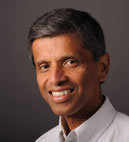
    <content type="text/html">&lt;p&gt;&lt;strong&gt;By James M. Mazurek&lt;/strong&gt;&lt;/p&gt;
&lt;p class="image-right"&gt;&lt;img src="http://forum2008.nd.edu/assets/4507/mazurek.jpg" title="mazurek.jpg" alt="mazurek.jpg" /&gt;&lt;/p&gt;
&lt;p&gt;Sustainability is commonly defined as the ability to meet the needs of the present without compromising the ability of future generations to meet their needs. It relates to the continuity of economic, social, institutional, and environmental aspects of human society, as well as the non-human environment.&lt;/p&gt;
&lt;p&gt;Beyond some sufficient level of continuous functioning, however, sustainability at a university represents more than just the mere ability to survive and get by. It also represents the shaping of new generations of leaders, as well as the institutional trade-offs that are made daily between equity, economics, aesthetics, and the environment.&lt;/p&gt;
&lt;p&gt;What does sustainability mean to a university? Quite simply, a lot. The core mission of a university is the education of its students. In order to meet the educational needs of generation after generation, the university needs to weave sustainability into its everyday undertakings—teaching and research—as well as core support needs such as energy, transportation, and food service.&lt;/p&gt;
&lt;p&gt;At Notre Dame, we view this as protecting what is special about our university and ensuring that future generations of students have the same richness of experiences as past and current students.&lt;/p&gt;
&lt;p&gt;Finally, there is the underlying notion that universities are a permanent long-term institution within society—and there is no greater place to catalyze change. Universities shape future business, civic, social, and educational leaders, and rooting sustainability into today’s students as a way of life will not only create future citizens who embrace sustainability into their everyday lives, but also develop teachers of sustainability to future generations.&lt;/p&gt;
&lt;p&gt;&lt;em&gt;James M. Mazurek ’91 is director of the &lt;a href="http://green.nd.edu"&gt;Office of Sustainability.&lt;/a&gt; Along with representatives from all segments of the campus community, the new office will lead sustainability efforts in such areas as energy, waste reduction, design &amp;amp; construction, procurement, transportation, food services, and water.&lt;/em&gt;&lt;/p&gt;
&lt;p&gt;&lt;em&gt;This entry is the final article in a 10-day series titled&lt;/em&gt; Perspectives on Sustainable Energy.&lt;/p&gt;</content>
    <author>
      <name>Notre Dame Forum 2008</name>
    </author>
  </entry>
  <entry>
    <id>tag:forum2008.nd.edu,2005:News/949</id>
    <published>2008-09-23T12:00:01-04:00</published>
    <updated>2008-09-15T15:14:38-04:00</updated>
    <link type="text/html" rel="alternate" href="http://forum2008.nd.edu/news/949-incorporating-sustainable-energy-practices-into-your-daily-life/" />
    <title>Incorporating sustainable energy practices into your daily life</title>
    <content type="text/html">&lt;p&gt;&lt;strong&gt;By Brandon Sparks&lt;/strong&gt;&lt;/p&gt;
&lt;p class="image-right"&gt;&lt;img src="http://forum2008.nd.edu/assets/4509/sparks.jpg" title="sparks.jpg" alt="sparks.jpg" /&gt;&lt;/p&gt;
&lt;p&gt;Large corporations will play a large role in charting a sustainable energy future, but individuals can also impact the future.&lt;/p&gt;
&lt;p&gt;The greatest role an individual can play is in saving energy. Not only does this action often lead to monetary benefit, but it also affects and pressures industries in a way that will lead to a sustainable energy future.&lt;/p&gt;
&lt;p&gt;Saving energy is easy. First, focus on petroleum products.&lt;/p&gt;
&lt;p&gt;Cut down on gas by driving smarter and less often. Remember to coast, avoid idling for long periods of time, carpool with friends, keep your tires properly inflated, and get regular tune-ups. Ride a bike and walk to save energy, but just as importantly to get some fresh air and appreciate nature. If your home is heated by natural gas (or electricity), keep the temperature colder in the winter and wear a sweatshirt. Remember to call your energy company and get on a budget plan to also avoid higher bills in the winter.&lt;/p&gt;
&lt;p&gt;Other daily practices can help with lowering electricity use. The most obvious is turning off lights. Never leave your room or house with a light on. Also invest in compact fluorescent bulbs; though the price may be higher at the initial purchase, the long-term benefits are tremendous. At night, turn off your computer and power strip. When you are not using your computer during the day, at least put it in sleep mode. Most computers also have power-saving options, which not only save battery power but also lower energy use when plugged in. Keep track of your phone while it is charging; a fully charged phone still draws power from the outlet.&lt;/p&gt;
&lt;p&gt;Last, reuse materials that would otherwise be thrown away. Plastic bags and water bottles are the easiest to reuse. A better investment is to purchase a metal water bottle and canvas bags in order to remove yourself completely from the use of plastic bags and bottles. Remember to recycle whenever possible, as well.&lt;/p&gt;
&lt;p&gt;Most importantly, be conscious of your daily energy use, and you will be able to come up with creative and useful ways to play your part in creating a sustainable energy future.&lt;/p&gt;
&lt;p&gt;&lt;em&gt;Brandon Sparks is a senior in Notre Dame’s Glynn Family Honors Program, majoring in anthropology and the Arts and Letters Pre-Professional Program. He has been active in the University’s sustainable energy and environmental efforts as a member of the post-Forum planning committee and co-chair of the student committee for the 2008 Forum.&lt;/em&gt;&lt;/p&gt;
&lt;p&gt;&lt;em&gt;This article is part of a 10-day series titled&lt;/em&gt; Perspectives on Sustainable Energy. &lt;em&gt;Subscribe &lt;a href="http://forum2008.nd.edu/stay-involved/"&gt;here&lt;/a&gt; for updates.&lt;/em&gt;&lt;/p&gt;</content>
    <author>
      <name>Notre Dame Forum 2008</name>
    </author>
  </entry>
  <entry>
    <id>tag:forum2008.nd.edu,2005:News/948</id>
    <published>2008-09-22T12:00:01-04:00</published>
    <updated>2008-09-22T22:41:14-04:00</updated>
    <link type="text/html" rel="alternate" href="http://forum2008.nd.edu/news/948-the-center-for-building-communities-saving-energy-locally-and-collaboratively/" />
    <title>The Center for Building Communities: Saving energy locally and collaboratively</title>
    <content type="text/html">&lt;p&gt;&lt;strong&gt;By Sallie Hood and Ron Sakal&lt;/strong&gt;&lt;/p&gt;
&lt;p class="image-right"&gt;&lt;img src="http://forum2008.nd.edu/assets/4508/sakal_and_hood.jpg" title="sakal_and_hood.jpg" alt="sakal_and_hood.jpg" /&gt;&lt;/p&gt;
&lt;p&gt;In the film &amp;#8220;An Inconvenient Truth,&amp;#8221; Al Gore urged Americans to drive less, but he failed to mention how the places we live in are designed to keep us behind the wheel. Outside of campus, most of us have to drive in order to do much of anything, no matter how high gas prices go.&lt;/p&gt;
&lt;p&gt;We need to recognize and change these patterns so we can live better while using less energy. Alternative fuels may help, but in the long run, good urban design is more sustainable—and more healthy and fun. Everyone should be able to live in places that offer inviting options to walk to work, school, church, and a variety of errands and entertainment.&lt;/p&gt;
&lt;p&gt;The Center for Building Communities (&lt;span class="caps"&gt;CBC&lt;/span&gt;) in the School of Architecture (&lt;a href="http://buildingcommunities.nd.edu"&gt;buildingcommunities.nd.edu&lt;/a&gt;) is dedicated to changing urban design patterns by redeveloping existing communities to make them pedestrian-friendly. Among other things, that involves reclaiming surface parking lots for higher, better, and more beautiful uses (while putting necessary parking into structures and underground); allowing apartments over stores; and redesigning streets.&lt;/p&gt;
&lt;p&gt;The process of changing urban design involves learning from the past. As Michael Lykoudis, Dean of the School of Architecture, said earlier this year in Traditional Building magazine, &amp;#8220;When we select knowledge from history, we can be eclectic; it’s all there for us to put together in synthesis for the best possible outcome.&amp;#8221; (&lt;a href="http://www.traditional-building.com/FebRoundtable08_pg1.html"&gt;http://www.traditional-building.com/FebRoundtable08_pg1.html&lt;/a&gt;)&lt;/p&gt;
&lt;p&gt;Changing urban design also involves working with other disciplines to keep up with the latest approaches, as we have done at Notre Dame with graphic and industrial design and with civil engineering. Students in the &lt;span class="caps"&gt;CBC&lt;/span&gt; have experienced wide-ranging collaboration in a variety of places—from Benton Harbor, Michigan, to the 90-block downtown Los Angeles Fashion District, to the western edge of this campus.&lt;/p&gt;
&lt;p&gt;Urban design isn&amp;#8217;t the only kind of pattern that needs to change: Underfunding of mass transit is also an issue right here in South Bend. Ironically, when we first came to teach here as visitors, we had to buy a car to travel from Chicago because the weekday South Shore train schedule is incompatible with a Notre Dame teaching schedule.&lt;/p&gt;
&lt;p&gt;We can all work at conserving energy in our daily lives, but we shouldn&amp;#8217;t lose sight of the often invisible patterns that need changing as well.&lt;/p&gt;
&lt;p&gt;&lt;em&gt;Sallie Hood and Ron Sakal are associate professor and professional specialist, respectively, in Notre Dame’s School of Architecture. Sakal is the executive director of the Center for Building Communities, and Hood is the director of design. They are principals in Sakal &amp;amp; Hood Architecture and Urban Design.&lt;/em&gt;&lt;/p&gt;
&lt;p&gt;_This article is part of a 10-day series titled _Perspectives on Sustainable Energy. &lt;em&gt;Subscribe &lt;a href="http://forum2008.nd.edu/stay-involved"&gt;here&lt;/a&gt; for updates.&lt;/em&gt;&lt;/p&gt;</content>
    <author>
      <name>Notre Dame Forum 2008</name>
    </author>
  </entry>
  <entry>
    <id>tag:forum2008.nd.edu,2005:News/988</id>
    <published>2008-09-21T12:00:01-04:00</published>
    <updated>2008-09-22T23:03:28-04:00</updated>
    <link type="text/html" rel="alternate" href="http://forum2008.nd.edu/news/988-a-student-perspective-on-energy-in-the-developing-world/" />
    <title>A student perspective on energy in the developing world</title>
    <content type="text/html">&lt;p class="image-right"&gt;&lt;img src="http://forum2008.nd.edu/assets/4722/michelle_byrne.jpg" title="Michelle Byrne" alt="Michelle Byrne" /&gt;&lt;/p&gt;
&lt;p&gt;&lt;strong&gt;By Michelle Byrne&lt;/strong&gt;&lt;/p&gt;
&lt;p&gt;The topic of sustainable energy is one that touches the lives of each of us. CEOs are seeking a &amp;#8220;green&amp;#8221; image for their company, current presidential candidates are preaching their solutions to the climate crisis, and local families are making financial decisions in response to rising energy costs.&lt;/p&gt;
&lt;p&gt;As Americans begin to feel the pinch, one billion other members of the global community suffer as well, and maybe most of all.  This sector of our human family also happens to be made up of the world&amp;#8217;s poorest, those living on less than $1 a day in the developing world.&lt;/p&gt;
&lt;p&gt;When leaving Uganda this summer, I was amazed to see the striking contrast between the dark expanse of land below as my flight departed and the vast networks of shining lights as I descended into New York City. Right now, those struggling to survive in regions of Sub-Saharan Africa and Southeast Asia simply are off the grid.&lt;/p&gt;
&lt;p&gt;Lack of energy resources is devastating for communities in that it limits economic development, stifles schools and hospitals, and forces household members to walk miles each day to retrieve firewood for heating and cooking. If poverty is to be alleviated in the developing world, energy access must be increased.&lt;/p&gt;
&lt;p&gt;In addition to suffering from a lack of energy in their home regions, the world&amp;#8217;s poorest are also forced to endure the problems imposed upon them by overconsumption in the first world. While the United States consumes over one-fifth of the world&amp;#8217;s total energy, the entire continent of Africa consumes a mere 3 percent. The high energy usage in wealthy nations leads to climate change issues such as coastal flooding, increased costs of aid, rising food prices, and decreased agricultural production. Lennart Bage of the United Nations notes this troubling reality, saying, &amp;#8220;Those least responsible for the problem will be hit first, and hardest.&amp;#8221;&lt;/p&gt;
&lt;p&gt;Here at our University, &amp;#8220;where learning becomes service to justice,&amp;#8221; we members of the Notre Dame family must consider the consequences of our lifestyles and seek innovative solutions that benefit all members of the global community. As the third world seeks energy resources in pursuit of development, it will be vital that the infrastructure and policies put in place are created with a focus on renewables and energy efficiency.&lt;/p&gt;
&lt;p&gt;“Charting a sustainable energy future&amp;quot; requires that we search not for ways to support our current consumption level, but rather for ways to achieve a world in which the whole human family can thrive.&lt;/p&gt;
&lt;p&gt;&lt;em&gt;Michelle Byrne is a senior studying Science-Business and Peace Studies. She is particularly interested in energy issues as they pertain to global sustainability, development, and the preferential option for the poor.&lt;/em&gt;&lt;/p&gt;</content>
    <author>
      <name>Notre Dame Forum 2008</name>
    </author>
  </entry>
  <entry>
    <id>tag:forum2008.nd.edu,2005:News/947</id>
    <published>2008-09-20T12:00:01-04:00</published>
    <updated>2008-09-15T16:10:03-04:00</updated>
    <link type="text/html" rel="alternate" href="http://forum2008.nd.edu/news/947-energy-policy-from-an-mba-students-perspective/" />
    <title>Energy policy: an MBA student’s perspective</title>
    <content type="text/html">&lt;p&gt;&lt;strong&gt;By Joe Kindt&lt;/strong&gt;&lt;/p&gt;
&lt;p class="image-right"&gt;&lt;img src="http://forum2008.nd.edu/assets/4506/kindt.jpg" title="kindt.jpg" alt="kindt.jpg" /&gt;&lt;/p&gt;
&lt;p&gt;A nation’s economic development is tethered to its ability to produce energy. From the English industrial revolution, triggered by coal-fired steam engines, to today’s Chinese economic boom, backed by the construction of one coal-fired power plant per week, economies have long been concerned with harnessing greater production power.  A nation with a sound energy policy that promotes sustainability will foster a healthy business economy.&lt;/p&gt;
&lt;p&gt;Although there are many examples of energy&amp;#8217;s impact on an economy, most apparent today is the cost of oil and its impact on the transportation of goods around the world. As transportation costs have increased, the prices of goods and services have risen, while companies’ profits have fallen. While an economy tends to correct itself over time, these shocks will affect a company’s profits, employment, and overall strategy in the coming years. Fiscal growth is stunted.  Navigating these economic shocks can be quite difficult and disruptive for business leaders.&lt;/p&gt;
&lt;p&gt;The economic goal of a national energy policy should consequently be to promote stability and growth. The ecological impact of energy production and distribution must be considered as foreseeable future shocks to an economy. The eventual disappearance of fossil fuels will affect energy prices if an economy is unprepared for their absence.&lt;/p&gt;
&lt;p&gt;Energy policy is the political foundation on which a nation’s businesses and industries grow. Governments around the globe must concern themselves with crafting sound energy policies that focus on avoiding and smoothing the shocks that limited and potentially harmful resources can cause. Countries that understand and address the linkage between energy and the economy will thrive, while those that do not will be jolted by instability. (Peter Fairley, &lt;em&gt;Technology Review,&lt;/em&gt; January 1, 2007)&lt;/p&gt;
&lt;p&gt;&lt;em&gt;Joe Kindt is a second-year &lt;span class="caps"&gt;MBA&lt;/span&gt; candidate at the Mendoza College of Business. His specialization is in energy marketing and strategy, and he is on the Core Leadership Team of GreeND.&lt;/em&gt;&lt;/p&gt;
&lt;p&gt;&lt;em&gt;This article appears as part of a 10-day series&lt;/em&gt; titled Perspectives on Sustainable Energy. &lt;em&gt;Subscribe for updates &amp;quot;here.&lt;/em&gt;&amp;quot;:/stay-involved/&lt;/p&gt;</content>
    <author>
      <name>Notre Dame Forum 2008</name>
    </author>
  </entry>
  <entry>
    <id>tag:forum2008.nd.edu,2005:News/946</id>
    <published>2008-09-19T12:00:01-04:00</published>
    <updated>2008-09-22T22:39:03-04:00</updated>
    <link type="text/html" rel="alternate" href="http://forum2008.nd.edu/news/946-research-at-notre-dame-designing-next-generation-solar-cells/" />
    <title>Research at Notre Dame: designing next-generation solar cells</title>
    <content type="text/html">&lt;p&gt;&lt;strong&gt;By Prashant V. Kamat&lt;/strong&gt;&lt;/p&gt;
&lt;p class="image-right"&gt;&lt;img src="http://forum2008.nd.edu/assets/4504/kamat.jpg" title="kamat.jpg" alt="kamat.jpg" /&gt;&lt;/p&gt;
&lt;p&gt;During the last century the worldwide population quadrupled and the energy demand increased by sixteen times. The exponential growth in the energy demand is exhausting our fossil fuel supply at an alarming rate. [1, 2]&lt;/p&gt;
&lt;p&gt;About 14 terawatts (TW) of energy is currently needed to sustain the lifestyles of 6.5 billion people worldwide. By the year 2050, we will need an additional 10 TW of environmentally clean alternative energy to sustain current lifestyles across the globe.&lt;/p&gt;
&lt;p&gt;Three major options are at our disposal to supply the additional 10 TW of clean energy in the coming years: carbon-neutral energy (fossil fuel in conjunction with carbon sequestration), nuclear power, and renewable energy.&lt;/p&gt;
&lt;p&gt;Although renewable energy, such as solar power, is ideal to meet the projected demand, it requires new initiatives to harvest solar photons with greater efficiency.[3, 4] The single crystal silicon-based photovoltaic devices that are commercially available deliver power with a 15% efficiency. These first generation devices suffer from high costs of manufacturing and installation.&lt;/p&gt;
&lt;p&gt;The second generation devices consisting of CuInGaSe2 (&lt;span class="caps"&gt;CIGS&lt;/span&gt;), or polycrystalline semiconductor thin films, can bring down the price significantly, but their efficiency must be enhanced to make them practically viable. Now being studied are the third generation devices that can deliver high efficiency while being economically feasible.  &lt;br /&gt;
The emergence of nanomaterials as the new building blocks to construct light energy harvesting assemblies has opened up new ways to develop next generation light energy conversion devices.&lt;sup class="footnote" id="fnr5"&gt;&lt;a href="#fn5"&gt;5&lt;/a&gt;&lt;/sup&gt;&lt;/p&gt;
&lt;p&gt;Department of Energy-funded research at Notre Dame has focused on three major pathways for designing light harvesting assemblies and implementing them in energy conversion devices. These include (1) mimicking photosynthesis with donor-acceptor molecular assemblies or clusters; (2i) semiconductor-assisted photocatalysis to produce fuels such as hydrogen; and (3) semiconductor nanocrystal-based solar cells.&lt;/p&gt;
&lt;p&gt;Efforts are being made to design organic and inorganic hybrid structures that exhibit improved selectivity and efficiency toward light-energy conversion. Of particular interest are the size-dependent properties such as quantization effects in semiconductor nanocrystals and quantized charging effects in metal nanoparticles. &lt;br /&gt;
The use of nanostructures with well defined geometrical shapes (e.g., solid and hollow spheres, prisms, rods, wires) and the ability to organize them into 2- and 3- dimensional assemblies will expand our capability to implement new strategies for light-energy conversion.&lt;/p&gt;
&lt;p&gt;&lt;strong&gt;Bibliography&lt;/strong&gt;&lt;/p&gt;
&lt;p&gt;1.	Hubbert, M. K., &lt;em&gt;The world&amp;#8217;s evolving energy system&lt;/em&gt;. Am. J. Phys., 1981, &lt;em&gt;49,&lt;/em&gt; 1007-1029.&lt;br /&gt;
2.	Weisz, P. B., &lt;em&gt;Basic Choices and Constraints on Long-Term Energy Supplies&lt;/em&gt;. Physics Today, 2004.&lt;br /&gt;
3.	Schiermeier, Q.; Tollefson, J.; Scully, T.; Witze, A.;Morton, O., &lt;em&gt;Energy alternatives: Electricity without carbon_. Nature, 2008,&lt;/em&gt; 454,_ 816-823.&lt;br /&gt;
4.	Armaroli, N.;Balzani, V., &lt;em&gt;The Future of Energy Supply: Challenges and Opportunities&lt;/em&gt; Angewandte Chemie-International Edition, 2007, &lt;em&gt;46,&lt;/em&gt; 52-66.&lt;br /&gt;
5.	Kamat, P. V., &lt;em&gt;Meeting the Clean Energy Demand: Nanostructure Architectures for Solar Energy Conversion.&lt;/em&gt; J. Phys. Chem. C, 2007, &lt;em&gt;111,&lt;/em&gt; 2834 &amp;#8211; 2860.&lt;/p&gt;
&lt;p&gt;&lt;em&gt;Prashant V. Kamat is professor of chemistry and biochemistry, a senior scientist at the Notre Dame Radiation Laboratory, a concurrent professor in the Department of Chemical and Biomolecular Engineering, and member of Notre Dame’s Energy Center. He has directed Department of Energy-funded solar photochemistry research for more than 20 years, with his work yielding many  publications and scholarly honors.&lt;/em&gt;&lt;/p&gt;
&lt;p&gt;&lt;em&gt;This article appears as part of a 10-day series titled&lt;/em&gt; Perspectives on Sustainable Energy. &lt;em&gt;Subscribe for updates &amp;quot;here.&lt;/em&gt;&amp;quot;:/stay-involved/&lt;/p&gt;</content>
    <author>
      <name>Notre Dame Forum 2008</name>
    </author>
  </entry>
  <entry>
    <id>tag:forum2008.nd.edu,2005:News/945</id>
    <published>2008-09-18T12:00:01-04:00</published>
    <updated>2008-09-15T15:18:00-04:00</updated>
    <link type="text/html" rel="alternate" href="http://forum2008.nd.edu/news/945-energy-the-environment-and-catholic-social-teaching/" />
    <title>Energy, the environment, and Catholic social teaching</title>
    <content type="text/html">&lt;p&gt;&lt;strong&gt;By Margaret Pfeil&lt;/strong&gt;&lt;/p&gt;
&lt;p&gt;From the perspective of the Catholic social tradition, care for the environment flows from grateful appreciation of the interdependence of all of God’s creation. As Pope Benedict &lt;span class="caps"&gt;XVI&lt;/span&gt; wrote in his 2008 World Day of Peace Message, “&amp;#8230;[I]t is essential to ‘sense’ that the earth is ‘our common home’ …”  (See also the &lt;em&gt;Compendium of the Social Doctrine of the Church,&lt;/em&gt; paragraphs 466-471, 481-487).&lt;/p&gt;
&lt;p&gt;Created_ imago Dei_ [in the image of God], human beings enjoy both the gift and the task of striving toward the fulfillment of the common good of all of God’s creation. The signs of the times—particularly the devastating effects of global climate change, together with wanton consumption and waste of the world’s energy resources—remind us that the protection and nurturing of human life and well-being require contemplative awareness of, and intentional care for, all of creation as the abundant fruit of God’s love.&lt;/p&gt;
&lt;p&gt;The _Compendium of the Social Doctrine of the Church _invites us to examine and form our consciences with a view toward living more sustainably: &lt;em&gt;“Serious ecological problems call for an effective change of mentality leading to the adoption of new lifestyles,&lt;/em&gt; ‘in which the quest for truth, beauty, goodness and communion with others for the sake of the common good are the factors that determine consumer choices, savings, and investments.’ These lifestyles should be inspired by sobriety, temperance, and self-discipline at both the individual and social levels” (paragraph 486, quoting from &lt;em&gt;Centesimus annus).&lt;/em&gt;&lt;/p&gt;
&lt;p&gt;The 2008 Forum offers members of the Notre Dame community the opportunity to discern our own ecological footprint. As we each form our consciences on this issue, some questions for reflection might be helpful: Thinking about my own habits of energy consumption, how do I see myself contributing to a sustainable energy future? Considering my own role in the university community and our common mission, what would I identify as “best practices” regarding energy consumption at both the personal and communal levels?&lt;/p&gt;
&lt;p&gt;&lt;em&gt;Margaret Pfeil is an assistant professor in the Department of Theology. She specializes in Catholic social thought and the development of moral doctrine. A widely published author, she is currently finishing a book,&lt;/em&gt; Social Sin: Social Reconciliation? &lt;em&gt;She is a founder and resident of the St. Peter Claver Catholic Worker House in South Bend.&lt;/em&gt;&lt;/p&gt;
&lt;p&gt;&lt;em&gt;This article appears as part of a 10-day series titled&lt;/em&gt; Perspectives on Sustainable Energy. &lt;em&gt;Subscribe for updates &amp;quot;here.&lt;/em&gt;&amp;quot;:stay-involved&lt;/p&gt;</content>
    <author>
      <name>Notre Dame Forum 2008</name>
    </author>
  </entry>
  <entry>
    <id>tag:forum2008.nd.edu,2005:News/944</id>
    <published>2008-09-17T12:00:01-04:00</published>
    <updated>2008-09-15T15:24:39-04:00</updated>
    <link type="text/html" rel="alternate" href="http://forum2008.nd.edu/news/944-food-services-energy-food-and-campus-lifestyle/" />
    <title>ND Food Services: energy, food and campus lifestyle</title>
    <content type="text/html">&lt;p&gt;&lt;strong&gt;By Jim Yarbrough&lt;/strong&gt;&lt;/p&gt;
&lt;p class="image-right"&gt;&lt;img src="http://forum2008.nd.edu/assets/4510/yarbrough.jpg" title="yarbrough.jpg" alt="yarbrough.jpg" /&gt;&lt;/p&gt;
&lt;p&gt;There’s a maxim that states, “You are what you eat.” I think it is time we started to use a new phrase: “You are what you recycle,” or, “You are the contribution you make to the environment.”&lt;/p&gt;
&lt;p&gt;We live in an era when sustainability and energy have become major issues on every agenda.&lt;/p&gt;
&lt;p&gt;Several years ago, Notre Dame Food Services formed a Social Responsibility Committee that focuses on local purchases, fair-trade products, animal welfare, and environmental issues. The work of the committee filters down to the cooks that prepare your food, the staff that serves your food, and those responsible for maintaining our facilities.&lt;/p&gt;
&lt;p&gt;In each area of Food Services, there is a Sustainable Representative that is chosen for their interest in the issues I mentioned. They guide and train staff members to be good stewards of our planet.&lt;/p&gt;
&lt;p&gt;The Social Responsibility Committee has facilitated the development of the Indiana College and University Food Alliance (&lt;span class="caps"&gt;ICUFA&lt;/span&gt;), which works with the Indiana State Department of Agriculture to develop farm-to-school programs that promote distribution of locally produced goods by in-state farmers.&lt;/p&gt;
&lt;p&gt;Food Services has just completed a multi-faceted Campus Sustainable Food Plan that includes plans for improvement in the areas of local food purchases, organic and sustainably produced food, use of eco-friendly to-go containers, reducing and recycling food waste, sustainable production and delivery from our vendor partners, reducing and recycling packaging, and outreach to the campus community.&lt;/p&gt;
&lt;p&gt;We want to take the knowledge we have acquired over the past couple of years and educate those who live and work on our campus. We have activities planned for the upcoming year that will actively involve students in developing metrics for the waste we generate in our dining halls. We will use those metrics to develop marketing materials that show students the impact they can make on their environment.&lt;/p&gt;
&lt;p&gt;I had the opportunity to facilitate a group during the January 28, 2008, Green Summit II. It was exciting to see the concern displayed by our students and campus staff members and their willingness to make changes that can preserve resources.&lt;/p&gt;
&lt;p&gt;It is rewarding when you see Food Service staff bringing flashlight batteries from home to put in our battery recycling containers or you see staff pulling a cardboard box from the outgoing trash and breaking it down to be recycled.&lt;/p&gt;
&lt;p&gt;They understand our sustainability vision is to “meet the needs of the present without compromising the ability of future generations to meet their own needs.”&lt;/p&gt;
&lt;p&gt;&lt;em&gt;Jim Yarbrough is the Senior Associate Director for Residential Operations and has been with Notre Dame Food Services for 19 years. Jim is also the Chairman of the Social Responsibility Committee.&lt;/em&gt;&lt;/p&gt;
&lt;p&gt;&lt;em&gt;This article appears as part of a 10-day series titled&lt;/em&gt; Perpsectives on Sustainable Energy. &lt;em&gt;Subscribe for updates &amp;quot;here.&lt;/em&gt;&amp;quot;:/stay-involved&lt;/p&gt;</content>
    <author>
      <name>Notre Dame Forum 2008</name>
    </author>
  </entry>
  <entry>
    <id>tag:forum2008.nd.edu,2005:News/943</id>
    <published>2008-09-16T12:00:01-04:00</published>
    <updated>2008-09-16T16:02:19-04:00</updated>
    <link type="text/html" rel="alternate" href="http://forum2008.nd.edu/news/943-a-student-intern-returns-energy-policy-the-beltway-and-the-nd-way/" />
    <title>A student intern returns: Energy policy, the Beltway, and the ND way</title>
    <content type="text/html">&lt;p&gt;&lt;strong&gt;By Colleen Kelly&lt;/strong&gt;&lt;/p&gt;
&lt;p class="image-right"&gt;&lt;img src="http://forum2008.nd.edu/assets/4505/kelly.jpg" title="kelly.jpg" alt="kelly.jpg" /&gt;&lt;/p&gt;
&lt;p&gt;I am the stereotypical idealistic student. I strongly believe that creativity and ingenuity can solve any seemingly insurmountable problem. In particular, the energy crisis is one of those solvable problems. The complex and multi-faceted energy concerns including dwindling supply, increasing demand, environmental degradation, geopolitical unrest, and infrastructure problems can all be resolved.&lt;/p&gt;
&lt;p&gt;However, my idealism was shaken when I went to Washington, D.C.&lt;/p&gt;
&lt;p&gt;I interned in the office of Senator Richard Lugar, the senior senator from Indiana and a major player in energy policy. I had come to D.C. to learn, be inspired, and be part of the change. Yet, after only a few short weeks, I became discouraged.&lt;/p&gt;
&lt;p&gt;The partisanship I experienced in D.C. was slightly unnerving. I witnessed many passionate debates between Senators, staffers, and citizens, but inaction caused by partisanship seemed to persist. Debate is effective, except when consensus or compromise is not reached. With high gas prices and a floundering economy, energy concerns were propelled to the forefront of public consciousness and political debate. But sadly, politics were inhibiting government from solving these issues.&lt;/p&gt;
&lt;p&gt;In this polarized environment, I saw a great deal of hope. Senator Lugar is a man of integrity who demonstrated the importance and success of bipartisanship. He spent a great deal of time with my fellow interns and me, explaining the complexities of issues and the vicious political battles. Even though politics can interfere, I met and worked with many people who understood the value of collaboration, not only in government but among government, citizens, and industry.&lt;/p&gt;
&lt;p&gt;Returning to school this year, my idealism has been tempered, but I am more confident that the energy crisis will be solved. The solution is not just a specific technology or a lifestyle adjustment. I have no doubt that technological advancements will be made. The most important components are collaboration and cooperation.&lt;/p&gt;
&lt;p&gt;As the English philosopher Bertrand Russell once declared, “The only thing that will redeem mankind is cooperation.” The energy crisis is in good hands. I serve as the Vice President of GreeND, the newly emerging Notre Dame energy and environmental student organization.  I have seen the passion, teamwork, and perseverance of the students I work with, and I hope these sentiments translate into the real world. There are different ways to combat the problem, but I have witnessed a renewal of the movement. The politicians could take a page out of my colleagues’ books.&lt;/p&gt;
&lt;p&gt;The energy of the students is my new idealism.&lt;/p&gt;
&lt;p&gt;&lt;em&gt;Collen Kelly ’10,  an economics major, is the vice president of GreeND, a representative on the University’s Energy and Environmental Issues Committee, and a member of the student advisory board fo Notre Dame’s Energy Center. She led a pilot program last year for Game Day Recycling.&lt;/em&gt;&lt;/p&gt;
&lt;p&gt;&lt;em&gt;This article appears on as part of a 10-day series titled&lt;/em&gt; Perspectives on Sustainable Energy. &lt;em&gt;Subscribe for updates &amp;quot;here.&lt;/em&gt;&amp;quot;:/stay-involved&lt;/p&gt;</content>
    <author>
      <name>Notre Dame Forum 2008</name>
    </author>
  </entry>
  <entry>
    <id>tag:forum2008.nd.edu,2005:News/942</id>
    <published>2008-09-15T12:05:01-04:00</published>
    <updated>2008-09-16T09:33:06-04:00</updated>
    <link type="text/html" rel="alternate" href="http://forum2008.nd.edu/news/942-the-challenges-and-interdisciplinary-approaches/" />
    <title>Challenges and interdisciplinary approaches</title>
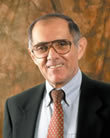
    <content type="text/html">&lt;p&gt;&lt;strong&gt;By Frank Incropera&lt;/strong&gt;&lt;/p&gt;
&lt;p class="image-right"&gt;&lt;img src="http://forum2008.nd.edu/assets/4098/fincropera.jpg" title="fincropera.jpg" alt="fincropera.jpg" /&gt;&lt;/p&gt;
&lt;p&gt;What kind of energy future would we like to see? Few would argue with continued access to abundant, low-cost energy supplies or elimination of energy as a barrier to economic development. We would probably also agree that supplies should be adequate to meet the basic needs of all humankind and accessible without geopolitical tensions or having to turn a blind eye to energy-rich but autocratic governments given to the abuse of human rights. And, finally, we would want energy to be used in an environmentally benign and sustainable manner. Regrettably, these conditions do not exist today, nor are they likely to be achieved any time soon.&lt;/p&gt;
&lt;p&gt;Today, the world depends on nonrenewable fossil fuels for more than 80% of its primary energy. In the U.S., this dependence is close to 85%. However, new oil fields are becoming more difficult to find and develop, and within two decades the same will be said for natural gas. Global markets for these fuels are strongly influenced by geopolitical rivalries, and today’s investments in exploration may not yield meaningful supplies for a decade or more. At some point, conditions will be marked by scarcity, first of oil and later natural gas.&lt;/p&gt;
&lt;p&gt;Abundant coal in nations with large appetites for energy insures use of this fuel throughout the 21st century. But, will it be used in an environmentally acceptable manner? Coal-fired power plants are the world’s largest source of carbon emissions. Technologies for capturing and sequestering the carbon have yet to be demonstrated, and even then it could be decades before implementation is widespread.&lt;/p&gt;
&lt;p&gt;As we look beyond fossil fuels, we inevitably turn to renewable sources of energy, such as solar, wind, geothermal and biofuels, as well as to nuclear energy. Renewables must provide an increasing share of the world’s energy portfolio, but they are not without limitations and their contribution to global energy consumption is currently small, less than 1% for solar, wind and geothermal energy combined. Even with rapid growth, it could be many years before renewables have a significant effect, and the hope that they will one day meet all needs is not likely to be realized in this century. While today nuclear power contributes significantly to global demand for electricity, its future is clouded by concerns for disposal of waste materials.&lt;/p&gt;
&lt;p&gt;So, where do we go from here? Do we turn to Washington for guidance? Unfortunately, for decades the nation has lacked any semblance of a comprehensive energy policy. While politicians are fond of rhetoric such as energy independence, partisanship, special interests and ideology have done little to improve the nation’s energy security. Meanwhile, dependence on energy imports continues to grow, contributing greatly to the nation’s burgeoning current account deficit and an unprecedented transfer of wealth to autocratic, if not hostile, nations.&lt;/p&gt;
&lt;p&gt;So, what should be done? Well, for starters the nation needs a well defined road map, one having near and long term objectives that are executable and sensitive to both environmental and economic issues. Here are some suggestions.&lt;/p&gt;
&lt;p&gt;The U.S. should set a firm goal, with specific implementation measures, to generate 25% of its electricity from renewables by 2025. It can be done. Denmark already generates 20% of its electricity from wind alone, and Germany is on track to generate as much from renewables by 2015. But, renewables aren’t enough, and although natural gas is gaining great favor in the halls of Congress, it would be a mistake to increase the use of gas-fired power plants or, for that matter, compressed natural gas vehicles. Yes, natural gas is a relatively clean fuel and yes the U.S. is experiencing resurgent gas production, but by increasing consumption we would embark on the same journey that led to our current dependence on imported oil. We don’t want to take that trip. So, what’s left?&lt;/p&gt;
&lt;p&gt;Despite inherent environmental issues, the use of coal and nuclear energy for power production can’t be neglected. Coal is abundant and relatively inexpensive and, like it or not, it will be used. But, it must be used responsibly. The development of reliable and scalable technologies for capturing and permanently sequestering carbon dioxide should therefore be accelerated and ready for implementation by 2020. Until that time, no permits should be issued for the construction of new coal-fired power plants. The same can not be said for nuclear power plants.&lt;/p&gt;
&lt;p&gt;Although there are fuel issues yet to be resolved, the time is at hand to increase the contribution of nuclear power to the nation’s supply of electricity. But, construction of new plants should be concurrent with transition from an open to a closed fuel cycle. That is, spent fuel rods should be reprocessed to increase the efficiency of fuel utilization and to reduce the amount of nuclear wastes that must be stored. To those who are opposed to nuclear power, yet are concerned about global warming, I would argue that, for the foreseeable future, increased use of nuclear power is essential if we are to reduce our greenhouse gas emissions.&lt;/p&gt;
&lt;p&gt;And yes, the U.S. should continue to develop domestic sources of oil and gas, but mindful of the fact that our consumption of these fuels is excessively disproportionate to our remaining reserves. If the mood of the nation is to expand off-shore exploration for oil, so be it. But, let’s not delude ourselves. That oil will not provide short-term relief to prices at the pump, and long-term it will do little more than reduce the rate of declining domestic production. Excluding the long-term potential of shale oil, which has its unique problems, the U.S. is no longer among the oil rich nations of the world. So let’s keep drilling, but make no mistake. Regardless of the pace at which domestic sources are tapped, continued consumption at current levels will only exacerbate future dependence on imports, while diminishing domestic supplies available to future generations.&lt;/p&gt;
&lt;p&gt;Enough said about energy supply. Let’s examine the demand side of the energy equation.&lt;br /&gt;
There is no dearth of suitable targets for reducing energy consumption by increasing energy efficiency, from appliances, lighting, computers and space heating/cooling systems to power plants, automated electricity distribution systems, automobiles and aircraft. More can be done in each of these categories, enabled by an ever present reservoir of human ingenuity. The automotive sector is an especially attractive target. The 2007 federal mandate of achieving a fleet average efficiency of 35 mpg by 2020 for light duty vehicles is hardly a stretch target. It is doable with today’s technologies. How about 45 mpg by 2020?&lt;/p&gt;
&lt;p&gt;The U.S. should commit to achieving a one-third reduction in fossil fuel consumption for automotive transportation by 2025. The goal could be achieved by combining higher vehicle fuel efficiency standards with increased use of hybrid vehicles and biofuels derived from non food sources, as well as investments in modernizing and expanding public transportation systems.&lt;/p&gt;
&lt;p&gt;Now, let’s address an issue that politicians are loathe to confront and one that may well subject me to an angry tirade. It’s the C-word, but I’m not referring to cancer. We Americans have become nothing short of reckless in our use of energy. If we are to successfully deal with our energy problems, we must adopt a mindset that values energy conservation. On average and at any instant, Americans consume energy at a rate of 12 kilowatts (kW), six times the global average and more than 20 times that of the world’s poorest nations. Yes, you might say, but look at the size of our economy. Even there we fair poorly, with energy consumption per &lt;span class="caps"&gt;GDP&lt;/span&gt; well above that of many nations.&lt;/p&gt;
&lt;p&gt;In a 2004 book entitled &lt;em&gt;The End of Oil,&lt;/em&gt; Paul Roberts attributes a substantial portion of the blame for the nation’s energy problems to the average American consumer, “who each year seems to know less, and care less, about how much energy he or she uses, where it comes from, or what its true costs are. Americans, it seems, suffer profoundly from what soon may be known as energy illiteracy: most of us understand so little about our energy economy that we have no idea that it has begun to fall apart.” Strong words, indeed. But even now with high gasoline prices and greater public concern, they retain an element of truth.&lt;/p&gt;
&lt;p&gt;Can we become a 6 kW per person nation by 2025, recognizing that countries such as Germany and Japan are already below this level and may well be at 4 kW by then, while still maintaining vibrant, globally competitive economies? As a nation operating at 5 kW per person and aspiring to reach 2 kW, Switzerland provides a gold standard. They’re not likely to achieve such an ambitious goal, but it’s become part of the national psyche, and they will make progress.&lt;/p&gt;
&lt;p&gt;When it comes to energy, time is a luxury that the U.S. can ill afford. It must begin to implement a suite of short- and long-term measures that make a difference and to do so with a sense of urgency. And, we must recognize that there is no silver bullet. All options must be embraced, including environmentally responsible use of fossil fuels and nuclear energy, as well as accelerated implementation of renewables and energy efficiency and conservation measures. Attention must be paid to both the supply and demand sides of the energy equation, maintaining adequate levels of the former and doing our best to reduce the latter. It could be argued that energy efficiency and conservation provide our most immediate and substantive sources of new energy.&lt;/p&gt;
&lt;p&gt;Although the foregoing paragraphs have addressed energy in the context of domestic needs, it’s also important for Americans to think and act globally, particularly in managing relations with energy exporting nations and in responding to the needs of billions of people lacking access to the energy required for an acceptable standard of living. With a ten-fold or more difference in per capita energy consumption between developed and impoverished or developing nations, energy is clearly a differentiator between the haves and the have-nots, one that’s unacceptable as a permanent condition. Western nations have a responsibility to assist poorer nations in developing efficient and clean sources of energy that enable a transition from poverty. And, recognizing that climate change is likely to disproportionately affect the world’s poorest populations, high priority should be given by all nations to reducing greenhouse gas emissions.&lt;/p&gt;
&lt;p&gt;Several years ago I read Thomas Cahill’s book on &lt;em&gt;How the Irish Saved Civilization,&lt;/em&gt; and I was struck by an analogy that could be drawn. As a precursor to describing the transition of western civilization from the classical world to the medieval period, Cahill took a stab at delineating reasons for the fall of Rome, which ranged from “inner weakness” to “outer pressure.” In summary, however, he made an insightful characterization which may well apply to America’s treatment of energy issues over the past three decades. To quote Cahill: “What we can now say with confidence is that Rome fell gradually and that Romans for many decades scarcely noticed what was happening.” They simply didn’t see it coming, or perhaps if they had an inkling, they didn’t want to acknowledge it. Life was still too good.&lt;/p&gt;
&lt;p&gt;The nation’s energy problems go well beyond the price of gasoline at the pump. They must be viewed more clearly and comprehensively, and as Americans, we must all be part of the solution.&lt;/p&gt;
&lt;p&gt;&lt;em&gt;Frank Incropera is Clifford and Evelyn Brosey Professor of Mechanical Engineering and former dean of Notre Dame’s College of Engineering. He teaches and conducts research on energy issues, including the role of public policy and geopolitical considerations.&lt;/em&gt;&lt;/p&gt;
&lt;p&gt;&lt;em&gt;This article appears on as part of a 10-day series titled&lt;/em&gt; Perspectives on Sustainable Energy. &lt;em&gt;Subscribe for updates &amp;quot;here.&lt;/em&gt;&amp;quot;:/stay-involved&lt;/p&gt;</content>
    <author>
      <name>Notre Dame Forum 2008</name>
    </author>
  </entry>
</feed>