<?xml version="1.0" encoding="UTF-8"?>
<?xml-stylesheet type="text/xsl" href="/stylesheets/feed.atom.xml" media="screen"?>
<feed xml:lang="en-US" xmlns="http://www.w3.org/2005/Atom">
  <id>tag:al.nd.edu,2005:/news/latest-news/category/alumni</id>
  <link rel="alternate" type="text/html" href="https://al.nd.edu"/>
  <link rel="self" type="application/atom+xml" href="https://al.nd.edu/news/latest-news/category/alumni.atom"/>
  <id>tag:al.nd.edu,2005:/latest</id>
  <title>Alumni | College of Arts &amp; Letters | Latest News</title>
  <updated>2026-04-29T10:10:00-04:00</updated>
  <link rel="alternate" type="text/html" href="https://al.nd.edu/"/>
  <link rel="self" type="application/atom+xml" href="https://al.nd.edu//news/latest-news.atom"/>
  <subtitle>Notre Dame’s College of Arts and Letters challenges graduate and undergraduate students in the liberal arts to ask the great questions as they pursue their intellectual passions in the arts, humanities, and social sciences.</subtitle>
  <entry>
    <id>tag:al.nd.edu,2005:News/181221</id>
    <published>2026-04-29T10:10:00-04:00</published>
    <updated>2026-04-29T11:11:13-04:00</updated>
    <link rel="alternate" type="text/html" href="https://al.nd.edu/news/latest-news/notre-dame-alumna-dolores-diaz-returns-to-campus-for-staged-reading-of-george-washingtons-mexican-birthday/"/>
    <title>Alumna Dolores Díaz ’05 connects with students through her play &lt;i&gt; George Washington’s Mexican Birthday &lt;/i&gt;</title>
    <summary type="text">
      <![CDATA[Playwright and Notre Dame alumna Dolores Díaz returned to campus for a staged reading of her play, George Washington’s Mexican Birthday, and a day of conversation with students and faculty.]]>
    </summary>
    <content type="html">
      <![CDATA[<figure class="image image-right"><img src="https://latinostudies.nd.edu/assets/657298/gwmb_2_1_.webp" alt='A diverse group of 12 smiling people stand on a stage with a black background. One person wears a "DEBARTOLO ARTS CENTER" shirt.' width="600" height="401">
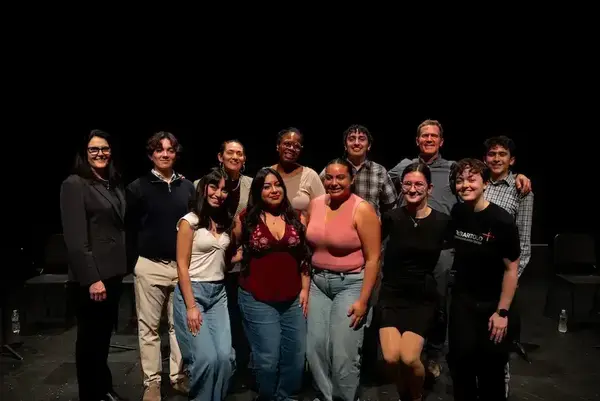
<figcaption>Playwright Dolores Díaz (2nd row, 3rd from left) with University of Notre Dame students and faculty on stage at the DeBartolo Performing Arts Center following the staged reading of <em>George Washington’s Mexican Birthday.</em></figcaption>
</figure>
<p>Playwright and University of Notre Dame alumna Dolores Díaz ’05 returned to campus on March 26 for a staged reading of her play <em>George Washington’s Mexican Birthday</em> at the DeBartolo Performing Arts Center.</p>
<p>Set in Laredo, Texas, the play follows a group of high school students preparing for the city’s George Washington birthday celebration — a setting Díaz uses to explore identity, ambition, radicalization, and the pressures placed on Latiné students as they imagine their futures. It was originally developed at the 2024 Goodman Theatre New Stages Festival. </p>
<p>Directed by Gabrielle Randle-Bent, the reading was followed by a post-show conversation moderated by <a href="https://ftt.nd.edu/people/anne-garcia-romero/">Anne García-Romero</a>, professor in the <a href="https://ftt.nd.edu/">Department of Film, Television, and Theatre</a> and faculty fellow with the <a href="https://latinostudies.nd.edu/">Institute for Latino Studies</a>.</p>
<p>Student participation was central to the performance. The cast and production team included students Ryan Madrid, Eny Ramirez, Jenisse Jarquin, Diego Ramos, and Annika Fernandez, along with Notre Dame alumnus Timothy Merkle and local professional actor Jared Fernley. The visit also extended into the classroom, with Díaz and Randle-Bent visiting García-Romero’s “Playwriting” and “Adaptation” courses, as well as associate professor Sarah Gitenstein’s “Acting and Directing New Work for the Stage.” </p>
<p>Annika Fernandez, an undergraduate who participated in the staged reading and played Magdalena Santos, said the experience pushed her into unfamiliar but rewarding territory.</p>
<p>“Although I had no prior acting experience and felt hesitant at first, learning more about the storyline sparked my curiosity about the character and encouraged me to take on the role,” Fernandez said.</p>
<p>Fernandez also added that working with Díaz, Randle-Bent, and the rest of the cast was “truly a rewarding experience,” and that the rehearsal process revealed “the level of commitment and passion shared among the entire team.”</p>
<p>Stephania Sanchez, an ILS Latino Studies Merit Scholar, served as an undergraduate research assistant on the project and said the play’s themes resonated deeply.</p>
<p>“Serving as an undergraduate research assistant on this project was especially meaningful, as its themes of Hispanic labeling, navigating multiple identities, and cultural celebration deeply resonated with me,” she said. “Bringing Dolores Díaz back to Notre Dame as an alumna felt powerful, and her work skillfully builds tension for characters you might initially dismiss and ultimately challenge your assumptions.”</p>
<figure class="image image-left"><img src="https://latinostudies.nd.edu/assets/657300/gwmb_3_1_.webp" alt="Six smiling people: three women in white, maroon, and pink tops; three men in plaid and blue shirts, on a dark stage." width="600" height="401">
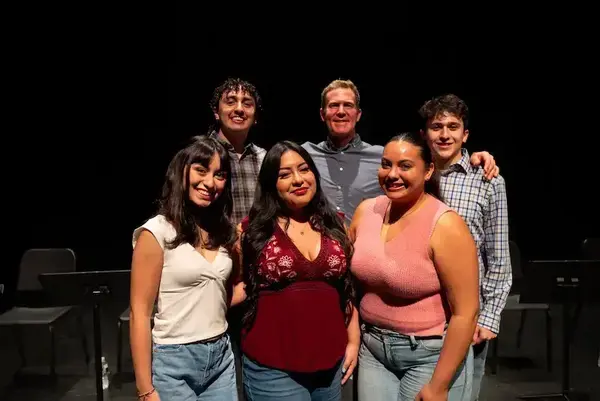
<figcaption>Student performers and faculty gather on stage following the staged reading of <em>George Washington’s Mexican Birthday</em> at the DeBartolo Performing Arts Center.</figcaption>
</figure>
<p>Sanchez added that students walked away with “a deeper understanding of identity and a renewed appreciation for storytelling as a way to humanize complex experiences.”</p>
<p>The reading was co-sponsored by the FTT, ILS’ literary initiative Letras Latinas, the Franco Family Institute for Liberal Arts and the Public Good, and the Teaching Beyond the Classroom program provided by Mr. Earl Linehan and Mrs. Darielle Linehan. The event also grew out of a larger collaboration between ILS and FTT. </p>
<p>Before the performance, Díaz also met with students for an informal conversation in Bond Hall, discussing growing up in Texas, her path from science to the arts, and the questions of identity and belonging that shape her work. She also reflected on how leaving home can make identity suddenly feel newly visible. </p>
<p>“You don’t really think about our identity,” she said, “because it just feels like home.”</p>
<p>That tension between home, perception, and self-definition was central to the day’s conversations. Díaz told students that some of the play’s questions grew out of her own experience coming to Notre Dame and encountering new expectations around how identity is understood and categorized.</p>
<p>She spoke candidly about the challenge of finding belonging on campus, recalling that “it took me a while to find my people.” In another moment, she described her artistic interests as grounded in places where “identity is unstable enough that it is both serious and at times absurd,” a line that helps illuminate the play’s tone and its layered treatment of race, performance, and belonging.</p>
<p>Díaz’s visit brought students into conversation not only with a working playwright but also with an alumna who reflected openly on the path that took her from South Texas to Notre Dame and eventually to the stage. </p>
<p>“Focus on the work,” she told students. “Focus on what you can control.”</p>
<p class="attribution">Originally published by <span class="rel-author">Parker Gaines</span> at <span class="rel-source"><a href="https://latinostudies.nd.edu/news-events/news/notre-dame-alumna-dolores-diaz-returns-to-campus-for-staged-reading-of-george-washingtons-mexican-birthday/">latinostudies.nd.edu</a></span> on <span class="rel-pubdate">April 23, 2026</span>.</p>]]>
    </content>
    <link rel="enclosure" type="image/webp" href="https://al.nd.edu/assets/657936/gwmb_2_1_.webp" title="A diverse group of 12 smiling people stand on a stage with a black background. One person wears a &quot;DEBARTOLO ARTS CENTER&quot; shirt."/>
    <author>
      <name>Parker Gaines</name>
    </author>
  </entry>
  <entry>
    <id>tag:al.nd.edu,2005:News/180664</id>
    <published>2026-04-08T10:58:00-04:00</published>
    <updated>2026-04-08T10:59:52-04:00</updated>
    <link rel="alternate" type="text/html" href="https://al.nd.edu/news/latest-news/passing-the-mic/"/>
    <title>Passing the mic: Sociology major Victoria Erdel Garcia ’19 finds purpose shining light on the underserved</title>
    <summary type="text">
      <![CDATA[Victoria Erdel Garcia ’19 was known on campus as the girl obsessed with fighting trafficking. She was drawn to the issue because victims’ stories rarely sustained attention—and too often elicited only sympathy. For Erdel Garcia, change has to go further than that. She just had to find a way to get people to listen. So, she started a podcast.]]>
    </summary>
    <content type="html">
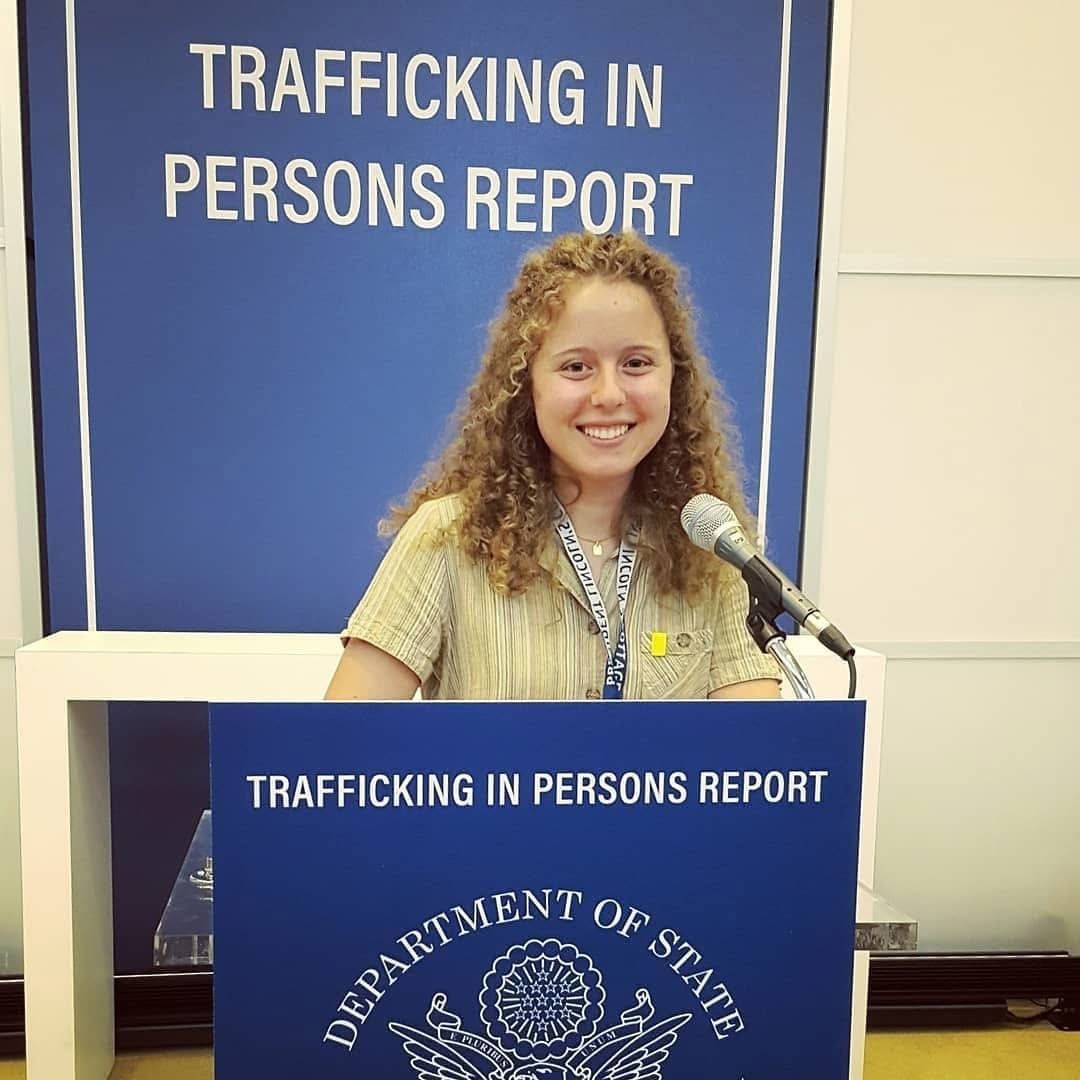
      <![CDATA[<figure class="image image-default"><img src="https://al.nd.edu/assets/655525/fullsize/wearend_victoriaerdelgarcia_1440x617.jpg" alt='A smiling young woman with curly blonde hair speaks at a blue podium, labeled "TRAFFICKING IN PERSONS REPORT," with a microphone.' width="1440" height="617"></figure>
<p><strong>Victoria Erdel Garcia ’19</strong> was known on campus as the girl obsessed with fighting trafficking. She was drawn to the issue because victims’ stories rarely sustained attention — and too often elicited only sympathy. For Erdel Garcia, change has to go further than that. She just had to find a way to get people to listen. So, she started a podcast.</p>
<p>In 2017, the summer before her junior year at Notre Dame, Erdel Garcia started The Trafficking Dispatch, a four-season podcast featuring interviews with activists and survivors of trafficking. The podcast had short episodes targeted at college-aged students who could listen during their busy days, and the episodes covered all forms of trafficking, from sex trafficking to labor trafficking, organ harvesting, child soldiers, and more.</p>
<hr>
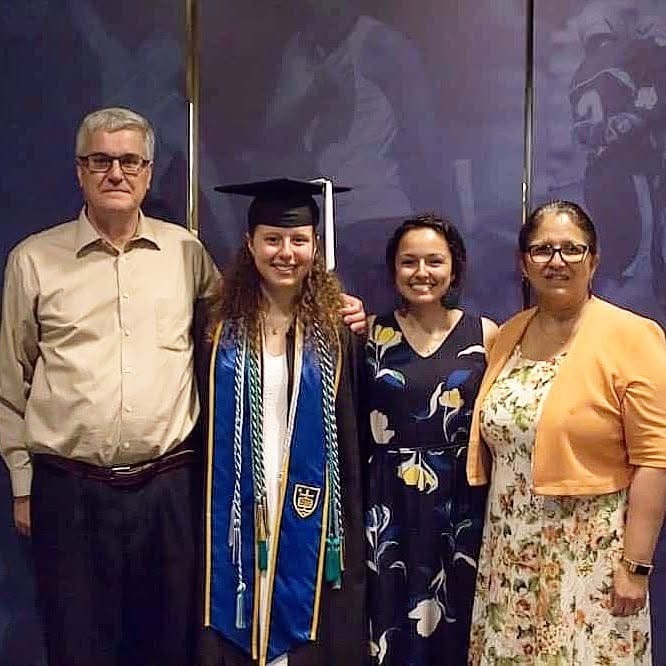
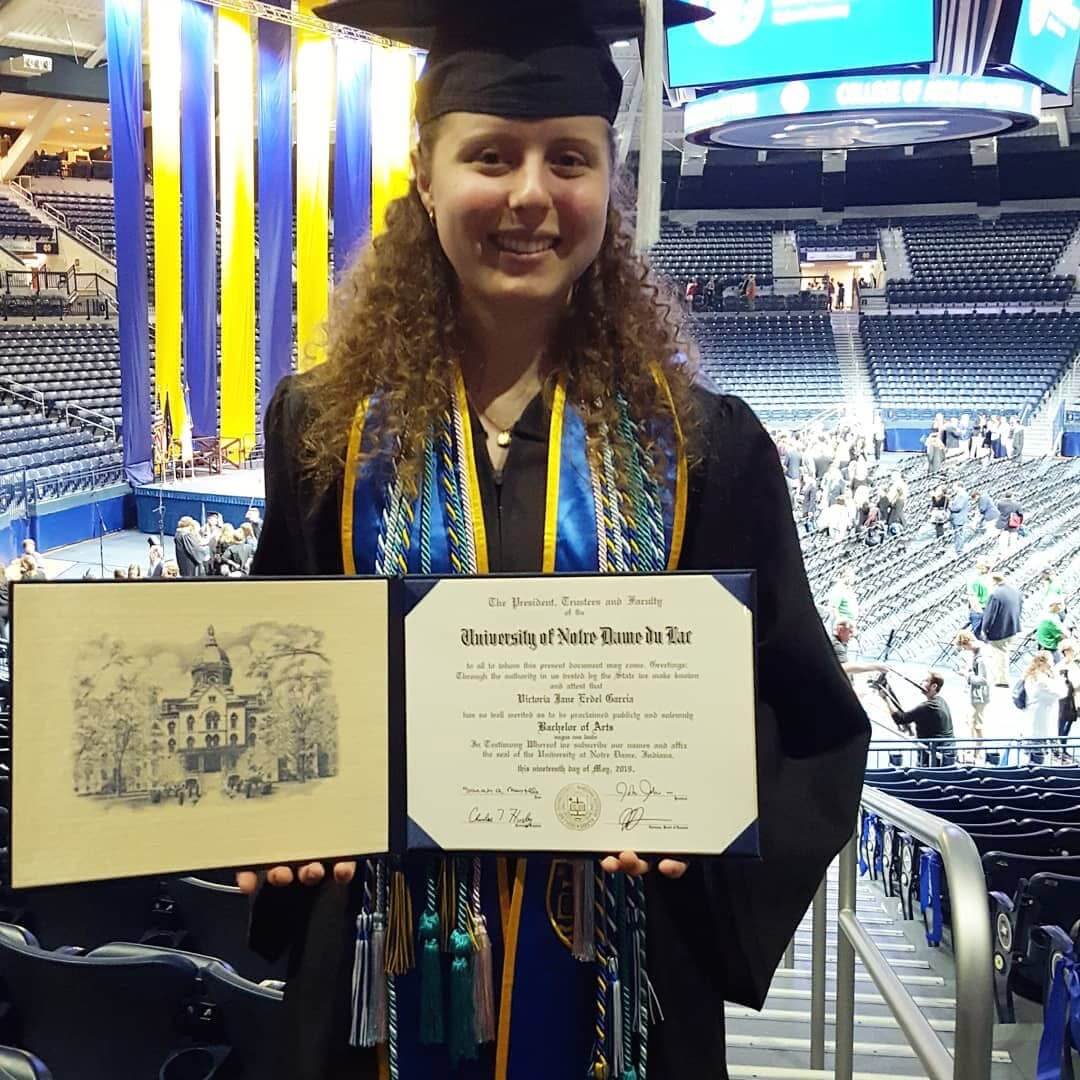
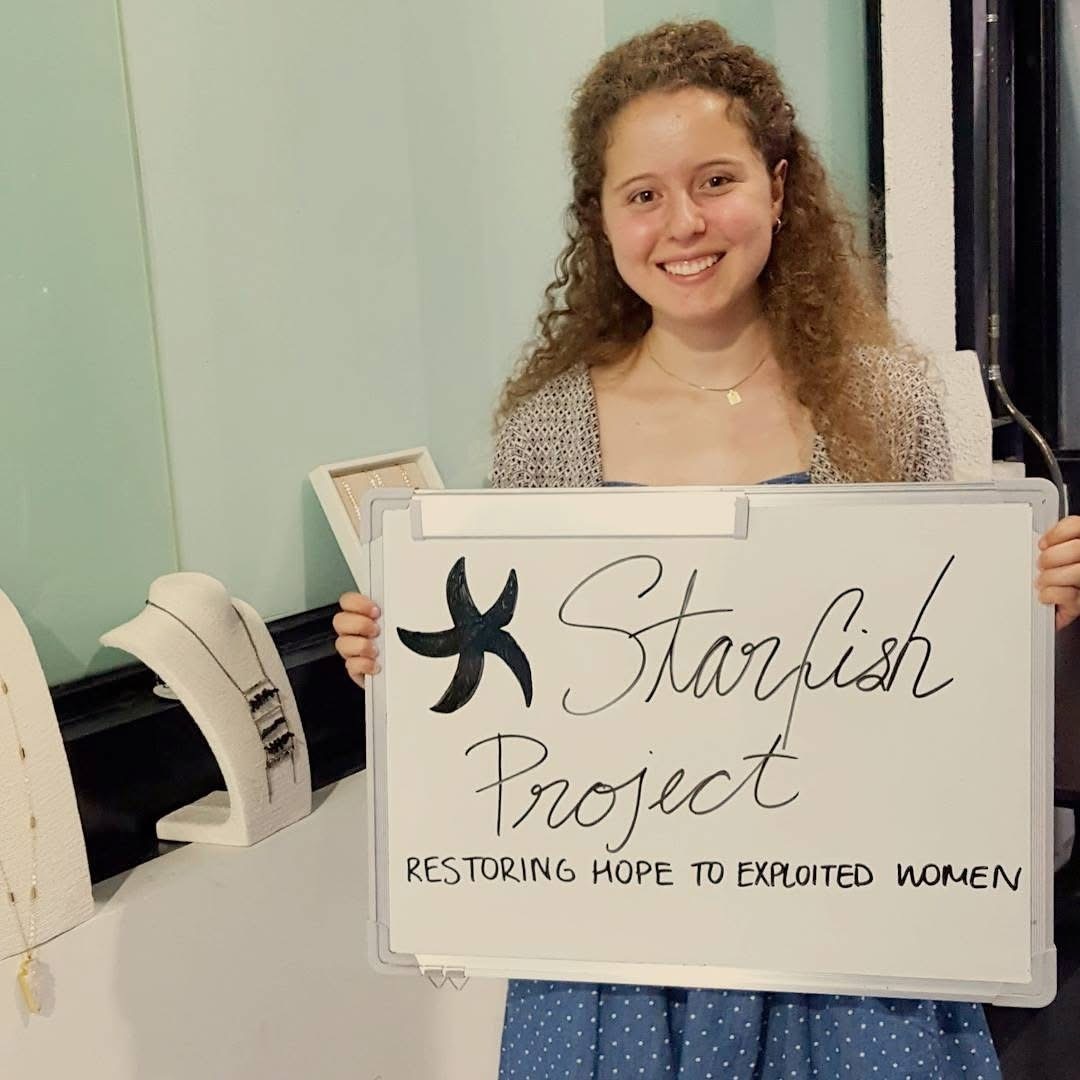
<p><script src="https://al.nd.edu/javascripts/lb.js?v=2023-05-17" defer></script><ul id="gallery-931" class="gallery-lb gallery-931" data-count="6"><li><a href="https://weare.nd.edu/assets/650612/fullsize/img_3897.jpeg" title="" data-title=""><img src="https://weare.nd.edu/assets/650612/600x600/img_3897.jpeg" alt="Eight diverse people smile before the gold Notre Dame seal and blue curtain." width="600" height="600" loading="lazy"></a></li><li><a href="https://weare.nd.edu/assets/650609/fullsize/img_3898.jpeg" title="" data-title=""><img src="https://weare.nd.edu/assets/650609/600x600/img_3898.jpeg" alt="Young woman with curly hair smiles in a black dress on a sunny day in front of Notre Dame&#39;s Main Building with the Golden Dome." width="600" height="600" loading="lazy"></a></li><li><a href="https://weare.nd.edu/assets/650610/fullsize/img_3895.jpeg" title="" data-title=""><img src="https://weare.nd.edu/assets/650610/600x600/img_3895.jpeg" alt="Smiling graduate in black gown, blue and gold stole, poses with a smiling man and two smiling women." width="600" height="600" loading="lazy"></a></li><li><a href="https://weare.nd.edu/assets/650611/fullsize/img_3896.jpeg" title="" data-title=""><img src="https://weare.nd.edu/assets/650611/600x600/img_3896.jpeg" alt="Smiling woman with curly hair at a podium with a microphone. Blue signs read &quot;Trafficking in Persons Report.&quot;" width="600" height="600" loading="lazy"></a></li><li><a href="https://weare.nd.edu/assets/650608/fullsize/img_3894.jpeg" title="" data-title=""><img src="https://weare.nd.edu/assets/650608/600x600/img_3894.jpeg" alt="Smiling woman in cap, gown, blue and gold stole holds Notre Dame diploma and Main Building illustration at Purcell Pavilion." width="600" height="600" loading="lazy"></a></li><li><a href="https://weare.nd.edu/assets/650607/fullsize/img_3899.jpeg" title="" data-title=""><img src="https://weare.nd.edu/assets/650607/600x600/img_3899.jpeg" alt="Smiling woman with curly brown hair holds a whiteboard: &#39;Starfish Project. RESTORING HOPE TO EXPLOITED WOMEN&#39;." width="600" height="600" loading="lazy"></a></li></ul><script>document.addEventListener("DOMContentLoaded", function(){var lightbox = new Lightbox({showCaptions: false,elements: document.querySelector(".gallery-931").querySelectorAll("a")});});</script></p>
<hr>
<p>The platform Erdel Garcia had created reached beyond campus and to survivors who wanted to share their stories, most of Erdel Garcia’s guests being people who reached out to her. During her time, she interviewed several survivors, and, in one case, a former trafficker.</p>
<p>“I wanted to show that there are real people, real stories behind all these atrocities,” Erdel Garcia said. “I feel like a lot of times people spread awareness, and then they just stop. I really wanted to equip people with information that would actually compel them to act.”</p>
<p>Sharing survivors’ stories comes with great responsibility — something Erdel Garcia admitted made her nervous at first. She wasn’t sure how to approach such sensitive material. In those early moments, she held onto a quote from professor and activist Su’ad Abdul Khabeer: “You don’t have to be a voice for the voiceless, you just have to pass the mic.”</p>
<p>Erdel Garcia tries to live by that idea and has been since she was young, starting simply with paying attention.</p>
<p>Erdel Garcia was born in Bremen, Indiana, but soon after her birth her parents moved the family to Portugal. Both Ecuadorian-American, her parents worked as missionaries and taught in international schools. She credits her early exposure to different cultures with shaping her sense of cultural awareness.</p>
<p>It was before she started kindergarten when her family returned to the United States and officially settled in Mishawaka, where she spent most of her childhood. She first visited Notre Dame’s campus at six years old.</p>
<p>“I obviously was too young to understand college and Notre Dame’s reputation and academic rigor, but I just remember seeing all the Gothic architecture and how much it reminded me of Portugal,” she said. “I felt at home from the first time I visited campus, and when we were leaving, I told my parents I was going to go there someday.”</p>
<p>Later, when Erdel Garcia was thirteen, the founder of the Starfish Project — a non-profit jewelry organization that employs and supports women escaping trafficking and exploitation in Asia — visited her church to speak about the group’s mission.</p>
<p>“In school, I was always taught that slavery was a thing of the past, but this was the first time that I heard of human trafficking and how it is still an ongoing issue,” Erdel Garcia said.</p>
<p>This sudden awareness of an issue so pervasive yet largely unspoken stuck with her, quietly shaping the direction of her studies until it eventually became her focus. She wanted to understand trafficking more deeply and resolved to be part of the solution.</p>
<p>Erdel Garcia was accepted to Notre Dame through the QuestBridge Scholars Program. She initially began on the <a href="https://prehealth.nd.edu/">pre-health</a> track, imagining she’d work in the medical field, before switching to <a href="https://sociology.nd.edu/">sociology</a> and adding a minor in Teaching English to Speakers of Other Languages (TESOL).</p>
<p>“I knew that I wanted to help other people. I just didn’t know how to do that,” she said. “The only job that immediately came to mind was a doctor.”</p>
<p>Her academic interests shifted when she realized her heart was in the humanities and that there are countless ways to help people across disciplines, some of which she had already encountered.</p>
<p>By her sophomore year, she had her sights set on working for Starfish Project and reached out to the organization’s CEO to ask about internship opportunities.</p>
<p>At the time, she was hoping for a remote position and had no plans of leaving Indiana. But that changed when she was offered an internship in East Asia.</p>
<p>With the help of Notre Dame grants, Erdel Garcia spent the summer of 2018 in East Asia with the Starfish Project, immersing herself in a new culture while building relationships with survivors. She got to meet women where they were and listened to their stories firsthand.</p>
<p>“I really had a great time exploring a new culture, taking all their public transportation,” she said. “It was amazing, but there were also heavy moments.”</p>
<p>When she returned to Notre Dame, Erdel Garcia immersed herself even more deeply in studying human trafficking, now informed not only by survivors’ stories but also by having witnessed the circumstances they endured.</p>
<p>By her senior year, her podcast had reached listeners in 100 countries. It also led to an invitation to present at the 2018 Nobel Peace Prize Forum. The podcast was later featured in the UN Sustainable Development Solutions Network’s 2018 Youth Solutions Report under the Sustainable Development Goal of Peace and Justice.</p>
<p>Even as her work took her beyond South Bend, Erdel Garcia stayed grounded in campus life. A proud Pasquerilla West resident for all eight semesters, she found a home in the dorm’s community. She also tutored in the <a href="https://writing.nd.edu/writing-center/">Writing Center</a>, drawing on her TESOL minor to support international students.</p>
<p>Additionally, she served as a research assistant in the <a href="https://kellogg.nd.edu/opportunities/undergraduate-students/research-programs/kellogg-international-scholars-program">Kellogg International Scholars Program</a>, working under former history and Africana studies professor Mariana Candido to study the historical roots of human trafficking and slavery in Angola. She carried that work into her senior honors sociology thesis, which examined human trafficking in Asia.</p>
<p>By graduation, it seemed everything was lining up for Erdel Garcia to return to Starfish — this time not as an intern, but as a full-time English teacher. She had even spent her senior year studying trauma-informed teaching methods in preparation for the role. But a week before graduation, visa laws changed, and she was suddenly no longer eligible.</p>
<p>Instead, Starfish offered her a different position in marketing and social media. In the role, she helped generate content about the organization’s products while telling survivors’ stories in a trauma-informed and sensitive way, focusing on their journeys rather than their traumatic pasts.</p>
<p>“In a kind of unplanned way, running that podcast in college really helped prepare me for that role, so I kind of had this informal training. My thesis was also about how we present topics of human trafficking on social media, so it all accidentally prepared me for that exact role,” she said.</p>
<p>Though her job was different from what she had originally planned, Erdel Garcia eventually rose to an e-commerce senior manager position and found the work deeply fulfilling.</p>
<p>“I know advertising is all about sales, but at the end of the day, it was different at this company. At this company, every sale quite literally directly leads to hiring more women,” Erdel Garcia said. “It was really motivating to be able to see a number and then know exactly how many women would be able to change their own lives because of it.”</p>
<p>However, six months into her role at Starfish, the pandemic upended everything. Erdel Garcia returned to Mishawaka and began working remotely as the company weathered financial strain. To make extra income — and because she genuinely loved it when she was on campus —she picked tutoring back up.</p>
<p>Around that same time, she was diagnosed with attention deficit hyperactivity disorder (ADHD). The diagnosis helped her understand her own academic journey and inspired her to support students who struggled in similar ways.</p>
<p>“I felt like a lot of things in my life started making sense retroactively, and I started reflecting back on my time, specifically working at the Writing Center at Notre Dame,” she said.</p>
<p>Many of the students who came to her had ADHD, and she’d used the techniques that had worked for her, not yet realizing she had it, too. After her diagnosis, she felt better equipped to support her students, now understanding more fully the challenges they faced.</p>
<p>“I started working with students and professionals who had ADHD or autism, just helping them communicate their own ideas clearly,” Erdel Garcia said. “It was something I started doing, honestly, out of survival at first, but then, over time, it just became this thing that I kept doing and still do to this day.”</p>
<p>After nearly five and a half years at Starfish and tutoring on the side, Erdel Garcia began craving something in-person — and a change of scenery. She left the organization and moved to Memphis, Tennessee. In Sept. 2024, she joined financial planning and wealth management firm Fish and Associates as a client services associate. Her long-term goal is to become a certified financial planner.</p>
<p>Fish and Associates’ mission is similar to Starfish Project in that they aim not only to support their clients financially but to equip them for long-term stability and success. As a women-owned and operated firm, they focus on serving the underserved, particularly women and members of the LGBTQ community.</p>
<p>Though the field may seem different, Erdel Garcia sees a clear overlap between her past and present work — particularly when it comes to financial empowerment.</p>
<p>“I want to help women,” she said. “My core mission is to help women achieve financial literacy, so that they can achieve financial freedom.”</p>
<p>It is important to Erdel Garcia that she carries the same morals and values with her, no matter the role.</p>
<p>Looking back on her own experiences, she encourages current Notre Dame students to lean into the resources and opportunities the University provides.</p>
<p>“If you want to make your little slice of the world a better place, Notre Dame has so many connections and so many opportunities to help you do that,” she said. “Don’t shy away from finding those opportunities because I promise you they exist.”</p>
<p class="attribution">Originally published by <span class="rel-author">Amanda Dempson '26</span> at <span class="rel-source"><a href="https://weare.nd.edu/stories/passing-the-mic/">weare.nd.edu, </a></span><em>a digital publication from the Notre Dame Alumni Association telling stories of Domers doing good in the world,</em> on March 03, 2026.</p>]]>
    </content>
    <link rel="enclosure" type="image/jpeg" href="https://al.nd.edu/assets/655525/wearend_victoriaerdelgarcia_1440x617.jpg" title="A smiling young woman with curly blonde hair speaks at a blue podium, labeled &quot;TRAFFICKING IN PERSONS REPORT,&quot; with a microphone."/>
    <author>
      <name>Amanda Dempson '26</name>
    </author>
  </entry>
  <entry>
    <id>tag:al.nd.edu,2005:News/179626</id>
    <published>2026-03-02T16:22:00-05:00</published>
    <updated>2026-03-02T16:23:10-05:00</updated>
    <link rel="alternate" type="text/html" href="https://al.nd.edu/news/latest-news/alumni-spotlight-michael-waddell-ph-d-00/"/>
    <title>Medieval Institute Ph.D. alumnus discusses founding of autism studies program at Saint Mary’s College</title>
    <summary type="text">
      <![CDATA[This semester's Medieval…]]>
    </summary>
    <content type="html">
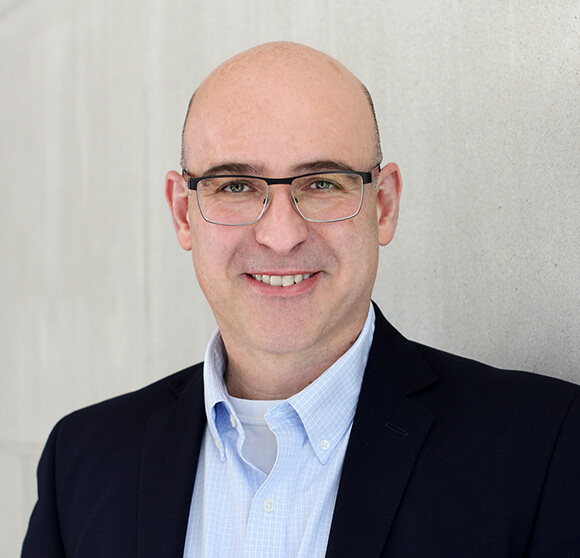
      <![CDATA[<figure class="image image-right"><img src="https://medieval.nd.edu/assets/637296/web_waddell.jpg" alt="Bald man with glasses wearing a light blue checkered button-down shirt and a dark blue blazer smiles at the camera." width="580" height="558"></figure>
<p>This semester's <a href="https://medieval.nd.edu/">Medieval Institute</a> alumni spotlight features <a href="https://www.saintmarys.edu/academics/faculty/michael-waddell">Michael Waddell</a>, associate professor at Saint Mary's College, where he holds the Edna and George McMahon Aquinas Chair in Philosophy. He is also the founding director of the institution's <a href="https://www.saintmarys.edu/academics/departments/autism-studies">Autism Studies program</a>. Waddell completed his Ph.D. in medieval studies at Notre Dame in 2000. His dissertation was titled “Truth Beloved: Thomas Aquinas and the Relational Transcendentals,” and was written under advisor Ralph McInerny, beloved past director of the Medieval Institute.</p>
<p>We asked Waddell to share some thoughts on his work at Notre Dame and beyond.</p>
<h2>What initially interested you in the Middle Ages?</h2>
<p>My interest in the Middle Ages was born during my time as an undergraduate at Cornell College. I was a history major and took a course on “Europe from 400 to 1600” with William Carroll, a Catholic intellectual historian (and Notre Dame alum). That was where I first encountered the writings of people like Augustine and Aquinas. I still remember getting migraines from trying to read Aquinas in that class!</p>
<p>I found the way that these thinkers worked to reconcile and integrate faith and reason to be fascinating. When I decided to pursue an academic career, I was torn between studying philosophy and studying theology. Then one day, while I was studying in the basement of the library, Professor Carroll came bounding over to me — which was quite a sight, with his 6-foot-7 frame — and told me that he had solved my problem: If I went into medieval studies, I could study both philosophy and theology!</p>
<p>Since I was already studying history and literature, in addition to philosophy and theology, the idea of an interdisciplinary program was very attractive to me. And I've always been kind of a history nerd, so the prospect of being able to gain a deep knowledge of the historical context in which great thinkers were working was really attractive, too. I was fortunate to get offers from Notre Dame, the Pontifical Institute of Medieval Studies at the University of Toronto, and Boston College. But a visit to Notre Dame (facilitated by Professor Carroll) made it clear to me that Our Lady's university was where I wanted to go to study the Middle Ages.</p>
<hr>
<blockquote>
<p>“People often ask me whether I ever used my training as a medievalist in my work with autism studies, and I tell them that I use it every day: It’s precisely in virtue of my training as an interdisciplinary scholar and my study of St. Thomas’s writings about human nature that I am able to work with psychologists, speech therapists, occupational therapists, behavioral therapists, and physicians to provide autism expertise to students today.”</p>
</blockquote>
<hr>
<h2>What initially interested you in the thought of Thomas Aquinas?</h2>
<p>From the very beginning, I appreciated Aquinas’ desire to integrate faith and reason. To be honest, though, I was not initially a fan of his particular approach to doing it. In fact, I usually found myself arguing against him, and I was really more interested in working on Augustine than Aquinas. The more I tried to argue with Aquinas, though, the more I realized that he was usually right and I was usually wrong. So I decided that maybe I should try to be his student rather than trying to refute him. As the old saying goes, “If you can't beat ’em, join ’em.”</p>
<h2>When did you become interested in autism studies, and why?</h2>
<a href="https://www.staugustine.net/9781587317262/restoring-nature/">
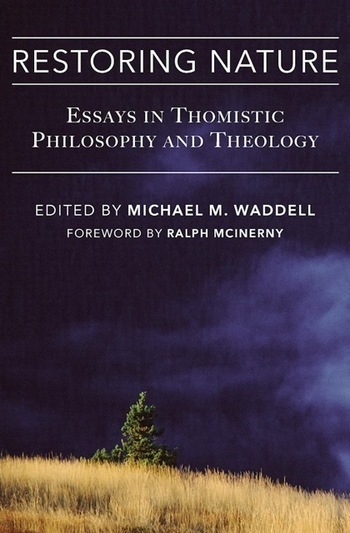
<figure class="image image-right"><img src="https://medieval.nd.edu/assets/650250/350x/waddell_restoring_nature.jpeg" alt="RESTORING NATURE: Essays in Thomistic Philosophy and Theology, edited by Michael M. Waddell. Pine tree, golden grass, dark sky." width="350" height="533"></figure>
</a>
<p>My twin daughters were diagnosed with autism right after they turned 2 years old. Once our family got our balance with that — managing 80 hours of therapies per week, etc. — I couldn't help thinking about autism from philosophical and theological perspectives. And I soon realized that the ways in which people, including therapists, thought about human existence in general had a deep impact on how they responded to autism.</p>
<p>As an interdisciplinary scholar, I also noticed that the various professions that aimed to help people on the spectrum were incredibly siloed, and their inability to communicate effectively across professional lines often had a negative impact on the therapeutic support they were able to provide.</p>
<p>From those two observations, I developed a vision for an interdisciplinary approach to autism education grounded in a Catholic anthropology. People often ask me whether I ever used my training as a medievalist in my work with autism studies, and I tell them that I use it every day: It’s precisely in virtue of my training as an interdisciplinary scholar and my study of St. Thomas’s writings about human nature that I am able to work with psychologists, speech therapists, occupational therapists, behavioral therapists, and physicians to provide autism expertise to students today.</p>
<h2>What was it like working with Ralph McInerny as a student, and what was it like working with him as a peer?</h2>
<p>I would never say that I became a peer to Professor McInerny. He was an intellectual giant, and he had few true peers in that regard.</p>
<p>Working with him as a student was an extraordinary opportunity, though. I only wish that I had been more prepared to take full advantage of his erudition and wisdom than I was as a twenty-something. When I began working with doctoral students at Villanova — about five years after completing my Ph.D. — I grew to have a deeper understanding of what an extraordinary mentor he was, and I really looked forward to talking more with him about the kinds of issues I was wrestling with at that stage of my career. Unfortunately, he died before our relationship was able to go to that level, and I've always regretted that lost opportunity.</p>
<h2>How have the people you met and the experiences you had at the Medieval Institute influenced you as a researcher and educator today?</h2>
<p>My experiences and relationships at the Medieval Institute were absolutely formative for me as a scholar and as a person. I was blessed with the opportunity to learn not only from some of the world's leading experts in medievalia, but also from other graduate students who have gone on to become leading scholars in their own right. And I still count many of those people amongst my best friends. I'll always be grateful to the MI for the education and the career it gave me, but especially for the people it brought into my life.</p>
<p class="attribution">Originally published by <span class="rel-author">Medieval Institute</span> at <span class="rel-source"><a href="https://medieval.nd.edu/news-events/news/alumni-spotlight-michael-waddell-ph-d-00/">medieval.nd.edu</a></span> on <span class="rel-pubdate">March 02, 2026</span>.</p>]]>
    </content>
    <link rel="enclosure" type="image/jpeg" href="https://al.nd.edu/assets/650778/alumni_spotlight_michael_waddell_sp_2026.jpg" title="Mike Waddell, a bald man with glasses, smiling in a dark jacket and light blue shirt against a light wall."/>
    <author>
      <name>Medieval Institute</name>
    </author>
  </entry>
  <entry>
    <id>tag:al.nd.edu,2005:News/179158</id>
    <published>2026-02-23T08:30:00-05:00</published>
    <updated>2026-02-24T15:22:01-05:00</updated>
    <link rel="alternate" type="text/html" href="https://al.nd.edu/news/latest-news/from-shakespeare-to-the-c-suite-how-studying-the-liberal-arts-helped-english-major-mike-lamena-95-become-a-wealth-management-ceo/"/>
    <title>From Shakespeare to the C-suite: How studying the liberal arts helped English major Mike LaMena ’95 become a wealth management CEO</title>
    <summary type="text">
      <![CDATA[Mike LaMena…]]>
    </summary>
    <content type="html">
      <![CDATA[<figure class="image image-default"><img src="https://al.nd.edu/assets/648591/fullsize/champion.jpg" alt='Two smiling young men pose in front of the yellow "Play Like a Champion Today" sign. One wears a striped shirt, the other a navy baseball cap with a gold ND logo.' width="1200" height="800">
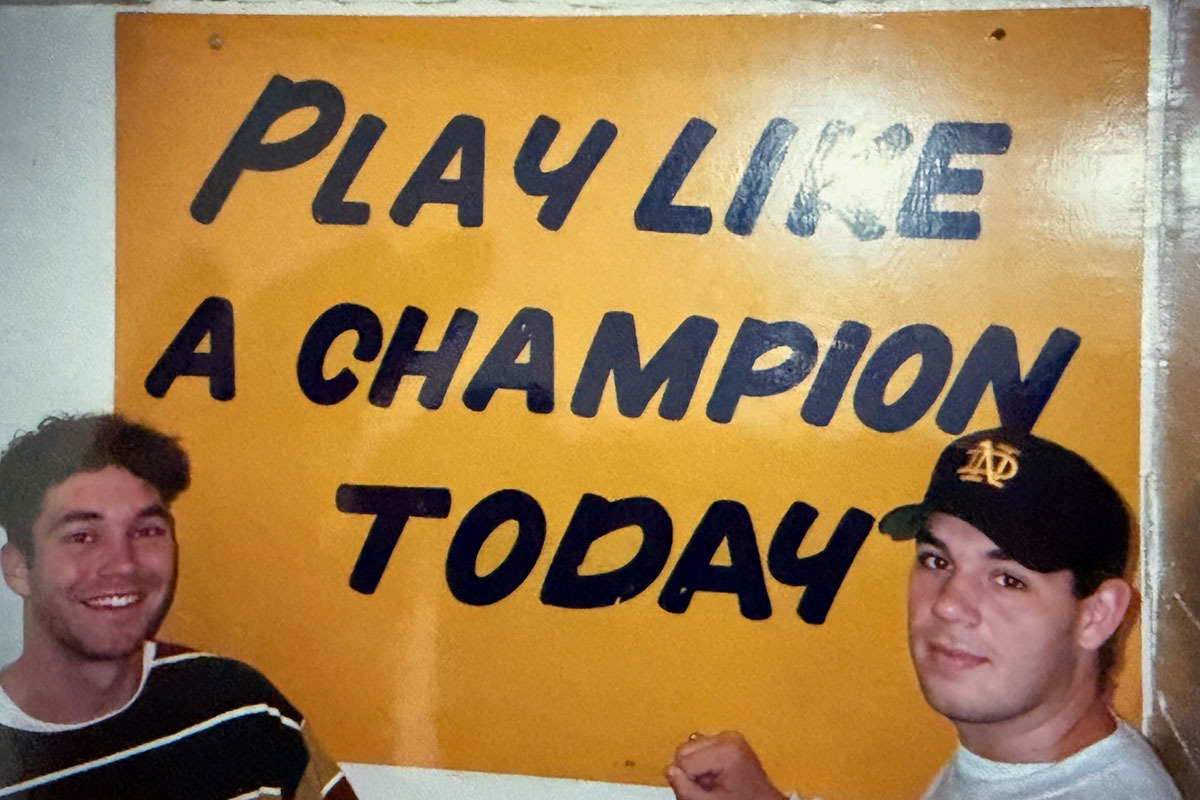
<figcaption>Mike LaMena ’95 (left) and friend Scott Ismail ’95 pose with the iconic “Play like a champion today” sign. (Photo provided by Mike LaMena)</figcaption>
</figure>
<p>Mike LaMena ’95 was always envious of his fellow Notre Dame students who knew what career they wanted to pursue from the start. He, like many, thought the ladder to success was a linear one.</p>
<p>But over time, LaMena discovered that career paths often have many loops and lateral steps.</p>
<figure class="image image-right"><img src="https://al.nd.edu/assets/650112/fullsize/lamena_mike_web.jpg" alt="Smiling man with short graying hair, wearing a blue plaid jacket and light blue shirt. Blurred background with hints of green." width="600" height="600">
<figcaption>Mike LaMena ’95</figcaption>
</figure>
<p>LaMena, who majored in English, is now the chief executive officer of <a href="https://www.wealthspire.com/">Wealthspire</a>, an independent financial firm that serves clients across the wealth, institutional, and retirement markets. Collectively, the organization manages or advises on more than $580 billion in assets and is a dynamic leader in the independent wealth space.</p>
<p>Previously, he held positions as president and chief operating officer at Bronfman Rothschild, president and COO at HighTower, and executive director at Morgan Stanley.</p>
<p>Clearly, LaMena knows business, especially for someone who didn’t focus on business as an undergraduate. What was central to his success, though, was a passion for and skill in translation — connecting components together and synthesizing the best way to achieve people’s goals.</p>
<p>“When someone doesn’t know where to start, we listen,” LaMena said. “It’s not just technological and spreadsheets — advisors help their clients, whether that’s business owners or families, navigate life and learn how to make their life or business meaningful. Being a trusted advisor means we provide comfort and guidance.”</p>
<h2>Finding his fit</h2>
<p>During his time at Notre Dame, LaMena found himself envisioning multiple opportunities and perspectives, but eagerly pursued his interest in English.</p>
<p>He didn’t want to be a one-dimensional student, though. He had a work-study job and was involved with interhall sports and student government, serving as class treasurer.</p>
<figure class="image image-left"><img src="https://al.nd.edu/assets/648593/fullsize/mike_friends.jpg" alt="Three men in white shirts and patterned ties smile outdoors. The left man has dark curly hair. The middle man's arm rests on the right man's shoulder, who holds a silver can. St. Mary's Lake is visible behind them." width="600" height="400">
<figcaption>Mike LaMena (center) with Joe Monahan ’95 (left) and Scott Ismail ’95 by St. Mary's Lake. (Photo provided by Mike LaMena)</figcaption>
</figure>
<p>As he thought about his future, he liked the idea of giving back and gravitated towards teaching. After graduation, he volunteered as a ninth-grade teacher in the Bronx for the Marist Brothers. He felt fortunate to have received financial support to attend Notre Dame and wanted to pay it forward in his community.</p>
<p>After his teaching stint, LaMena went to Wall Street, where he fell in love with financial planning. The experience was eye-opening as he discovered how financial advisors focused on helping clients achieve their goals and lead their most impactful and fulfilling lives, and LaMena wanted to integrate his stewardship mindset into his personal and professional life.</p>
<p>A Notre Dame classmate helped him interview with Morgan Stanley’s private wealth management group, and LaMena found the financial business to be surprisingly human. Although a large part of the job requires financial familiarity, other traits are also essential — including interpersonal and effective listening skills, which he honed through his liberal arts education.</p>
<p>“There’s a value in generalists in a world that’s increasingly specialized,” he said. “I know how to ask good questions, how to synthesize information from several sources, and my greatest impact is in connecting the dots.”</p>
<p>LaMena’s 14-year career with Morgan Stanley also pivoted at points, from a client-facing position to a more behind-the-scenes one in technology. In that role, he developed technological skills and was eventually asked to move to Asia to lead and build a new business and technology platform, which proved to be a period of extreme professional growth.</p>
<p>“It was basically a blank sheet of paper,” he said. “Being exposed to different cultures and working to build a business from the ground up was the first time I was given the space to envision and create a better model to serve clients. This period really helped me become comfortable taking bigger risks.”</p>
<h2>Growing confidence</h2>
<p>As LaMena’s career progressed, he became more comfortable with taking professional risks and recognized that growth occurs outside one’s comfort zone.</p>
<p>Although it didn’t happen overnight, LaMena attributes part of that ease to being fostered by the course Shakespeare in Performance, taught by <a href="https://news.nd.edu/news/in-memoriam-paul-a-rathburn-professor-emeritus-of-english-founder-of-notre-dame-shakespeare-festival/">Paul Rathburn</a>, then-professor of English and founder of the <a href="https://shakespeare.nd.edu/">Notre Dame Shakespeare Festival</a>.</p>
<blockquote class="pull">
<p>“Life is a gift. Explore, follow your passions. Have a reflective mindset and follow that.”</p>
</blockquote>
<p>In the class, students gained a deeper understanding of the words and meanings of the plays by performing scenes. The premise intrigued LaMena, but he doubted his skills and continuously asked himself, “Why am I doing this? I’m going to have to actually act out scenes.”</p>
<p>LaMena stuck with the course and became more comfortable speaking in public and performing. Eventually, he performed in several plays while at Notre Dame, and he still draws on those skills in his work today.</p>
<p>“As I gained confidence to be comfortable with public speaking, I realized that growth is its reward,” he said.</p>
<p>Through his Arts &amp; Letters education, LaMena was pushed outside his comfort zone, and he recommends that move for others who might feel like their life or career is getting stale.</p>
<p>“Life is a gift. Explore, follow your passions,” he said. “Have a reflective mindset and follow that.”</p>
<h2>Right time, right place</h2>
<p>Ultimately, LaMena credits his study of the liberal arts for providing him with a well-rounded perspective and the skills to ask good questions, whether with clients or with team members. He encourages those entering the workforce to be like a sponge and “ask good questions.”</p>
<figure class="image image-left"><img src="https://al.nd.edu/assets/648606/fullsize/grads.jpg" alt='Three smiling people stand against a green Notre Dame-themed backdrop. A woman in a dark blue top and another in a red shirt hold "95" and "29", respectively. A man in a dark blue polo holds "95". Together, they display "952995". Gold, blue, and white balloons are on the sides.' width="600" height="400">
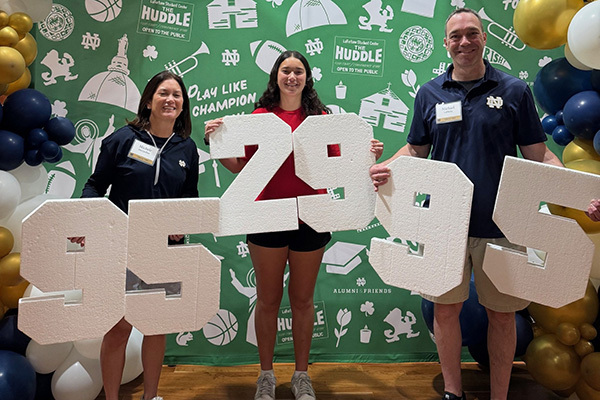
<figcaption>Mike LaMena (right), his wife and fellow class of ’95 alumnus Michele McQuillan, and their daughter, freshman Lauren LaMena. (Photo provided by Mike LaMena)</figcaption>
</figure>
<p>Those foundational translation skills he learned have come into play with his leadership roles, especially in bringing a “cohesiveness in building an effective team.”</p>
<p>“I realized I’m not going to be the smartest person in the room, but that’s OK. I have all these experts in all these subjects around me,” he said. “My job is to synthesize their knowledge. My role is around the breadth of knowledge, not depth.”</p>
<p>The road to success is not a linear path, LaMena said, and his success is due to his varied background. Today, he mentors individuals who are working toward their next promotion, striving to reach the next “rung on the ladder of success,” even if that step may feel unfamiliar or unusual.</p>
<p>“Notre Dame gave me an environment at a critical point where I could formulate and solidify some values that are not negotiable for me,” LaMena said. “A lot of people just focus on outcomes. Values matter, and the ends do not justify the means. We start with values as the foundation.”</p>
<p>In November, LaMena participated in the inaugural <a href="https://www.ndwealthsymposium.com/">Notre Dame Wealth Management Symposium</a>, sharing his passion for the industry and exposing students and young professionals to the meaningful and impactful careers it can provide for individuals from diverse educational backgrounds.</p>
<p>“At the end of the day, it’s not about having the most linear resume,” LaMena said. “It’s about curiosity, courage, and values. If you’re willing to ask good questions, take risks, and stay grounded in who you are, the path tends to reveal itself, and often in ways you never could have planned.”</p>]]>
    </content>
    <link rel="enclosure" type="image/jpeg" href="https://al.nd.edu/assets/648591/champion.jpg" title="Two smiling young men pose in front of the yellow &quot;Play Like a Champion Today&quot; sign. One wears a striped shirt, the other a navy baseball cap with a gold ND logo."/>
    <author>
      <name>Joni Gibley</name>
    </author>
  </entry>
  <entry>
    <id>tag:al.nd.edu,2005:News/178897</id>
    <published>2026-02-06T10:04:00-05:00</published>
    <updated>2026-02-03T14:41:56-05:00</updated>
    <link rel="alternate" type="text/html" href="https://al.nd.edu/news/latest-news/a-q-a-with-maggie-dosch-nd-21-on-art-history-empathy-and-the-mfa-art-residency-at-kylemore/"/>
    <title>Maggie Dosch ’21 talks art history, empathy, and the MFA Art Residency at Kylemore</title>
    <summary type="text">
      <![CDATA[…]]>
    </summary>
    <content type="html">
      <![CDATA[<figure class="image image-right"><img src="https://kylemore.nd.edu/assets/646474/350x/maggie_at_kylemore_2.jpg" alt="Maggie wears a green sweater, with a Notre Dame lanyard, and draws on a canvas at a desk of art supplies. Behind her, large windows overlook a blue lake surrounded by mountains under a bright sky. An easel with a painting is to her left." width="600" height="576">
<figcaption>Maggie works on her paintings at Kylemore</figcaption>
</figure>
<p>Maggie Dosch ’21 grew up in South Bend and graduated as an <a href="https://artdept.nd.edu/">art history</a> major with minors in <a href="https://romancelanguages.nd.edu/">Italian studies</a> and studio art. Currently the assistant curator of education, for school programs at the <a href="https://raclinmurphymuseum.nd.edu/">Raclin Murphy Museum of Art</a>, she attended the <a href="https://kylemore.nd.edu/">Notre Dame Kylemore</a> Winter 2026 MFA Art Residency. In this Q&amp;A, Maggie Dosch discusses her experience at the Kylemore residency with research programmes manager <a href="https://global.nd.edu/about/people/emma-kirner/">Emma Kirner</a>.</p>
<p><strong>How did you settle into the medium, form, and subject matter you currently work in?</strong></p>
<p>I initially entered college studying architecture because someone in high school recommended that it melded both my mathematical and artistic interests. Despite my interest in the subject matter and analysis components, once considering the outcome of actually becoming an architect, it ultimately came down to not feeling enamored with the studio practice as an architect. I felt rushed to complete projects, and missed the manipulation of oil painting, which is completely different from the primary use of watercolor in classical architectural curriculum. After switching to a minor in studio art, I made a slow transition from rendering architectural spaces in oil, to moving toward portraiture.</p>
<p><em>See <a href="https://www.maggiedosch.com/work">Maggie’s portfolio.</a></em></p>
<p><strong>On our faculty at the Kylemore Art Residency is Maria Tomasula, studio art professor emerita at Notre Dame. Tell me about your relationship with Tomasula as a professor, and how that relationship influenced your decision to apply to this residency?</strong></p>
<p>The main reason I applied to this art residency was because of my relationship with <a href="https://artdept.nd.edu/people/maria-tomasula/">Maria Tomasula</a>, given that she taught all of my painting classes while in undergrad at Notre Dame. She is my north star of influences, from how I have approached my subject matter and conceptual bounds of my work, but also my practice. Her critiques are some of the most valuable, rich, and beautiful moments of growth for me. She is the type of professor that sees your vision and works to augment but never change it. Even in my first class with her, I felt deeply seen by her as an artist. What makes her approach so successful is that her feedback often comes in the form of questions such as, “Is this what you are intending?” or, “What if you changed…?” This method encourages you to arrive at your own solutions rather than being given answers, which has been incredibly empowering.</p>
<p><strong>What are you working on in this residency?</strong></p>
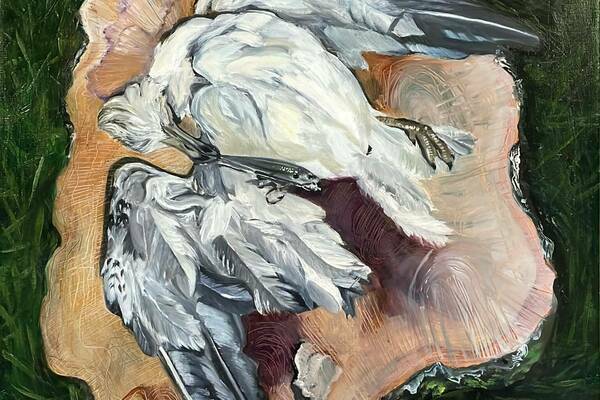
<p>I transitioned from portraiture to still life elements later in my practice, exploring a blurred boundary between objects and subjects, and treating objects as if they were portrait subjects. This provides an initial framework for the work I am doing here, using subjects found in nature to engage with ideas around the Anthropocene, environmentalism, and consumerism, as well as broader concepts of empathy and intersubjectivity.</p>
<p>My main question is: what defines the boundary between empathy and apathy? I am interested in exploring the ironies within that space. Much of the time, I paint animals or remnants of animals, and viewers often respond with empathy toward these dead or dying “beings.” In contrast, we are frequently confronted with terrible events involving humans, yet often dehumanize those subjects. This tension is where I hope to take my work in the future.</p>
<div style="display: flex; flex-flow: row wrap; margin: 2rem -.5rem 2rem 0; padding: 0;">
<figure class="image image-default" style="width: 33.3%;"><img src="https://al.nd.edu/assets/647180/fullsize/a_maggie_bird.jpg" alt="A large gray and black bird, painted with bold brushstrokes, is depicted clutching a dark, fish-like object. The artwork is presented on a white background marked with a faint grid." width="600" height="400"></figure>
<figure class="image image-default" style="width: 33.3%;"><img src="https://al.nd.edu/assets/647182/fullsize/b_maggie_bird.jpg" alt="Oil painting of two dead white and grey birds with ruffled feathers, lying on a reddish-brown surface, against an abstract dark green and yellow background." width="600" height="400"></figure>
<figure class="image image-default" style="width: 33.3%;"><img src="https://al.nd.edu/assets/647181/fullsize/c_maggie_bird.jpeg" alt="A painting of a deceased white and gray bird lying on its back on a light wood slice. A dark fishing lure is hooked in its beak, with reddish-brown staining visible on its body. Green grass surrounds the wood." width="600" height="400"></figure>
</div>
<p>I draw on the history of memento mori paintings, game piece paintings, and even vanitas paintings, where there is a moralizing lens. Lately, I have been painting a number of dead birds, and using that art historical framework, I ask myself what forms of viral strategy or human impact are affecting these subjects. Since these birds are found during my walks in nature, their presence in my work prompts me to consider how we are implicated in the Anthropocene.</p>
<p><strong>Talk about your background in art history, and how it has influenced your own approach to making art.</strong></p>
<p>I am still interested in classical and medieval art, but my favorite classes were about ’90s-era slacker artists and other contemporary practitioners. It’s an interesting irony, because some of my favorite artists are super contemporary and often associated with installation work, such as Cady Noland and Félix González‑Torres. It’s funny because my work is strictly two-dimensional. Even though I stick to the confines of the two-dimensional space, I am introducing an element of installed space, depth, and dimension.</p>
<p><strong>Thinking about Kylemore itself, and this landscape, how has this environment influenced your approach to your practice here?</strong></p>
<p>The theme of memento mori has been coming up everywhere at Kylemore for me. In a single day, the weather patterns shift dramatically, and decay is visible all around us in this temperate rainforest. Both thematically and texturally, some of the spaces I am painting have been inspired by a stump at Kylemore or the moss I have encountered on my walks.</p>
<p><strong>What has been a meaningful interaction of artistic dialogue that you have had here at Kylemore?</strong></p>
<p>Frances Ryan has been so forthcoming with encouragement. I have run into her on several of my walks, and she has been recording a song thrush and told me where to go and find them, knowing my interest in birds. It was nice to hear from Frances that dealing with these dark themes allows for an outlet to see the beauty in this cycle of life, death, and change.</p>
<p><strong>Talk about your work that you do outside of your artistic practice. How do you gather elements of your art history and art background into your role as assistant curator of education at the Raclin Murphy Museum of Art at Notre Dame?</strong></p>
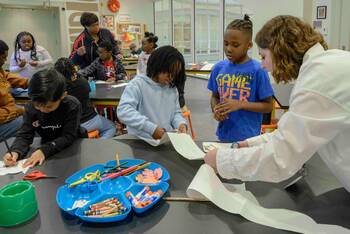
<figure class="image image-right"><img src="https://kylemore.nd.edu/assets/646473/350x/maggie_at_work.jpeg" alt="A group of children and adults engage in an art activity at a long dark table. Crayons, glue, and paper cutouts fill a blue craft tray." width="600" height="400">
<figcaption>Maggie runs a student program at the Raclin<br>Murphy Museum of Art</figcaption>
</figure>
<p>At The Raclin Murphy Museum of Art, our core themes are hospitality, empathy, and belonging. A museum is a very profound extension of the classroom, because it offers a third space of collective meaning making. Rika Burnham and Elliot Kai-Kee are two of the most influential theorists of museum education, and they discuss the concept of intersubjective encounters, which are the shared, interactive, and emotional experiences between visitors, staff, and objects. There is a tangible choreography and exchange that happens for people that visit museums, in their hormones and emotions. This philosophy ties back to how I am interested in the use of symbolism in my own art practice, leaving space for different interpretations and democratic dialogue.</p>
<hr>
<p><em><strong id="docs-internal-guid-4e24d6b1-7fff-0c8d-b3cf-2eac8b139067">Interested in experiencing a residency program like the one Maggie attended? Learn more about how to apply to Kylemore’s residency programs for artists and writers on the <a href="https://kylemore.nd.edu/programs/residency-programs/">ND Kylemore website</a>.</strong></em></p>
<p class="attribution">Originally published by <span class="rel-author">Emma Kirner</span> at <span class="rel-source"><a href="https://kylemore.nd.edu/news-stories/news/a-q-a-with-maggie-dosch-nd-21-on-art-history-empathy-and-the-mfa-art-residency-at-kylemore/">kylemore.nd.edu</a></span> on <span class="rel-pubdate">January 29, 2026</span>.</p>]]>
    </content>
    <link rel="enclosure" type="image/jpeg" href="https://al.nd.edu/assets/647179/maggie_at_kylemore_2.jpg" title="Maggie wears a green sweater, with a Notre Dame lanyard, and draws on a canvas at a desk of art supplies. Behind her, large windows overlook a blue lake surrounded by mountains under a bright sky. An easel with a painting is to her left."/>
    <author>
      <name>Emma Kirner</name>
    </author>
  </entry>
  <entry>
    <id>tag:al.nd.edu,2005:News/178060</id>
    <published>2026-01-21T09:00:00-05:00</published>
    <updated>2026-03-03T10:57:38-05:00</updated>
    <link rel="alternate" type="text/html" href="https://al.nd.edu/news/latest-news/alumni-spotlight-john-babbo-24-philosophy-fellowship-and-a-call-to-priesthood/"/>
    <title>Alumnus John Babbo ’24 on philosophy, fellowship, and a call to priesthood</title>
    <summary type="text">
      <![CDATA[Class of 2024 alumnus John Babbo came to Notre Dame to study great books and cheer in the student section, where his academic and spiritual formation helped him discern his call to the priesthood.]]>
    </summary>
    <content type="html">
      <![CDATA[<figure class="image image-right"><img src="https://al.nd.edu/assets/646467/fullsize/babbo_john_headshot.jpg" alt="Young man with curly brown hair, tortoiseshell glasses, and blue eyes smiles broadly, wearing a navy suit, white shirt, and blue tie against a grey background." width="300" height="400">
<figcaption>John Babbo</figcaption>
</figure>
<p>When John Babbo first stepped onto the University of Notre Dame’s campus, he imagined himself studying great books and cheering in the student section. He didn’t imagine that the ideas he encountered would eventually lead him toward the priesthood.</p>
<p>Babbo graduated from Notre Dame in 2024 with a degree from the <a href="pls.nd.edu">Program of Liberal Studies </a>(PLS) and minors in <a href="https://politicalscience.nd.edu/fields-of-study/constitutional-studies/">constitutional studies</a> and <a href="https://economics.nd.edu/undergraduate/minor-in-business-economics/">business economics</a>. Babbo was also a member of the <a href="http://constudies.nd.edu">Center for Citizenship and Constitutional Government</a>’s (CCCG) <a href="https://constudies.nd.edu/academics/undergraduate-education/tocqueville-fellowship/">Tocqueville Fellowship</a> for four semesters.</p>
<p>As a Chicago native, Babbo chose to attend Notre Dame due to its combination of academics, football culture, and Catholic identity. During his time, Babbo was introduced to the CCCG by a fellow PLS classmate and friend. This introduction, coupled with his interest in exploring political philosophy more deeply, inspired him to pursue the constitutional studies minor.</p>
<p>Babbo reflected on two influential classes he took through the minor — the first being a class on Nicomachean Ethics and Aristotle's Politics taught by <a href="https://politicalscience.nd.edu/people/susan-collins/">associate professor Susan Collins</a>, which he described as “one of the best classes I ever took.” Babbo credited this class as planting the intellectual seeds that were influential in discerning major life decisions upon graduation.</p>
<p>During his senior year, Babbo enrolled in the course “Cortex and Constitutionalism,” taught by both <a href="https://politicalscience.nd.edu/people/patrick-deneen/">professor Patrick Deneen</a> and <a href="https://politicalscience.nd.edu/people/vincent-munoz/">Phillip Munoz, the Tocqueville Professor of Political Science.</a> Babbo recalled reading The Odyssey, The Republic, and T<em>he City of God, </em>the latter of which has continued to shape his thinking in both his personal and professional life. Reflecting on this course’s influence, Babbo said it encouraged him to see himself as “a pilgrim on a pilgrim’s journey,” and to consider whether “to serve the city of God or the city of man.”</p>
<p>Alongside the constitutional studies minor, Babbo participated in the Tocqueville Fellowship program during his sophomore and senior years. The colloquia and readings offered outside of a traditional classroom setting deepened Babbo’s interest in political philosophy. Babbo appreciated the caliber of the CCCG’s invited speakers, noting that meeting them in small settings, such as breakfast or lunch, allowed for a unique perspective. Those conversations, he explained, allowed him to see each speaker “as a person, not when they're public speaking, but on a more personal basis. I loved that.”</p>
<p>Outside of the academic realm, Babbo particularly enjoyed the community he found through the fellowship.</p>
<p>“I felt like I met so many friends who I would not have met outside of the program,” he said.</p>
<p>Looking back, Babbo admitted he had been surprised by the longevity of the friendships he formed through the center and attributed them to the fellowship’s thought-provoking colloquia and informal conversations that took place alongside them.</p>
<p>During his time at Notre Dame, he also developed a love for investing during his sophomore year, describing it as a form of “applied philosophy.” The technological and psychological components involved in investing touched on many of his intellectual interests, and after graduation, Babbo worked at a small investment partnership firm based in Boston.</p>
<p>Despite having a career and being surrounded by colleagues that he loved, Babbo recounted experiencing a sense of “restlessness.” This feeling persisted until he met Fr. Pete, a priest at Gate of Heaven Parish in Boston, whose joy and contentment prompted Babbo to reflect on his own state of vocational restlessness.</p>
<p>“For the first time in my life, the radicality of the Catholic faith really impressed on me,” he said. “And if Jesus is God, then that has to change my life in some very important ways. And if Jesus is really present in the Eucharist, how am I not at Mass every day? How am I not crawling in on my knees?”</p>
<p>The combination of his restlessness and this epiphanic realization of the radicality and importance of his Catholic faith ultimately brought Babbo to pursue the priesthood.</p>
<p>Now, as a postulant with the <a href="https://www.holycrossusa.org/office-of-vocations/seminary-life/meet-the-men-in-formation/">Congregation of Holy Cross</a>, Babbo encourages current Notre Dame students to approach classwork as an end in itself, rather than a means to an end of simply getting a job.</p>
<p>“Looking back, I appreciate the quality of the education I got at Notre Dame in the constitutional studies minor, which I think you don’t appreciate as much when you’re in the middle of it,” he said. “This sort of is Christendom, it feels like to me, so make sure you get your faith really strong here, then you can go out in the world and evangelize.”</p>
<p><strong id="docs-internal-guid-6224c52f-7fff-4df7-92c1-1b4c46e8078d"></strong><em>To learn more about the Constitutional Studies minor and the Tocqueville Fellowship Program, please <a href="https://constudies.nd.edu/academics/undergraduate-education/">visit our webpage</a>. </em></p>
<p class="attribution">Originally published by <span class="rel-author">Allison Bowman</span> at <span class="rel-source"><a href="https://constudies.nd.edu/news/alumni-spotlight-john-babbo-24-philosophy-fellowship-and-a-call-to-priesthood/">constudies.nd.edu</a></span> on <span class="rel-pubdate">December 12, 2025</span>.</p>]]>
    </content>
    <link rel="enclosure" type="image/jpeg" href="https://al.nd.edu/assets/646466/babbo_john_1_1_1_.jpg" title="Young man with curly brown hair, tortoiseshell glasses, and blue eyes smiles broadly, wearing a navy suit, white shirt, and blue tie against a grey background."/>
    <author>
      <name>Allison Bowman</name>
    </author>
  </entry>
  <entry>
    <id>tag:al.nd.edu,2005:News/176626</id>
    <published>2025-11-19T08:30:00-05:00</published>
    <updated>2025-11-21T14:45:29-05:00</updated>
    <link rel="alternate" type="text/html" href="https://al.nd.edu/news/latest-news/redefining-the-narrative-of-patient-centered-care/"/>
    <title>Redefining the narrative of patient-centered care: Dr. Christy Lucas ’16 taps into her interdisciplinary education to shape her path</title>
    <summary type="text">
      <![CDATA[In the quiet spaces of pediatric oncology, Dr. Christy Lucas ‘16 finds purpose in being a faithful narrator—helping patients and families tell, to the very last pages, the stories they never thought they’d have to write.]]>
    </summary>
    <content type="html">
      <![CDATA[<p>In the quiet spaces of pediatric oncology, <strong>Dr. Christy Lucas ’16</strong> finds purpose in being a faithful narrator — helping patients and families tell, to the very last pages, the stories they never thought they’d have to write.</p>
<p>Lucas’ dedication to service may have begun as a Miracle League volunteer in Pittsburgh and continued through autism research as an undergraduate at Notre Dame, but now — as a third-year Pediatric Hematology/Oncology Fellow at Dana-Farber/Boston Children’s Cancer and Blood Disorders Center — her efforts in holistic care continues to highlight the voices of patients with cancer and sickle cell disease through narrative medicine.</p>
<p>A term coined by physician and literary scholar Dr. Rita Charon that emphasizes a patient’s story as a central component of empathetic medical practice, narrative medicine inspires and challenges practitioners to, in Lucas’s words, “reflect on our own humanity and of those we care for, and ask the questions we don’t usually ask or ask the questions where we may not like the answer” — to hear people’s voices.</p>
<hr>
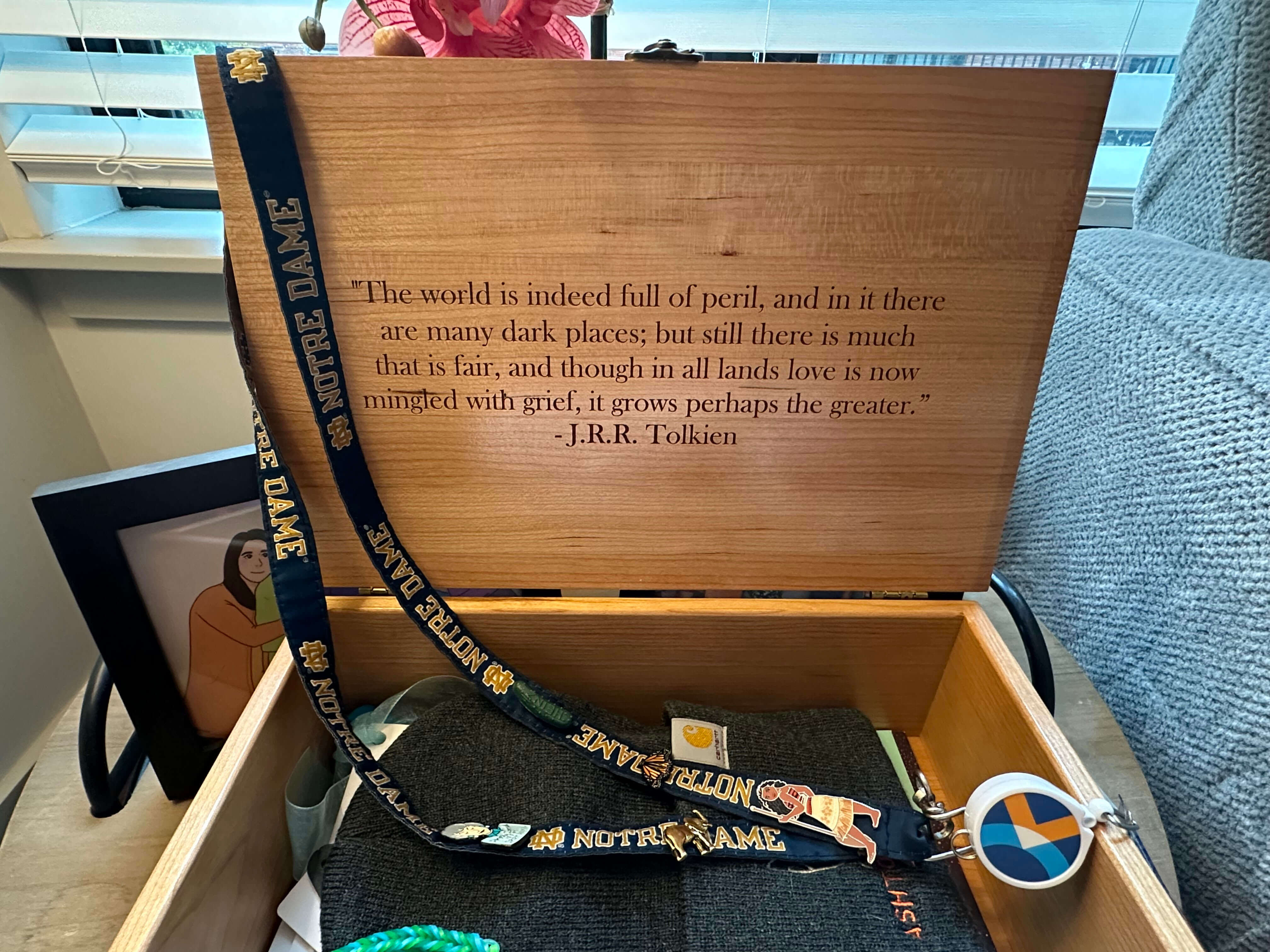
<p><strong><script src="https://al.nd.edu/javascripts/lb.js?v=2023-05-17" defer></script><ul id="gallery-843" class="gallery-lb gallery-843" data-count="9"><li><a href="https://weare.nd.edu/assets/638053/fullsize/2023_upmc_chp_graduation_ceremony_11146.jpeg" title="" data-title=""><img src="https://weare.nd.edu/assets/638053/300x300/2023_upmc_chp_graduation_ceremony_11146.jpeg" alt="Four smiling individuals: a woman in a blue floral dress, a man in a blue plaid blazer, a woman in a pink eyelet dress, and a woman in a white strawberry print dress stand against a lush green background." width="300" height="300" loading="lazy"></a></li><li><a href="https://weare.nd.edu/assets/638054/fullsize/img_0913.jpeg" title="" data-title=""><img src="https://weare.nd.edu/assets/638054/300x300/img_0913.jpeg" alt="A joyful young woman, wearing a heart-patterned headband and dark shorts, stands on a brick path with one leg raised, holding a pink sign that says &quot;I JUST FINISHED INTERN YEAR&quot; in white glitter letters. A green lawn and white fence are behind her." width="300" height="300" loading="lazy"></a></li><li><a href="https://weare.nd.edu/assets/638052/fullsize/img_2512.jpeg" title="" data-title=""><img src="https://weare.nd.edu/assets/638052/300x300/img_2512.jpeg" alt="Two smiling young women in blue &quot;THEN. NOW. FOREVER. Notre Dame Football&quot; t-shirts pose in the stands of Notre Dame Stadium. Below, football players in gold and navy uniforms are on the green field." width="300" height="300" loading="lazy"></a></li><li><a href="https://weare.nd.edu/assets/638051/fullsize/img_4685jpg.jpg" title="" data-title=""><img src="https://weare.nd.edu/assets/638051/300x300/img_4685jpg.jpg" alt="Dark blue ink on a rough, light brown wall reads: Wherever you go, there you are. It is signed Christy Lucas &#39;16, with Cara Lucas &#39;16 also written diagonally on the left." width="300" height="300" loading="lazy"></a></li><li><a href="https://weare.nd.edu/assets/638049/fullsize/pasposter.jpg" title="" data-title=""><img src="https://weare.nd.edu/assets/638049/300x300/pasposter.jpg" alt="Smiling woman in a pink &amp; red plaid blazer stands proudly next to a research poster titled &quot;Who is Behind the Gown? Investigating Physical Comfort &amp; Emotional Distress Related to Inpatient Attire Among Children with Cancer.&quot;" width="300" height="300" loading="lazy"></a></li><li><a href="https://weare.nd.edu/assets/638050/fullsize/img_4755jpg.jpg" title="" data-title=""><img src="https://weare.nd.edu/assets/638050/300x300/img_4755jpg.jpg" alt="Two smiling Notre Dame graduates wear black caps, gowns, and blue stoles with gold ND logos, standing near Notre Dame Stadium on a bright day." width="300" height="300" loading="lazy"></a></li><li><a href="https://weare.nd.edu/assets/638047/fullsize/umatter_2020.jpg" title="" data-title=""><img src="https://weare.nd.edu/assets/638047/300x300/umatter_2020.jpg" alt="A smiling woman with long brown hair wears a yellow sunflower dress and pink socks. She stands beside a man in a maroon scrub top, red and black plaid pants, and brown shoes. They are on a paver patio with a white fence, green grass, and trees under a sunny sky." width="300" height="300" loading="lazy"></a></li><li><a href="https://weare.nd.edu/assets/638048/fullsize/swh3.jpg" title="" data-title=""><img src="https://weare.nd.edu/assets/638048/300x300/swh3.jpg" alt="Two children look from a hospital window at yellow fireworks above a city skyline. An older child in a star-patterned shirt waves, while a younger child in a heart-patterned outfit kneels. &quot;Stitches with Hope&quot; text, featuring purple &quot;Hope&quot; and a pink flower, is above them." width="300" height="300" loading="lazy"></a></li><li><a href="https://weare.nd.edu/assets/638046/fullsize/box.jpg" title="" data-title=""><img src="https://weare.nd.edu/assets/638046/300x300/box.jpg" alt="Open wooden box featuring a Tolkien quote on the lid: &quot;The world is indeed full of peril, and in it there are many dark places; but still there is much that is fair, and though in all lands love is now mingled with grief, it grows perhaps the greater.&quot; Inside are a Notre Dame lanyard, knit item, and badge reel." width="300" height="300" loading="lazy"></a></li></ul><script>document.addEventListener("DOMContentLoaded", function(){var lightbox = new Lightbox({showCaptions: false,elements: document.querySelector(".gallery-843").querySelectorAll("a")});});</script></strong></p>
<p> </p>
<p>“I’m comfortable sitting with people in the uncomfortable moments of life,” admits Lucas, who was recognized by the Notre Dame Alumni Association as a <a href="http://domerdozen.nd.edu">2025 Domer Dozen</a> honoree. “My calling and my niche in life is what I call: ‘to sit with people in the valleys.’”</p>
<p>Now, as a master’s student in Media, Medicine, and Health at Harvard Medical School, Lucas explores parental bereavement through her capstone, “Ever After.” Her thoughtful listening and storytelling approach values accompaniment and honors terminal pediatric patients after their passing, expanding caregiving to include before, during, and after end-of-life.</p>
<p>To Lucas, narrative medicine is a means to preserve a child’s legacy that remains ever-present with their families:</p>
<p>“In bereavement, those parents aren’t often asked to share their stories,” Lucas explains. “If you just give people the chance to share their story, what will they tell you?</p>
<p>“Most parents didn’t focus on the death of their child, and most of them didn’t even mention that [their child] had cancer. They told these funny stories about poop jokes and pranks, and painted this picture of what their kid would look like. It’s an intimate look into how they remember their child.”</p>
<p>Serving as a pediatric oncologist, Lucas credits her interdisciplinary education for helping develop her integrative knowledge and capacity to care. Though she spent her first undergraduate year at the University of Pittsburgh, Lucas was drawn to Notre Dame’s beauty, dedication to social justice, and community of hard-working students with “grit, but who are also kind.” She transferred as a sophomore, joining her twin sister, Cara ’16, under the Dome to pursue a double major in science preprofessional studies and <a href="https://psychology.nd.edu/">psychology.</a></p>
<p>As a junior, Lucas enrolled in Psychology and Medicine, a course co-taught by adjunct professor Dr. Robert White and Kathleen Kolberg, associate dean in the College of Science, that highlights the human aspects of medicine not shown in television dramas. It was in that class that Lucas brainstormed “Stitches with Hope,” a program that provides inpatient pediatric patients with comfortable clothing to preserve patient dignity and individual expression.</p>
<p>She carried her passion for patient-centered care with her through Penn State Medical College, graduating in 2020. During medical school, Lucas took her undergraduate project and established it as a permanent fund at the UPMC Children’s Hospital of Pittsburgh Foundation. Since August 2018, “Stitches with Hope” has provided clothing to children to “sustain a sense of identity, dignity, and hope in the healing process.” She went on to complete her residency at UPMC Children’s Hospital of Pittsburgh.</p>
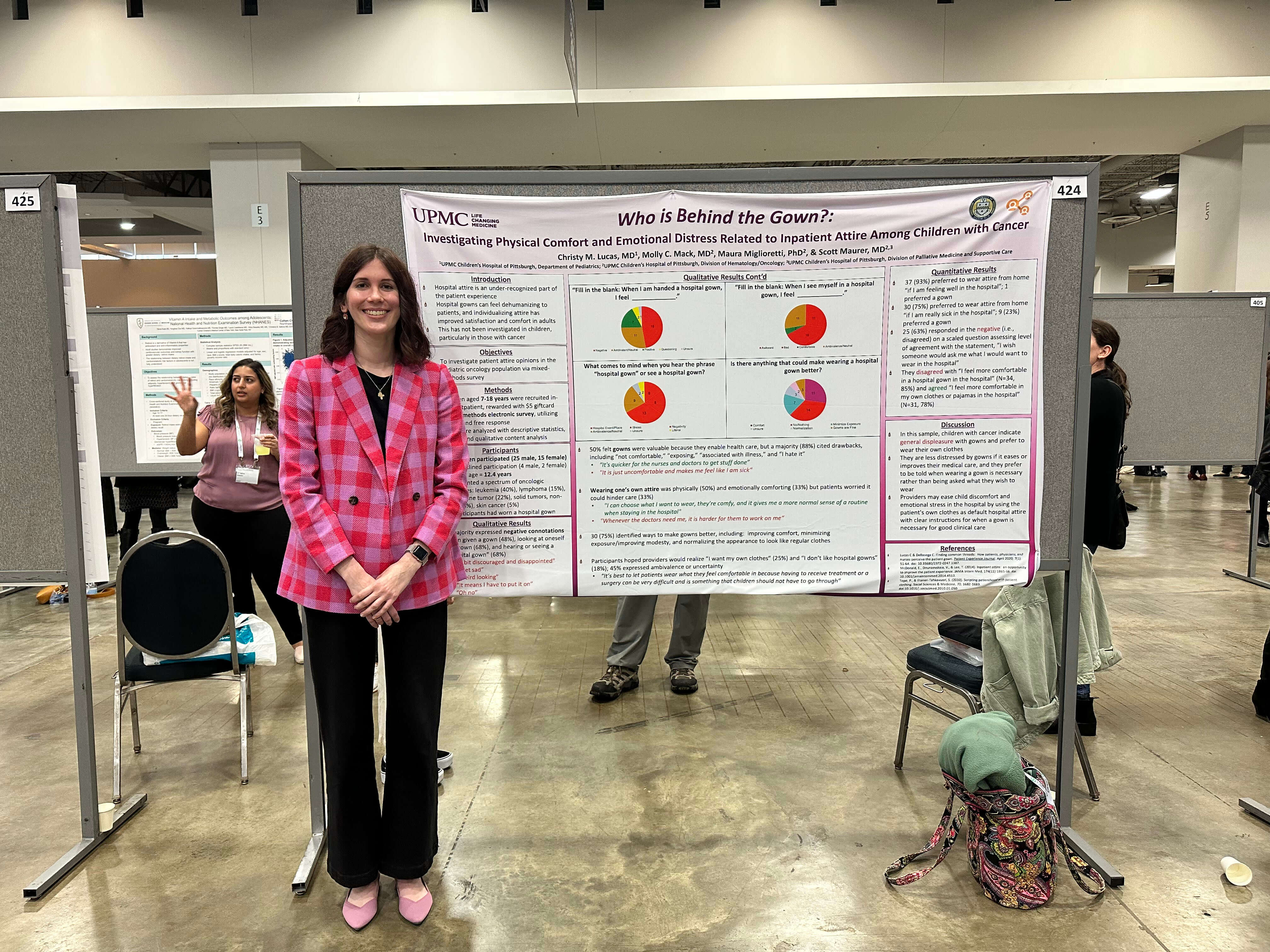
<p>After witnessing the impact of “Stitches with Hope,” Lucas ambitiously sought to abolish the generic hospital gown and to innovate in-patient care. After discussing with essential healthcare workers, she realized that hospital gowns are a “somewhat necessary evil,” but have existed for years without significant alterations. So, Lucas conducted a qualitative study.</p>
<p>She found that neither patients nor doctors and nurses liked the gowns — patients did not believe there was an alternative, and doctors and nurses “often felt ‘guilt’ for giving a garment they themselves wouldn’t wear.” Then, she had patients draw their ideal inpatient attire. From the data, Lucas invented UMATTER: Uniquely Made Attire, Tailored for Tubes &amp; Testing, Encouraging Respect. The design is an evidence-based, patient-guided, provider-approved garment patented in the European Union and pending in the United States.</p>
<p>While she loves her calling, Lucas also sits with the grief and suffering that accompanies treating children with terminal cancer. On heavy days, she finds resonance in the arts, an outlet she attributes to her “Arts &amp; Letters brain” fostered at Notre Dame. Some days, she listens to a playlist on Spotify. Other days, Lucas references Pieter Bruegel the Elder’s <a href="https://artsandculture.google.com/story/landscape-with-the-fall-of-icarus-royal-museums-of-fine-arts-of-belgium/ewUxXpmuNdcLJg?hl=en">Landscape with the Fall of Icarus,</a> a painting she studied in a narrative ethics class.</p>
<p>“The painting is a commentary on our view of human suffering. For some people, it’s hard, and you have to turn away because you can’t jump into the water and save people. But for me, I’ve kind of always identified with the one who sees the suffering of the drowned angel in the water and [jumps] in to be present with them.”</p>
<p>When asked to imagine the future of pediatric cancer care, Lucas places her hope in “the people in palliative care and the people we get to take care of.” The Penn State Andrew Creasy and Savino Family Award recipient—honored as a graduating medical student who shows potential for curing and treating childhood cancer and other life-threatening pediatric illnesses—reflects on a pilgrimage she attended as an undergraduate at Notre Dame and the words spoken by Rev. Jim King, C.S.C., ’98, on that trip: “God is not finished with you yet.”</p>
<p>“Advocate for yourself and advocate for who you want to be,” she says. “You owe it to yourself to be a faithful narrator to your own story. You are enough — just as you are — all ways, always.”</p>
<p class="attribution">Originally published by <span class="rel-author">Julianna Marchese '27</span> at <span class="rel-source"><a href="https://weare.nd.edu/stories/redefining-the-narrative-of-patient-centered-care/">weare.nd.edu, </a> <em>a digital publication from the Notre Dame Alumni Association telling stories of Domers doing good in the world, </em></span>on <span class="rel-pubdate">November 11, 2025</span>.</p>]]>
    </content>
    <link rel="enclosure" type="image/jpeg" href="https://al.nd.edu/assets/639027/wearend_christylucas_1440x617.jpg" title="A smiling woman with dark hair and sparkling earrings wears a red and pink plaid blazer in front of a research poster on patient attire at UPMC Children's Hospital."/>
    <author>
      <name>Julianna Marchese '27</name>
    </author>
  </entry>
  <entry>
    <id>tag:al.nd.edu,2005:News/175922</id>
    <published>2025-10-20T15:10:10-04:00</published>
    <updated>2025-10-20T15:10:30-04:00</updated>
    <link rel="alternate" type="text/html" href="https://al.nd.edu/news/latest-news/search-for-the-truth-economics-and-government-major-joseph-blanco-92-on-processing-change/"/>
    <title>‘Search for the truth’: Economics and government major Joseph Blanco ’92 on processing change</title>
    <summary type="text">
      <![CDATA[Joseph Blanco graduated from the University of Notre Dame in 1992, majoring in economics and government, and later returned to study theology and philosophy. He is currently the president of Secretariat, a business consulting firm. Despite numerous career changes requiring him to learn new…]]>
    </summary>
    <content type="html">
      <![CDATA[<p>Joseph Blanco graduated from the University of Notre Dame in 1992, majoring in economics and government, and later returned to study theology and philosophy. He is currently the president of Secretariat, a business consulting firm.</p>
<p>Despite numerous career changes requiring him to learn new skills and enter new fields, Blanco adapted easily. He attributes this comfort with fluidity to the broad, analytical worldview he gained from his liberal arts education.</p>
<p><iframe width="1200" height="673" src="https://www.youtube.com/embed/9cd6nIiRRKI" allowfullscreen="allowfullscreen"></iframe></p>
<p><strong>Video transcription:</strong></p>
<p>Joseph Blanco: I'm Joseph Blanco, and I graduated in 1992 with a B.A. in <a href="https://economics.nd.edu/">economics</a> and what was then called government, now <a href="https://politicalscience.nd.edu/">political science</a>.</p>
<p>I have perhaps a very circuitous path to get to where I am. So when I graduated from Notre Dame, I spent three years in the fleet with the Navy — I'd come here on an R.O.T.C. scholarship. I then left the Navy and came back here to Notre Dame and actually studied <a href="https://theology.nd.edu/">theology</a> and <a href="https://philosophy.nd.edu/">philosophy</a>, again within Arts &amp; Letters.</p>
<p>After law school, I clerked for a federal judge for a year and then started in the private practice of law. And so that led me through a whole bunch of turns to where I am now, though, as president of Secretariat. The company is rapidly growing in the professional services expert witness field, and so we're almost 600 folks now and operating in 11 countries.</p>
<p>My career, in particular, has involved a lot of career shifts. Present in every one of them was having to learn. When I left the law firm to go to Crawford &amp; Company, I had to learn a whole new industry. I think at the end of the day, why the humanities are so important to today's business is because I don't know what that change is going to be. Your ability to think about that change and process that change is what's going to be able to distinguish you from others. And I think that having that broad liberal arts view of the world makes that more accessible.</p>
<p>As I look back and really think about the kind of, if you will, four areas I studied — political science, economics, theology, and philosophy — it wasn't until I got deeply into them I realized how much interrelation there was. And the farther away from it, the more I think that's true — that there really is an interdisciplinary nature of the world.</p>
<p>I think that they're all different ways to search for the truth. And as long as you're searching for the truth, you're going to end up — or hopefully end up — in the same place. But it really is a bunch of different disciplines when trying to get there.</p>
<p>If I had not come here and explored and been open to thinking and be thinking in new ways, I'm not sure I would have been able to kind of move on with life. And it's been just a wonderful experience to have had that time to really think deeply, and I'll be forever grateful to the College for that.</p>]]>
    </content>
    <link rel="enclosure" type="image/jpeg" href="https://al.nd.edu/assets/635335/joseph_blanco_1200x.jpg" title="Joseph Blanco, smiling broadly, wears glasses, a blue plaid jacket, and a light blue shirt. Behind him, a blurred abstract mural with yellow, red, and teal shapes."/>
    <author>
      <name>Jon Hendricks</name>
    </author>
  </entry>
  <entry>
    <id>tag:al.nd.edu,2005:News/174033</id>
    <published>2025-07-28T18:00:00-04:00</published>
    <updated>2025-07-31T09:18:59-04:00</updated>
    <link rel="alternate" type="text/html" href="https://al.nd.edu/news/latest-news/painting-inspiration-kathryn-turner-95-finds-her-artistic-path-at-notre-dame/"/>
    <title>Painting inspiration: Kathryn Turner ’95 finds her artistic path</title>
    <summary type="text">
      <![CDATA[Kathryn Turner ’95 spent her childhood roaming the acres of her family’s ranch inside Grand Teton National Park in Wyoming. First, she rode on the same horse as her mom, Mary Kay Brady SMC ’64, as the family worked around the ranch, and then, by the time she was three, she was riding…]]>
    </summary>
    <content type="html">
      <![CDATA[<p><strong>Kathryn Turner ’95</strong> spent her childhood roaming the acres of her family’s ranch inside Grand Teton National Park in Wyoming. First, she rode on the same horse as her mom, Mary Kay Brady SMC ’64, as the family worked around the ranch, and then, by the time she was three, she was riding her own horse. As Turner got older, a sketchbook was her constant companion as she observed the changing seasons and wildlife at the Triangle X Ranch, where she is part of the fourth generation in the family business.</p>
<p>“I was knitted into this community of family working together with the land, very much tied to a sense of place. With the beauty and the legacy of the West, I was shaped by that,” Turner said. “I am deeply attuned to beauty, and I think that’s why I’m here: to capture beauty. Art became my language to express what I was, what I loved, and what I appreciated about what I was surrounded with in the natural world. It became my way of understanding the natural world.”</p>
<p>She knew that she wanted to be an artist since those childhood days spent sketching on the ranch. Her family’s land has inspired her art all her life. Today, she lives near the ranch and is an award-winning painter, with her own gallery in nearby Jackson and her art on display at exhibitions in museums around the country.</p>
<p>Back in the ’90s, when the time came to choose a college, Turner wasn’t quite sure the University of Notre Dame was the place for her to reach her artistic goals. But with a Saint Mary’s graduate for a mom and a Notre Dame graduate, John Turner ’64, for a dad, plus a scholarship in hand, Turner moved from Wyoming to South Bend.</p>
<p>“It was very challenging for me to go from Jackson Hole to South Bend in August — it was so hot,” she recalled. “Thank God for the lakes. I would take my paints to the lakeshore.”</p>
<figure class="image image-left"><img src="https://al.nd.edu/assets/623763/img_3796_400x.jpg" alt="Woman wearing a Notre Dame baseball cap, gray t-shirt, and blue shorts smiles while sketching by a stream, with a watercolor palette at her side and a treeline and mountains in the background." width="266" height="400">
<figcaption>Photo provided.</figcaption>
</figure>
<p>And more often than not, you’d find her at the <a href="https://raclinmurphymuseum.nd.edu/">Snite Museum of Art </a>in the center of campus. “I was somebody who just wore out the halls of the Snite Museum,” said Turner, who was a <a href="https://pls.nd.edu/">Program of Liberal Studies</a> major. “For such a small museum, it had such a high caliber of art, and it was right in the middle of our lives. Even if I just had a few moments, I would go and check out one piece of art and sit with it. The Snite Museum was a great teacher of mine.”</p>
<p>And it wasn’t just the museum where she connected with her love of art: She sang with the folk choir, took dance classes at her mom’s alma mater across the street, did illustrations for The Observer, and had her own art studio space in<a href="https://artdept.nd.edu/about/our-facilities/"> Riley Hall</a>.</p>
<p>Sometimes, she’d sell her football tickets to take advantage of four hours of quiet time in the studio while the rest of the student body cheered on the Irish in the stadium — though she says her brother, Mark Turner ’97, was exasperated by that decision. She also spent a semester in Rome through Saint Mary’s, enrolled in drawing and art history classes that took her all over the city.</p>
<p>“I was at Notre Dame at a time when there was more art being developed. You had to work a little harder than maybe a business student would have had to; it wasn’t spoon-fed,” Turner said. “But there was also freedom in that I felt like I could create what I needed for a funky art student at Notre Dame.”</p>
<p>After graduation, she headed to the University of Virginia to earn a master’s degree in education. She worked at the Smithsonian and taught art at a Catholic school, an experience she loved, but the ranch in Wyoming lured her home.</p>
<p>“When I moved back, I worked at the National Museum of Wildlife Art; that was my day job. But every minute I could, I was very committed and devoted to learning how to paint and draw. Luckily, in a place like Jackson Hole, which has a special focus on culture and art, it attracts artists from all over the world, so I was able to study from really noted artists who were drawn to this place,” Turner said. “How lucky am I — to be back in my little, tiny town, but with really exceptional art influences.”</p>
<p>She also had all the supplies she needed for the job, thanks to her father’s Notre Dame roommate, Nick Rassas ’66, an All-American football player for the Irish who went on to play in the NFL.</p>
<p>“Nick and Dad have always been like brothers, and I called him up sharing my dream of returning to Wyoming to realize my dream of being an artist,” Turner said. “Unbeknownst to me, Nick secretly shipped out to Wyoming all the art supplies that an aspiring artist might ever need to make her start. I am still using these top-quality supplies today, 25 years later — Notre Dame is indeed family.”</p>
<p>She’s owned the <a href="https://turnerfineart.com/?srsltid=AfmBOoqqBQDgm2n-oKpBf2EYfc3woBRQpvDI0UjF-ByiYbOy_7V0FSQh">Turner Fine Art Gallery</a> in Jackson for 20 years, and is still part of the family business at the ranch, where she has a standing weekly horseback ride with her dad. It's a balancing act, running a small business alongside making art, and she is very disciplined about maintaining time in her schedule to paint. “Without discipline and deadlines, no art would get done in my world,” Turner said.</p>
<figure class="image image-right"><img src="https://al.nd.edu/assets/623764/kathryn_mapes_turner_rain_on_the_snake_river_400x.jpg" alt="Misty, purple-hued mountains rise above a calm lake and a dark shoreline with a few trees." width="400" height="249">
<figcaption>Photo provided.</figcaption>
</figure>
<p>“I have this belief that I’m in the service industry, and that I need to give the art what it requires to serve the world, to serve beauty,” she continued. “I believe the world needs art, and I’m just making my contribution in service.”</p>
<p>This service mindset was shaped at Notre Dame, where she was inspired by her fellow Domers to strive for excellence.</p>
<p>“That's such a thread through everything that Notre Dame does, from the academics to the athletics to the music and architecture. I found Notre Dame incredibly inspiring,” said Turner, who has the word “excellence” emblazoned on the wall of her studio as a reminder.</p>
<p>Turner’s impressionist paintings chronicle a life lived with the land on her family’s ranch, and she hopes to inspire viewers to ponder their connection with the natural world.</p>
<p>“I want to make art that will give pause to the viewer in such a way that moves them emotionally to care in a deeper way,” she said. “Ultimately, my goal is to create art that is a reminder that we share this planet with other beings, and just offer a way of meditation, or a reminder or a reflection of this interconnectedness.”</p>
<p><em>Originally published by <a href="https://weare.nd.edu/stories/authors/maura-sullivan-hill-11/">Maura Sullivan Hill ’90</a> at <a href="https://weare.nd.edu/">weare.nd.edu</a>, a digital publication from the Notre Dame Alumni Association telling stories of Domers doing good in the world.</em></p>]]>
    </content>
    <link rel="enclosure" type="image/jpeg" href="https://al.nd.edu/assets/623765/kathrynturner_1200x.jpg" title="A woman wearing a red and brown plaid shirt smiles as she works at a table in her art studio.  Containers of paint brushes, pencils, and other art supplies surround her, and various artwork pieces are tacked to the wall behind her."/>
    <author>
      <name>Maura Sullivan Hill ’11</name>
    </author>
  </entry>
  <entry>
    <id>tag:al.nd.edu,2005:News/172535</id>
    <published>2025-05-14T12:00:00-04:00</published>
    <updated>2025-05-14T12:11:17-04:00</updated>
    <link rel="alternate" type="text/html" href="https://al.nd.edu/news/latest-news/kenneth-scheve-appointed-dean-of-the-university-of-notre-dames-college-of-arts-and-letters/"/>
    <title>Kenneth Scheve appointed dean of the College of Arts &amp; Letters</title>
    <summary type="text">
      <![CDATA[Kenneth Scheve, the Dean Acheson Professor of Political Science and Global Affairs and the dean of social science at Yale University, has been appointed the I.A. O’Shaughnessy Dean of the College of Arts and Letters by University of Notre Dame President Rev. Robert A. Dowd, C.S.C. Scheve, who will also hold a tenured faculty position in the Department of Political Science, begins a five-year term as dean on July 1.]]>
    </summary>
    <content type="html">
      <![CDATA[<figure class="image image-right"><img src="https://news.nd.edu/assets/616436/kenneth_scheve_300_366.jpg" alt="Man in a navy suit, striped tie, and glasses stands against a white wood-paneled background, smiling." width="300" height="365">
<figcaption>Kenneth Scheve, the I.A. O'Shaughnessy Dean of the College of Arts and Letters</figcaption>
</figure>
<p>Kenneth Scheve, the Dean Acheson Professor of Political Science and Global Affairs and the dean of social science at Yale University, has been appointed the I.A. O’Shaughnessy Dean of the <a href="http://al.nd.edu">College of Arts and Letters</a> by University of Notre Dame President <a href="https://president.nd.edu/">Rev. Robert A. Dowd, C.S.C.</a></p>
<p>Scheve, who will also hold a tenured faculty position in the <a href="politicalscience.nd.edu">Department of Political Science</a>, begins a five-year term as dean on July 1.</p>
<p>“Ken Scheve is a renowned political scientist and experienced administrator with a deep commitment to our Catholic mission,” Father Dowd said. “His global perspective, commitment to interdisciplinary research, and collaborative leadership style make him the ideal person to serve as dean of Notre Dame’s oldest and largest college at this point in the University’s history. We are delighted to welcome Ken back to his alma mater.”</p>
<p>An elected member of the American Academy of Arts and Sciences, Scheve studies the domestic and international governance of modern capitalism — seeking to explain how politics succeeds and fails in contributing to shared prosperity. His research examines inequality and redistribution, the politics of globalization, the social and political consequences of long-run economic change, and climate politics.</p>
<p>He is the author, with David Stasavage, of <a href="https://press.princeton.edu/books/hardcover/9780691165455/taxing-the-rich"><em>Taxing the Rich: A History of Fiscal Fairness in the United States and Europe</em></a>, which examines the role of fairness concerns in the politics of progressive taxation from the early 19th century through contemporary debates. Scheve is also the author, with fellow Class of 1990 alumnus <a href="https://www.tuck.dartmouth.edu/faculty/faculty-directory/matthew-slaughter">Matthew Slaughter</a>, of <a href="https://cup.columbia.edu/book/globalization-and-the-perceptions-of-american-workers/9780881322958/"><em>Globalization and the Perceptions of American Workers</em></a>, examining American public opinion about the liberalization of trade, immigration and foreign direct investment policies. His research has been published in leading journals including the <em>American Political Science Review</em>, <em>American Journal of Political Science</em>, <em>The Journal of Politics</em>, <em>Proceedings of the National Academy of Sciences</em>, and <em>International Organization</em>.</p>
<blockquote class="pull">
<p>“For many, attending Notre Dame is a transformative experience, and it certainly was for me — it helped shape my values, deepened my curiosity about the world, and instilled invaluable habits of mind. I have a deep appreciation for what a Catholic liberal arts education can mean in someone’s life. Literature teaches us empathy. It helps with the very qualities we need — being able to understand other points of view and other values and to imagine other worlds.”</p>
<p class="cite">— Kenneth Scheve, the I.A. O’Shaughnessy Dean of the College of Arts &amp; Letters</p>
</blockquote>
<p>Scheve’s scholarly awards include the International Political Economy Society’s David A. Lake Award, the American Political Science Association (APSA) Franklin L. Burdette/Pi Sigma Alpha Award, the Michael Wallerstein Award from the APSA’s Political Economy Section, the Robert O. Keohane Award from the journal International Organization, and the International Studies Association’s Society for Women in International Political Economy Mentor Award.</p>
<p>At Notre Dame, Scheve majored in economics and graduated with highest honors. He worked as a financial analyst in Morgan Stanley’s Commercial Bank Group for two years and then taught math at a high school in Kansas City before going on to complete a Ph.D. in political science from Harvard University, where he won the Toppan Prize for best dissertation on the subject of political science.</p>
<p>Scheve began his faculty career as an assistant professor in the Department of Political Science at Yale. He has also held faculty positions at the University of Michigan and Stanford University, where he served in a number of leadership roles, including director of The Europe Center. He returned to Yale in 2020, where he served as deputy director for academic affairs at the Jackson Institute (now the Jackson School) for Global Affairs, leading faculty recruitment and curricula development for a new Master in Public Policy in Global Affairs degree.</p>
<p>In his current role as dean of social sciences, Scheve serves on the leadership team for the dean of Yale’s Faculty of Arts and Sciences, oversees the seven departments in the Division of Social Sciences, and works with the dean of humanities to steward cross-divisional programs such as the Department of African American Studies.</p>
<p>“In an exceptionally competitive pool, Ken rose to the top,” said <a href="https://www.nd.edu/about/leadership/council/john-t-mcgreevy/">John T. McGreevy</a>, Notre Dame’s Charles and Jill Fischer Provost. “He is an award-winning teacher-scholar with an impressive international research profile. He is also an energetic problem-solver with extensive administrative experience and a commitment to our Catholic mission. We were uniformly impressed with his vision, leadership style, and dedication to excellence.”</p>
<p>McGreevy thanked the search committee for its efforts over the past several months. “The committee members were excellent recruiters and representatives of Notre Dame,” he said. “I’m grateful for their dedication and discernment throughout this process.”</p>
<p>Established in 1842, the year Notre Dame was founded, the College of Arts &amp; Letters includes 20 departments across the arts, humanities, and social sciences; 20 centers and institutes; more than 550 faculty members; 3,000 undergraduates; and 1,100 graduate students. The college is also the liberal arts home for all Notre Dame students as they take core curriculum courses and electives in everything from theology and philosophy to economics and creative writing.</p>
<p>“For many, attending Notre Dame is a transformative experience, and it certainly was for me — it helped shape my values, deepened my curiosity about the world, and instilled invaluable habits of mind,” Scheve said. “I have a deep appreciation for what a Catholic liberal arts education can mean in someone’s life. I’m truly honored to return in a role where I can contribute to that in a meaningful way and support the outstanding work of the college’s departments and faculty.</p>
<p>“The moment I saw this opportunity, I felt a real spark. It brings together everything I’ve worked on — as a teacher, scholar, and administrator — and brings it to bear on a mission that I’m really passionate about.”</p>
<p><strong> </strong></p>
<p class="attribution">Originally published at <span class="rel-source"><a href="https://news.nd.edu/news/kenneth-scheve-appointed-dean-of-the-university-of-notre-dames-college-of-arts-and-letters/">news.nd.edu</a></span> on <span class="rel-pubdate">May 14, 2025</span>.</p>]]>
    </content>
    <link rel="enclosure" type="image/jpeg" href="https://al.nd.edu/assets/616555/kenneth_scheve_1200_800.jpg" title="Kenneth Scheve, the I.A. O’Shaughnessy Dean of the College of Arts &amp; Letters, a man with glasses and a navy suit jacket with a gold and navy striped tie smiles against a white wooden background."/>
    <author>
      <name>Kate Garry</name>
    </author>
  </entry>
  <entry>
    <id>tag:al.nd.edu,2005:News/172203</id>
    <published>2025-05-06T08:34:00-04:00</published>
    <updated>2025-06-19T16:27:01-04:00</updated>
    <link rel="alternate" type="text/html" href="https://al.nd.edu/news/latest-news/alumnus-charles-yockey-named-2025-schwarzman-scholar/"/>
    <title>Arts &amp; Letters alumnus Charles Yockey named 2025 Schwarzman Scholar</title>
    <summary type="text">
      <![CDATA[Editor’s note: Since this announcement, Charles Yockey has withdrawn from the Schwarzman Scholars program to accept a political appointment in the federal government. He plans to participate in the program in the future. University of Notre Dame alumnus Charles Yockey has been named…]]>
    </summary>
    <content type="html">
      <![CDATA[<p><em>Editor’s note: Since this announcement, Charles Yockey has withdrawn from the Schwarzman Scholars program to accept a political appointment in the federal government. He plans to participate in the program in the future.</em></p>
<p>University of Notre Dame alumnus Charles Yockey has been named a 2025 Schwarzman Scholar. He is the University’s second Schwarzman Scholar since the program was established in 2015. He is one of 150 students selected for the award from a pool of nearly 5,000 applicants.</p>
<p>Schwarzman Scholars participate in a one-year, fully funded master’s degree program in global affairs at Tsinghua University in China. Designed to build a global community of future leaders, the program offers an immersive learning experience dedicated to leadership development.</p>
<p>“We were so happy to find out that Charles had been selected as a 2025 Schwarzman Scholar,” said Jeffrey Thibert, senior director of undergraduate scholarly initiatives and the Paul and Maureen Stefanick Executive Director of the <a href="https://cuse.nd.edu">Flatley Center for Undergraduate Scholarly Engagement </a>(CUSE) at Notre Dame. “One of the most rewarding aspects of working at Notre Dame is seeing our students and alumni receive these kinds of opportunities and knowing they are pursuing them not in service to themselves but in service to justice. It’s been a pleasure getting to know Charles over these past few years, and we’re looking forward to seeing how he continues to develop as a leader, both in the Schwarzman Scholars program and throughout his career.”</p>
<p>Yockey thanked CUSE and others.</p>
<p>“I am deeply grateful to the entire Notre Dame community, whose encouragement has played a crucial role in my academic and professional growth,” Yockey said. “I would especially like to thank the <a href="https://pls.nd.edu/">Program of Liberal Studies</a> and the <a href="https://constudies.nd.edu/">Center for Citizenship and Constitutional Government</a>, which have been instrumental in shaping my intellectual development. I would also like to acknowledge Dr. Thibert and the CUSE team, who provided invaluable guidance and support during the Schwarzman application process.”</p>
<p>Yockey graduated from Notre Dame in 2023, earning a bachelor’s degree in the Program of Liberal Studies. He minored in constitutional studies. He was a Center for Citizenship and Constitutional Government <a href="https://constudies.nd.edu/fellowships/menard-fellows/">Tocqueville Fellow</a> and a member of the Notre Dame chapter of the Federalist Society. He participated in research alongside <a href="https://politicalscience.nd.edu/people/matthew-hall/">Matthew E.K. Hall</a>, the David A. Potenziani Memorial College Professor of Constitutional Studies, and <a href="https://politicalscience.nd.edu/people/emilia-justyna-powell/">Emilia Justyna Powell</a>, professor of political science and concurrent professor of law.</p>
<p>Away from campus, he was a summer analyst for two investment firms — one in New York and one in Chicago — as well as an undergraduate intern for the U.S. Attorney’s Office in Illinois. As a senior, he was presented with the Stephen Rogers Award, given annually to a Program of Liberal Studies graduate for the purpose of graduate study.</p>
<p>Following his time at Notre Dame, he earned a Master of Philosophy in political thought and intellectual history from the University of Cambridge. He studied at Peterhouse, the oldest of the Cambridge colleges. His thesis explored sovereign debt remediation in historical perspective.</p>
<p>He currently resides in Budapest, where he works remotely as a policy analyst at the Manhattan Institute’s Center for Legal Policy. His work focuses on antitrust, corporate governance, and regulatory policy.</p>
<p>Additionally, he is a Budapest Fellow at the Hungary Foundation, which seeks to deepen cultural ties between Hungary and the U.S., and, in conjunction, a visiting researcher at Mathias Corvinus Collegium’s Center for International Law. He is a member of the Bretton Woods Committee, the Federalist Society, the International Institute for Strategic Studies, and the Royal Institute of International Affairs, and he sits on the board of the D’Oyly Carte Foundation.</p>
<p>He was named a 2025 Publius Fellow by the Claremont Institute and, in February, received the Director’s Award from the Hoover Institution for a paper on technology policy.</p>
<p>Looking ahead, he hopes to leverage his Schwarzman experience to promote greater Sino-American understanding and facilitate collaboration between the public and private sectors as a diplomat, lawyer, or policymaker.</p>
<p>“The Schwarzman Scholars program offers a unique opportunity to foster mutual understanding between China and the United States, two nations whose relationship will play a pivotal role in shaping the 21st century,” Yockey said. “In today’s contentious geopolitical climate, the importance of Sino-American relations cannot be overstated. I am eager to continue my research on sovereign debt diplomacy, which I began in graduate school and have carried forward in my early career. My experience living abroad and working on policy issues will, I hope, enable me to contribute meaningfully to the 10th cohort of Schwarzman Scholars and strengthen the vital relationship between our two political communities.”</p>
<p>Inspired by the Rhodes Scholarship, the Schwarzman Scholarship is a highly selective, one-year master’s degree program at Tsinghua University in Beijing. It is designed to prepare the next generation of global leaders for the challenges of the future.</p>
<p>For more on this and other scholarship opportunities, visit <a href="https://cuse.nd.edu">cuse.nd.edu</a>.</p>
<p class="attribution">Originally published by <span class="rel-author">Erin Blasko</span> at <span class="rel-source"><a href="https://news.nd.edu/news/alumnus-charles-yockey-named-2025-schwarzman-scholar/">news.nd.edu</a></span> on <span class="rel-pubdate">May 02, 2025</span>.</p>]]>
    </content>
    <link rel="enclosure" type="image/jpeg" href="https://al.nd.edu/assets/615293/img_2549.jpeg" title="Headshot of a light-skinned young man with wavy red hair, smiling, wearing a navy suit, white shirt, and maroon patterned tie against a white background."/>
    <author>
      <name>Erin Blasko</name>
    </author>
  </entry>
  <entry>
    <id>tag:al.nd.edu,2005:News/170971</id>
    <published>2025-03-24T11:54:00-04:00</published>
    <updated>2025-03-24T11:54:54-04:00</updated>
    <link rel="alternate" type="text/html" href="https://al.nd.edu/news/latest-news/video-alumna-madison-faller-15-on-how-interdisciplinary-learning-opens-up-the-world/"/>
    <title>Video: Alumna Madison Faller ’15 on how interdisciplinary learning opens up the world</title>
    <summary type="text">
      <![CDATA[Madison Faller graduated from the University of Notre Dame in 2015, majoring in economics and political science with a minor in the Hesburgh…]]>
    </summary>
    <content type="html">
      <![CDATA[<p><iframe width="800" height="449" src="https://www.youtube.com/embed/oxbx-5wpi4A" allowfullscreen="allowfullscreen"></iframe></p>
<p>Madison Faller graduated from the University of Notre Dame in 2015, majoring in economics and political science with a minor in the <a href="https://hesburghprogram.nd.edu/">Hesburgh Program in Public Service</a>. She currently works as a global investment strategist at J.P. Morgan Private Bank in London.</p>
<p>Faller’s multidisciplinary experience in the College of Arts &amp; Letters prepared her to solve difficult problems. In order to look at the big picture, she says, you need to explore and understand a range of perspectives.</p>
<h2><strong>Video transcription:</strong></h2>
<p>Madison Faller: I think I was always really interested in the way the world worked.</p>
<p>That originally led me to wanting to study economics. And then it was during my study abroad program in London that I really fell in love with political science.I think it added a really interesting humanities component.</p>
<p>I had two internships within finance, both after my sophomore and my junior years at Notre Dame. One of those internships led into a full-time job offer.</p>
<p>What I really honed in on was having a broader world view, and I really focused on the interdisciplinary approach through my experience within Arts &amp; Letters.</p>
<p>My next role at the firm — an investment strategy role — was even more closely tied to my Arts &amp; Letters experience and my understanding in my studies of economics and political science. I was very fortunate that they needed someone in London — I was asked to come here — and I’ve been in London now for about five and a half years.</p>
<p>I think that there’s something to be said about recognizing the strengths in different types of disciplines. Being able to take really large, big-picture topics that have a plethora of research and study on it — being able to view all of those different perspectives and then break it down and simplify it in order to communicate a thoughtful viewpoint, but also a persuasive one as well.</p>
<p>There are so many different things that can open up in terms of how you view the world and different ways of approaching problems. And it doesn’t necessarily have to be that job at a bank. It can be a job helping to develop thoughtful policy within a government organization or perhaps within a think tank, thinking about how to solve different really difficult world problems and providing advice for policy makers.</p>
<p>It really becomes more rooted in, “What did you learn in terms of how you view the world, and then how do you break down those problems and think about them differently from the person next to you?”</p>]]>
    </content>
    <link rel="enclosure" type="image/jpeg" href="https://al.nd.edu/assets/610222/final00_02_01_04still006.jpg" title="Madison Faller, a young woman with long brown hair, wearing a plaid blazer and cream top, walks through a park in London. A brown leather bag hangs from her shoulder."/>
    <author>
      <name>Jon Hendricks</name>
    </author>
  </entry>
  <entry>
    <id>tag:al.nd.edu,2005:News/170855</id>
    <published>2025-03-18T12:38:00-04:00</published>
    <updated>2025-03-18T12:39:27-04:00</updated>
    <link rel="alternate" type="text/html" href="https://al.nd.edu/news/latest-news/adm-christopher-grady-vice-chairman-of-the-joint-chiefs-of-staff-to-deliver-notre-dames-2025-commencement-address/"/>
    <title>Adm. Christopher Grady, Vice Chairman of the Joint Chiefs of Staff, to deliver Notre Dame’s 2025 Commencement address</title>
    <summary type="text">
      <![CDATA[Adm. Christopher Grady, the Vice Chairman and Acting Chairman of the Joint Chiefs of Staff, will be the principal speaker and receive an honorary degree at the University of Notre Dame’s 180th University Commencement Ceremony on May 18, Notre Dame President Rev. Robert A. Dowd, C.S.C., announced today. Grady, currently serving as the 12th Vice Chairman of the Joint Chiefs of Staff and the nation’s second-highest-ranking military officer, graduated from Notre Dame in 1984 and received his commission through Notre Dame’s Naval Reserve Officers Training Corps.]]>
    </summary>
    <content type="html">
      <![CDATA[<figure class="image image-right"><img src="https://news.nd.edu/assets/609381/admiral_grady_600.jpg" alt="A bald man in a dark suit and white collared shirt and tie faces forward. He has a serious expression. The U.S. flag and the Joint Chiefs of Staff flag are visible in the background." width="600" height="732">
<figcaption>Adm. Christopher Grady, Vice Chairman and Acting Chairman of the Joint Chiefs of Staff</figcaption>
</figure>
<p>Adm. Christopher Grady, the Vice Chairman and Acting Chairman of the Joint Chiefs of Staff, will be the principal speaker and receive an honorary degree at the University of Notre Dame’s 180th University <a href="https://commencement.nd.edu/">Commencement Ceremony</a> on May 18, Notre Dame President <a href="https://www.nd.edu/about/leadership/council/rev-robert-a-dowd-csc/">Rev. Robert A. Dowd, C.S.C.</a>, announced today.</p>
<p>Grady, currently serving as the 12th Vice Chairman of the Joint Chiefs of Staff and the nation’s second-highest-ranking military officer, graduated from Notre Dame's <a href="al.nd.edu">College of Arts &amp; Letters</a> in 1984 with a degree in <a href="history.nd.edu">history</a>, and received his commission through Notre Dame’s Naval Reserve Officers Training Corps. Since Feb. 21, he has also served as the Acting Chairman of the Joint Chiefs of Staff, making him the nation’s highest-ranking military officer. In May 2021, he was named the Navy’s “Old Salt,” an award that recognizes the extensive knowledge and expertise of the longest-serving surface warfare officer on active duty.</p>
<p>“A true American hero, Admiral Grady has demonstrated tremendous courage, visionary leadership and outstanding dedication to public service over his distinguished career, which spans more than 40 years,” Father Dowd said. “It is a privilege to have him address our graduates who will, no doubt, be inspired both by his words and by his example.”</p>
<p>Prior to his current appointment, Grady served as Commander of U.S. Fleet Forces Command and the naval component commander to both U.S. Northern Command and U.S. Strategic Command. His military career also includes service in command of the USS Chief, USS Ardent, USS Cole, Destroyer Squadron 22, Carrier Strike Group One, Naval Surface Force Atlantic, the U.S. Sixth Fleet, and Naval Striking and Support Forces NATO.</p>
<p>On shore, he has served in policy and strategy positions with the Joint Chiefs of Staff, Chief of Naval Operations staff, Chief of Legislative Affairs, and National Security Council.</p>
<p>A native of Newport, Rhode Island, Grady also holds master’s degrees from Georgetown University, where he participated as a fellow in foreign service at the Edmund A. Walsh School of Foreign Service, and the National War College.</p>
<p>Grady has received many awards for his service, among them the Distinguished Service Medal; Defense Superior Service Medal; the Legion of Merit and Meritorious Service Medal, both with four gold stars; Joint Service Commendation Medal; Navy and Marine Corps Commendation Medal with three gold stars and with Combat Valor; and the Joint Service Achievement Medal.</p>
<p>Despite his demanding schedule, Grady continues to give back to his alma mater, supporting Notre Dame’s fencing team (Grady was a three-time monogram winner and captain of the fencing team as an undergraduate student), mentoring the University’s Naval ROTC unit, and serving as a guest speaker for Notre Dame’s <a href="https://ndisc.nd.edu/">International Security Center</a>. He is the 2019 recipient of the Rev. William Corby, C.S.C., Award from the Notre Dame Alumni Association, conferred annually on a graduate who has distinguished themselves in military service.</p>
<p>Most recently, Grady returned to campus in September, in connection with Father Dowd’s inauguration as the University’s 18th president, to serve as a featured speaker in the <a href="https://forum2024.nd.edu/">2024-25 Notre Dame Forum</a>, which explores the question “What do we owe each other?” He discussed peacebuilding and diplomacy in a fractured world with former U.S. Ambassador to the Vatican and former U.S. Sen. Joe Donnelly.</p>
<p>When asked in that conversation what gives him hope, Grady said, “It has to be a pursuit of truth.</p>
<p>“And I think what Notre Dame does better than anybody else is it enables our students to get after the truth, to be a discerning consumer of all of the various things that are out there.”</p>
<p>Grady and his wife, Christine, are the parents of three children, two of whom are Notre Dame graduates. One of his sons is a U.S. Navy veteran, representing the fifth generation of naval officers in the Grady family.</p>
<p>The 2025 University Commencement Ceremony on May 18 will be held in Notre Dame Stadium beginning at 9 a.m. with the academic procession.</p>
<p class="attribution">Originally published by <span class="rel-author">Carrie Gates</span> at <span class="rel-source"><a href="https://news.nd.edu/news/adm-christopher-grady-vice-chairman-of-the-joint-chiefs-of-staff-to-deliver-notre-dames-2025-commencement-address/">news.nd.edu</a></span> on <span class="rel-pubdate">March 18, 2025</span>.</p>]]>
    </content>
    <link rel="enclosure" type="image/jpeg" href="https://al.nd.edu/assets/609468/admiral_grady_1200.jpg" title="A bald man in a dark suit and white collared shirt and tie faces forward. He has a serious expression. The U.S. flag and the Joint Chiefs of Staff flag are visible in the background."/>
    <author>
      <name>Carrie Gates</name>
    </author>
  </entry>
  <entry>
    <id>tag:al.nd.edu,2005:News/169653</id>
    <published>2025-01-31T10:34:00-05:00</published>
    <updated>2025-01-31T10:34:17-05:00</updated>
    <link rel="alternate" type="text/html" href="https://al.nd.edu/news/latest-news/how-passion-pursuit-and-persistence-led-television-writer-and-producer-joe-piarulli-09-to-an-emmy-nomination-for-i-cobra-kai-i/"/>
    <title>How passion, pursuit, and persistence led television writer and producer Joe Piarulli ’09 to an Emmy nomination for &lt;i&gt; Cobra Kai &lt;/i&gt;</title>
    <summary type="text">
      <![CDATA[…]]>
    </summary>
    <content type="html">
      <![CDATA[<figure class="image image-right"><img src="https://al.nd.edu/assets/603297/dsc05278_copy_2_1_600x.jpg" alt="A person with curly brown hair wears white headphones and adjusts them with their right hand. They are wearing a teal t-shirt and a light gray patterned overshirt draped over their left shoulder. They appear to be monitoring audio from a camera setup. A boom mic and audio recorder are visible in the foreground." width="450" height="600">
<figcaption>Joe Piarulli '09 is an Emmy-nominated executive producer, writer, and director for Netflix’s hit Cobra Kai, the legacy sequel to The Karate Kid.</figcaption>
</figure>
<p>Joe Piarulli knows a thing or two about what makes a good story.</p>
<p>The 2009 <a href="http://al.nd.edu/">College of Arts &amp; Letters</a> graduate has worked on many TV shows throughout his career, such as <em>Girls</em>, <em>It’s Always Sunny in Philadelphia</em>, <em>The Tick, F is for Family</em>, and <em>Obliterated.</em></p>
<p>But it might be his own story that’s scripted best — a tale of passion, pursuit, and persistence.</p>
<p>Over the past 14 years, Piarulli has worked his way up in the entertainment industry. Now, he’s an Emmy-nominated executive producer, writer, and director for Netflix’s hit <em>Cobra Kai,</em> the legacy sequel to <em>The Karate Kid</em>.</p>
<p>“I'm an Italian kid from New Jersey, so <em>Cobra Kai</em> is as close as you could get to writing your dream job,” he said.</p>
<p>Piarulli never thought he’d be writing for TV shows watched around the world, but he’s now telling the types of stories he loved growing up and will continue that work in a new upcoming movie project.</p>
<p>“It’s a high-energy, unpredictable life,” he said. “But it’s one of the best jobs in the world.”</p>
<h2><strong>From passion to tangible fruition</strong></h2>
<p>Piarulli always loved storytelling. As a child, he was constantly writing stories and watching movies or TV shows.</p>
<p>“My mom would take me to Blockbuster like every week, renting four or five movies. So by the time I was 14 or 15, I’d seen everything in the store,” he said.</p>
<p>At the University of Notre Dame, his interests led him to the student newspaper, <a href="https://www.ndsmcobserver.com/"><em>The Observer</em></a>, and he initially envisioned a career in journalism.</p>
<blockquote class="pull">
<p>"Notre Dame did help me with getting a couple of internships, and that got me in the right starting spot out in LA."</p>
</blockquote>
<p>“In journalism, you want to understand someone's point of view,” Piarulli said. “The more you can understand them, the better overall picture you’ll paint, and I think that’s true of TV also.”</p>
<p>Through the <a href="https://ftt.nd.edu/">Department of Film, Television, and Theatre (FTT)</a>, Piarulli developed a deeper appreciation for and knowledge of film, taking courses in film history, theory, and production. Faculty such as associate teaching professor <a href="https://ftt.nd.edu/people/faculty/ted-mandell/">Ted Mandell</a> provided Piarulli with critical hands-on experience that prepares students for the real world of production.</p>
<p>“I remember going out with our equipment in the freezing snow and shooting shorts and learning how the camera works, learning how to be on a set,” Piarulli said. “It is all extremely valuable knowledge now that I spend months a year on set.”</p>
<p>After graduating with majors in FTT and <a href="https://romancelanguages.nd.edu/undergraduate/italian/">Italian</a>, Piarulli decided to give Los Angeles and the entertainment business a chance, with assistance from <a href="https://ftt.nd.edu/people/faculty/christine-becker/">Christine Becker</a>, an associate professor of television who also serves as FTT’s internship coordinator.</p>
<p>“Notre Dame did help me with getting a couple of internships, and that got me in the right starting spot out in LA,” Piarulli said.</p>
<p>Piarulli’s first roles involved reading and analyzing scripts for talent agencies. He worked as an assistant to a television agent at Creative Artists Agency, where he is coincidentally now represented as a writer. Even these early experiences provided a glimpse of what a career in TV could become — when he would soon be the one working on such scripts.</p>
<p>“The phone never stops ringing all day, but you are getting to work with clients and you're seeing celebrities in the elevator,” he said. “That's when I kind of felt like I was really in LA, doing something.”</p>
<h2><strong>Putting the pieces together</strong></h2>
<figure class="image image-left"><img src="https://al.nd.edu/assets/603292/img_7854_1_600x.jpg" alt="Joe Piarulli '09 smiles and holds a film slate for Cobra Kai Season 5 in front of a thatched structure on set. He wears a light tan linen shirt, white headphones around his neck, and a black shoulder strap for the slate. The slate displays information such as the take, scene, and director." width="450" height="600">
<figcaption>Joe Piarulli '09 initially worked as a television assistant, but has since become an Emmy-nominated writer and producer.</figcaption>
</figure>
<p>One of Piarulli’s first major breakthroughs was working as an assistant to Jenni Konnor, the co-showrunner and writer for HBO’s <em>Girls</em>. In this role, he experienced firsthand what working on a set was like.</p>
<p>“We're filming in the neighborhoods where people love the show, and that was just the best,” he said. “That was really the crash course to see what it was like to be a working writer, producer, and showrunner.”</p>
<p>About a year later, Piarulli received a call from renowned screenwriter Dan Fogelman — known for his work on <em>Cars, Tangled, Crazy, Stupid, Love, </em>and the popular television show <em>This is Us. </em>Fogelman read one of Piarulli’s scripts and wanted to hire him and co-writer Luan Thomas as staff writers for the ABC musical comedy <em>Galavant</em>. There, Piarulli found himself surrounded by screenwriting industry idols.</p>
<p>“I was learning from people that had really been doing it in the golden age of sitcoms,” Piarulli said.</p>
<p>One of the key things Piarulli learned was the art of piecing a show together.</p>
<p>“When we get into the writer's room, it is like looking at a giant puzzle,” Piarulli said. “You have to figure out the main plot points that you need in the season, the main character arcs, then you're playing a game where you're zooming in and out of this puzzle and you're putting together little sections of it.”</p>
<p>Writing a season of a show can take between three-to-five months, Piarulli said, but once that’s finished, the job is far from over. Writers often incorporate notes from the showrunners and studio, and even work on set with the directors and actors.</p>
<p>“Somebody's gotta tell them what color you want the props to be, what kind of phone a character has, and how messed up their hair should be after a karate fight,” Piarulli said. “Everybody on a TV shoot needs those answers, and the writers and producers are the ones that have them.”</p>
<p>In addition to writing and producing, Piarulli was recently able to direct for the first time — one of <em>Cobra Kai</em>’s final episodes, which will premiere on Feb. 13.</p>
<p>“Directing was a goal that I've had for a long time,” he said. “And it was one of the coolest experiences you could hope for.”</p>
<h2><strong>Versatility and valuable experience</strong></h2>
<figure class="image image-right"><img src="https://al.nd.edu/assets/603291/img_0830_1_600x.jpg" alt="At night, actor William Zabka smiles and has his arm around another man who's also smiling. Zabka holds two small bottles in his left hand. The man next to him is wearing a black &quot;Cobra Kai&quot; headband. A building is visible in the background." width="600" height="450">
<figcaption>Joe Piarulli '09 poses with Cobra Kai actor William Zabka on set.</figcaption>
</figure>
<p>As <em>Cobra Kai’</em>s chapter comes to a close, Piarulli is energized by new projects and possibilities, including several developing projects with Sony Television, as well as a franchise movie with Sony Pictures Entertainment, details of which are still under wraps.</p>
<p>For Piarulli, studying FTT and Italian at Notre Dame was the perfect place to explore his creative potential.</p>
<p>“You had encouragement to write and tell stories and go out and make things, and you're in an environment with a lot of people that want to do that,” he said.</p>
<p>With the versatility that TV writing and producing demands, the breadth of a liberal arts education offered Piarulli the skills, connections, and confidence needed to pursue a challenging, but incredibly rewarding, career.</p>
<p>“Notre Dame made me feel like I could take a shot at a very, very competitive field,” he said. <br>“And have a chance to make it.”</p>]]>
    </content>
    <link rel="enclosure" type="image/jpeg" href="https://al.nd.edu/assets/603293/dsc05278_copy_2_1_1200x.jpg" title="Joe Piarulli '09, presenting as a man with curly brown hair, wears white Sony headphones and a teal t-shirt. They hold the headphones to their ear with their right hand while looking downwards, likely listening intently to audio from a nearby recording device. A blurred staircase is visible in the background."/>
    <author>
      <name>Hailey Oppenlander</name>
    </author>
  </entry>
  <entry>
    <id>tag:al.nd.edu,2005:News/168920</id>
    <published>2024-12-30T00:00:00-05:00</published>
    <updated>2024-12-20T09:26:29-05:00</updated>
    <link rel="alternate" type="text/html" href="https://al.nd.edu/news/latest-news/the-top-five-most-read-arts-letters-stories-from-2024/"/>
    <title>The top five most-read Arts &amp; Letters stories from 2024</title>
    <summary type="text">
      <![CDATA[As we look to the new year, we reflect and celebrate the top five most-read stories from the College of Arts &amp; Letters in 2024.  Students stand…]]>
    </summary>
    <content type="html">
      <![CDATA[<p>As we look to the new year, we reflect and celebrate the top five most-read stories from the College of Arts &amp; Letters in 2024.</p>
<figure class="image image-right"><img src="https://al.nd.edu/assets/512627/beyond_the_dome_p2c.jpg" alt="Beyond The Dome P2c" width="600" height="400">
<figcaption>Students stand at Beyond the Dome programming. (Photo provided.)</figcaption>
</figure>
<h3>
<strong>#5: </strong>How the College of Arts and Letters’ Beyond the Dome Program helped shaped my career discernment path</h3>
<p>These days, when people ask me what I plan to do with my major in English after graduation, I usually grin and say, “Whatever I want.” But it wasn’t always that way.</p>
<p>The truth is, when I chose English, I didn’t know what I wanted to do with my life. All I knew is that for the next four years I wanted to do something I liked.</p>
<p>English always made sense to me — fitting words together, crafting cool sentences, cooking quirky poems, reading a sentence in a book, and it feels like sheer gravy.</p>
<p>But at the start of my sophomore year, this thing that always made sense to me — English — stopped making so much sense to me. I found myself answering to people at parties who asked me flippantly, “What in the world are you going to do with an English degree?”</p>
<p>Then one day I stumbled upon room 119 of O'Shaughnessy Hall where I met Jared Mrozinske, the Director of <a href="https://al.nd.edu/careers/">Beyond the Dome</a>, the career development program for the College of Arts &amp; Letters.</p>
<p>I think I almost cried after I first met with him because 1. I’m a big crybaby, and 2. He was one of the first people at Notre Dame to tell me that not only was being in the <a href="https://al.nd.edu/">College of Arts &amp; Letters </a>cool, but it was advantageous for my future career.</p>
<p><a href="https://al.nd.edu/news/latest-news/majors-careers-college-oh-my-how-the-college-of-arts-and-letters-beyond-the-dome-program-helped-shape-my-career-discernment-path/" class="btn btn-lg btn-cta">Read more </a></p>
<figure class="image image-right"><img src="https://al.nd.edu/assets/596306/fr_kevin_grove_class_1_1200x.jpg" alt="Fr. Kevin Grove, presenting as white male with red hair in a black shirt with a clerical collar smiles at a blurred audience seated in a large lecture hall. He holds his hands clasped in front of him." width="600" height="450">
<figcaption>Fr. Grove teaches Foundations of Theology in DeBartolo classroom building. (Photo by Matt Cashore/University of Notre Dame)</figcaption>
</figure>
<h3>
<strong>#4: </strong>‘Theology helps provide the words’: Rev. Kevin Grove, C.S.C., teaches students how to engage meaningfully</h3>
<div class="m_-2248967454277244562e2ma-p-div">Three times a semester, <a href="https://theology.nd.edu/people/kevin-g-grove-csc/">Rev. Kevin Grove, C.S.C.</a>, hosts his "hummus office hours" in South Dining Hall where he makes a vat of the blended chickpeas, and about a hundred of his students attend to discuss classwork, eat the snack with pita bread, and engage with the associate professor of theology.</div>
<div class="m_-2248967454277244562e2ma-p-div"> </div>
<div class="m_-2248967454277244562e2ma-p-div">His passion for connecting with students in multifaceted ways has generated campus cultural phenomena — from standing-room-only crowds in lecture halls for discussions of St. Augustine’s <em>Confessions</em> to discussion groups competitively recreating iconic cultural works — that reveal how eager students are to engage meaningfully with theology.</div>
<div class="m_-2248967454277244562e2ma-p-div"> </div>
<div class="m_-2248967454277244562e2ma-p-div">Fostering that engagement is among the reasons Fr. Grove has won the 2024 <a href="https://al.nd.edu/about/college-awards/sheedy-excellence-in-teaching-award/">Sheedy Award for Excellence in Teaching</a>, the Notre Dame College of Arts &amp; Letters' highest teaching honor.</div>
<div class="m_-2248967454277244562e2ma-p-div"> </div>
<div class="m_-2248967454277244562e2ma-p-div">“Fr. Grove’s impact on his students, including myself, is nothing short of transformative,” wrote senior Evelyn Hemler in her nomination letter. “He not only teaches theology, but also helps us navigate the complexities of life with faith and grace. His dedication to nurturing our spiritual growth makes him an invaluable asset to the Notre Dame community.”</div>
<div class="m_-2248967454277244562e2ma-p-div"> </div>
<div class="m_-2248967454277244562e2ma-p-div"><a href="https://al.nd.edu/news/latest-news/theology-helps-provide-the-words-rev-kevin-grove-c-s-c-teaches-students-how-to-engage-meaningfully/" class="btn btn-cta">Read more about his impact</a></div>
<div class="m_-2248967454277244562e2ma-p-div">
<figure class="image image-right"><img src="https://al.nd.edu/assets/562275/tasende1200x.jpg" alt="Isabela “Isa” Tasende" width="600" height="451">
<figcaption>Isabela “Isa” Tasende was University of Notre Dame's Class of 2024 valedictorian. She majored in economics and political science. (Photo provided.)</figcaption>
</figure>
<h3>
<strong>#3: </strong>Arts &amp; Letters senior Isa Tasende connects political science and economics with law, research, and consulting</h3>
<p><a href="https://news.nd.edu/news/isa-tasende-2024-valedictory-address/">Isabela “Isa” Tasende</a> believes today’s most pressing issues — immigration, violence against women, private business influences — are best understood and addressed from an interdisciplinary perspective.</p>
<p>“We live in a world of hyperspecialization, and the lack of interdisciplinary understanding, I think, has led to big gaps in people not knowing how to talk to each other about these issues,” she said.</p>
<p>Originally from Panama, Tasende has always had an interest in understanding policy and helping people. Now a senior at the University of Notre Dame, she majors in <a href="https://politicalscience.nd.edu/">political science</a> and <a href="https://economics.nd.edu/">economics</a> and has a minor in <a href="https://theology.nd.edu/">theology</a>. The diverse coursework has led to opportunities in law, research, and consulting — and they’ve equipped her to tackle worldwide problems from a more connected perspective.</p>
<p>“I’m all about filling the gaps,” Tasende said. “Between public, private, civil society; between different disciplines. I think a more interconnected world is a more efficient one.”</p>
<p><a href="https://al.nd.edu/news/latest-news/arts-letters-senior-isa-tasende-connects-political-science-and-economics-with-law-research-and-consulting/" class="btn btn-cta">Read more about her experiences</a></p>
<figure class="image image-right"><img src="https://al.nd.edu/assets/597692/o_shag_west_window_800x_1_.jpg" alt="Three stained-glass windows depict Gorgias Cicero, Aristotle Porphyry, and Priscianus Donatus. Each window features the name inscribed at the top and contains symbolic imagery representing their contributions to rhetoric, philosophy, and grammar.  The vibrant colors and geometric designs create a striking visual display." width="600" height="450">
<figcaption>Stained glass window on the west side of the O'Shaughnessy Great Hall. (Photo by Matt Cashore/University of Notre Dame)</figcaption>
</figure>
<h3>
<strong>#2: </strong>Arts &amp; Letters faculty continue record NEH success, winning three fellowships and a major grant</h3>
<p>Three faculty members in the <a href="https://al.nd.edu/">College of Arts &amp; Letters</a> have won <a href="https://www.neh.gov/">National Endowment for the Humanities</a> (NEH) fellowships, extending the University of Notre Dame’s record success with the federal agency committed to supporting original research and scholarship.</p>
<p><a href="https://philosophy.nd.edu/people/faculty/shane-duarte/">Shane Duarte</a>, an associate professor of the practice in the <a href="https://philosophy.nd.edu/">Department of Philosophy</a>; <a href="https://ftt.nd.edu/people/faculty/mary-celeste-kearney/">Mary Celeste Kearney</a>, an associate professor of <a href="https://ftt.nd.edu/">film, television, and theatre</a>; and <a href="https://philosophy.nd.edu/people/faculty/stephen-ogden/">Stephen Ogden</a>, the Tracey Family Associate Professor of Philosophy, are among the 82 scholars to be awarded the competitive fellowships, which were announced Tuesday.</p>
<p>Additionally, a pair of A&amp;L scholars — <a href="https://pls.nd.edu/people/katie-bugyis/">Katie Bugyis</a>, the Rev. John A. O'Brien Associate Professor in the <a href="https://pls.nd.edu/">Program of Liberal Studies</a>, and <a href="https://sacredmusic.nd.edu/people/faculty/margot-e-fassler/">Margot Fassler</a>, the Keough-Hesburgh Professor of Music History and Liturgy Emerita — have won a significant, three-year NEH Humanities Initiatives at Colleges and Universities grant to develop a website and to teach medieval liturgy.</p>
<p>“I am delighted and proud that the NEH has again supported our faculty members’ relevant and interesting projects,” said Sarah Mustillo, the I.A. O’Shaughnessy Dean of the <a href="http://al.nd.edu/">College of Arts &amp; Letters</a>. “These four awards highlight the quality of diverse academic research conducted by our experts in multiple fields as well as the excellent support provided by the <a href="https://isla.nd.edu/">Institute for Scholarship in the Liberal Arts</a> throughout the application process.”</p>
<p><a href="https://al.nd.edu/news/latest-news/arts-letters-faculty-continue-record-neh-success-winning-three-fellowships-and-a-major-grant/" class="btn btn-cta">Read more about their award-winning reseach </a></p>
<figure class="image image-right"><img src="https://al.nd.edu/assets/589809/ryan_twardzik_1200x.jpg" alt="Ryan Twardzik, presenting as a white male with long brown hair wearing a white suit, relaxes on furniture from his Drip collection." width="600" height="450">
<figcaption>Ryan Twardzik relaxes on furniture from his Drip collection. (Photo by John Corrales, Jeepney Media.)</figcaption>
</figure>
<h3>
<strong>#1: </strong>From Miami to Milan: Designer Ryan Twardzik ’16 showcases his furniture that makes people happy</h3>
<p>Lego bricks were a childhood favorite of <a href="https://www.unformstudio.com/about">Ryan Twardzik</a> ’16; he used the interlocking plastic pieces to give form to his creative ideas.</p>
<p>These days, some of his furniture pieces — which have been featured in shows from Miami to Milan — give a nod to those building blocks. Like Legos, his bold furniture is fun to interact with.</p>
<p>“It’s wild to show off furniture you made that brings joy to people,” said Twardzik, who earned a <a href="https://artdept.nd.edu/undergraduate/design/requirements/#BFA_industrial">BFA in design</a> with a concentration in industrial design at the <a href="https://www.nd.edu/">University of Notre Dame</a>. “These are pieces that beckon to be touched, to be used."</p>
<p><a href="https://al.nd.edu/news/latest-news/from-miami-to-milan-designer-ryan-twardzik-16-showcases-his-furniture-that-makes-people-happy/" class="btn btn-cta">Read more about how Arts &amp; Letters shaped his craft and path</a></p>
</div>]]>
    </content>
    <link rel="enclosure" type="image/jpeg" href="https://al.nd.edu/assets/597691/o_shag_north_window_1200x.jpg" title="Stained glass window with sixteen colorful panels, four across and four down, depicting symbols of the Liberal Arts and their patrons, including Tubal Cain, Boethius, Euclid, Ptolemy, Atlas, Apuleius, Nichomachus. Each panel features artistic representations of tools and concepts related to music, geometry, astronomy, arithmetic, rhetoric, grammar, and logic."/>
    <author>
      <name>College of Arts and Letters</name>
    </author>
  </entry>
  <entry>
    <id>tag:al.nd.edu,2005:News/167459</id>
    <published>2024-10-14T09:29:00-04:00</published>
    <updated>2024-10-14T09:30:00-04:00</updated>
    <link rel="alternate" type="text/html" href="https://al.nd.edu/news/latest-news/alumna-jessica-ashman-doctoral-candidate-maria-caterina-gargano-named-fulbright-john-lewis-civil-rights-fellows/"/>
    <title>A&amp;L alumna Jessica Ashman, doctoral candidate Maria Caterina Gargano named Fulbright-John Lewis Civil Rights Fellows</title>
    <summary type="text">
      <![CDATA[University of Notre Dame alumna Jessica Ashman and graduate student Maria Caterina “Cat” Gargano have been selected as Fulbright-John Lewis Civil Rights Fellows for the 2024-25 academic year. Established through bipartisan legislation in both the U.S. House of Representatives and U.S. Senate,…]]>
    </summary>
    <content type="html">
      <![CDATA[<p>University of Notre Dame alumna Jessica Ashman and graduate student Maria Caterina “Cat” Gargano have been selected as Fulbright-John Lewis Civil Rights Fellows for the 2024-25 academic year.</p>
<p>Established through bipartisan legislation in both the U.S. House of Representatives and U.S. Senate, the Fulbright-John Lewis Civil Rights Fellowship honors the legacy of the late civil rights leader and lawmaker, who served 33 years in the House of Representatives.</p>
<p>The fellowship, awarded to select Fulbright U.S. Student Program finalists, provides expanded learning opportunities to enable participants to enhance the reach and impact of their Fulbright experience, and to promote studies, research and international exchange on nonviolent movements that establish and protect civil rights around the world.</p>
<p>This inaugural group of fellows represents the diversity of the United States through their backgrounds and experiences, and as researchers in a range of academic disciplines. They will carry out research in 23 countries.</p>
<p>President Joe Biden announced the cohort during the Annual Legislative Conference of the Congressional Black Caucus Foundation.</p>
<p>“I’m excited to announce tonight that we have selected the first class of Fulbright-John Lewis Civil Rights Fellows, who will learn how to establish and protect freedom and justice and equity, not just at home but around the world,” Biden said.</p>
<p>Ashman graduated from Notre Dame in May with two degrees: a Bachelor of Arts in anthropology from the <a href="https://al.nd.edu/">College of Arts and Letters</a>, and a Bachelor of Arts in global affairs, with a concentration in international development studies, from the <a href="https://kellogg.nd.edu/">Kellogg Institute for International Studies</a>, which is part of the <a href="https://keough.nd.edu/">Keough School of Global Affairs</a>.</p>
<figure class="image image-left"><img src="https://news.nd.edu/assets/589968/ashman_j_23.png" alt="A woman posing in a white top and cream sweater" width="300" height="300">
<figcaption>Jessica Ashman</figcaption>
</figure>
<p>Originally from Maryland, Ashman is passionate about topics related to sociocultural identity and its intersections with human development. She strongly believes in the power of social science research to generate informed solutions to complex problems.</p>
<p>As an undergraduate, she conducted independent research into issues related to colorism, anti-Haitianism, national identity and education in the Dominican Republic with support from <a href="https://latinostudies.nd.edu/people/personnel/karen-richman/">Karen Richman</a>, director of undergraduate academic programs at the <a href="https://latinostudies.nd.edu/">Institute for Latino Studies </a>and a Kellogg Institute for International Studies faculty fellow. She also worked with <a href="https://anthropology.nd.edu/people/faculty/luis-felipe-r-murillo/">Luis Felipe R. Murillo</a>, assistant professor of anthropology and faculty fellow at the <a href="https://techethicslab.nd.edu/">Notre Dame Technology Ethics Center</a>, whose work is dedicated to the study of computing from an anthropological perspective.</p>
<p>As a Fulbright-John Lewis Civil Rights Fellow, Ashman is exploring issues related to transnational Blackness and social inclusion in Ecuador. Beyond that, she plans to pursue a doctorate in sociocultural anthropology with the hopes of becoming a research-teaching professor.</p>
<p>Gargano is a doctoral candidate in peace studies and psychology in the Keough School of Global Affairs and College of Arts and Letters, respectively. Within Keough, she is part of both the Kellogg Institute for International Studies and the <a href="https://kroc.nd.edu/">Kroc Institute for International Peace Studies</a>. She is a former <a href="https://lucyinstitute.nd.edu/">Lucy Family Institute for Data &amp; Society</a> Graduate Scholar.</p>
<figure class="image image-right"><img src="https://news.nd.edu/assets/589967/gargano.png" alt="A woman posing in a patterned top" width="300" height="300">
<figcaption>Maria Caterina Gargano</figcaption>
</figure>
<p>Gargano received her bachelor’s degree in psychology from the University of California, Berkeley, and a laurea magistrale in protection of human rights and international cooperation from Università di Bologna in Italy. Most recently, she worked with the Psychosocial Innovation Network, a Serbian nongovernmental organization, to found the Consortium of Refugees’ and Migrants’ Mental Health.</p>
<p>Gargano’s research focuses on migration, interpersonal violence and mental health. Her experiences in transit countries have made her particularly interested in developing interventions that are trauma-informed, culturally meaningful and feasible to apply in displacement and other low-resource contexts.</p>
<p>As a dual Fulbright-Garcia Robles and Fulbright-John Lewis Civil Rights Fellow, she is conducting research in Tijuana, Mexico, in support of her dissertation, which focuses on temporal and spatial violence during migration, as well as the nascent psychological literature on transit. Through this, she hopes to deliver actionable insights from people who are migrating to policymakers, practitioners and researchers.</p>
<p>In the long term, she plans to continue her research and advocacy work in the U.S.-Mexico borderlands, ideally as a professor of psychology or migration studies.</p>
<p>Ashman worked closely with the <a href="https://cuse.nd.edu/">Flatley Center for Undergraduate Scholarly Engagement</a> (CUSE), and Gargano with the Graduate School’s <a href="https://graduateschool.nd.edu/graduate-training/research-communication/the-office-of-grants-and-fellowships/">Office of Grants and Fellowships</a>, in applying to the Fulbright program.</p>
<p>Emily Hunt is the assistant director of scholarly development at CUSE.</p>
<p>“Congratulations to Jessica and Cat,” Hunt said. “It is an honor for Notre Dame to have two students represented in the inaugural cohort of the Fulbright-John Lewis Civil Rights Fellows program.”<a href="mailto:eblasko@nd.edu"></a></p>
<p class="attribution">Originally published by <span class="rel-author">Erin Blasko</span> at <span class="rel-source"><a href="https://news.nd.edu/news/alumna-jessica-ashman-doctoral-candidate-maria-caterina-gargano-named-fulbright-john-lewis-civil-rights-fellows/">news.nd.edu</a></span> on <span class="rel-pubdate">October 11, 2024</span>.</p>]]>
    </content>
    <link rel="enclosure" type="image/jpeg" href="https://al.nd.edu/assets/590170/fulbright_new_feature.jpg" title="Fulbright"/>
    <author>
      <name>Erin Blasko</name>
    </author>
  </entry>
  <entry>
    <id>tag:al.nd.edu,2005:News/167401</id>
    <published>2024-10-10T11:06:00-04:00</published>
    <updated>2024-10-10T11:06:00-04:00</updated>
    <link rel="alternate" type="text/html" href="https://al.nd.edu/news/latest-news/from-miami-to-milan-designer-ryan-twardzik-16-showcases-his-furniture-that-makes-people-happy/"/>
    <title>From Miami to Milan: Designer Ryan Twardzik ’16 showcases his furniture that makes people happy</title>
    <summary type="text">
      <![CDATA[Ryan Twardzik pairs sleek aluminum…]]>
    </summary>
    <content type="html">
      <![CDATA[<figure class="image image-right"><img src="https://al.nd.edu/assets/589805/ryantwardzikby_paulbarbera_600x.jpg" alt="Ryan Twardzik, presenting as a white male with long brown hair wearing a pinstripe suit, stands next to his blue furniture piece." width="400" height="600">
<figcaption>Ryan Twardzik pairs sleek aluminum chairs with random forms of pooling paint in his Drip collection. Photo by Paul Barbera</figcaption>
</figure>
<p>Lego bricks were a childhood favorite of <a href="https://www.unformstudio.com/about">Ryan Twardzik</a> ’16; he used the interlocking plastic pieces to give form to his creative ideas.</p>
<p>These days, some of his furniture pieces — which have been featured in shows from Miami to Milan — give a nod to those building blocks. Like Legos, his bold furniture is fun to interact with.</p>
<p>“It’s wild to show off furniture you made that brings joy to people,” said Twardzik, who earned a <a href="https://artdept.nd.edu/undergraduate/design/requirements/#BFA_industrial">BFA in design</a> with a concentration in industrial design at the <a href="https://www.nd.edu/">University of Notre Dame</a>. “These are pieces that beckon to be touched, to be used. They just say, ‘Sit on me!’”</p>
<h3><strong>Form, fun, and function </strong></h3>
<p>Since Twardzik founded <a href="https://www.unformstudio.com/">Unform Studio</a> in 2021, he’s produced three polished seat collections and has been featured by multiple media outlets, including <a href="https://www.nytimes.com/2024/04/15/arts/design/milan-design-week-furniture.html"><em>The New York Times</em></a>.</p>
<p>He likes to design seating — chairs, in particular — because people forge such strong personal connections with them.</p>
<p>“If you sit down on something, if the design attracts you, if the comfort level is there, if there’s this tactility and this form that you can touch and enjoy, that's a seating experience that will always make you happy” he said.</p>
<p>His <a href="https://www.unformstudio.com/pop-up-collection">Pop-Up collection</a> is a<strong> </strong>systemized approach to lounge seating; modular fabric cushions fit onto a gridded metal frame, which can be expanded or contracted to make a sofa, ottoman, or lounge chair.</p>
<p>The Spherae collection uses brass, wood, and upholstery — traditional furniture materials — in unusual ways. Similar to the Pop-Up collection, people can interact with and manipulate the highly tactile product to form a stool or ottoman.</p>
<p>And with his debut <a href="https://www.unformstudio.com/drip-collection">Drip collection</a>, Twardzik explored improvisation within furniture design by pairing sleek aluminum chairs<strong> </strong>and small tables<strong> </strong>with random forms of dripping and pooling paint.</p>
<p>“It’s this fun sense of energy and contrast,” he said, “between this sheer industrial process mixed with random organic chaos.”</p>
<h3><strong>Family, football, and design</strong></h3>
<p>As a young boy, Twardzik dreamed of attending <a href="https://www.nd.edu/">Notre Dame</a> like his grandfather, Ted ’51, the founder of <a href="https://www.mrstspierogies.com/">Mrs. T’s Pierogies</a>, and his father, Tim ’81, who handled marketing for the family business.</p>
<figure class="image image-left"><img src="https://al.nd.edu/assets/589803/unform_studio_un10_pop_up_lounge_blue_velvet_3_600x.jpg" alt="A blue velvet lounge chair from the Pop-Up collection." width="600" height="410">
<figcaption>A blue velvet lounge chair from the Pop-Up collection.</figcaption>
</figure>
<p>“I grew up going to Notre Dame football games and having a great time,” he said, “and I always envisioned myself going there.”</p>
<p>At the same time, Twardzik was infatuated with design, including<strong> </strong>inventor Philippe Starck’s products, which range from furniture to lighting to bicycles.</p>
<p>Twardzik had positive family influences, too. His great-uncle owned a textile company and garment workshop; his grandmother had a flair for interior design; and his mother, a creative teacher, encouraged him to explore through crafts and activities.</p>
<p>In middle school, Twardzik’s interests in the Fighting Irish and in design began to coalesce. During a football weekend in South Bend, Twardzik met with <a href="https://news.nd.edu/news/in-memoriam-robert-pierce-sedlack-jr-associate-professor-of-visual-communication-and-design/">Robert Sedlack</a>, the late professor of visual communication design in the <a href="https://artdept.nd.edu/">Department of Art, Art History &amp; Design</a>.</p>
<p>“We sat down with him, and I talked about what I might want to do,” Twardzik said. “I told him what I liked, and he said, ‘Oh, that’s industrial design. We have it — and we’re very good at it.’”</p>
<h3><strong>Building a broad base</strong></h3>
<p>Once immersed in courses from sketching to advanced product design, Twardzik learned firsthand how good the department was.</p>
<p>He also appreciated the opportunity to learn traditional woodworking methods in <a href="https://architecture.nd.edu/faculty/robert-brandt/">Robert Brandt</a>’s furniture design course in the <a href="https://architecture.nd.edu/">School of Architecture</a>.</p>
<p>For his BFA senior thesis <a href="https://www.ryantwardzik.com/unseat"><em>Unseat</em></a>, Twardzik unveiled three seating arrangements at the Snite Museum of Art.</p>
<p>In addition to honing his design skills, Twardzik received<strong> </strong>an intellectually enriching education in the <a href="https://al.nd.edu/">College of Arts &amp; Letters</a>.</p>
<p>Having a broad knowledge base enables him to successfully build relationships with local manufacturers, manage international shipping regulations, and handle public relations campaigns.</p>
<p>"And knowing <a href="https://romancelanguages.nd.edu/undergraduate/italian/">Italian</a> was really helpful when I was showing in Milan,” he said. “And I can confidently write and speak about my work.”</p>
<h3><strong>Sense of community</strong></h3>
<figure class="image image-right"><img src="https://al.nd.edu/assets/589806/spheraemaple_600x.jpg" alt="Colorful spherical furniture pieces." width="600" height="400">
<figcaption>In his Spherae collection, Ryan Twardzik uses traditional furniture materials in an untraditional way to form a versatile stool/ottoman.</figcaption>
</figure>
<p>Twardzik’s wife Jessica Kim ’19, who also earned a BFA in industrial design at Notre Dame, has been a source of continual support as well as an asset to the business.</p>
<p>“With the 800 jobs he’s doing, I can be a wall that he can bounce ideas off of and we can test things out together,” said Kim, who earned a master’s degree in architecture at Yale University and now designs at a firm in Pennsylvania. “I like to help style his booths at these major shows. It’s been amazing to watch him take the studio from day one to what it is now.”</p>
<p>Twardzik, whose studio is in his home state of Pennsylvania,<strong> </strong>recently signed with the New York gallery <a href="https://www.otrasformas.co/">Otras Formas</a>. He’s currently working on new pieces, including a sofa and a dining set.</p>
<p>The couple is also planning a fall trip to a Fighting Irish football game and are excited to bring hundreds of handmade pierogies and Korean dumplings to share at a tailgate.</p>
<p>“It will be a way to gather and reconnect with our network of friends,” Kim said.</p>
<p>“We love hosting,” added Twardzik. “Football provides a shared culture and a shared experience. Notre Dame gives you such a sense of community.”</p>]]>
    </content>
    <link rel="enclosure" type="image/jpeg" href="https://al.nd.edu/assets/589809/ryan_twardzik_1200x.jpg" title="Ryan Twardzik, presenting as a white male with long brown hair wearing a white suit, relaxes on furniture from his Drip collection."/>
    <author>
      <name>Beth Staples</name>
    </author>
  </entry>
  <entry>
    <id>tag:al.nd.edu,2005:News/166126</id>
    <published>2024-08-29T09:25:00-04:00</published>
    <updated>2024-08-29T09:38:47-04:00</updated>
    <link rel="alternate" type="text/html" href="https://al.nd.edu/news/latest-news/a-curious-mind-joseph-earl-thomas-19-mfa-looks-at-life-through-many-lenses/"/>
    <title>A Curious Mind: Joseph Earl Thomas ’19 MFA looks at life through many lenses</title>
    <summary type="text">
      <![CDATA[…]]>
    </summary>
    <content type="html">
      <![CDATA[<figure class="image image-default"><img src="https://al.nd.edu/assets/582308/1200x/_221_joseph_earl_thomas_1200x_.jpg" alt="Joseph Earl Thomas, presenting as a black male with a beard, glasses, and nose piercings. He is standing in front of a brick wall and the photo has a orange-sepia filter added." width="600" height="246">
<figcaption>Joseph Earl Thomas ’19 MFA</figcaption>
</figure>
<p>On his way to working in medicine, <strong>Joseph Earl Thomas ’19 MFA</strong> decided to become a writer instead.</p>
<p>Since he was young, Thomas had an affinity for the arts. He loved to draw and immersed himself in the worlds that visual arts and animations brought to life. Through cartoons and video games, Pokémon and anime, and all things science fiction and fantasy, Thomas found solace creating. It wasn't until later that writing would enter his radar, but drawing laid the foundation for his creative career.</p>
<p>After graduating high school at 17, Thomas began taking science classes at Community College of Philadelphia in preparation to become a physician assistant. In addition to school work, he was juggling four jobs — the stress ultimately forcing him to explore other options.</p>
<p>At 19, Thomas joined the Army National Guard and deployed as a medic and EMT, serving for 13 years. He was sent to Baghdad, where he provided medical treatment and gained practical experience in treating patients. He hoped to use the time, money, and space the military provided to carve out his future.</p>
<p>“I didn’t come from a household where most people graduated high school or had a college degree,” he said. “That was part of why I went to the Army.”</p>
<p>With the financial support, he enrolled at Arcadia University and continued working towards a career in medicine while also exploring his options academically — taking a few poetry and literature classes on the side. Although writing didn’t have much of a place within Thomas' plan, he did find enjoyment in the classes, and he was good at it.</p>
<p>“I was into them, but I wasn’t taking them as seriously as, you know, this is who I am or what I’m going to do,” Thomas said.</p>
<p>Thomas went on to complete his military service and earn his degree in biology before he was accepted into physician assistant school at Drexel University in Philadelphia — one step closer to a future in healthcare. However, after taking a summer class in African American literature at the neighboring St. Joseph’s University, Thomas’ career trajectory changed. His talent for writing pivoted from an afterthought to an ambition.</p>
<figure class="image image-left"><img src="https://al.nd.edu/assets/582307/img_4578.jpg" alt="Joseph Earl Thomas, presenting as a black man, with his four children standing in a kitchen." width="600" height="450"></figure>
<p>“I was really into [the writing classes],” he said. “And I became really disenchanted with going to school for medicine and wanted to do something else, to think beyond pre-existing paradigms.”</p>
<p><a href="https://www.aishalockridge.com/"><strong>Aisha Lockridge</strong></a>, associate professor of communication and media studies at St. Joseph’s, whose influence was instrumental in Thomas' decision to pursue the arts, noticed his aptitude for writing and explained the process of graduate school.</p>
<p>“I didn’t understand that in the humanities, you could write a sample and get into a place that was funded,” Thomas said. Coming from the rigid structure of the sciences, that concept felt foreign to him. Nonetheless, he was interested.</p>
<p>Thomas ended up taking the risk and leaving medicine, pursuing an M.A. in Writing Studies at St. Joseph’s and preparing himself to apply to MFA and Ph.D. programs.</p>
<p>Thomas weighed many factors when deciding where to earn his MFA.</p>
<p>“I wanted to be somewhere away from the city. Big city life is not really conducive to thinking for me,” he said.</p>
<p>Naturally, Notre Dame fit the bill. More important to Thomas was the faculty. He resonated with the <a href="https://www.youtube.com/watch?v=W2Z5TOFMzTU">Notre Dame Creative Writing Program</a> and community because of their authenticity.</p>
<p>His application made it into the hands of <a href="https://english.nd.edu/people/roy-scranton/"><strong>Dr. Roy Scranton</strong></a><strong>,</strong> who would later become his mentor. Scranton recalls how excited he was reading Thomas’ writing and learning about his life. “His stories were propulsive and engaging. They were just fantastic,” Scranton said. “Learning more about him and who he was, and his long journey to this point of applying to MFA, was fascinating.”</p>
<p>Thomas resonated with Scranton’s background, which he recognized wasn't often found in academia: Scranton was also a veteran of the American occupation of Iraq. Further, Thomas saw that Scranton’s work was less interested in being a ‘commercial product’ and more concerned with thinking and feeling — which he also hoped his writing would inspire.</p>
<p>“It was important for me to find somebody who had come from a similar class background because there’s so few of those people in academia at all,” Thomas said.</p>
<p>A formative moment for Thomas was when Scranton told him that his writing needed more work. He found his honesty both exciting and rewarding because it pushed him to be better, to mold words in new ways. At the same time, Scranton was also learning from Thomas.</p>
<p>“He has the kind of mind where he’s thinking in narrative, thinking in image, thinking in sound, but he’s also thinking in ideas and in critical analysis, and philosophically,” Scranton said.</p>
<figure class="image image-right"><img src="https://al.nd.edu/assets/582309/img_9707.jpg" alt="A hand holding a sketch drawing of a muffin, and the colorful cover of the book God Bless You, Otis Spunkmeyer by Joseph Earl Thomas." width="480" height="640"></figure>
<p>As a student in Scranton’s MFA workshop, Thomas used his “curious and lightning-fast mind,” as Scranton described, to create compelling language. Thomas' thesis, which became his first book, Sink, was one of those pieces that was both powerful and challenging.</p>
<p><a href="https://josephearlthomas.com/sink"><strong>Sink</strong></a>, a third-person narrative of Thomas’ turbulent childhood, published in February 2023, has received high acclaim. It was chosen as one of the New York Times’ 100 Notable Books of 2023, BET’s Favorite Memoirs of 2023, Electric Literature’s Favorite Books of 2023, and was long-listed for the PEN/Jean Stein Award.</p>
<p>Thomas grew up in Frankford, a Philadelphia neighborhood where encounters with racism, abuse, and economic struggles greatly shaped his identity. Sink explores Thomas' childhood and the influence of “geek culture” in his journey to self-discovery. He hopes his memoir highlights that while many are afflicted with poverty, the impoverishment of “social resources” — whether they be healthy family dynamics and relationships, access to good teachers and schools, or social workers — contributes to the struggle.</p>
<p>“I wanted to write a book that was about the failure of those systems, rather than the failures of individual people for not having enough money — it’s more complicated than that,” Thomas said.</p>
<p>Finding the right words to do this is no small feat and, for Thomas, that sometimes leads to arguments and long conversations with himself in the shower. “I always play out social situations,” he said. His friends and family frequently ask “Who are you talking to?” He assures them that there’s a method to his mumbling.</p>
<p>Currently, Thomas is writing the novel God Bless You, Otis Spunkmeyer, and a collection of stories, Leviathan Beach, amongst other projects. He is finishing his final year of his Ph.D. at the <a href="https://www.english.upenn.edu/people/joseph-earl-thomas"><strong>University of Pennsylvania</strong></a> and will be a faculty member in creative writing at Sarah Lawrence College in New York.</p>
<p>Being able to create a sentence that is moving and funny is challenging. Translating complex feelings and emotions into words is even more so. But, wrestling with the language to get there is deeply satisfying for Thomas.</p>
<p>“Writing,” Thomas said, “is one of the most difficult and pleasurable things I’ve ever done in my life.”</p>
<p><em>Originally published by Amanda Pilarski at <a href="https://weare.nd.edu/stories/a-curious-mind/">weare.nd.edu</a>, a digital publication from the Notre Dame Alumni Association telling stories of Domers doing good in the world.</em></p>]]>
    </content>
    <link rel="enclosure" type="image/jpeg" href="https://al.nd.edu/assets/582310/_221_joseph_earl_thomas_edit_.jpg" title="Joseph Earl Thomas, presenting as a black male with a beard, glasses, and nose piercings. He is standing in front of a brick wall and the photo has a orange-sepia filter added."/>
    <author>
      <name>Notre Dame Alumni Association</name>
    </author>
  </entry>
  <entry>
    <id>tag:al.nd.edu,2005:News/166097</id>
    <published>2024-08-28T11:10:00-04:00</published>
    <updated>2024-08-29T12:38:41-04:00</updated>
    <link rel="alternate" type="text/html" href="https://al.nd.edu/news/latest-news/cultivating-global-citizens-through-the-st-edmunds-college-cambridge-and-university-of-notre-dame-graduate-program/"/>
    <title>Recent alumni continue global research through University of Notre Dame graduate program at St. Edmund’s College, Cambridge </title>
    <summary type="text">
      <![CDATA[University of Notre Dame alumni Jacob Sherer ’24 and Brian Joseph ’24 will spend the next year pursuing an MPhil in Politics and International Studies, as two of the first students on a postgraduate program available to Notre Dame alumni.]]>
    </summary>
    <content type="html">
      <![CDATA[<p>St. Edmund’s College, Cambridge combines the rich scholarly tradition of the University of Cambridge with a dynamic, modern academic environment. The Gothic Revival architecture is complemented by picturesque grounds featuring an orchard and even a hidden garden, maintained by the students. With students representing over 70 nationalities, St. Edmund’s is one of the university’s most diverse colleges.</p>
<figure class="image image-right"><img src="https://global.nd.edu/assets/579301/450x/cambridge_feature_shot.jpg" alt="St. Edmund's College" width="600" height="401">
<figcaption>St. Edmund's College</figcaption>
</figure>
<p>Against this backdrop, University of Notre Dame alumni Jacob Sherer ’24 and Brian Joseph ’24 will spend the next year pursuing an MPhil in Politics and International Studies, as two of the first students on a postgraduate program available to Notre Dame alumni. This initiative, allowing Notre Dame students to learn from some of the world’s leading experts in their fields, stems from <a href="https://news.nd.edu/news/notre-dame-signs-agreement-with-st-edmunds-college-university-of-cambridge/">the strengthening partnership between St. Edmund’s College and Notre Dame.</a></p>
<p>Founded in 1896 with a distinctive Catholic ethos, St. Edmund’s College has been dedicated to inclusive education from its inception, making it a natural partner for Notre Dame.</p>
<p>"The Catholic founders of St. Edmund’s College were committed to ensuring no one was excluded from the best higher education on the basis of faith or identity," said Catherine Arnold, Master of St. Edmund’s College.</p>
<p>Today, the college fosters a diverse community of scholars from over 75 countries, preparing them to become ethical leaders in a global context.</p>
<p>In an increasingly interconnected and rapidly changing world, this graduate program aims to enhance cultural understanding, global perspectives, and academic excellence, equipping Notre Dame participants with the skills to become strong global citizens capable of addressing global challenges.</p>
<h3>A unique research opportunity</h3>
<p>The success of this initiative is best illustrated through the stories of the students it serves.</p>
<p>While at Notre Dame, Sherer majored in <a href="https://politicalscience.nd.edu/">political science</a> and minored in <a href="https://ppe.nd.edu/">philosophy, politics, and economics </a>(PPE), and<a href="https://nanovic.nd.edu/academics/minor-in-european-studies"> European studies </a>with the Nanovic Institute. His journey to Cambridge started during his junior year when he studied abroad in London. It was in the UK, specifically through the <a href="https://london.nd.edu/programs/undergraduate/kennedy-scholars/">Kennedy Scholars Program</a>, that first sparked his passion for academic research. During a class trip to Cambridge, he engaged with scholars at St. Edmund’s, and solidified his desire to continue his education there.</p>
<figure class="image image-left"><img src="https://global.nd.edu/assets/579302/400x/jacob_and_brian_graduation.jpg" alt="Jacob Sherer and Brian Joseph at graduation" width="600" height="800">
<figcaption>Brian Joseph, left, and Jacob Sherer at graduation.</figcaption>
</figure>
<p>“I appreciated St. Edmund’s College and its focus on serving a ‘higher purpose’ beyond oneself. Notre Dame champions a similar creed when it asks us to be a ‘powerful force for good’ in the world around us,” he said.</p>
<p>For Sherer, the opportunity to study at Cambridge means continuing work on research that aims to be communicated beyond academia, with the intent of enhancing people's lives. After returning from London, he completed his senior thesis as part of the <a href="https://glynnhonors.nd.edu/">Glynn Family Honors Program</a> and won the John Roos Prize for Best Thesis in American Politics.</p>
<p>“Growing up in small-town Wisconsin, I never imagined that I’d be able to study at such a world-class university while also continuing my work to better understand and advocate for the rural communities in which I was raised," he said. "In short, this is a dream come true!”</p>
<p>Joseph majored in the Program of Liberal Studies at Notre Dame and wrote his senior thesis on the influence of Ancient Greek and Roman rhetorical theory on US Senator Daniel Webster’s 1850 speech, “The Constitution and the Union.” Attending Cambridge will allow him to continue this research, focusing on the rhetoric and statesmanship of the nineteenth-century British Prime Minister William Ewart Gladstone.</p>
<p>“The opportunity to attend Cambridge as a Notre Dame Global-St. Edmund’s College, Cambridge Graduate Program Fellow is simply remarkable. Notre Dame has consistently believed in me, even when I may have doubted myself,” Joseph said.</p>
<p>Both Sherer and Joseph highlight the program’s commitment to allowing students to delve deeply into their research interests under the guidance of world-renowned experts.</p>
<h3>Real stories, real impact</h3>
<p>Maria McKenna, director of the Transformational Leaders Program, said the initiative's mission is built on a common commitment to equity, ethical globalism, and the co-existence of faith and reason.</p>
<p>"The partnership between Notre Dame and St. Edmund's College, Cambridge is exciting and unique," she said. "I am especially grateful for how this partnership is helping historically marginalized students find access to higher education at one of the world's most learned institutions."</p>
<p>For current students, especially those in mission-based scholars programs at Notre Dame, this program represents a tangible opportunity to advance their academic and professional goals. As the program continues to flourish, it aims to inspire current and future Notre Dame students to pursue their academic aspirations.</p>
<figure class="image image-right"><img src="https://global.nd.edu/assets/579304/350x/kennedy_scholars_in_rome.jpg" alt="Kennedy Scholars in Rome" width="600" height="870">
<figcaption>Jacob Sherer on a trip to Rome with the Kennedy<br>Scholars during his time in the London<br>Undergraduate Program.</figcaption>
</figure>
<h3>Joining the legacy of excellence</h3>
<p>The program exemplifies the significant impact of strategic partnerships in higher education. Michael Pippenger, vice president and associate provost for internationalization at Notre Dame, said the importance of such collaborations between the two programs "exemplifies the transformative power of global partnerships in higher education.”</p>
<p>The partnership between St. Edmund’s College, Cambridge, and Notre Dame fosters international cooperation among faculty, scholars, students, and administrators in education, research, and outreach.</p>
<p>"By bringing together diverse perspectives, resources, and expertise, we create unique opportunities for our students and faculty to engage in research and cross-cultural exchanges,” Pippenger said. “These partnerships not only enhance academic quality but also prepare our community to address complex global challenges with innovative and inclusive solutions.”</p>
<p>Looking ahead, the program aims to inspire others with its success and the stories of the students who bring it to life. The objective is to continue supporting and expanding initiatives that promote inclusion, excellence, and global engagement.</p>
<p class="attribution">Originally published by <span class="rel-author">Joanna Byrne</span> at <span class="rel-source"><a href="https://global.nd.edu/news-stories/news/cultivating-global-citizens-through-the-st-edmunds-college-cambridge-and-university-of-notre-dame-graduate-program/">global.nd.edu</a></span> on <span class="rel-pubdate">August 20, 2024</span>.</p>]]>
    </content>
    <link rel="enclosure" type="image/jpeg" href="https://al.nd.edu/assets/582096/jacob_and_brian_graduation.jpg" title="Jacob Sherer and Brian Joseph at graduation"/>
    <author>
      <name>Joanna Byrne</name>
    </author>
  </entry>
  <entry>
    <id>tag:al.nd.edu,2005:News/164676</id>
    <published>2024-08-05T07:30:00-04:00</published>
    <updated>2024-08-28T12:16:20-04:00</updated>
    <link rel="alternate" type="text/html" href="https://al.nd.edu/news/latest-news/a-tidal-wave-of-pills-notre-dame-economists-help-determine-how-to-remediate-the-opioid-crisis/"/>
    <title>A tidal wave of pills: Notre Dame economists help determine how to remediate the opioid crisis</title>
    <summary type="text">
      <![CDATA[Alumnus Paul Farrell '94 witnessed first-hand how the opioid crisis impacted his hometown and went to his Notre Dame roots for guidance.   ]]>
    </summary>
    <content type="html">
      <![CDATA[<p><iframe width="1200" height="673" src="https://www.youtube.com/embed/IcRqz9DQqaM?embeds_referring_euri=https" allowfullscreen="allowfullscreen"></iframe></p>
<p><a href="https://al.nd.edu/news/latest-news/notre-dame-emboldened-paul-farrell-jr-94-to-fight-for-those-who-cant-fight-for-themselves/">Paul Farrell Jr. </a>was enjoying his extended family’s Sunday ritual of an after-Mass meal at his parents’ house in Huntington, West Virginia, when the challenge that would transform his life and reverberate across the country landed on the breakfast table.</p>
<p>His father was wearing an apron and cooking bacon. His mother dropped onto the table a newspaper story—which would later win a 2017 Pulitzer Prize for Eric Eyre of the <em>Charleston Gazette-Mail</em>—that first made the country aware of an opioid crisis in which nearly 800 million pills were dumped into a state of 1.8 million people.</p>
<p>“We saw it here first—we call it ground zero for a reason,” Farrell said. “It’s claimed the lives of my friends and my friends’ children, my neighbors. You will not find anybody in this community that has not been impacted. We have an epidemic of grandparents raising grandchildren because of a lost generation.”</p>
<blockquote>
<p>“This wasn’t a wave, this was a tidal wave of pills into communities.”–Paul Farrell, Jr.</p>
</blockquote>
<p>Farrell’s mother wanted to know what he was going to do about it. He pleaded that he was a personal injury lawyer, but she knew he would fight for his hometown. So Farrell, a <a href="https://politicalscience.nd.edu/">political science</a> major who graduated from Notre Dame in 1994, combed through his law books until he found a statute—chapter 7-1-3kk—that jumped off the page, giving the county commission the power to eliminate and abate a public nuisance.</p>
<p>“The opioid litigation didn’t start with a lawsuit; it started with an idea,” Farrell said. “If the Exxon Valdez crashed into our shores and spilled oil all over, we would have the power to force Exxon to clean up the oil spill. Well, somebody crashed into our shore and dumped 80 million pills into Huntington, West Virginia. They broke it. Now they need to fix it.”</p>
<p>Farrell went back to his Notre Dame roots for guidance. He asked economist <a href="https://economics.nd.edu/people/william-evans/">Bill Evans</a>, a co-founder of the <a href="https://leo.nd.edu/">Wilson Sheehan Lab for Economic Opportunities</a> (LEO), to curate the data that tracks every pill from manufacturer to distributor to pharmacy for future academic research to study how opioids overwhelmed the health care system—and how to stop it from happening again.</p>
<p><a href="https://www.nd.edu/stories/a-tidal-wave-of-pills/" class="btn btn-cta">Read the full story</a></p>]]>
    </content>
    <link rel="enclosure" type="image/jpeg" href="https://al.nd.edu/assets/577000/photo_ground_zero_1200.jpg" title="Bridge across a river, overlooking a town."/>
    <author>
      <name>Brendan O'Shaughnessy</name>
    </author>
  </entry>
</feed>