<?xml version="1.0" encoding="UTF-8"?>
<?xml-stylesheet type="text/xsl" media="screen" href="/~d/styles/atom10full.xsl"?><?xml-stylesheet type="text/css" media="screen" href="http://feeds.feedburner.com/~d/styles/itemcontent.css"?><feed xmlns="http://www.w3.org/2005/Atom">
    <title>Events Marketing</title>
    <link rel="alternate" type="text/html" href="http://blog.allen.com/" />
    
    <id>tag:blog.allen.com,2009-05-23://1</id>
    <updated>2010-01-30T20:49:28Z</updated>
    <subtitle>Marketing Strategies for Growing Event Companies </subtitle>
    <generator uri="http://www.sixapart.com/movabletype/">Movable Type Pro 4.21-en</generator>

<atom10:link xmlns:atom10="http://www.w3.org/2005/Atom" rel="self" type="application/atom+xml" href="http://feeds.feedburner.com/CliffAllen" /><feedburner:info xmlns:feedburner="http://rssnamespace.org/feedburner/ext/1.0" uri="cliffallen" /><atom10:link xmlns:atom10="http://www.w3.org/2005/Atom" rel="hub" href="http://pubsubhubbub.appspot.com/" /><feedburner:emailServiceId xmlns:feedburner="http://rssnamespace.org/feedburner/ext/1.0">CliffAllen</feedburner:emailServiceId><feedburner:feedburnerHostname xmlns:feedburner="http://rssnamespace.org/feedburner/ext/1.0">http://feedburner.google.com</feedburner:feedburnerHostname><entry>
    <title>Marketing Trends for 2010 - And What to Do About Them</title>
    <link rel="alternate" type="text/html" href="http://blog.allen.com/2010/01/marketing-trends-for-2010---an.html" />
    <id>tag:blog.allen.com,2010://1.35</id>

    <published>2010-01-04T00:04:04Z</published>
    <updated>2010-01-30T20:49:28Z</updated>

    <summary>There are several new marketing trends for 2010 that will have an impact on practically every marketing organization because of new trends in customer behavior, such as: Shift in consumer mentality from recession to recovery Changes in how customers make...</summary>
    <author>
        <name>Cliff Allen</name>
        <uri>http://www.Allen.com</uri>
    </author>
    
        <category term="Social Media Marketing" scheme="http://www.sixapart.com/ns/types#category" />
    
        <category term="Strategic Marketing Plan" scheme="http://www.sixapart.com/ns/types#category" />
    
    
    <content type="html" xml:lang="en" xml:base="http://blog.allen.com/">
        <![CDATA[<p>There are several new marketing trends for 2010 that will have an impact on practically every marketing organization because of new trends in customer behavior, such as:</p>

<ul>	<li>Shift in consumer mentality from recession to recovery</li>
	<li>Changes in how customers make purchase decisions</li>
	<li>New technologies for communicating with customers</li></ul>

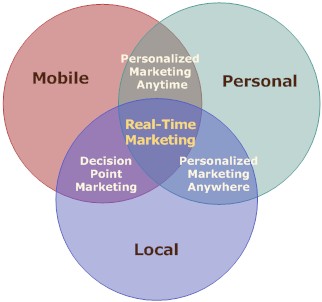
<p>Let's take a look at the major marketing trends for 2010 that will affect both business-to-business (B2B) and consumer (B2C) companies so we can update our marketing strategies for 2010.<img src="http://blog.allen.com/images/marketing-trends-2010.jpg" align=right alt="Marketing Trends for 2010 - mobile, local, personal"><br />
<h2 class="asset-subhead">Spotting marketing trends</h2></p>

<p>When something becomes a "hot trend" it does so for two reasons. First, it's a product or activity that has been proven and refined. And, second, it's growing in adoption. The hot marketing trends for 2010 are all visible as we enter the year, and these trends are growing to the point where we need to adjust our marketing communications and sales strategies to take advantage of them.</p>

<h2 class="asset-subhead">Big marketing trends for 2010</h2>

<p>Some of the hot marketing trends are rather obvious, such as the growing use of social media. But it's important to identify the "big marketing trends" for 2010 that can help define effective marketing strategies for 2010.  </p>

<p><strong>Big Marketing Trend #1: Personal</strong> &#8212; Communicate with individuals to carry on conversations about meeting their needs and solving their problems.<br />
 <br />
<strong>Big Marketing Trend #2: Local</strong> &#8212; Participate in personal, face-to-face meetings, events, and activities near where your product will be used because fewer customers will be flying to national events and conferences.<br />
 <br />
<strong>Big Marketing Trend #3: Mobile</strong> &#8212; Reach customers anywhere at any time with the 24/7 connectivity of mobile devices.<br />
 </p>

<p>These three big marketing trends for 2010 overlap and reinforce each other to provide marketing opportunities to connect with your customers and increase revenue.</p>

<h2 class="asset-subhead">Marketing trend opportunities for 2010</h2>

<p>Here are four ways you can combine these big marketing trends to create actionable marketing strategies that your competitors may not have thought of yet:</p>

<p><strong>Marketing Trend Opportunity #1: Personal + Mobile</strong> &#8212; Provide personalized product, service, and solution information when and where customers are thinking about their problems and needs<br />
 <br />
<strong>Marketing Trend Opportunity #2: Personal + Local</strong> &#8212; Tailor marketing messages based on each person's purchase process, starting with their information gathering and continuing through their searching, purchasing, and reordering.<br />
 <br />
<strong>Marketing Trend Opportunity #3: Mobile + Local</strong> &#8212; Deliver product and solution information to customers at the location where the purchase decisions are being made using mobile devices and local Internet searches.<br />
 <br />
<strong>Marketing Trend Opportunity #4: Personal + Local + Mobile</strong> &#8212; Use one-to-one marketing to treat different customers differently &#8212; anywhere, anytime, and using any medium they want, whether it's text, telephone, Web, mobile app, or video.<br />
</p>]]>
        <![CDATA[<h2 class="asset-subhead">Adapting to new trends in customer behavior</h2>

<p>The current economic climate has caused both B2B customers and retail consumers to change how they make purchases in 2010.  A longer sales cycle requires greater frequency of contact.  Increased price sensitivity requires providing greater value.  And, increased customer mobility requires that marketers use new technologies to stay in contact.<br />
 <br />
The year 2010 will provide marketers with significant opportunities for growth by adopting marketing strategies based on the "new normal" for customer behavior.<br />
</p>]]>
    </content>
</entry>

<entry>
    <title>Get in the "Zone" with B2B Marketing Zone</title>
    <link rel="alternate" type="text/html" href="http://blog.allen.com/2009/10/get-in-the-zone-with-b2b-marke.html" />
    <id>tag:blog.allen.com,2009://1.33</id>

    <published>2009-10-22T16:37:37Z</published>
    <updated>2009-10-22T16:46:55Z</updated>

    <summary> Marketing has become more and more complex as the Internet has become part of everyone's lives. Blogs have sprung up everywhere on all aspects of marketing, but it's been hard to find the really good marketing blogs, especially good...</summary>
    <author>
        <name>Cliff Allen</name>
        <uri>http://www.Allen.com</uri>
    </author>
    
    
    <content type="html" xml:lang="en" xml:base="http://blog.allen.com/">
        <![CDATA[<p><br />
Marketing has become more and more complex as the Internet has become part of everyone's lives. Blogs have sprung up everywhere on all aspects of marketing, but it's been hard to find the really good marketing blogs, especially good blogs on B-to-B marketing.</p>

<p>Recently, a couple of really savvy guys created a great site that allows us marketers to find the latest blog posts on B-to-B marketing from some top notch marketers. I added <a href="http://www.b2bmarketingzone.com/" onClick="javascript:urchinTracker('/outgoing/b2bmarketingzone.com');">B2B Marketing Zone</a> to my blog reader when it launched, and it's made it so much easier to keep up on hot B2B marketing topics. </p>

<p>I'm pleased that my blog has been added to B2B Marketing Zone, so my posts on marketing strategy are now available there, too.</p>

<p>I suggest that you add <a href="http://www.b2bmarketingzone.com/" onClick="javascript:urchinTracker('/outgoing/b2bmarketingzone.com');">B2B Marketing Zone</a> to your blog reader,  bookmarks, or a Post-it on your computer so you can get in the "Zone" every day. </p>]]>
        
    </content>
</entry>

<entry>
    <title>Developing a Marketing Communications Strategy</title>
    <link rel="alternate" type="text/html" href="http://blog.allen.com/2009/08/marketing-communications-strategy.html" />
    <id>tag:blog.allen.com,2009://1.32</id>

    <published>2009-08-15T17:43:11Z</published>
    <updated>2009-12-09T18:20:09Z</updated>

    <summary>Raising awareness of your product in your target market is where sales begin, and this is where marketing communications activities begin the selling process. With today's multiple channels for content to reach potential customers, the art and science of marketing...</summary>
    <author>
        <name>Cliff Allen</name>
        <uri>http://www.Allen.com</uri>
    </author>
    
        <category term="Strategic Marketing Plan" scheme="http://www.sixapart.com/ns/types#category" />
    
    
    <content type="html" xml:lang="en" xml:base="http://blog.allen.com/">
        <![CDATA[<p>Raising awareness of your product in your target market is where sales begin, and this is where marketing communications activities begin the selling process.</p>

<p>With today's multiple channels for content to reach potential customers, the art and science of marketing communications has become increasingly important.<br />
<img src="http://www.allen.com/images/map_strategy_marcom.jpg" alt="Marcom Strategy Programs" border="0" align="right"></p>

<p>The marketing communications function (commonly called "marcom") has many communications tools available.  Some companies in an industry might rely on paid advertising in print and online media. While other companies in the same industry might rely on a very different media mix, such as public relations and events.<br />
 <br />
However, no company can be sure they are using the most efficient media mix without creating a marcom strategy that is aligned with their overall strategic marketing direction.<br />
<h2 class="asset-subhead">Turning the strategic direction into marketing messages</h2>The marketing communications strategy process usually begins with creating a "messaging strategy" -- determining the consistent theme or fundamental selling message that will he used in all marketing materials.<br />
 <br />
Another key part of the messaging process is creating the positioning statement. This two sentence statement tells what you sell, to whom, and why customers should buy it.<br />
 <br />
As you move through the process of creating a positioning statement, you'll want to capture your brainstorming results, such as in your marketing strategy mind map. Then, refine and test those creative approaches until you settle on your company's positioning statement.<br />
 <br />
Your positioning statement is critical to making all of the other parts of the marketing communications strategy work well.  This is because every awareness-building and product information program needs to paint a clear, concise picture of what you sell and how customers will benefit from using your products.</p>

<h2 class="asset-subhead">Selecting effective marketing programs</h2>

<p>Once you have settled on a strong positioning statement, you can develop sound strategies for your marcom programs. For most companies this means considering programs such as:</p>

<ul type="disc">	<li>Public relations</li>
	<li>Advertising</li>
	<li>Web site</li>
	<li>Seminars</li>
	<li>Conferences and trade shows</li>
	<li>Downloadable materials</li>
	<li>Direct marketing (offline & online)</li>
	<li>Packaging</li>
	<li>Event sponsorships</li>
	<li>Merchandising promotions</li></ul>
 
A <a href="http://www.allen.com/cgi-bin/gt/tpl.h,content=160">mind map</a> is a good way to capture ideas about which programs look like they will be most effective.  Add these programs to the Marketing Communications section of your strategic marketing mind map. Later, evaluate each program to see if it should be in your final strategic marketing plan.

<p>In large companies where each marketing program has its own manager, you can link your main strategic marketing mind map to each program's own planning mind map.</p>

<p>In companies where the whole marcom strategy is implemented by one team, you can add details about marcom programs in the team's main marketing mind map.<br />
<h2 class="asset-subhead">Benefits of a sound marcom strategy</h2></p>

<p>The process of creating a marcom strategy has gotten more complex as more marketing activities move to the Internet. This has made it even more important to understand customer segments and how to communicate with those potential customers.<br />
 <br />
When you develop a marcom strategy based on a sound strategic marketing view of your market your marcom program will be more effective -- and customers will have a better, more consistent brand experience.<br />
 </p>

<p><strong><em>Next:</em></strong><br />
<ul  type="disc">	<li>Evaluating Potential Marketing Programs</li><br />
<li>Developing a Sales Strategy</li><br />
<li>Developing a Distribution Strategy</li><br />
<li>Developing a Customer Service Strategy</li></ul</p>]]>
        
    </content>
</entry>

<entry>
    <title>Turning Marketing Strategy into Marketing Program Plans</title>
    <link rel="alternate" type="text/html" href="http://blog.allen.com/2009/07/turning-marketing-strategy-program-plans.html" />
    <id>tag:blog.allen.com,2009://1.31</id>

    <published>2009-07-17T20:25:13Z</published>
    <updated>2009-12-09T18:13:52Z</updated>

    <summary>Every good strategic marketing plan includes two elements: strategic direction and plans for moving the company in the new direction. After you have developed your strategic marketing direction, it's time to develop strategies for each of your major marketing functions....</summary>
    <author>
        <name>Cliff Allen</name>
        <uri>http://www.Allen.com</uri>
    </author>
    
        <category term="Marketing ROI" scheme="http://www.sixapart.com/ns/types#category" />
    
        <category term="Strategic Marketing Plan" scheme="http://www.sixapart.com/ns/types#category" />
    
    
    <content type="html" xml:lang="en" xml:base="http://blog.allen.com/">
        <![CDATA[<p>Every good strategic marketing plan includes two elements: strategic direction and plans for moving the company in the new direction.</p>

<p>After you have developed your <a href="http://blog.allen.com/2009/06/strategic-direction-strategic-marketeing-plan.html">strategic marketing direction</a>, it's time to develop strategies for each of your major marketing functions. </p>

<p>Unfortunately, many companies can't seem to convert their marketing strategy into the marketing plans that guide their day-to-day marketing programs.  You've probably seen companies where the advertising didn't match the actual customer experience at the point of sale. This occurs when the manager of each marketing function does their own thing instead of aligning with the company's strategic marketing direction. </p>

<p>Either the company didn't have a strategic marketing plan, or senior management didn't use the plan to guide their marketing program managers.  Whatever the cause, the "silo" effect occurs, keeping the marketing managers from working together harmoniously, like a concert orchestra.<br />
<img src="http://www.allen.com/images/map_strategy_overview_sm.jpg"  alt="Strategic marketing mind map overview" border="0" align="right"><br />
<h2 class="asset-subhead">Eliminating the "silo" effect</h2> Instead of keeping the marketing strategy safely hidden away, I like to integrate the strategic marketing direction into the marketing communications strategy, sales strategy, and other marketing functions.</p>

<p>This unified approach to developing a company's strategic marketing plan makes it easy for the managers to align their marketing activities with all the other marketing programs.  </p>

<p>In other words, this alignment helps ensure that the strategic marketing plan is actually used to guide the day-to-day marketing programs, such as advertising, public relations, social media, and sales.<br />
 <br />
As we move through this <a href="http://blog.allen.com/2009/05/mind-maps-make-marketing-meaninfgul.html">process of creating a strategic marketing plan</a>, two business realities should become clear:<br />
 <br />
<ol><li>Everyone within the company who comes in contact with customers is part of the marketing function, even if they don't report up to the company's chief marketing officer.</li><br />
<li>Every marketing program needs to present a clear, consistent message that's in harmony with all the other marketing programs.</li></ol></p>

<p>Part of this "best practices" approach to achieving harmony is to develop an internal communications process that ensures that everyone knows their role in communicating with potential customers.<br />
<img src="http://www.allen.com/images/map_strategy_marcom_tree_sm.jpg" width="312" height="206"  alt="Marketing communications (Marcom) mind map" border="0" align="right"><h2 class="asset-subhead">How to use a marketing strategy mind map</h2></p>

<p>I find it helpful to use a marketing strategy <a href="http://www.allen.com/cgi-bin/gt/tpl.h,content=160">mind map</a> to capture ideas, plans, and relationships so I can present them in review meetings. The marketing strategy mind map can also be used in briefings and brainstorming with your advertising agency, public relations firm, call center, distribution center, and other vendors that affect your customers' experience.</p>

<p>During planning meetings, such as for marketing communications, I encourage brainstorming of all the techniques that the team feels could support the overall strategy, which we add to the mind map.</p>

<p>For example, some companies consider the lead nurturing program to be part of marketing communications until the lead is contacted by a salesperson. However, other companies feel all communication with leads should be handled by the sales department.</p>

<p>Another benefit of using mind map software is that during a review meeting you can focus attention on high level strategies.  Then, click an area to "unfold" the diagram to reveal program details and show relationships.</p>

<p>Sharing the mind map within the marketing organization keeps everyone up to date on the company's marketing strategy and implementation plans. Exactly how you distribute mind maps will depend on how your marketing organization is connected. Centralized marketing teams are on the same local area network and file server, while others are distributed across multiple locations and collaborate using the Internet.</p>

<p>After your marketing strategy mind map is made available, expect that program managers will want to develop their own mind map to manage their operation. Most mind mapping software allows you to link to Web pages or local documents (such as other mind maps). This makes it easy to link from the main marketing strategy mind map to each program's own mind map to see their detailed plans, projects, and tasks.</p>

<p>Some mind mapping software products have extensive budgeting and project management features, while others have little or no project management capabilities. Be sure to select a mind mapping product that you can grow into over the next few years.</p>

<h2 class="asset-subhead">Completing the strategic marketing plan</h2>

<p>This unified approach to marketing strategy and program plans can help your marketing team avoid the "silo" problem that affects so many marketing organizations.</p>

<p>When your marketing program managers understand how all marketing programs are implementing the strategic direction, they can align their marketing activities to create a consistent customer experience. And at the best possible cost. </p>

<p></p>

<p><strong><em>Next:</em></strong><br />
<ul  type="disc">	<li>Developing a Marketing Communications Strategy</li><br />
	<li>Developing a Sales Strategy</li><br />
	<li>Developing a Distribution Strategy</li><br />
	<li>Developing a Customer Service Strategy</li></ul></p>]]>
        
    </content>
</entry>

<entry>
    <title>Strategic Direction - The Core of a Strategic Marketing Plan</title>
    <link rel="alternate" type="text/html" href="http://blog.allen.com/2009/06/strategic-direction-strategic-marketeing-plan.html" />
    <id>tag:blog.allen.com,2009://1.30</id>

    <published>2009-06-30T17:01:09Z</published>
    <updated>2009-12-09T18:11:50Z</updated>

    <summary>Taking a long trip is like marketing. You need to pick a direction, which will determine what to pack -- shorts and sandals for summer, or coats and gloves for winter -- and who you will meet along the way....</summary>
    <author>
        <name>Cliff Allen</name>
        <uri>http://www.Allen.com</uri>
    </author>
    
        <category term="Strategic Marketing Plan" scheme="http://www.sixapart.com/ns/types#category" />
    
    
    <content type="html" xml:lang="en" xml:base="http://blog.allen.com/">
        <![CDATA[<p>Taking a long trip is like marketing. You need to pick a direction, which will determine what to pack -- shorts and sandals for summer, or coats and gloves for winter -- and who you will meet along the way. <br />
 <br />
The same is true for marketing. Once you pick a marketing direction, all of your marketing programs need to be aligned to move the company in that direction, which will determine what type of customers you'll pick up along that route.</p>

<h2 class="asset-subhead">The importantce of choosing the right strategic marketing direction</h2>
<img src="http://www.allen.com/images/map_strategy_market_direction.jpg"  alt="Marketing Strategy - Strategic Market Direction" border="0" align="right">
To show the importance of picking the right strategic marketing direction and sticking with it, take a look at the history of Sears. For many years Sears was the low price leader for many products that consumers buy.

<p><br />
Not today. Wal-Mart is the low price leader, and Sears is struggling.</p>

<p>What happened to Sears?</p>

<p>During the past 30 years <a href="http://marketingwatchwithkimberly.com/xmlrpc.php">Sears tried several times to change</a> from its successful low-price marketing strategy to an upscale strategy. Each time that Sears added expensive products and changed stores to a sophisticated look, they alienated loyal customer and failed to attract upscale shoppers.</p>

<blockquote>Sears was the Wal-Mart of the '50s and '60s and the largest retailer in the country until the early 1980s. Then the company drifted upwards into the mushy middle. Sears wasn't cheap and it wasn't chic. (Today, Wal-Mart is more than seven times the size of Sears. Furthermore Wal-Mart's net profit margin last year was twice as much as Sears: 3.4% vs. 1.6%.)</blockquote>

<p>At the same time Sam Walton pursued the "low cost leader" strategy that was so successful when Wal-Mart was starting out in rural northwest Arkansas.<br />
 <br />
Choosing a marketing strategy appropriate for your company starts by <a href="http://blog.allen.com/2009/06/using-marketing-analytics-in-strategic-marketing-planning.html">analyzing the information you've gathered</a> on your industry, your customers, and your competition.</p>

<h2 class="asset-subhead">Identifying market segments and buying motivations</h2>

<p>Then, you'll want to consider questions such as:<br />
<ul><li>Is your overall industry growing or shrinking?</li><br />
<li>What is your market within that industry?</li><br />
<li>How do you segment that market?</li><br />
<li>What are the buying motivations for each segment?</li><br />
<li>What are your strengths and opportunities in each segment?</li><br />
<li>What is in your product development pipeline for the next several years?</li></ul><br />
Based on questions like these you can decide how you want to be perceived by customers. In other words, your overall market strategy. There are many potential market strategies you can choose from, but normally one market strategy will result in the highest possible revenue and profits for your unique company.</p>

<h2 class="asset-subhead">Pricing products to match customer perceptions</h2>

<p>Once you've chosen an overall market strategy you can decide on a pricing strategy that fits. You can't have a "high quality and service" market strategy and the lowest prices. You can't make a profit -- and it will confuse your customers. So, choose a pricing strategy that matches your market segments and competitive environment.<br />
<img src="http://www.allen.com/images/map_strategy_overview_sm.jpg"  alt="Strategic marketing mind map overview" border="0" align="right"><br />
Once you have your market strategy and a pricing strategy, you can create a reasonable budget for revenue, expenses, and profit. </p>

<p>I like to capture these decisions in a <a href="http://blog.allen.com/2009/05/mind-maps-make-marketing-meaninfgul.html">marketing strategy mind map</a> using a product such as <a href="http://www.allen.com/cgi-bin/gt/tpl.h,content=160">SmartDraw</a> and link it to detailed documents and spreadsheets.  This helps senior executives at a company easily see the big picture, then interactively drill down to the their detailed analysis and decisions.</p>

<h2 class="asset-subhead">Planning for marketing programs</h2>

<p>Then, with a sound marketing strategy and budget, you can then develop detailed plans for each of your marketing programs -- from marketing communications to sales, distribution, and service.<br />
</p>]]>
        
    </content>
</entry>

<entry>
    <title>Using Marketing Analytics in Strategic Marketing Planning</title>
    <link rel="alternate" type="text/html" href="http://blog.allen.com/2009/06/using-marketing-analytics-in-strategic-marketing-planning.html" />
    <id>tag:blog.allen.com,2009://1.29</id>

    <published>2009-06-14T17:32:27Z</published>
    <updated>2009-12-09T18:09:00Z</updated>

    <summary>A good marketing strategy is based on good data. That's why it's important to start the strategic marketing planning process with data about your industry and specific market, and about your customers.</summary>
    <author>
        <name>Cliff Allen</name>
        <uri>http://www.Allen.com</uri>
    </author>
    
        <category term="Strategic Marketing Plan" scheme="http://www.sixapart.com/ns/types#category" />
    
        <category term="Web Analytics" scheme="http://www.sixapart.com/ns/types#category" />
    
    
    <content type="html" xml:lang="en" xml:base="http://blog.allen.com/">
        <![CDATA[<p>A good marketing strategy is based on good data. That's why it's important to start the strategic marketing planning process with data about your industry and specific market, and about your customers.</p>

<h2  class="asset-subhead">Industry and market data</h2>
 
When your industry is growing, your company is probably growing, too. And, when your industry is starting to trend downward, it's time to update your strategic marketing plan to reduce the impact of your industry contracting.
 
There are several types of data that can provide insights into how your industry is trending:
<img src="http://www.allen.com/images/map_strategy_market_analytics_sm.jpg"  align=right alt="Market analytics for strategic marketing plan mind map">
<ul type="circle"><li>Political and other external influences</li>
	<li>Macro economic trends</li>
	<li>Industry size and growth </li>
	<li>Competitor size and growth</li></ul>
<h2  class="asset-subhead">Customer behavior data</h2>
 
Most companies have an abundance of data about their customers that goes unused, such as:
 
<ul type="disc"><li>Web analytics data on how visitors perform on your Web site</li>
	<li>Customer purchase history on which products are re-ordered with other products, and which types of customers buy which products</li>
	<li>Won-lost data on which prospects did not purchase from your company, and whether a competitor received the order</li></ul>
 
In addition to the internal data about customers, data needs to be gathered on non-customers, too. Unless your company's market share is over 50%, more people buy from competitors than from you. This means non-customers hold the key to your company's future growth, so research the market to learn how to meet the needs of those potential customers.
 
There are two ways to obtain this market research data:
 
<ul type="disc">	<li><b>Primary research</b> - Hire a market research firm to contact a representative sample of the market.</li>
	<li><b>Secondary research</b> - Find market research that's been published about the company's markets or about a market segment.</li></ul>
 
Despite their names, secondary research is done first, and primary research is done second.

<h2  class="asset-subhead">Online monitoring</h2>

<p>Buyers are now shifting from relying on manufacturers for product information to participating in online conversations about a company's  products. </p>

<p>Marketers now need to track user generated content on all of the social media sites, forums, blogs, video sharing sites, and other ways the Internet distributes information about your company and brands.<br />
 <br />
Monitoring these online conversations can help you understand changes in customer behavior and product purchase patterns.</p>

<h2  class="asset-subhead">Turning data into Information</h2>

<p>Lots of data by itself doesn't help in creating a marketing strategy. What's needed is a good analysis of the data. In other words, information on how potential customers feel, think, and act. And, it helps to create a good <a href="http://www.allen.com/cgi-bin/gt/tpl.h,content=160">mind map</a> showing customer behavior.<br />
 <br />
Good market researchers are skilled in the art of spotting patterns in the data and highlighting significant relationships between marketing activities and purchase behavior. In other words, market researchers turn data into the information that's needed to make sound marketing strategy decisions.<br />
 <br />
Gathering data on the industry, market, and your customers is the <a href="http://blog.allen.com/2009/05/mind-maps-make-marketing-meaninfgul.html">first step in formulating an effective strategic marketing plan</a>.<br />
 <br />
 </p>]]>
        
    </content>
</entry>

<entry>
    <title>Mind Maps Make Marketing More Meaningful</title>
    <link rel="alternate" type="text/html" href="http://blog.allen.com/2009/05/mind-maps-make-marketing-meaninfgul.html" />
    <id>tag:blog.allen.com,2009://1.28</id>

    <published>2009-05-30T17:36:25Z</published>
    <updated>2009-12-02T23:42:04Z</updated>

    <summary>One technique to keep a strategic view of a company's marketing it to create a graphical "mind map."

The immediate benefit of using a strategic marketing mind map is that every manager knows how their team fits into the overall strategy -- and what they need to do to support that marketing strategy.  In other words, everyone understands how the marketing strategy is related to their marketing tactics.</summary>
    <author>
        <name>Cliff Allen</name>
        <uri>http://www.Allen.com</uri>
    </author>
    
        <category term="Strategic Marketing Plan" scheme="http://www.sixapart.com/ns/types#category" />
    
    <category term="mindmapping" label="mind mapping" scheme="http://www.sixapart.com/ns/types#tag" />
    <category term="strategicmarketingplan" label="strategic marketing plan" scheme="http://www.sixapart.com/ns/types#tag" />
    
    <content type="html" xml:lang="en" xml:base="http://blog.allen.com/">
        <![CDATA[<p>Success in any area depends on having a clear, sound  plan -- then acting on that  plan.</p>

<p>It's especially challenging to do this in marketing for two reasons:</p>

<ul>	<li>Marketing strategy is based on how multiple groups of customers think and feel about products.</li>
	<li>Marketing has become increasingly complex as the number of communications and sales channels has increased.</li></ul>

<p>These challenges have made it difficult to connect a set of marketing strategies with day-to-day marketing programs.<br />
<img src="http://www.allen.com/images/map_strategy_overview_sm.jpg" alt="Strategic marketing mind map overview" border="0" align="right"><br />
At the same time, potential customers are being influenced by these multiple marketing channels.  This means that marketers need to take advantage of the marketing leverage that an integrated marketing program can provide. </p>

<p>It's too easy to become focused on a few tactical marketing activities -- and miss other opportunities to influence potential customers. </p>

<h2 class="asset-subhead">Creating a visual "map" of marketing strategy and tactics </h2>
One technique to keep a strategic view of a company's marketing it to create a graphical "mind map" that shows:

<ul><li>How marketing strategy guides all tactical marketing programs</li>
	<li>How all marketing programs reinforce each other</li></ul>

<p>The immediate benefit of using a strategic marketing mind map is that every manager knows how their team fits into the overall strategy -- and what they need to do to support that marketing strategy.  In other words, everyone understands how the marketing strategy is related to their marketing tactics.</p>

<h2 class="asset-subhead">Mind mapping process captures concepts, ideas & plans</h2>

<p>Mind mapping is a process of starting with a central concept and graphically adding links to greater and greater details. Most mind maps are drawn around the central  concept,  but, mind maps are drawn in lots of ways, such as a traditional organization chart.</p>

<p>Basically, a mind map is visual way to show a hierarchy.  You'd think that an outliner, like in Microsoft Word, would work well. However, it turns out that with graphical mind maps you can more easily see both the high level view plus the details -- and the relationships -- better than with a linear outline. Of course, some times the linear, prioritized nature of an outline is better, but in marketing so many programs affect other programs that the multi-dimensional approach of mind maps works very well.</p>

<p>There are many mind map software tools available today, such as <a href="http://www.allen.com/cgi-bin/gt/tpl.h,content=160">SmartDraw (which is more than just a mind map tool</a>). And, there are a number of good Web-based systems that create mind maps, too.<br />
 <br />
But mind mapping is more than a way to draw charts. Unlike flowchart and other presentation software products, mind mapping software is used to capture ideas and concepts as they are discovered, and show their relationships. The actual mind map drawing is just a way to visually express those thoughts and make them more meaningful.</p>

<p>For example, I have several mind maps that I add to every few days as I learn a new details about a topic. It turns out that this approach makes it faster to organize related concepts than making individual notes and later trying to organize them.<br />
<h2 class="asset-subhead">Using mind maps as a corporate-wide planning system</h2></p>

<p>For brainstorming groups, a mind map  tool can capture and display  ideas, and help a group quickly  drill down to the details.<br />
 <br />
In some organizations every manager and team leader uses a mind mapping  tool, which creates a common way of communicating projects, plans, and performance.<br />
 <br />
Mind maps are also used as an interactive knowledge tool because most mind map software products have free "player" products that allow others to expand and contract the mind maps  you send to them. In addition, a few mind map products have a Web-based player that allows a Web user to explore your mind map interactively.<br />
 <br />
<h2 class="asset-subhead">Creating your own strategic marketing mind map</h2></p>

<p>There are many facets to creating a gem of a marketing plan.  So, over the next several weeks I'll  show how I use this detailed strategic marketing mind map template to help companies create their comprehensive strategic marketing plan.  Here are the current posts:<br />
<ul><li><a href="http://blog.allen.com/2009/06/using-marketing-analytics-in-strategic-marketing-planning.html">Using Marketing Analytics in Strategic Marketing Planning</a></li><br />
<li><a href="http://blog.allen.com/2009/06/strategic-direction-strategic-marketeing-plan.html">Strategic Direction - The Core of a Strategic Marketing Plan</a></li></ul></p>]]>
        
    </content>
</entry>

<entry>
    <title>Market Research Answers the Second Question</title>
    <link rel="alternate" type="text/html" href="http://blog.allen.com/2009/05/market-research-answers-the-se.html" />
    <id>tag:blog.allen.com,2009://1.27</id>

    <published>2009-05-27T22:39:46Z</published>
    <updated>2009-05-27T22:52:05Z</updated>

    <summary>Every marketer has done  market research, even if it's  just looking at a competitor's  traffic at Compete. com. But, we sometimes forget just  how many ways we can use  market research.</summary>
    <author>
        <name>Cliff Allen</name>
        <uri>http://www.Allen.com</uri>
    </author>
    
        <category term="Strategic Marketing Plan" scheme="http://www.sixapart.com/ns/types#category" />
    
    
    <content type="html" xml:lang="en" xml:base="http://blog.allen.com/">
        <![CDATA[<p>Every marketer has done  market research, even if it's  just looking at a competitor's  traffic at Compete.com. But, we sometimes forget just how many ways we can use market research.<br />
 <br />
Recently, I found a list of <a href="http://www.marketingcure.com/market-research-agency.html">ways market research could be used</a> that included a few I hadn't thought  about.<br />
 <br />
It reminded me that many experienced executives and sales managers have a  good feel for where a potential market is -- but it may not be such a good market. A customer may have ordered a product that isn't normally purchased by that type of company.  Or, a customer tells their customer service rep about a new way they used a product.</p>

<p>The sales manager is likely to tell the marketing manager, "I found a new market we can sell to!"</p>

<p>Two questions about that market come to mind:</p>

<ol>
	<li>What is it? </li>
	<li>How big is it?</li>
</ol>

<p>It's great to find a new market, but it's important for new markets to be profitable.  Knowing the size of a market gives you a clue to how successful you can be in that market.<br />
 <br />
So, when you're working on the marketing plan for a new product, budget resources for the market research that can help answer the questions that come after, "What is it?"<br />
</p>]]>
        
    </content>
</entry>

<entry>
    <title>Keeping Up with Tech in Southern California</title>
    <link rel="alternate" type="text/html" href="http://blog.allen.com/2009/04/keeping-up-with-tech-in-southe.html" />
    <id>tag:blog.allen.com,2009://1.25</id>

    <published>2009-04-01T14:20:50Z</published>
    <updated>2009-04-01T14:31:26Z</updated>

    <summary>Southern California is a hotbed of technology companies that are leaders in their sector. This includes MySpace, CitySearch, Ticketmaster, eHarmony, and thousands of lesser known technology companies. A high-tech community like this also has many bloggers and Web-based news outlets...</summary>
    <author>
        <name>Cliff Allen</name>
        <uri>http://www.Allen.com</uri>
    </author>
    
        <category term="Social Media Marketing" scheme="http://www.sixapart.com/ns/types#category" />
    
    
    <content type="html" xml:lang="en" xml:base="http://blog.allen.com/">
        <![CDATA[<p>Southern California is a hotbed of technology  companies that are leaders in their sector. This includes MySpace, CitySearch, Ticketmaster, eHarmony,  and thousands of lesser known technology companies.</p>

<p>A high-tech community like this also has many bloggers and Web-based news  outlets that cover our companies, venture capital, and events -- plus a number of  advisers who help technologies entrepreneurial companies grow.</p>

<p>It's been difficult to keep up on all aspects of the technology sector in Southern California. There are several journalistic Web sites that do a great job of covering the news about SoCal companies.  However, it's been hard to find the thoughtful bloggers who provide interesting commentary on what's happening and are advising high growth entrepreneurs.</p>

<p>The <a href="http://www.tcosc.org">Technology Council of Southern California</a> and <a href="http://www.techempower.com/core/">TechEmpower</a> have created <a href="http://cc.tcosc.org">Southern California Tech Central</a>, a new Web site  that makes it much easier to keep up with the whole technology sector in Southern California.</p>

<p>For example, here's a page on that site that summaries my recent blog posts:  <br />
<a href="http://cc.tcosc.org/&source=cliff-allen-on-marketing">http://cc.tcosc.org/&source=cliff-allen-on-marketing</a></p>

<p>One of the unique features of the site is that the links on that page refine the search deeper and deeper, without having to master any complex search language.</p>

<p>Check out the <a href="http://www.tcosc.org">Southern California Tech Central</a> -- and keep up with Southern California.<br />
</p>]]>
        
    </content>
</entry>

<entry>
    <title>Are You an Analytics Leader?</title>
    <link rel="alternate" type="text/html" href="http://blog.allen.com/2009/03/are-you-an-analytics-leader.html" />
    <id>tag:blog.allen.com,2009://1.24</id>

    <published>2009-03-28T14:13:12Z</published>
    <updated>2009-03-28T14:19:51Z</updated>

    <summary>No matter how much you use marketing analytics, you could probably be doing more. Mila D'Antonio at Think Customers: The 1to1 Blog reports that Garther, the consulting and analyst firm, says that many of the largest companies will miss opportunities...</summary>
    <author>
        <name>Cliff Allen</name>
        <uri>http://www.Allen.com</uri>
    </author>
    
        <category term="Web Analytics" scheme="http://www.sixapart.com/ns/types#category" />
    
    
    <content type="html" xml:lang="en" xml:base="http://blog.allen.com/">
        <![CDATA[<p>No matter how much you use  marketing analytics, you could  probably be doing more.<br />
 <br />
Mila D'Antonio at <a href="http://www.1to1media.com/weblog/2009/03/are_you_an_analytics_leader.html">Think Customers: The 1to1 Blog</a> reports that Garther, the consulting and analyst firm,  says that many of the largest  companies will miss  opportunities  because of under funding their  analytical processes:</p>

<blockquote>Gartner reports that through 2012 more than 35 percent of the top 5,000 global companies will fail  to make insightful decisions about significant changes in their business markets due to under  investment in the information infrastructure and business user tools.</blockquote>

<p>And SAS, the statistics and analytics company, divides the market into eight  levels of analytics. <a href="http://www.1to1media.com/weblog/2009/03/are_you_an_analytics_leader.html">Take a look at the list</a> to see  where you are. Then, look  down the list to see how  to expand and improve your  use of marketing analytics.<br />
</p>]]>
        
    </content>
</entry>

<entry>
    <title>Gravity Summit Slide Presentations</title>
    <link rel="alternate" type="text/html" href="http://blog.allen.com/2009/03/gravity-summit-slide-presentations.html" />
    <id>tag:blog.allen.com,2009://1.23</id>

    <published>2009-03-10T02:24:05Z</published>
    <updated>2009-03-10T02:42:37Z</updated>

    <summary>I recently mentioned that I attended the Gravity Summit one-day seminar on social media marketing. Here are slide presentations from representatives of three large brands on how they have used social media marketing: Yahoo Sony Sprint In addition, here are...</summary>
    <author>
        <name>Cliff Allen</name>
        <uri>http://www.Allen.com</uri>
    </author>
    
        <category term="Marketing ROI" scheme="http://www.sixapart.com/ns/types#category" />
    
    
    <content type="html" xml:lang="en" xml:base="http://blog.allen.com/">
        <![CDATA[<p><a href="http://blog.allen.com/2009/03/gravity_summit.html">I recently mentioned</a> that I  attended the <a href="http://www.suretomeet.com/exec/gt/event.h,event=8bcb2ce69448">Gravity Summit</a> one-day seminar on social media marketing.</p>

<p>Here are slide presentations from representatives of three large brands on how they have used social media marketing:</p>

<ul><li><a href="http://www.slideshare.net/GravitySummit/gravity-summit-social-media-seo-tony-adam">Yahoo</a></li>
<li><a href="http://www.slideshare.net/GravitySummit/gravity-summit-aglenn2">Sony</a></li>
<li><a href="http://www.slideshare.net/GravitySummit/sprint-social-media-justin-goldsborough">Sprint</a></li></ul>

<p>In addition, here are slide presentations from two social media consultants who presented examples of clients they've helped:</p>

<ul><li><a href="http://www.slideshare.net/GravitySummit/gravity-summit-keynote">David Reis</a></li>
<li><a href="http://www.slideshare.net/GravitySummit/twitter-as-a-business-marketing-and-branding-channel">Rodney Rumford</a>, co-producer of the event</li></ul>

<p>These presentations show what's possible by using social media to raise awareness of brands.</p>

<p><br />
</p>]]>
        
    </content>
</entry>

<entry>
    <title>Gravity Summit</title>
    <link rel="alternate" type="text/html" href="http://blog.allen.com/2009/03/gravity-summit.html" />
    <id>tag:blog.allen.com,2009://1.22</id>

    <published>2009-03-07T23:09:48Z</published>
    <updated>2010-01-01T22:11:52Z</updated>

    <summary>Social media marketing is the current "hot" marketing technique that marketers are turning to. I recently attended the one-day Gravity Summit seminar on social media marketing. The speakers from Sony, Sprint, and Yahoo presented excellent examples on how major brands...</summary>
    <author>
        <name>Cliff Allen</name>
        <uri>http://www.Allen.com</uri>
    </author>
    
        <category term="Marketing ROI" scheme="http://www.sixapart.com/ns/types#category" />
    
    
    <content type="html" xml:lang="en" xml:base="http://blog.allen.com/">
        <![CDATA[<p>Social media marketing is the current "hot" marketing technique that marketers are turning to.</p>

<p>I recently attended the one-day <a href="http://www.suretomeet.com/exec/gt/event.h,event=8bcb2ce69448">Gravity Summit</a> seminar on social media marketing.</p>

<p>The speakers from Sony, Sprint, and Yahoo presented excellent examples on how major brands can generate attention for a product by using social media. And, representatives from social media marketing agencies described how they help clients plan, implement, and monitor a social media marketing campaign.</p>

<p>One of the challenges facing management when considering a social media campaign is the amount of time required either by the company's marketing team or an outsourced social media agency. In general, the social media marketing process typically used is to:</p>

<ol><li>Create a Web site for the product or the promotional campaign.
<li>Create social media profiles on sites such as Facebook, MySpace, Twitter, and others.
<li>Contact individuals on those social media services and invite then to be friends, followers, contacts, etc.
<li>Then, broadcast status updates that include a link to the product's or promotion's Web site.</ol>

<p>There are other steps in the process, such as interacting with individuals, friends, followers, etc. And it's important to create a fresh flow of new content for the social media team to promote. <br />
 <br />
So, how can management decide if a social media marketing campaign will be worthwhile? The best way is to estimate the ROI of the campaign the same way that other marketing campaigns are evaluated.<br />
 <br />
It can be hard to estimate the cost of a social media marketing campaign, but a speaker at the conference from a social media agency suggested a budget of at least $50 thousand.</p>

<p>If the gross profit on a product is 50%, then a company would need to sell $100 thousand to break even on a $50 thousand social media marketing campaign. Any revenue over $100 thousand would generate additional gross profit at the rate of about 50% that could be applied to G&A expenses.<br />
 <br />
By using a company's traditional traffic-to-revenue metrics, it would be easy to estimate the minimum amount of traffic to the product Web site needed to break even. It's the minimum amount of Web traffic needed because visitors from a social media marketing campaign are primarily looking for entertainment, and will secondarily be exposed to the brand. </p>

<p>This means that your traffic-to-revenue metrics for direct marketing campaigns, such as search engine marketing, will produce a minimum traffic figure that's too low.<br />
 <br />
Instead, you'll need to use metrics on how well a branding campaign typically generates revenue to estimate how much traffic will actually be needed.<br />
 <br />
In other words, if your Web site normally serves 1,000 page views per sale from a direct marketing campaign, a social media branding campaign may need to generate 3-10 times that much traffic to generate a sale.</p>

<p>By using this approach to estimating the amount of Web traffic needed to break even, your social media marketing consultant can decide if they can generate sufficient traffic to make the project pay for itself.</p>

<p>Update:  Here are the <a href="http://blog.allen.com/2009/03/gravity_summit_slide_presentations.html">Gravity Summit slide presentations.</a><br />
</p>]]>
        
    </content>
</entry>

<entry>
    <title>How to learn about social media marketing</title>
    <link rel="alternate" type="text/html" href="http://blog.allen.com/2009/02/how-to-learn-about-social-medi.html" />
    <id>tag:blog.allen.com,2009://1.21</id>

    <published>2009-02-09T23:46:34Z</published>
    <updated>2009-03-08T00:18:17Z</updated>

    <summary> The popularity of social networking among friends — and would-be friends — is fast becoming "social media." Individuals are now concerned about their "personal brand." And, companies are looking for ways to use social media in their marketing to...</summary>
    <author>
        <name>Cliff Allen</name>
        <uri>http://www.Allen.com</uri>
    </author>
    
        <category term="Social Media Marketing" scheme="http://www.sixapart.com/ns/types#category" />
    
    
    <content type="html" xml:lang="en" xml:base="http://blog.allen.com/">
        <![CDATA[<p><a href="http://www.suretomeet.com/exec/gt/event.h,event=8bcb2ce69448" onClick="javascript:urchinTracker('/outgoing/gravitysummit.com');"><img class="alignleft size-full wp-image-308" title="Gravity Summit: Social Media Marketing For Business" src="http://www.gravitysummit.com/wp-content/uploads/2009/01/gravity-summit125.jpg" alt="" width="125" height="125" border=0 align=left></a> <br />
The popularity of social networking among  friends &#8212; and would-be friends &#8212; is fast becoming "social media."<br />
 <br />
Individuals are now concerned about  their "personal brand." And, companies are looking for ways to use social media in their marketing to increase brand awareness and drive traffic to their Web site.<br />
 <br />
The area of social media marketing is challenging for most corporate marketing people because it's so different  from one-way mass media  advertising.<br />
 <br />
In addition to being two-way marketing (or one-to-one marketing), social media marketing is both very personal and very public.  It's personal because it depends on personal relationships and conversations. And, it's very, very public because prospective  customers are usually communicating with people from the company in public areas of the Internet.</p>

<p>A lot has been written about using company blogs, Twitter, and Facebook, but It's hard to sift through all of that  to develop a complete, consistent, and concise social media marketing strategy.<br />
 <br />
On February 25th the Gravity  Summit at UCLA will give marketers a full day of guidance on social media marketing. Here is what the seminar  organizers say:<br />
 <br />
<blockquote><a href="http://www.suretomeet.com/exec/gt/event.h,event=8bcb2ce69448" onClick="javascript:urchinTracker('/outgoing/gravitysummit.com');">Gravity Summit</a>  is designed to educate and inform the business community on how to use social media to foster customer engagement, provide internal productivity tools, and further online branding for small business owners and entrepreneurs.</blockquote></p>

<p>The speakers at the Gravity Summit are from the Word of Mouth Marketing Association, Yahoo, Sony, Sprint, and others:</p>

<p>• David Reis, CEO DEI Worldwide and Founding Member of WOMMA (Word of Mouth Marketing Association) <br />
• Justin Goldsborough, Social Media Manager, Sprint <br />
• Ann Glenn, Senior Web Producer, Sony Pictures Imageworks Interactive<br />
• Tony Adam, SEO Manager, Yahoo<br />
• Ricardo Bueno, Blog Director, Real Estate Tomato<br />
• Renée Barrett, Principal of Awareness, Action, Accountability <br />
• Karl Kasca, CEO, Kasca & Associates<br />
 <br />
The <a href="http://www.pitchengine.com/gravitysummit/gravity-summit-at-ucla-announces-agenda-for-social-media-marketing-seminar/3866/"  onClick="javascript:urchinTracker('/outgoing/gravitysummit-pitchengine.com');">descriptions of each speaker's  presentation </a>looks very good:<br />
 <br />
I'm looking forward to learning from each speaker at the seminar. If  you're going to attend, let me  know so we can chat  face-to-face.</p>

<p><object style="margin:0px" width="425" height="355"><br />
<param name="movie" value="http://static.slideshare.net/swf/ssplayer2.swf?doc=gravitysummitintro-1230114145440513-1&stripped_title=social-media-marketing-for-business-presentation" /><param name="allowFullScreen" value="true"/><param name="allowScriptAccess" value="always"/><embed src="http://static.slideshare.net/swf/ssplayer2.swf?doc=gravitysummitintro-1230114145440513-1&stripped_title=social-media-marketing-for-business-presentation" type="application/x-shockwave-flash" allowscriptaccess="always" allowfullscreen="false" width="425" height="355"></embed></object><br />
</p>]]>
        
    </content>
</entry>

<entry>
    <title>What Data Crunchers Did for Obama</title>
    <link rel="alternate" type="text/html" href="http://blog.allen.com/2009/01/what-data-crunchers-did-for-ob.html" />
    <id>tag:blog.allen.com,2009://1.20</id>

    <published>2009-01-24T22:20:11Z</published>
    <updated>2009-01-24T22:30:11Z</updated>

    <summary>The election of President Obama was significant in many ways to many people. As marketers, it represented a continuing evolution of the use of market research data at the individual level. Political consultants have used survey statistics for a long...</summary>
    <author>
        <name>Cliff Allen</name>
        <uri>http://www.Allen.com</uri>
    </author>
    
        <category term="Marketing ROI" scheme="http://www.sixapart.com/ns/types#category" />
    
    
    <content type="html" xml:lang="en" xml:base="http://blog.allen.com/">
        <![CDATA[<p>The election of President Obama was significant in many ways to many people.  As marketers, it represented a continuing evolution of the use of market research data at the individual level. </p>

<p>Political consultants have used survey statistics for a long time to help their candidate tailor campaign messages.  However, small survey samples resulted in imprecise analysis, and messages that were not always on target.</p>

<p>Today, marketers can obtain access to comprehensive databases about what people have bought, which gives some insight into how they make decisions.</p>

<p>Stephen Baker's article  <a href="http://www.businessweek.com/technology/content/jan2009/tc20090123_026100.htm"><em>What Data Crunchers Did for Obama</em></a> highlights how the Obama campaign used a consulting firm that helps politicians understand the core values of individual voters.</p>

<p>Marketers have used similar <a href="http://www.allen.com/cgi-bin/gt/tpl.h,content=87">differentiation and segmentation </a>services services, such as  <a href="http://www.claritas.com">PRIZM from Claritas</a>, which creates 66 demographically and behaviorally distinct segments of consumers based on Census and other types of data.</p>

<p>However, the firm Obama's team used "grouped nearly every American of voting age—175 million of us—into 10 'values' tribes."</p>

<p>Obama's use of the market segmentation techniques at the voter level is key to successful one-to-one marketing.  By grouping individual people by behavioral traits -- instead of relying just on demographics -- marketers can better understand what people in each group are feeling, thinking, and doing.  And once you know that, it's easier to explain why they should buy your product (or candidate) in terms that they will understand.<br />
</p>]]>
        
    </content>
</entry>

<entry>
    <title>9 Marketing Trends for 2009</title>
    <link rel="alternate" type="text/html" href="http://blog.allen.com/2008/12/9-marketing-trends-for-2009.html" />
    <id>tag:blog.allen.com,2008://1.19</id>

    <published>2008-12-20T21:51:20Z</published>
    <updated>2010-01-06T16:31:36Z</updated>

    <summary> Update for 2010: Marketing Trends for 2010 - And What to Do About Them While the economy in 2009 looks challenging for most companies, the outlook of marketing executives is rather bright and upbeat. Deborah Kania and her team...</summary>
    <author>
        <name>Cliff Allen</name>
        <uri>http://www.Allen.com</uri>
    </author>
    
        <category term="Marketing ROI" scheme="http://www.sixapart.com/ns/types#category" />
    
    
    <content type="html" xml:lang="en" xml:base="http://blog.allen.com/">
        <![CDATA[<hr>
<strong>Update for 2010:  <a href="http://blog.allen.com/2010/01/marketing-trends-for-2010---an.html">Marketing Trends for 2010 - And What to Do About Them</a></strong>
<hr>
While the economy in 2009 looks  challenging for most companies,  the outlook of marketing executives is rather bright and upbeat.

<p>Deborah Kania and her team at <a href="http://www.brightworksinteractive.com"  onClick="javascript:urchinTracker('/outgoing/www.brightworksinteractive.com');">Brightworks Interactive</a> have just released results of their survey  of marketing executives' plans for 2009. The survey covered both B-to-B and B-to-C companies, as well as a mix of large, medium, and small businesses, so the survey results represent a good cross-section of marketers.</p>

<p>Here are nine marketing trends you can expect during 2009:<br />
 <br />
<ul type="disc"><li>Marketing Trend #1: Increased use of digital media and a decrease in television, radio, and print media.</li><br />
	<li>Marketing Trend #2: Increased use of quality, targeted content (textual and video) that tells a company's story well and engages the prospective customer.</li><br />
	<li>Marketing Trend #3: Increased use of e-mail to reach out to prospects and customers more frequently at a very low cost.</li><br />
	<li>Marketing Trend #4: Increased use of blogs, social networking, and other social media to create dialog and relationships with prospects and customers.</li><br />
	<li>Marketing Trend #5: Increased use of analytics tools  (e.g., Google Analytics) to spot ways to improve ROI.</li><br />
	<li>Marketing Trend #6: Increased focus on organic (i.e., free)  search engine optimization (SEO) content targeting.</li><br />
	<li>Marketing Trend #7: Increased use of search engine marketing (SEM) techniques, such as pay-per-click and other trackable paid marketing techniques.</li><br />
	<li>Marketing Trend #8: Increased use of online webinars and decreased use of large trade shows.</li><br />
	<li>Marketing Trend #9: Increased use of outsourced marketing functions to experienced professionals.</li></ul> <br />
These marketing executives plan to increase or maintain budgets and their  staffs, which past recessions have shown is how companies pull out of a recession quickly.<br />
 <br />
The report also offers some practical  marketing resolutions for 2009 that all marketing executives can incorporate into their marketing plan for 2009.</p>

<p>You can get a complete copy of their marketing survey "Marketing 2009 and Marketing Resolutions To Keep In the New Year" at their Web site:  <a href="http://www.brightworksinteractive.com/marketing-survey.html"  onClick="javascript:urchinTracker('/outgoing/www.brightworksinteractive.com/marketing-survey.html');">www.brightworksinteractive.com/marketing-survey.html</a>.<br />
</p>]]>
        
    </content>
</entry>

</feed>
