<?xml version="1.0" encoding="UTF-8"?>
<?xml-stylesheet type="text/xsl" href="/stylesheets/feed.atom.xml" media="screen"?>
<feed xml:lang="en-US" xmlns="http://www.w3.org/2005/Atom">
  <id>tag:cpn.nd.edu,2005:/news</id>
  <link rel="alternate" type="text/html" href="https://cpn.nd.edu"/>
  <link rel="self" type="application/atom+xml" href="https://cpn.nd.edu/news.atom"/>
  <id>tag:cpn.nd.edu,2005:/latest</id>
  <title>Catholic Peacebuilding Network | News</title>
  <updated>2026-05-26T07:57:00-04:00</updated>
  <link rel="alternate" type="text/html" href="https://cpn.nd.edu/"/>
  <link rel="self" type="application/atom+xml" href="https://cpn.nd.edu//news.atom"/>
  <subtitle>The Catholic Peacebuilding Network is a voluntary network of practitioners and academics, clergy and laity, which seeks to enhance the study and practice of Catholic peacebuilding in areas torn by conflict.</subtitle>
  <entry>
    <id>tag:cpn.nd.edu,2005:News/182010</id>
    <published>2026-05-26T07:57:00-04:00</published>
    <updated>2026-05-26T07:57:33-04:00</updated>
    <link rel="alternate" type="text/html" href="https://cpn.nd.edu/news/notre-dame-rome-and-caritas-internationalis-formalize-partnership-to-advance-integral-human-development/"/>
    <title>Notre Dame Rome and Caritas Internationalis formalize Partnership to Advance Integral Human Development</title>
    <summary type="text">
      <![CDATA[University of Notre Dame Rome and Caritas Internationalis have signed a Memorandum of Understanding (MOU), formalizing and strengthening their collaboration in research and formation at the service of the Church’s humanitarian mission. The agreement builds…]]>
    </summary>
    <content type="html">
      <![CDATA[<p>University of Notre Dame Rome and <a href="https://www.caritas.org/">Caritas Internationalis</a> have signed a Memorandum of Understanding (MOU), formalizing and strengthening their collaboration in research and formation at the service of the Church’s humanitarian mission.</p>
<p>The agreement builds on a successful initial collaboration and establishes a structured framework to support fellows, interns, and faculty from Notre Dame in contributing to the work of Caritas Internationalis. It comes at a critical moment for the global humanitarian sector, as Caritas responds to significant shifts in international aid and development funding.</p>
<figure class="image image-left"><img src="https://rome.nd.edu/assets/659355/450x/caritas_inte_1.jpg" alt="White flag with red Caritas Internationalis logo and text waves in front of a blurred classical building under a blue sky." width="450" height="300"></figure>
<p>Following major foreign aid reductions announced in early 2025 by the United States and subsequently by several European governments, Caritas Internationalis launched an initiative to reassess its approach to Integral Human Development (IHD). Mandated by the Representative Council of the Caritas Confederation (REPCO), this effort seeks to produce a comprehensive guidelines document to support Caritas organizations worldwide in adapting their programming, advocacy, and fundraising strategies.</p>
<p>Rooted in Catholic Social Teaching, Integral Human Development remains a cornerstone of Caritas’ identity. The forthcoming guidelines aim to ensure that this framework is both theologically grounded and practically applicable in a rapidly evolving and increasingly competitive humanitarian landscape.</p>
<p>The first initiative under the MOU is a dedicated<a href="https://careers.nd.edu/search-careers/3743990013049236-preparing-the-future-research-fellowship-with-caritas-internationalis-ci-rome-italy/"> research fellowship</a> focused on contributing to the development of the IHD guidelines document.</p>
<p>The fellowship is funded by <a href="http://rome.nd.edu">Notre Dame Rome</a>, the <a href="https://kroc.nd.edu/">Kroc Institute for International Peace Studies</a> and the <a href="https://nanovic.nd.edu/">Nanovic Institute for European Studies</a>, both part of the <a href="https://keough.nd.edu/">Keough School of Global Affairs</a>, reflecting a shared institutional commitment to interdisciplinary research and global engagement. It is also co-sponsored by the <a href="https://cpn.nd.edu/">Catholic Peacebuilding Network</a>.</p>
<p>The selected fellow will be appointed as a Research Fellow at Notre Dame Rome from September 1, 2026, to May 31, 2027. For approximately nine months, the fellow will be seconded to Caritas Internationalis, where they will conduct research under the supervision of the Integral Human Development team on a project dedicated to the development of the IHD guidelines.</p>
<p>The fellow will also support the consultation process across the global Caritas network, helping gather and integrate feedback. The final document is expected to be presented at the Caritas Confederation General Assembly in May 2027.</p>
<p>This partnership builds on earlier collaboration between the two institutions, including the <a href="https://rome.nd.edu/news-stories/news/a-providential-calling/">fellowship of Flora Gicquel,</a> who between October 2024 and the beginning of 2025, worked with Caritas Internationalis on a global study of peacebuilding initiatives. Her research helped identify best practices across the Confederation and contributed to strengthening Caritas’ strategic approach in that field.</p>
<p>Her experience demonstrated the value of embedding academic research within Caritas’ global operations—an approach that informs the structure of the new fellowship.</p>
<p>By formalizing this collaboration, the University of Notre Dame and Caritas Internationalis reaffirm their shared commitment to advancing Integral Human Development through research, formation, and service.</p>
<p class="attribution">Originally published by <span class="rel-author">Costanza Montanari</span> at <span class="rel-source"><a href="https://rome.nd.edu/news-stories/news/notre-dame-rome-and-caritas-internationalis-formalize-partnership-to-advance-integral-human-development/">rome.nd.edu</a></span> on <span class="rel-pubdate">May 20, 2026</span>.</p>]]>
    </content>
    <link rel="enclosure" type="image/jpeg" href="https://cpn.nd.edu/assets/660638/img_20240612_wa0001_1_.jpg" title="targa"/>
    <author>
      <name>Costanza Montanari</name>
    </author>
  </entry>
  <entry>
    <id>tag:cpn.nd.edu,2005:News/181731</id>
    <published>2026-05-14T09:18:00-04:00</published>
    <updated>2026-05-14T09:18:15-04:00</updated>
    <link rel="alternate" type="text/html" href="https://cpn.nd.edu/news/beyond-barbenheimer-what-the-nuclear-age-means-for-our-generation/"/>
    <title>Beyond Barbenheimer: What the Nuclear Age Means for Our Generation</title>
    <summary type="text">
      <![CDATA[Lilly Post and Mia Clarke While previous generations held their breath through the Cuban Missile Crisis, debated Reagan's Star Wars system proposal, or celebrated deep cuts in weapons at the end of the Cold War, one of Gen Z’s first major cultural encounters with the history and dangers…]]>
    </summary>
    <content type="html">
      <![CDATA[<p><em>Lilly Post and Mia Clarke</em></p>
<p>While previous generations held their breath through the Cuban Missile Crisis, debated Reagan's Star Wars system proposal, or celebrated deep cuts in weapons at the end of the Cold War, one of Gen Z’s first major cultural encounters with the history and dangers of nuclear weapons was “Barbenheimer” weekend. Masked by box office competition, this weekend marked a deeper moment, when the dangers of nuclear weapons entered pop-culture dialogue. Now, at an important nexus in nuclear policy, Gen Z is ready to lead the conversation not only on what we can do to combat the dangers of nuclear weapons, but what we <em>should d</em>o.</p>
<p>Luckily, the Catholic Peacebuilding Network can offer some guidance on those questions. Since 2014, its “<a href="https://cpn.nd.edu/peacebuilding-topics/nuclear-disarmament/">Project on Revitalizing Catholic Engagement on Nuclear Disarmament</a>” has sponsored high-level convenings of church leaders, scholars and policymakers, published ground-breaking books and articles on ethics, policy and nuclear disarmament, and organized institutes and webinars for students from around the world.</p>
<p>In August 2025, the program undertook its most significant endeavor since COVID-19 by participating in a pilgrimage to Hiroshima and Nagasaki to commemorate the 80th anniversary of the atomic bombings. Fr. Bob Dowd led a Notre Dame delegation of professors and students that joined delegations from other U.S. and Japanese universities. Cardinals Robert McElroy (Washington) and Blase Cupich (Chicago), as well as Archbishops John Wester (Santa Fe) and Paul Etienne (Seattle), led the pilgrimage.</p>
<p>Over the course of five days, Notre Dame students participated in meaningful discussions on the implications of nuclear weapons for our generation and listened to reflections from international religious and political leaders on the ethics of nuclear deterrence. Following the pilgrimage, student leaders – those who participated in the pilgrimage and many who did not – have convened for virtual meetings and webinars to build on these discussions. This pilgrimage sparked international dialogue on the ethics of nuclear weapons, but it is also proof that the next generation is ready and willing to tackle this issue.</p>
<p>A key player in the new nuclear arena will be universities. On the recent pilgrimage to Hiroshima, <a href="https://president.nd.edu/homilies-writings-and-addresses/on-war-and-peace-the-role-of-auniversity-in-the-21st-century/.">Father Bob remarked</a>, “We are at a critical moment in the nuclear age. On one hand, there is hope in achievements such as the fact that nuclear weapons have not been used in war since Nagasaki…On the other hand, we are in a new Cold War and arms race, with arms control treaties discarded and major nuclear powers ‘modernizing’ their arsenals with trillions of dollars.” Universities are uniquely positioned to bridge generations with vastly different nuclear experiences, and they must embrace this responsibility by fostering dialogue across disciplines and generations in pursuit of a more peaceful nuclear future.</p>
<p>Amidst a rapidly advancing technological environment, volatile and disruptive U.S. foreign policies, and the expiration of the New START Treaty—the last nuclear arms treaty between the United States and Russia—it is more important than ever that our generation is engaged, educated and vocal about a future free from the fear of nuclear war.</p>
<p>One of the most difficult aspects of nuclear weapons is how easy it is to write them off as an impossible problem to solve. Nuclear weapons have imprisoned us in a paradox where the only thing that can keep us safe is also what is most likely to destroy us. However, as in many cases, the easy thing is not always the right thing. While nuclear weapons might seem like an impossible problem to tackle, it’s imperative that we try.</p>
<p>The nuclear threat has led the Catholic Church to reject not only the use of nuclear weapons but even their possession. Although this may seem like a radical stance in an age where nuclear weapons are a widely accepted facet of international politics, it is strongly grounded in the Church’s moral and social teachings. <a href="https://www.chicagocatholic.com/chicagoland/-/article/2025/08/20/cardinal-cupich-joinsvisit-to-japan-on-anniversary-of-nuclear-bombings.">As Cardinal Cupich preached</a> during the recent pilgrimage, “We [Catholics] refuse to accept persistent justifications for atomic bombings as a means of ending war.” He continued to explain that the mere threat of owning or using nuclear weapons is so grave and dangerous that it cannot morally be entertained. Our care and respect for our fellow humans must drive us to prioritize nonviolence and dialogue over weapons.</p>
<p>Any students interested in exploring the theological, ethical or practical implications of the Catholic Church’s teaching about nuclear weapons can explore the <a href="https://cpn.nd.edu/">Catholic Peacebuilding Network’s website</a> to stay updated and see upcoming events. If you would like to be added to our student mailing list, please contact Mia Clarke at <a href="mailto:mclarke5@nd.edu">mclarke5@nd.edu</a>.</p>
<p class="attribution">Originally published by <span class="rel-author">Global Ambassador</span> at <span class="rel-source"><a href="https://keough.nd.edu/news-and-events/news/beyond-barbenheimer-what-the-nuclear-age-means-for-our-generation/">keough.nd.edu</a></span> on <span class="rel-pubdate">April 30, 2026</span>.</p>]]>
    </content>
    <link rel="enclosure" type="image/jpeg" href="https://cpn.nd.edu/assets/659700/global_ambassador_post.jpg" title="Global Ambassador, Keough School of Global Affairs logo.  A gold globe with the ND monogram is on a blue background with the words &quot;GLOBAL AMBASSADOR&quot; in white text and &quot;KEOUGH SCHOOL OF GLOBAL AFFAIRS&quot; in smaller gold text below.  A dark blue diamond pattern borders the top and bottom."/>
    <author>
      <name>Global Ambassador</name>
    </author>
  </entry>
  <entry>
    <id>tag:cpn.nd.edu,2005:News/181729</id>
    <published>2026-05-14T09:15:00-04:00</published>
    <updated>2026-05-14T09:15:50-04:00</updated>
    <link rel="alternate" type="text/html" href="https://cpn.nd.edu/news/university-awards-recognize-excellence-of-notre-dame-faculty/"/>
    <title>University awards recognize Notre Dame faculty excellence</title>
    <summary type="text">
      <![CDATA[On Tuesday, May 12,…]]>
    </summary>
    <content type="html">
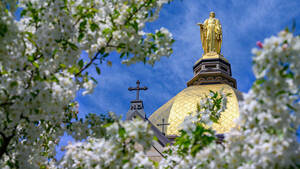
      <![CDATA[<figure class="image image-right"><img src="https://provost.nd.edu/assets/564694/300x/mc_5.5.23_spring_dome.jpg" alt="The Golden Dome of Notre Dame's Main Building and statue of Mary, framed by bright white spring blossoms against a blue sky." width="300" height="169"></figure>
<p>On Tuesday, May 12, <a href="https://provost.nd.edu/about/charles-and-jill-fischer-provost/">John T. McGreevy</a>, the Charles and Jill Fischer Provost at the University of Notre Dame, announced the winners of the <a href="https://provost.nd.edu/faculty-recognitions/faculty-awards/">2026 University faculty awards</a>.</p>
<p>“This year’s faculty award recipients represent the very best of Notre Dame through their outstanding achievements in teaching, scholarship, and service,” McGreevy said. “Their work strengthens our academic community and furthers the University’s mission as a leading global Catholic research institution.”</p>
<p>The 2026 University faculty award winners are:</p>
<ul>
<li>Rev. Edmund P. Joyce, C.S.C., Awards for Excellence in Teaching: <strong>Badih Assaf </strong>(Department of Physics and Astronomy), <strong>Juan Del Valle (</strong>Department of<strong> </strong>Chemistry &amp; Biochemistry), and <strong>Roya Ghiaseddin</strong> (Department of Applied and Computational Mathematics and Statistics)</li>
<li>Research Achievement Award: <strong>Peter Garnavich</strong> (Department of Physics and Astronomy), <strong>Eric Jumper</strong> (Department of Aerospace and Mechanical Engineering), and <strong>Jennifer Tank</strong> (Department of Biological Sciences)</li>
<li>President's Award: <strong>Ernest Davis Morrell </strong>(Departments of English and Africana Studies)</li>
<li>Hesburgh Legacy Award: <strong>Gerard F. Powers </strong>(Kroc Institute for International Peace Studies)</li>
<li>Dockweiler Awards for Excellence in Advising: <strong>Maria Holland </strong>(Department of Aerospace and Mechanical Engineering), <strong>Karen Richman</strong> (Institute for Latino Studies), and <strong>Gina V. Shropshire </strong>(Mendoza College of Business)</li>
<li>Faculty Award: <strong>Christopher Kolda </strong>(Department of Physics and Astronomy)</li>
<li>Rev. Paul J. Foik, C.S.C., Award: <strong>Mark Robison</strong> (Hesburgh Libraries)</li>
<li>Thomas P. Madden Award: <strong>Giuseppe Mazzone (</strong>School of Architecture)</li>
</ul>
<p>Coordinated by the Office of the Provost, the annual University faculty awards recognize excellence in research, teaching, and service to the University; signal milestone accomplishments and contributions across the disciplines; and celebrate outstanding members of the Notre Dame community.</p>
<p>Learn more about the awards and read the citations for this year's winners at <a href="https://provost.nd.edu/awards">provost.nd.edu/awards</a>.</p>
<p class="attribution">Originally published by <span class="rel-author">Emily Monacelli Guzman</span> at <span class="rel-source"><a href="https://provost.nd.edu/news/university-awards-recognize-excellence-of-notre-dame-faculty/">provost.nd.edu</a></span> on <span class="rel-pubdate">May 12, 2026</span>.</p>]]>
    </content>
    <link rel="enclosure" type="image/jpeg" href="https://cpn.nd.edu/assets/659698/mc_5523_spring_dome.jpg" title="Golden Dome of Notre Dame's Main Building with Mary statue, framed by white spring blossoms under a blue sky."/>
    <author>
      <name>Emily Monacelli Guzman</name>
    </author>
  </entry>
  <entry>
    <id>tag:cpn.nd.edu,2005:News/181304</id>
    <published>2026-04-30T16:15:00-04:00</published>
    <updated>2026-04-30T16:15:43-04:00</updated>
    <link rel="alternate" type="text/html" href="https://cpn.nd.edu/news/cpns-gerard-powers-on-the-conversation-weekly/"/>
    <title>CPN's Gerard Powers on The Conversation Weekly</title>
    <summary type="text">
      <![CDATA["What is a just war? Inside the war of words between the Trump administration and the Catholic church," on The Conversation Weekly podcast]]>
    </summary>
    <content type="html">
      <![CDATA[<p>The Conversation Weekly, the podcast platform for The Conversation journalism platform, published an episode on April 30 with CPN Coordinator Gerard Powers. The episode foucsed on the recent comments from the Trump administration and Pope Leo XIV concerning just war. </p>
<p>The podcast follows a <a href="https://theconversation.com/what-is-and-isnt-new-about-us-bishops-criticism-of-trumps-foreign-policy-274499">February article</a> written by Powers for The Conversation analyzing criticism from US bishops of the Trump administrations foreign policy and use of force.</p>
<p>In the podcast interview, Powers explains how the Catholic Church’s just war tradition evolved and the influence it’s had on US military thinking, as well as the challenge the current comments from Church leaders might pose for Catholics serving in the US military.</p>

<div style="width: 100%; height: 200px; margin-bottom: 20px; border-radius: 6px; overflow: hidden;"><iframe style="width: 100%; height: 200px;" frameborder="no" scrolling="no" allow="clipboard-write" seamless="" src="https://player.captivate.fm/episode/4a5b9400-9bc3-4dfd-a8b4-905a66d9d39f"></iframe></div>]]>
    </content>
    <link rel="enclosure" type="image/jpeg" href="https://cpn.nd.edu/assets/658233/conversation_weekly.jpeg" title="The Conversation Weekly logo: white text on black background, with a red speech bubble outline for the 'O'."/>
    <author>
      <name>Caesar Montevecchio</name>
    </author>
  </entry>
  <entry>
    <id>tag:cpn.nd.edu,2005:News/178846</id>
    <published>2026-02-02T10:57:00-05:00</published>
    <updated>2026-02-02T10:59:49-05:00</updated>
    <link rel="alternate" type="text/html" href="https://cpn.nd.edu/news/kroc-institute-to-welcome-three-catholic-relief-services-research-fellows-in-spring-2026/"/>
    <title>Kroc Institute to welcome three Catholic Relief Services research fellows in spring 2026</title>
    <summary type="text">
      <![CDATA[Thanks to the Kroc Institute-Catholic Relief Services (CRS) Peacebuilding Fellowship, three visiting scholars will join the Kroc Institute for International Peace Studies on campus in spring…]]>
    </summary>
    <content type="html">
      <![CDATA[<p>Thanks to the <a href="https://kroc.nd.edu/research/grants-and-fellowships/kroc-catholic-relief-services-fellowships/">Kroc Institute-Catholic Relief Services (CRS) Peacebuilding Fellowship</a>, three visiting scholars will join the Kroc Institute for International Peace Studies on campus in spring 2026 to pursue independent research projects.</p>
<p>The long–running fellowship program between the Kroc Institute and CRS began in 2006. Its aim is to host a CRS staff person (or a member of a partner organization engaged in peacebuilding) for a short-term research and writing post at the Kroc Institute, part of the <a href="https://keough.nd.edu/">Keough School of Global Affairs </a>at the University of Notre Dame. The opportunity gives the fellow a chance to reflect on and strengthen their peacebuilding work, translate their work into scholarship or policy documents, or do valuable, big picture planning for more engaged and sustained peacebuilding.</p>
<p>The fellowship will be divided between two projects this year, with one project conducted by a team of CRS staffers.</p>
<p>“We had one of our strongest applicant pools for this year’s fellowships, which made the final choices difficult,” said <a href="https://kroc.nd.edu/faculty-and-staff/caesar-a-montevecchio/">Caesar Montevecchio</a>, assistant director of the Kroc Institute’s <a href="https://cpn.nd.edu/">Catholic Peacebuilding Network</a>, which sponsors the fellowship program.</p>
<p>“That said, the research proposals from the fellows selected are so tightly aligned with CPN’s research areas – specifically, extractives and environmental peacebuilding, and the leadership role of women in the Church and peacebuilding – that we felt it was prudent to open this year’s fellowship to multiple candidates.”</p>
<p>Following are this year’s Kroc-CRS fellows:</p>
<figure class="image image-right"><img src="https://kroc.nd.edu/assets/646675/isabel_aguilar_uman_a_copy_conductor.jpg" alt="A smiling woman with long, dark hair streaked with gray, wearing brown tortoise-shell glasses and pink lipstick." width="600" height="400">
<figcaption>Isabel Aguilar Umaña</figcaption>
</figure>
<p><strong>Isabel Aguilar Umaña</strong> and <strong>Cecilia Margarita Suárez</strong> have been actively engaged in peacebuilding efforts with CRS in Latin America and the Caribbean – Suárez since 2013 and Aguilar Umaña since 2015.</p>
<p>Suárez has served as the CRS Mexico and Latin America Peacebuilding Platform manager since 2020 and as the Mexico country manager since 2013. Aguilar Umaña is the technical director for the Peace, Social Cohesion and Justice Platform for the CRS Latin America and Caribbean Regional Office, after serving as its regional advisor on Violence Prevention and Peacebuilding from 2015 to 2024.</p>
<p>In 2020, they co-designed and launched the CRS/LACRO Platform for Peace, Social Cohesion, and Justice—a regional initiative that promotes horizontal exchange among faith-based institutions and integrates social cohesion and justice into CRS programming. The platform engages more than 80 strategic allies, promotes 24 peacebuilding methodologies, and sustains the “Walking Toward Peace” community of practice, where 16 organizations collaborate to strengthen capacities and advocate for peace within and beyond the Church.</p>
<figure class="image image-left"><img src="https://kroc.nd.edu/assets/646674/cecilia_sua_rez_copy_conductor.jpg" alt="A woman with dark, curly hair smiles brightly, wearing a yellow blouse with black zigzag embroidery and colorful flowers. A yellow lanyard is around her neck." width="600" height="400">
<figcaption>Cecilia Margarita Suárez</figcaption>
</figure>
<p>While at the Kroc Institute, Aguilar Umaña and Suárez will examine how gender-transformative methodologies within faith-based institutions—particularly the Catholic Church—can elevate women as strategic peacebuilders and catalyze systemic change across Latin America and the Caribbean. Using a methodology that addresses trauma healing and economic empowerment, they will analyze the impact of women-led support groups in combination with Savings and Internal Lending Communities that have enabled women to assume leadership roles to address development and humanitarian challenges.</p>
<p>They will divide their fellowship in two-week increments, with Aguilar Umaña at the Kroc Institute from Feb. 16-27, followed by Suárez from March 16-30.</p>
<figure class="image image-right"><img src="https://kroc.nd.edu/assets/646676/fr_michael_q_copy_white_robe.jpg" alt="A man with dark skin, dark hair, and glasses, smiling while wearing a white clerical shirt, against a dark gray background." width="600" height="400">
<figcaption>Rev. Michael K. A. Quaicoe</figcaption>
</figure>
<p><strong>Rev. Michael K. A. Quaicoe</strong> is a Catholic priest in the Archdiocese of Cape Coast in Ghana who serves as the director of the Directorate for Governance, Justice and Peace for the Ghana Catholic Bishops’ Conference. He is also the Catholic Chaplain to the Parliament of Ghana and a visiting lecturer at St. Paul’s Catholic Seminary in Sowutuom near Accra.</p>
<p>While at the Kroc Institute, Fr. Quaicoe will work on a study to explore the Catholic Church’s support of Ghana’s fight against illegal and irresponsible mining, locally known as <em>galamsey.</em> Illegal mining is both an environmental and economic concern, and is at odds with the protection of security, justice, and peace. Backed by Catholic Social Teaching, knowledge in integral ecology, and the Theology of Just Peace, the Church in Ghana endeavours to wage a strategic peacebuilding campaign to safeguard the environment and human dignity.</p>
<p>Fr. Quaicoe will analyze the Ghana Catholic Bishops’ Conference’s Justice and Peace structures and how it employs faith, moral authority, and community engagement to counter environmental degradation. His study will also address the Church’s mediation with and among state agencies, traditional leaders, civil society, and mining communities, situating this within formal and informal peace processes that link ecological justice to social cohesion. The end result will be a policy-oriented research paper that articulates a model of “ecological reconciliation,” with peace being inseparable from environmental stewardship.</p>
<p>He will be with the Kroc Institute from April 13-May 4.</p>
<p>Supporting scholarly research is a key objective of the Kroc Institute, with research fellowships being integral to this commitment. This year’s Kroc-CRS fellows will join six other scholars currently at the Kroc Institute, here through the Institute’s <a href="https://kroc.nd.edu/people/visiting-research-fellows/">Visiting Research Fellows Program</a>.</p>
<p class="attribution">Originally published by <span class="rel-author">Kate Chester</span> at <span class="rel-source"><a href="https://kroc.nd.edu/news-events/news/kroc-institute-to-welcome-three-catholic-relief-services-research-fellows-in-spring-2026/">kroc.nd.edu</a></span> on <span class="rel-pubdate">January 30, 2026</span>.</p>]]>
    </content>
    <link rel="enclosure" type="image/jpeg" href="https://cpn.nd.edu/assets/646952/crs_fellows_copy.jpg" title="Three smiling individuals: a woman with glasses in an orange and patterned top; a woman in a yellow embroidered blouse with an ID; and a man in glasses wearing a white clerical robe."/>
    <author>
      <name>Kate Chester</name>
    </author>
  </entry>
  <entry>
    <id>tag:cpn.nd.edu,2005:News/178682</id>
    <published>2026-01-26T09:45:00-05:00</published>
    <updated>2026-01-26T09:45:19-05:00</updated>
    <link rel="alternate" type="text/html" href="https://cpn.nd.edu/news/pope-leo-mining-executives-and-catholic-approaches-to-mining/"/>
    <title>Pope Leo, Mining Executives, and Catholic Approaches to Mining</title>
    <summary type="text">
      <![CDATA[CPN mining report featured in Financial Times story on Pope Leo XIV]]>
    </summary>
    <content type="html">
      <![CDATA[<p>On January 24, Pope Leo XIV <a data-cke-saved-href="https://www.vaticannews.va/en/pope/news/2026-01/pope-meets-energy-mineral-leaders-from-latin-america-caribbean.html" href="https://www.vaticannews.va/en/pope/news/2026-01/pope-meets-energy-mineral-leaders-from-latin-america-caribbean.html" target="_blank" rel="noopener">met with business leaders</a> from the energy and critical minerals industries, including major mining multinationals BHP and Vale. The meeting was a continuation of the "<a data-cke-saved-href="https://www.buildingbridges.va/en.html" href="https://www.buildingbridges.va/en.html" target="_blank" rel="noopener">Building Bridges Initiative</a>" begun by the Pontifical Commission for Latin America in 2022, by Pope Francs then-Cardinal Robert Prevost before he was elected at Pope Leo XIV. This was the seventh synodal meeting under this initiative.</p>
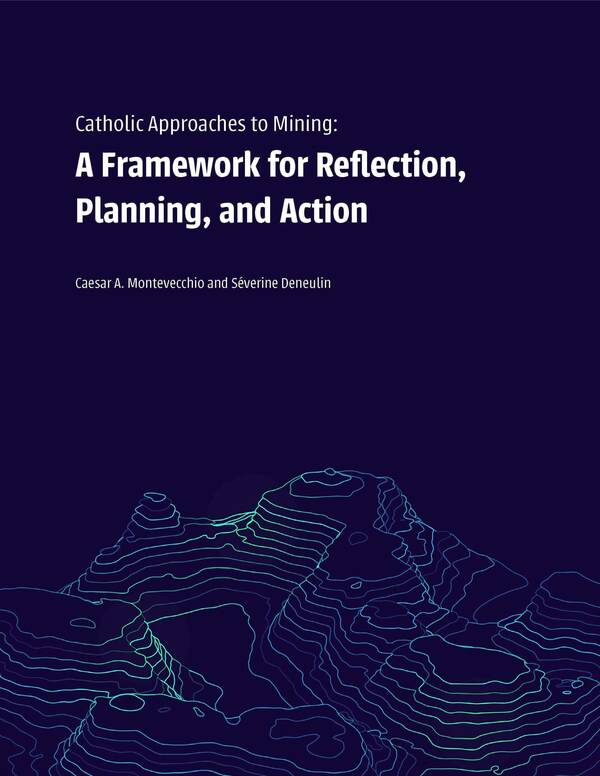
<p>In coverage by the <a data-cke-saved-href="https://www.ft.com/content/32504cb5-530f-49dd-b7c1-1cb94b1fdfe2?accessToken=zwAGSUwYZlYwkc8yUEy1Uw9J3dO3wRy5Sx_f4g.MEQCIFWbDa-RhUPFDmMg91gW46w48UDWHa6jvKHcT2kidgG_AiAaWRoX1r5J3BOkQPSqq-A_lIZyX4LkBzwDpvbbzxrIgQ&amp;sharetype=gift&amp;token=b2c4a721-aeca-4eda-8c1d-f180342414ee" href="https://www.ft.com/content/32504cb5-530f-49dd-b7c1-1cb94b1fdfe2?accessToken=zwAGSUwYZlYwkc8yUEy1Uw9J3dO3wRy5Sx_f4g.MEQCIFWbDa-RhUPFDmMg91gW46w48UDWHa6jvKHcT2kidgG_AiAaWRoX1r5J3BOkQPSqq-A_lIZyX4LkBzwDpvbbzxrIgQ&amp;sharetype=gift&amp;token=b2c4a721-aeca-4eda-8c1d-f180342414ee" target="_blank" rel="noopener"><em>Financial Times</em></a>, the meeting was connected to <a data-cke-saved-href="https://cpn.nd.edu/research-and-learning/publications/catholic-approaches-to-mining-a-framework-for-reflection-planning-and-action/" href="https://cpn.nd.edu/research-and-learning/publications/catholic-approaches-to-mining-a-framework-for-reflection-planning-and-action/" target="_blank" rel="noopener"><em>Catholic Approaches to Mining</em></a>, the recent guidance document for Catholic engagement on mining published by CPN in collaboration with the Dicastery for Promoting Integral Human Development, the Kroc Institute for International Peace Studies at the University of Notre Dame, and the Laudato Si' Research Institute at the University of Oxford.</p>]]>
    </content>
    <link rel="enclosure" type="image/jpeg" href="https://cpn.nd.edu/assets/631850/cpn_mining_document_2025_digital_082925_1.jpg" title="Cover of Catholic Approaches to Mining: A Framework for Reflection, Planning, and Action"/>
    <author>
      <name>Caesar Montevecchio</name>
    </author>
  </entry>
  <entry>
    <id>tag:cpn.nd.edu,2005:News/175950</id>
    <published>2025-10-21T10:22:00-04:00</published>
    <updated>2025-10-21T10:22:41-04:00</updated>
    <link rel="alternate" type="text/html" href="https://cpn.nd.edu/news/catholic-peacebuilding-network-releases-new-report-on-the-problems-of-global-mining-and-potential-responses-using-catholic-social-teaching-lens/"/>
    <title>Catholic Peacebuilding Network releases new report on the problems of global mining and potential responses, using Catholic Social Teaching lens</title>
    <summary type="text">
      <![CDATA[On Oct. 21, the Catholic Peacebuilding Network (CPN) released a new report, Catholic Approaches to Mining: A Framework for Reflection, Planning,…]]>
    </summary>
    <content type="html">
      <![CDATA[<p>On Oct. 21, the <a href="https://cpn.nd.edu/">Catholic Peacebuilding Network</a> (CPN) released a new report, <a href="https://cpn.nd.edu/research-and-learning/publications/catholic-approaches-to-mining-a-framework-for-reflection-planning-and-action/">Catholic Approaches to Mining: A Framework for Reflection, Planning, and Action</a>, and hosted an international panel to launch the report in collaboration with the <a href="https://www.humandevelopment.va/en.html">Holy See Dicastery for Promoting Integral Human Development</a>. The Secretariat for CPN is housed in the <a href="http://kroc.nd.edu/">Kroc Institute for International Peace Studies</a>, part of the <a href="http://keough.nd.edu/">Keough School of Global Affairs</a> at the <a href="https://www.nd.edu/">University of Notre Dame</a>.</p>
<p>“Catholic Approaches to Mining is the result of a year-long consultation process with Catholic groups and individuals working in mining-affected areas,” said <a href="https://kroc.nd.edu/faculty-and-staff/caesar-a-montevecchio/">Caesar A. Montevecchio</a>, CPN’s assistant director. “It’s a collection of their insights, offering guidance for how others in the global Catholic community can more effectively engage issues of mining to promote peace, integral human development, and environmental protection.”</p>
<p>The nearly 50-page report identifies problems associated with mining – social, economic, and environmental among them – and analyzes these issues through Catholic Social Teaching to provide a path forward for mining-affected communities.</p>
<p>Mining is difficult and dangerous work; workers are often exploited, which impacts family relations and structure. Mining can have serious impacts on the health of local communities, especially for children and for women’s reproductive health. Its activities often generate unjust economic relations and can deepen poverty dynamics, with mining companies at times taking the place of the state as providers of public services. Collectively, these outcomes jeopardize the social fabric of local communities.</p>
<p>From an environmental standpoint, there are myriad negative ecological impacts associated with mining activities: deforestation, desertification, increased climate vulnerability, biodiversity loss, pollution, and contamination. These contribute to permanent changes in the landscape, which introduce a new set of risks and vulnerabilities for mine-affected communities already confronting more extreme weather events induced by climate change. In turn, this can lead to loss of livelihoods and increased migration.</p>
<p>Furthermore, these social, economic, and environmental factors often worsen violent conflict by pitting members of communities against one another, causing danger for civic leaders and defenders of human rights and the environment, or exacerbating existing conflict dynamics.</p>
<p>“In many parts of the world, the Catholic Church serves as a peacebuilder at the forefront of accompanying communities faced with systemic crises,” said Montevecchio. “Because of the power inequalities related to mining, it is imperative for Church actors to defend the rights of local communities, and with them determine local and global responses that promote integral human development, protect ecosystems, and mitigate conflict.”</p>
<p>To that end, the report offers modes of engagement to help Church actors and their collaborators make informed decisions about mining and the most prudent path forward. All engagement stems from pastoral closeness, or what Catholic organizations call accompaniment. Among these accompaniment measures are documentation and communications, such as data collection, case studies, and communication campaigns; training and capacity building in legal literacy, mediation and advocacy skills, scientific understanding, land management, and alternative livelihoods; advocacy through legal prosecution, legislative reform, and disinvestment campaigns; and nonviolent civil resistance.</p>
<p>Montevecchio moderated the panel discussion, which featured a slate of participants representing organizations that collaborated on the report: Cardinal Michael Czerny, SJ, prefect of the Dicastery for Promoting Integral Human Development; Elena Sofia Fanciulli, Caritas Internationalis; Jing Rey Henderson, Caritas Internationalis; Liliana Zamudio Vaquiro, Caritas Colombia; Rev. Rigobert Minani, SJ, Centre d'Etudes pour l'Action Sociale (DRC); and Séverine Deneulin, Laudato Si' Research Institute.</p>
<p>The consultation process leading up to Catholic Approaches to Mining involved a series of online workshops over the past year with 35 individuals from 18 countries. It culminated in an international conference, “<a href="https://cpn.nd.edu/events/2025/06/16/peacebuilding-mining-and-integral-human-development/">Peacebuilding, Mining, and Integral Human Development</a>,” in Bogotá, Colombia in June 2025 that brought together another 60 people from around the globe who shared their experiences, challenges, and successes facing problems from mining and gave additional input for the newly released report.</p>
<p>The Catholic Peacebuilding Network is made up of two dozen bishops’ conferences, universities, research centers, and peace and development agencies that work to enhance the Catholic Church’s capacity for peacebuilding by deepening solidarity, sharing best practices, and conducting research. Its accompaniment of conflict-affected communities led CPN to begin its<a href="https://cpn.nd.edu/peacebuilding-topics/extractives/"> Initiative on Catholic Peacebuilding and Mining</a> in 2014.</p>
<p>After publishing<a href="https://www.routledge.com/Catholic-Peacebuilding-and-Mining-Peacebuilding-Development-and-Ecology/Montevecchio-Powers/p/book/9780367545086"> Catholic Peacebuilding and Mining: Integral Peace, Development, and Ecology</a> in 2022, CPN sought to develop a practical publication aimed at an audience of Church leaders and practitioners. That effort was accelerated after CPN joined a 2024 meeting of the<a href="https://cpn.nd.edu/news/the-church-of-africa-denounces-the-exploitation-of-mineral-and-natural-resources-fueling-conflict-and-suffering/"> Symposium of Episcopal Conferences of Africa and Madagascar</a> focused on conflict and mining. At that meeting, the African bishops voiced a desire for a manual that could serve as a starting point for Church organizations to learn more about mining and how to effectively defend communities from the mining-related conflict and harm that they were seeing in their dioceses.</p>
<p>“Catholic Approaches to Mining is an attempt to meet that need, not only for the bishops in Africa but for others in the worldwide Catholic community facing similar challenges,” said Montevecchio.</p>
<p>“The framework we’ve created supports the concern of Pope Francis, who emphasized mining-related ecological and social issues in Laudato Si’ and elsewhere. It also sheds light on the teaching and experience of the Church in the Global South, where bishops and others have been on the front lines of confronting pollution, deforestation, land dispossession, violence, and human rights violations in connection with mining.”</p>
<p>The report is a collaboration of CPN; the <a href="https://lsri.campion.ox.ac.uk/">Laudato Si’ Research Institute</a>, <a href="https://www.campion.ox.ac.uk/">Campion Hall, University of Oxford</a>; the Holy See Dicastery for Promoting Integral Human Development; <a href="https://www.caritas.org/">Caritas Internationalis</a>; and the Kroc Institute for International Peace Studies.</p>
<p class="attribution">Originally published by <span class="rel-author">Kate Chester</span> at <span class="rel-source"><a href="https://kroc.nd.edu/news-events/news/catholic-peacebuilding-network-releases-new-report-on-the-problems-of-global-mining-and-potential-responses-using-catholic-social-teaching-lens/">kroc.nd.edu</a></span> on <span class="rel-pubdate">October 21, 2025</span>.</p>]]>
    </content>
    <link rel="enclosure" type="image/webp" href="https://cpn.nd.edu/assets/635408/cpn_report_web.webp" title="Stylized topographical map displaying abstract mountain ranges with light blue and cyan contour lines against a dark navy background, indicating elevation changes."/>
    <author>
      <name>Kate Chester</name>
    </author>
  </entry>
  <entry>
    <id>tag:cpn.nd.edu,2005:News/175701</id>
    <published>2025-10-13T08:18:00-04:00</published>
    <updated>2025-10-13T08:18:08-04:00</updated>
    <link rel="alternate" type="text/html" href="https://cpn.nd.edu/news/catholic-peacebuilding-networks-bogota-conference-in-june-leads-to-vatican-launch-of-framing-document-on-mining-and-peace-in-october/"/>
    <title>Catholic Peacebuilding Network’s Bogotá conference in June leads to Vatican launch of framing document on mining and peace in October</title>
    <summary type="text">
      <![CDATA[Later this month the Catholic Peacebuilding Network (CPN) – whose secretariat is at the Keough School of Global Affairs’ Kroc Institute for International Peace Studies – will publish a new report focused on the international Catholic community’s engagement on mining.…]]>
    </summary>
    <content type="html">
      <![CDATA[<p>Later this month the <a href="https://cpn.nd.edu/">Catholic Peacebuilding Network (CPN)</a> – whose secretariat is at the Keough School of Global Affairs’ Kroc Institute for International Peace Studies – will publish a new report focused on the international Catholic community’s engagement on mining.</p>
<p>“Catholic Approaches to Mining: A Framework for Reflection, Action, and Planning” is the result of a year-long consultative process led by CPN and its many collaborators – Laudato Si' Research Institute (LSRI), Campion Hall, University of Oxford, the Kroc Institute, the Holy See Dicastery for Promoting Integral Human Development, and Caritas Internationalis.</p>
<p>On Tuesday, Oct. 21, the Holy See Dicastery will host a <a href="https://kroc.nd.edu/news-events/events/2025/10/21/catholic-approaches-to-mining-framework-document-launch-event/">virtual launch event</a> celebrating the report. It will take place at 9 a.m./ET (3 p.m./CEST; 1 p.m./GMT) in English, with simultaneous translation in Spanish and French. To attend, register <a href="https://notredame.zoom.us/webinar/register/WN_ctbmDN-eSR-EUUoMJPdm3w#/registration">here.</a></p>
<figure class="image image-right"><img src="https://kroc.nd.edu/assets/633721/cpn_mining_document_2025_digital_082925_1.jpg" alt="Cover of Catholic Approaches to Mining: A Framework for Reflection, Planning, and Action" width="600" height="776">
<figcaption>Catholic Approaches to Mining: A Framework for Reflection, Planning, and Action</figcaption>
</figure>
<p><a href="https://kroc.nd.edu/faculty-and-staff/caesar-a-montevecchio/">Caesar A. Montevecchio</a>, CPN’s assistant director, will moderate the panel discussion to feature:</p>
<ul>
<li dir="ltr" aria-level="1">
<p>Cardinal Michael Czerny, SJ, Dicastery for Promoting Integral Human Development</p>
</li>
<li dir="ltr" aria-level="1">
<p>Elena Sofia Fanciulli, Caritas Internationalis</p>
</li>
<li dir="ltr" aria-level="1">
<p>Jing Rey Henderson, Caritas Philippines</p>
</li>
<li dir="ltr" aria-level="1">
<p>Liliana Zamudio Vaquiro, Caritas Colombia</p>
</li>
<li dir="ltr" aria-level="1">
<p>Rev. Rigobert Minani, SJ, Centre d'Etudes pour l'Action Sociale (DRC)</p>
</li>
<li dir="ltr" aria-level="1">
<p>Séverine Deneulin, Laudato Si' Research Institute, Campion Hall, University of Oxford</p>
</li>
</ul>
<p>“The Catholic Church continues to play a major peacebuilding role in a number of the world’s intractable conflicts,” said Montevecchio. “This document is the product of lengthy back-and-forth exchange with Catholic actors and others defending communities and the environment in mining contexts throughout the world,” he said.</p>
<p>Much of the report’s data sprang from a global conference, “Peacebuilding, Mining, and Integral Human Development,” held in Bogotá, Colombia last June. Organized by CPN, the gathering was hosted by Javeriana University and its Alfredo Vásquez Carrizosa Institute for Human Rights and Peacebuilding, and the Colombian Episcopal Conference National Secretariat for Social Pastoral-Cáritas Colombiana.</p>
<p>Nearly 60 attended the conference, representing the Philippines, the United Kingdom, Vatican City, Canada, the United States, Mexico, Guatemala, Colombia, Ecuador, Peru, Brazil, and the Democratic Republic of the Congo.</p>
<p>“We’re witnessing how peacebuilding work is becoming increasingly intertwined with issues of resource extraction, degradation of the environment, and backsliding on peace processes,” said Montevecchio, who added that these actions present new and complex challenges for achieving sustainable peace.</p>
<p>The conference tackled these challenges head-on, offering Catholic peacebuilders the opportunity to compare notes on lessons learned and best practices with counterparts from around the world. Mining and armed conflict, ecology, women's leadership and the impact of mining on women, youth and employment, the capacity and power of ecclesial networks, the effect of the energy transition, and indigenous rights were among the topics addressed.</p>
<p>“Much of the peacebuilding work led by the Catholic community is unheralded, under-resourced, and under-analyzed,” said <a href="https://kroc.nd.edu/faculty-and-staff/gerard-f-powers/">Gerard F. Powers</a>, director of the Kroc Institute’s Catholic Peacebuilding Studies and coordinator of CPN.</p>
<p>“Gathering a diverse group of leading Catholic peacebuilders to assess what works, what doesn’t, and what are good practices enhances the Church’s peacebuilding work. Together, we become more strategic and less reactive to situations that arise. That was the purpose of this conference – to foster networking and mutual learning regarding the unique challenges of peacebuilding, mining, and integral human development,” said Powers.</p>
<p>The Catholic Peacebuilding Network is a global network made up of 24 affiliated partners, including bishops’ conferences, academic institutions, and humanitarian and aid organizations. Its June conference was co-sponsored by the Laudato Si' Research Institute, Campion Hall, University of Oxford; the University of Notre Dame's Keough School of Global Affairs and its Kroc Institute for International Peace Studies and McKenna Center for Human Development and Global Business; Pax Christi International; the Southern African Bishops' Parliamentary Liaison Office; and the Pulte Family Charitable Foundation.</p>
<p><strong id="docs-internal-guid-3b5cdd5f-7fff-18b7-9760-956f4e9f853d"><br><br></strong></p>
<p class="attribution">Originally published by <span class="rel-author">Kate Chester</span> at <span class="rel-source"><a href="https://kroc.nd.edu/news-events/news/catholic-peacebuilding-networks-bogota-conference-in-june-leads-to-vatican-launch-of-framing-document-on-mining-and-peace-in-october/">kroc.nd.edu</a></span> on <span class="rel-pubdate">October 09, 2025</span>.</p>]]>
    </content>
    <link rel="enclosure" type="image/jpeg" href="https://cpn.nd.edu/assets/634343/copy_of_2511f049_4bfc_4662_b02a_534bb9bae0c9.jpg" title="A large, diverse group of men and women, smiling, poses outside the brick Capilla San Ignacio. Dressed in various casual attire, many wear lanyards, suggesting an event. The chapel features two main arches with a statue centered above."/>
    <author>
      <name>Kate Chester</name>
    </author>
  </entry>
  <entry>
    <id>tag:cpn.nd.edu,2005:News/175211</id>
    <published>2025-09-24T10:08:16-04:00</published>
    <updated>2025-10-28T09:42:40-04:00</updated>
    <link rel="alternate" type="text/html" href="https://cpn.nd.edu/news/pilgrimage-for-peace-marks-80th-anniversary-of-atomic-bombings/"/>
    <title>Pilgrimage for Peace Marks 80th Anniversary of Atomic Bombings</title>
    <summary type="text">
      <![CDATA[The Pilgrimage of Peace to Japan took place from August 5-10 to commemorate the 80th anniversary of the atomic bombings of Hiroshima and Nagasaki.]]>
    </summary>
    <content type="html">
      <![CDATA[<p>Organized under the theme of the Catholic Church’s Jubilee Year, “Pilgrims of Hope,” the Pilgrimage of Peace to Japan took place from August 5-10 to commemorate the 80th anniversary of the atomic bombings of Hiroshima and Nagasaki. It followed a 2023 pilgrimage that led to the formation of the <a href="https://cpn.us15.list-manage.com/track/click?u=8bc2843504250f7e340040016&amp;id=bdc0bcd864&amp;e=8ff285159a" target="_blank" data-saferedirecturl="https://www.google.com/url?q=https://cpn.us15.list-manage.com/track/click?u%3D8bc2843504250f7e340040016%26id%3Dbdc0bcd864%26e%3D8ff285159a&amp;source=gmail&amp;ust=1758807881581000&amp;usg=AOvVaw0tu3InGIKQ_amCcxeQQFpx" rel="noopener">Partnership for a World Without Nuclear Weapons</a>.</p>
<p>The US delegation was led by Cardinal Robert McElroy of Washington, DC, Cardinal Blaise Cupich of Chicago, Archbishop Paul Etienne of Seattle, and Archbishop John Wester of Santa Fe. Bishop Alexis Mitsuru Shirahama of Hiroshima and Archbishop Peter Michiaki Nakamura of Nagasaki hosted the pilgrimage. It also included faculty, students, and senior administrators from a dozen U.S. and Japanese universities. Several institutions involved in the Catholic Peacebuilding Network's <a href="https://cpn.us15.list-manage.com/track/click?u=8bc2843504250f7e340040016&amp;id=b175499397&amp;e=8ff285159a" target="_blank" data-saferedirecturl="https://www.google.com/url?q=https://cpn.us15.list-manage.com/track/click?u%3D8bc2843504250f7e340040016%26id%3Db175499397%26e%3D8ff285159a&amp;source=gmail&amp;ust=1758807881581000&amp;usg=AOvVaw1XUAPgMRmekkxnSxEQc34m" rel="noopener">Project on Revitalizing Catholic Engagement on Nuclear Disarmament</a> helped plan the pilgrimage.<br><br>Statements and reflections from the <a href="https://cpn.us15.list-manage.com/track/click?u=8bc2843504250f7e340040016&amp;id=1c44584d92&amp;e=8ff285159a" target="_blank" data-saferedirecturl="https://www.google.com/url?q=https://cpn.us15.list-manage.com/track/click?u%3D8bc2843504250f7e340040016%26id%3D1c44584d92%26e%3D8ff285159a&amp;source=gmail&amp;ust=1758807881581000&amp;usg=AOvVaw37e3nlWUs2X-xnPLjcEyI1" rel="noopener">Catholic Bishops' Conference of Japan</a>, <a href="https://cpn.us15.list-manage.com/track/click?u=8bc2843504250f7e340040016&amp;id=4cf702cc9b&amp;e=8ff285159a" target="_blank" data-saferedirecturl="https://www.google.com/url?q=https://cpn.us15.list-manage.com/track/click?u%3D8bc2843504250f7e340040016%26id%3D4cf702cc9b%26e%3D8ff285159a&amp;source=gmail&amp;ust=1758807881581000&amp;usg=AOvVaw1aEK4A-SjpLiPqw25duBKj" rel="noopener">Bishop Shirahama</a>, <a href="https://cpn.us15.list-manage.com/track/click?u=8bc2843504250f7e340040016&amp;id=d464ccb065&amp;e=8ff285159a" target="_blank" data-saferedirecturl="https://www.google.com/url?q=https://cpn.us15.list-manage.com/track/click?u%3D8bc2843504250f7e340040016%26id%3Dd464ccb065%26e%3D8ff285159a&amp;source=gmail&amp;ust=1758807881581000&amp;usg=AOvVaw0ZNy59ZTrRa-BfTKQ3oT4h" rel="noopener">Cardinal McElroy</a>, <a href="https://cpn.us15.list-manage.com/track/click?u=8bc2843504250f7e340040016&amp;id=a1f1e3d12d&amp;e=8ff285159a" target="_blank" data-saferedirecturl="https://www.google.com/url?q=https://cpn.us15.list-manage.com/track/click?u%3D8bc2843504250f7e340040016%26id%3Da1f1e3d12d%26e%3D8ff285159a&amp;source=gmail&amp;ust=1758807881581000&amp;usg=AOvVaw0nEI2xXEhqezTXwsAsipVK" rel="noopener">Cardinal Cupich</a>, <a href="https://cpn.us15.list-manage.com/track/click?u=8bc2843504250f7e340040016&amp;id=9e33a54c0a&amp;e=8ff285159a" target="_blank" data-saferedirecturl="https://www.google.com/url?q=https://cpn.us15.list-manage.com/track/click?u%3D8bc2843504250f7e340040016%26id%3D9e33a54c0a%26e%3D8ff285159a&amp;source=gmail&amp;ust=1758807881581000&amp;usg=AOvVaw29OHef4K0cUBrikmXXL9Mk" rel="noopener">Archbishop Etienne</a>, <a href="https://cpn.us15.list-manage.com/track/click?u=8bc2843504250f7e340040016&amp;id=bebfbacef9&amp;e=8ff285159a" target="_blank" data-saferedirecturl="https://www.google.com/url?q=https://cpn.us15.list-manage.com/track/click?u%3D8bc2843504250f7e340040016%26id%3Dbebfbacef9%26e%3D8ff285159a&amp;source=gmail&amp;ust=1758807881581000&amp;usg=AOvVaw16EQ4TiQuA-4Um38bvAeVl" rel="noopener">Archbishop Wester</a>, and <a href="https://cpn.us15.list-manage.com/track/click?u=8bc2843504250f7e340040016&amp;id=8af2d649d2&amp;e=8ff285159a" target="_blank" data-saferedirecturl="https://www.google.com/url?q=https://cpn.us15.list-manage.com/track/click?u%3D8bc2843504250f7e340040016%26id%3D8af2d649d2%26e%3D8ff285159a&amp;source=gmail&amp;ust=1758807881581000&amp;usg=AOvVaw24ujI8NDRfFQsTUTIlOLVp" rel="noopener">Robert Dowd, CSC</a>, President of the University of Notre Dame, are online. Also see a statement from <a href="https://cpn.us15.list-manage.com/track/click?u=8bc2843504250f7e340040016&amp;id=6831cf3149&amp;e=8ff285159a" target="_blank" data-saferedirecturl="https://www.google.com/url?q=https://cpn.us15.list-manage.com/track/click?u%3D8bc2843504250f7e340040016%26id%3D6831cf3149%26e%3D8ff285159a&amp;source=gmail&amp;ust=1758807881581000&amp;usg=AOvVaw2o-luGljArmX-32trgY3ok" rel="noopener">Pope Leo XIV</a> on the anniversary of the bombings, and a <a href="https://cpn.us15.list-manage.com/track/click?u=8bc2843504250f7e340040016&amp;id=7e6ca69d3b&amp;e=8ff285159a" target="_blank" data-saferedirecturl="https://www.google.com/url?q=https://cpn.us15.list-manage.com/track/click?u%3D8bc2843504250f7e340040016%26id%3D7e6ca69d3b%26e%3D8ff285159a&amp;source=gmail&amp;ust=1758807881581000&amp;usg=AOvVaw1JzpWTYO1Gg8bTdMIXwV7U" rel="noopener">joint statement</a> from the four participating US bishops, twelve Japanese bishops, three Korean bishops, and several atomic bomb survivor organizations. This <a href="https://cpn.us15.list-manage.com/track/click?u=8bc2843504250f7e340040016&amp;id=3f0c095e2f&amp;e=8ff285159a" target="_blank" data-saferedirecturl="https://www.google.com/url?q=https://cpn.us15.list-manage.com/track/click?u%3D8bc2843504250f7e340040016%26id%3D3f0c095e2f%26e%3D8ff285159a&amp;source=gmail&amp;ust=1758807881581000&amp;usg=AOvVaw3fSSqemjcG1sT0ce0-Lut7" rel="noopener">program</a> for one of the several events during the pilgrimage contains texts of talks, in English and Japanese, of several other major addresses.</p>
<p>Additional follow up on the pilgrimage has included the University of Notre Dame producing a video featuring the <a data-cke-saved-href="https://youtu.be/DRfWpcR29dQ?si=1hBne56EtG5HvcTR" href="https://youtu.be/DRfWpcR29dQ?si=1hBne56EtG5HvcTR" target="_blank" rel="noopener">Notre Dame students</a> who traveled with the US delegation, an episode of "<a data-cke-saved-href="https://rss.com/podcasts/the-nonviolent-jesus-podcast/2220445/" href="https://rss.com/podcasts/the-nonviolent-jesus-podcast/2220445/" target="_blank" rel="noopener">The Nonviolent Jesus Podcast</a>," hosted by John Dear, featuring a conversation with Archbishop Wester, and an interview by Global Sisters Report with <a data-cke-saved-href="https://www.globalsistersreport.org/qas/qa-sr-kumiko-sakamoto-advocate-nuclear-disarmament?site_redirect=1" href="https://www.globalsistersreport.org/qas/qa-sr-kumiko-sakamoto-advocate-nuclear-disarmament?site_redirect=1" target="_blank" rel="noopener">Sr. Kumiko Sakamoto</a>, president of Nagasaki Junshin Catholic University, which held a student symposium as part of the pilgrimage. <br><br>Representatives from the following universities and associations were involved in the pilgrimage: the Association of Jesuit Colleges and Universities in North America, the Catholic University of America, DePaul University, Georgetown University, Gonzaga University, Loyola University Chicago, Marquette University, Nagasaki Junshin Catholic University, Northwestern University, Sophia University Tokyo, the University of New Mexico, and the University of Notre Dame. </p>
<p><iframe width="560" height="314" src="https://www.youtube.com/embed/piRzlzF1X80?si=lxOE2n1mGKj8f2AY" allowfullscreen="allowfullscreen"></iframe></p>]]>
    </content>
    <link rel="enclosure" type="image/jpeg" href="https://cpn.nd.edu/assets/631695/hiroshima_8257600_1280.jpg" title="Hiroshima Peace Memorial Park"/>
    <author>
      <name>Caesar Montevecchio</name>
    </author>
  </entry>
  <entry>
    <id>tag:cpn.nd.edu,2005:News/175210</id>
    <published>2025-09-24T10:03:54-04:00</published>
    <updated>2025-09-24T10:03:54-04:00</updated>
    <link rel="alternate" type="text/html" href="https://cpn.nd.edu/news/solidarity-over-silos-lessons-from-the-pilgrimage-of-peace-to-hiroshima-and-nagasaki-on-the-80th-anniversary-of-the-atomic-bombings/"/>
    <title>Solidarity over silos: Lessons from the pilgrimage of peace to Hiroshima and Nagasaki on the 80th anniversary of the atomic bombings </title>
    <summary type="text">
      <![CDATA[Paul Kyumin Lee is a Ph.D. student at the University of Notre Dame studying peace studies and sociology, reflects on a recent trip to Hiroshima and Nagasaki to mark the 80th anniversary of the atomic bombings that devastated the cities. He is primarily interested in the intergenerational transmission of trauma and kinship from conflict.]]>
    </summary>
    <content type="html">
      <![CDATA[<p><em>Lord, help us to remove the needles of pain and hate from our hearts; help us to forgive, respect and love in a way that our differences help us grow together and build a community that reflects the past.</em></p>
<p>Moved by the <a href="https://jcapsj.org/2025/08/80-years-is-enough/">words</a> of Takashi Nagai, a Japanese Catholic who survived the 1945 atomic bombing of Nagasaki, our student group composed this intercessory prayer for a solemn occasion: the Mass for Peace at Nagasaki’s Urakami Cathedral on August 9, the 80th anniversary of the bombing.</p>
<p>We had written the prayer during an afternoon of impactful dialogue that has stayed with me. Even after experiencing various peacebuilding trainings and cultural exchanges around the world, I was amazed by the depth of active listening and speaking from the heart that emerged. The prayer our group composed was emblematic of a larger <a href="https://www.vaticannews.va/en/church/news/2025-08/us-church-leaders-pilgrimage-peace-anniversary-nuclear-bombings.html">Pilgrimage of Peace</a> to Hiroshima and Nagasaki to reflect on the anniversary of the atomic bombings — a journey grounded in collective remembrance, humanizing encounters and commitment to a just peace.</p>
<p>My fellow students and I accompanied church and university leaders from the United States. We were part of a larger Notre Dame contingent that included University President Rev. Robert A. Dowd, C.S.C.; Mary Gallagher, the Marilyn Keough Dean of the Keough School; and Rev. Austin Collins, C.S.C., the University’s vice president for mission engagement and church affairs.</p>
<p>As visitors during the <a href="https://www.iubilaeum2025.va/en.html">Jubilee Year of Hope</a>, our primary aim was to engage on a spiritual level with the legacy of the atomic bombings through prayer. Every day, we had opportunities to remember the those who died in the atomic bombings as well as the survivors — known as hibakusha — in formal religious settings, including Mass at Hiroshima’s World Peace Memorial Cathedral or the interfaith prayer gathering at Nagasaki’s hypocenter memorial. The scorching heat and humidity of summer in southwest Japan made the stories of hibakusha begging for water and throwing themselves into the river all the more vivid.</p>
<p>Perhaps the most memorable moment was at 11:02 a.m. on August 9 — the exact time the bomb dropped on Nagasaki — when everyone around me at the Atomic Bomb Museum stood up for a collective moment of silence. I also cherished the informal opportunities for prayer, such as climbing the hill of the Jesuit Novitiate on our final morning in Hiroshima to sing Japanese hymns and Taizé chants, accompanied by an orchestra of buzzing cicadas.</p>
<p>By facilitating relationships between different generations, countries and disciplines, this pilgrimage served as a counterweight to silos — not just storage spaces for weapons of mass destruction, but also those of isolation and desolation. Father Mukadi, a Congolese Jesuit priest, taught me about the Japanese concept of aidagara (間柄), emphasizing social connections over individualism. At the same time, Shino, a student at Sophia University, reflected on the kizuna (絆), or tight-knit bonds, that our group formed during our week together.</p>
<p>I was also amazed by the serendipitous encounters that arose during such a momentous occasion. After Mass at Oura Cathedral, the oldest Christian church in Japan, we met Mr. Kojiro Moriuchi, a descendant of one of the “hidden Christians” who kept their faith despite centuries of persecution. As the child of an atomic bomb survivor, Mr. Moriuchi initiated the restoration <a href="https://japannews.yomiuri.co.jp/features/japan-focus/20250809-274156/">effort</a> of Urakami Cathedral’s bell — which had been damaged by the bombing — and thanked us for our interest and support.</p>
<figure class="image image-right"><img src="https://keough.nd.edu/assets/626568/lee_2.jpg" alt="A young man in a light green polo shirt smiles as he stands next to an older woman wearing a white top with a ruffled collar.  They are posing for a photo outdoors near a tree trunk, with other people and white tents in the background." width="600" height="450">
<figcaption>In Hiroshima, Lee met with Nam Soon Park, one of the “hibakusha”, or survivors of the atomic bombings in Japan. During the trip, students encountered multiple survivors and listened to their perspectives.</figcaption>
</figure>
<p>In both cities, I was able to visit the memorials to the tens of thousands of Korean hibakusha and meet with two now-elderly Korean women who continue to speak out about their experience through advocacy and poetry. At the commemoration service for Korean victims of the atomic bomb in Hiroshima, I befriended a group of Japanese and Korean volunteers who perform seemingly ordinary acts of remembrance by sweeping the memorial every day. Ultimately, speaking with these grandmothers helped me grasp the human impact of the bombs beyond ethno-national boundaries.</p>
<p>Perhaps the most important takeaway from this pilgrimage was the realization that faith-based peacebuilders must act to address the injustice that persists from nuclear weapons and violent conflicts. I found Professor Hirokazu Miyazaki’s call to repair the ruptured relationships between nuclear and non-nuclear states, and between people and the land, to be particularly resonant.</p>
<p>One powerful example of this was in Professor Myrriah Gómez’s remarks about the impact of nuclear testing on “downwinders” in New Mexico. She apologized on behalf of the U.S. and made an offering of sacred dirt from El Sanctuario de Chimayo. I was also inspired by the Pax Jubilee 2025 <a href="https://paxchristi.net/catholic-peace-forum-80-years-is-enough/">Declaration</a> (read in Japanese, Korean and English). It calls for a peaceful Asia-Pacific region without nuclear weapons while committing to "honestly acknowledging past wrongdoings among nations — including colonialism, unjust wars and illegal occupations — as a foundation for healing and reconciliation."</p>
<p>Archbishop Nakamura of Nagasaki delivered a heartfelt <a href="https://www.youtube.com/live/7RuRpfwAyJ0?feature=shared">homily</a> at Urakami Cathedral, standing next to a crucifix and a Marian statue damaged by the bombing. The archbishop sang the following words:</p>
<p>“Jesus and Mary who survived the bombing, please tell us:</p>
<p>Will true peace come to this town that I love?</p>
<p>That depends…that depends on how you live your life.”</p>
<p><strong> </strong></p>
<p>I returned to campus filled with gratitude and a renewed sense of purpose. I am grateful to the Keough School’s <a href="http://asia.nd.edu">Liu Institute for Asia and Asian Studies</a> and<a href="http://kroc.nd.edu"> Kroc Institute for International Peace Studies</a> for making this trip possible and especially to Professor Jerry Powers for the invitation to participate in such a transformative journey. And I am determined to put my hands, mind and eyes to use in my research, pedagogy and peacebuilding practice.</p>
<figure class="image image-right"><img src="https://keough.nd.edu/assets/626567/lee_3.jpg" alt="A headless, stone statue of Christ on the cross, suspended slightly above a gray metal stand.  A traditional crucifix hangs on the wall behind it.  The room has red carpeting." width="600" height="683">
<figcaption>This crucifix at Urakami Cathedral in Nagasaki was damaged during the atomic bombing of the city. The cathedral was one of several sites that a Notre Dame contingent visited during a “Pilgrimage of Peace” to mark the 80th anniversary of the bombings.</figcaption>
</figure>
<p>Inspired by the moral imagination generated at the intersection of spirituality, policymaking and peacebuilding, I carry with me not just fond memories and new friendships but also a deepened sense of responsibility to bear witness to and build bridges between the bleeding pieces of our fractured world, from Gaza and Ukraine to Washington D.C. and South Bend.</p>
<p><em>Paul Kyumin Lee is a Ph.D. student at the University of Notre Dame studying peace studies and sociology. He is primarily interested in the intergenerational transmission of trauma and kinship from conflict.</em></p>
<p class="attribution">Originally published by <span class="rel-author">Paul Kyumin Lee</span> at <span class="rel-source"><a href="https://keough.nd.edu/news-and-events/news/solidarity-over-silos-lessons-from-the-pilgrimage-of-peace-to-hiroshima-and-nagasaki-on-the-80th-anniversary-of-the-atomic-bombings/">keough.nd.edu</a></span> on <span class="rel-pubdate">August 20, 2025</span>.</p>]]>
    </content>
    <link rel="enclosure" type="image/jpeg" href="https://cpn.nd.edu/assets/631692/lee_1.jpg" title="Five people stand near a stone monument with a carved relief of St. Francis Xavier.  A man in a light-colored shirt gestures as he speaks to the group.  Lush green foliage forms a backdrop."/>
    <author>
      <name>Paul Kyumin Lee</name>
    </author>
  </entry>
  <entry>
    <id>tag:cpn.nd.edu,2005:News/174329</id>
    <published>2025-08-15T05:43:00-04:00</published>
    <updated>2025-08-15T05:43:26-04:00</updated>
    <link rel="alternate" type="text/html" href="https://cpn.nd.edu/news/statement-from-university-president-rev-robert-a-dowd-c-s-c-on-the-anniversary-of-the-atomic-bombing-of-hiroshima/"/>
    <title>Statement from University President Rev. Robert A. Dowd, C.S.C., on the anniversary of the atomic bombing of Hiroshima</title>
    <summary type="text">
      <![CDATA[Today, on the anniversary of the bombing of Hiroshima, Father Dowd offered remarks at the Elisabeth University of Music as a guest of its president, Yuji Kawano, and Bishop Alexis Mitsuru Shirahama of Hiroshima. Father Dowd focused on the role that universities can play in addressing the current nuclear predicament and the wider challenges of peace in today’s world.]]>
    </summary>
    <content type="html">
      <![CDATA[<p>University of Notre Dame President Rev. Robert A. Dowd, C.S.C., traveled to Japan this week as part of a “Pilgrimage of Peace,” to mark the 80th anniversary of the atomic bombings of Hiroshima and Nagasaki. The delegation was led by Cardinal Blase Cupich of Chicago, Cardinal Robert McElroy of Washington, Archbishop Paul Etienne of Seattle and Archbishop John Wester of Santa Fe, New Mexico. Notre Dame faculty, staff and students also joined the pilgrimage, along with representatives from other U.S. Catholic universities.</p>
<p>Today, on the anniversary of the bombing of Hiroshima, Father Dowd offered remarks at the Elisabeth University of Music as a guest of its president, Yuji Kawano, and Bishop Alexis Mitsuru Shirahama of Hiroshima. Father Dowd focused on the role that universities can play in addressing the current nuclear predicament and the wider challenges of peace in today’s world.</p>
<p>“The first and primary role of a university is to discover new knowledge and to educate,” Father Dowd said. “While modern universities have excelled at scientific and technical discoveries, moral wisdom has often lagged behind. The particular role of a Catholic university like Notre Dame is to join scientific and technical knowledge with moral and religious understanding. Nuclear weapons and war are, at root, spiritual and moral problems. …</p>
<p>“One reason I wanted to be part of this pilgrimage is the opportunity to hear directly from the remaining survivors of the bombings — the hibakusha. Their witness to the reality of these barbarous weapons is irreplaceable in gaining the moral wisdom that will fulfill the promise of the inscription on the Memorial Monument not far from here: ‘Let all the souls here rest in peace; for we shall not repeat the evil.’ …</p>
<p>“Those of us from Catholic institutions charged with educating and forming the next generation should be proud of our leadership in religion and ethics, but we can do much more to help our students understand and embrace the Church’s rich tradition of moral reflection on war and peace, as well as the Church’s long-standing moral critique of nuclear weapons and calls for mutual, verifiable nuclear disarmament. We can do more to help bring about the moral about-face that is necessary if the world is to have any hope of escaping the nuclear predicament.”</p>
<p>Father Dowd’s full remarks can be viewed here <a href="https://president.nd.edu/homilies-writings-and-addresses/on-war-and-peace-the-role-of-a-university-in-the-21st-century/">in English</a> and <a href="https://president.nd.edu/assets/624743/_the_role_of_a_university_in_the_21st_century.pdf">in Japanese</a>.</p>
<p> </p>
<p class="attribution">Originally published by <span class="rel-author">Notre Dame News</span> at <span class="rel-source"><a href="https://news.nd.edu/news/statement-from-university-president-rev-robert-a-dowd-c-s-c-on-the-anniversary-of-the-atomic-bombing-of-hiroshima/">news.nd.edu</a></span> on <span class="rel-pubdate">August 06, 2025</span>.</p>]]>
    </content>
    <link rel="enclosure" type="image/jpeg" href="https://cpn.nd.edu/assets/625832/mc_8425_hiroshima_07jpg.jpg" title="The Hiroshima Peace Memorial, also known as the Atomic Bomb Dome, stands illuminated at twilight beside a calm river reflecting the city lights."/>
    <author>
      <name>Notre Dame News</name>
    </author>
  </entry>
  <entry>
    <id>tag:cpn.nd.edu,2005:News/173392</id>
    <published>2025-06-18T15:46:00-04:00</published>
    <updated>2025-06-18T15:46:39-04:00</updated>
    <link rel="alternate" type="text/html" href="https://cpn.nd.edu/news/a-providential-calling/"/>
    <title>A providential calling</title>
    <summary type="text">
      <![CDATA[Flora Gicquel’s work over the past nearly nine months can be described as a labor of love: the opportunity to combine her professional interest in peacebuilding with her personal values as a Catholic. As a research fellow at Caritas Internationalis in…]]>
    </summary>
    <content type="html">
      <![CDATA[<p>Flora Gicquel’s work over the past nearly nine months can be described as a labor of love: the opportunity to combine her professional interest in peacebuilding with her personal values as a Catholic.</p>
<p>As a research fellow at <a href="https://www.caritas.org/">Caritas Internationalis</a> in Rome since October 2024, Gicquel is leading a study on Caritas’ peacebuilding best practices and lessons learnt, with a special focus on the role of women. Outcomes from her research will help revise the Caritas Confederation’s peacebuilding strategies to enhance peacebuilding projects and showcase the significance of women’s roles to advance peacebuilding work at the local level.</p>
<p>Her fellowship, which runs through August, is sponsored by <a href="https://rome.nd.edu/" target="_blank" data-saferedirecturl="https://www.google.com/url?q=https://rome.nd.edu/&amp;source=gmail&amp;ust=1749902462877000&amp;usg=AOvVaw0-CS_HWgBO1kv8CZHaps4N" rel="noopener">Notre Dame Rome</a>, the <a href="https://cpn.nd.edu/" target="_blank" data-saferedirecturl="https://www.google.com/url?q=https://cpn.nd.edu/&amp;source=gmail&amp;ust=1749902462877000&amp;usg=AOvVaw10X88sfDyt00n17z7yfcVX" rel="noopener">Catholic Peacebuilding Network</a>, and the<a href="https://kroc.nd.edu/" target="_blank" data-saferedirecturl="https://www.google.com/url?q=https://kroc.nd.edu/&amp;source=gmail&amp;ust=1749902462877000&amp;usg=AOvVaw3H4Dlw4XPAUNGzzDyHlBdu" rel="noopener"> Kroc Institute for International Peace Studies</a>, part of the <a href="https://keough.nd.edu/" target="_blank" data-saferedirecturl="https://www.google.com/url?q=https://keough.nd.edu/&amp;source=gmail&amp;ust=1749902462877000&amp;usg=AOvVaw3NRR8z81M50IvfcxPQ0eqQ" rel="noopener">Keough School of Global Affairs.</a> She is the <a href="https://cpn.nd.edu/news/preparing-the-future-a-program-in-service-to-the-dicastery-for-promoting-integral-human-development/">fourth Preparing the Future Research Fellow</a> at the Vatican, made possible by the generous support of the Conrad N. Hilton Foundation and the GHR Foundation through FADICA-Catholic Philanthropy Network.</p>
<p>“I am very, very grateful for this opportunity,” said Gicquel, who described the opportunity coming together naturally, soon after getting married in May 2024.</p>
<p>“My fiance at the time had found a position in Italy. Meanwhile, a former fellow at the Dicastery for Promoting Integral Human Development, who I’d reached out to two years prior, thought of me for this position. He sent me the application, and it all fell into place,” she said.</p>
<p>A portion of Gicquel’s work culminates in a public <a href="https://kroc.nd.edu/news-events/events/2025/06/17/women-and-peacebuilding-uncapping-the-power-of-catholic-women-peacebuilders/">roundtable discussion</a> taking place Tuesday, June 17, at Notre Dame Rome’s campus, and co-sponsored by the fellowship partners, plus Caritas Internationalis. A panel of distinguished speakers will address how the Catholic Church is tapping into the power of Catholic women peacebuilders – and the importance of doing so. The event is hybrid; to register to attend virtually, visit <a href="https://ndrome-events.com/women-and-peacebuilding-uncapping-the-power-of-catholic-women-peacebuilders/">here</a>.</p>
<p>“This is the first time we partner with Caritas Internationalis on a project of this type,” said<a href="https://global.nd.edu/about/people/silvia-dallolio/"> Silvia Dall’Olio</a>, director of the <a href="https://rome.nd.edu/">Notre Dame Rome campus</a>. “Flora’s personal and professional profile made her an ideal candidate for the fellowship and the event that she put together is a confirmation of the interest surrounding the vital role women play in the Church and in the peacebuilding field.”</p>
<p>For Gicquel, the fellowship was the realization of a dream she’d had since a teenager: to be useful in a world impacted by war through peacebuilding of some type. She’d studied literature in college, followed by a master’s in philosophy, and was on the path to becoming a philosophy teacher with an interest in humanitarian ethics and governance.</p>
<p>Then she traveled to Lebanon, where she volunteered with the Church as part of a United Nations-led refugee camp. Gicquel’s professional plans changed.</p>
<p>“This was really an eye-opening experience for me, and I quickly realized that I wanted to get into this sector of humanitarian work or development,” she said.</p>
<p>From a personal perspective, it was also a time in Gicquel’s life when she wanted to realign herself with the Church and reconcile questions she had. She returned from Lebanon and enrolled in a theology course, which “helped me to see the truth that the Church is carrying, and also the social aspect of it. So this was my step forward, toward working with the Church and being more active, helpful, and responsible for my faith.”</p>
<p>Next, she pursued another master’s program, in London, focused on humanitarian emergencies and international development. After graduating, she landed a position with an ESG Consultancy, where she managed an international development project for the Gates Foundation. The project focused on behavior change and women empowerment; it targeted teenage girls in Africa through a social marketing campaign.</p>
<p>“The work was great; it was really interesting in terms of my career goals because I wanted something concrete and to do something meaningful,” said Gicquel.</p>
<p>“My fellowship at Caritas enables me to work for the Church, which feels right to me because my role and purpose are even more aligned with my values and my faith,” said Gicquel. “It’s extremely meaningful, and everyone is passionate about working here.”</p>
<h3>The study</h3>
<p>The humanitarian outreach of the Caritas Confederation is vast, with service spanning the globe. Its Peacebuilding: A Caritas training manual was first published in 2002 in response to the genocide in Rwanda, and updated in 2006. There is a desire to update the available resources emphasizing more holistic approaches to peacebuilding and social cohesion, as foundations for Integral Human Development, such as the triple nexus approach. There is also a clear determination across the Confederation to support better mechanisms to women, who are increasingly playing integral, key roles in peacebuilding and social cohesion initiatives.</p>
<p>“The triple nexus approach fully embraces the interconnectedness and integration of three key areas: humanitarian aid, development, and peacebuilding,” said Victor Genina, director of the Integral Human Development department at Caritas Internationalis and Gicquel’s supervisor.</p>
<p>“Flora’s research will be a huge help to us related to the role of women in peacebuilding, community engagement and reconciliation. Her work is leading to concrete recommendations for how Caritas can practically integrate the triple nexus, particularly with women at the local peacebuilding level.”</p>
<p>There have been three phases to Gicquel's research activities. Using available data online, her first project was to map peacebuilding activities underway in all 162 member countries of the confederation. Next, a survey questionnaire was sent to all member countries, to delve into the results from the mapping exercise, gather best practices and lessons learned, and ask if women had been included in these peacebuilding activities. Gicquel’s survey garnered a response rate of more than 40%.</p>
<p>She is now in the third phase of her project, conducting interviews with 24 leaders in the confederation throughout the world, to glean deeper insights as to the best path forward for the organization with its peacebuilding efforts. Gicquel has already submitted a report on the survey results; she is now drafting a comprehensive report that consolidates the survey findings and the interviews conducted, which will be shared following the June roundtable.</p>
<p>“Flora’s work is pivotal for women’s empowerment, as well as to develop a new generation of lay women and men to serve the Catholic Church in its mission to transform the social order,” said Gerard F. Powers, director of Catholic Peacebuilding Studies at the University of Notre Dame and coordinator of the Catholic Peacebuilding Network.</p>
<p>In the fall, Gicquel and a colleague will co-author an article for The Journal of Moral Theology on women and their roles with security and peacebuilding, best practices, and case study examples.</p>
<p>“In doing my research, it’s become clear that the participation of women in recovery processes helps communities thrive,” said Gicquel. “One of the key arguments to say that women should be at the center of peacebuilding, or at least more supported in their peacebuilding efforts, is that they are, along with youth, one of the most affected by conflicts. They are among the most vulnerable when it comes to violence and conflicts.</p>
<p>“As a consequence, they know what needs to be done to tackle the issues that they are affected by. And research shows that the involvement of women in peacebuilding processes leads to longer lasting agreements and more peaceful societies,” she said.</p>
<p>When the fellowship wraps up later this summer, Gicquel plans to rest a bit; she and her husband are expecting their first child at the end of August.</p>
<p>“The baby will be my immediate focus, and then we’ll see about my future,” she said. “This fellowship has been incredible; I didn’t know there were jobs in the Church working on humanitarian kinds of topics until I arrived here.</p>
<p>“I am grateful for what I’ve been given, and I see a bright future ahead. It’s an exciting time in my life.”</p>
<p class="attribution">Originally published by <span class="rel-author">Kate Chester</span> at <span class="rel-source"><a href="https://kroc.nd.edu/news-events/news/a-providential-calling/">kroc.nd.edu</a></span> on <span class="rel-pubdate">June 17, 2025</span>.</p>]]>
    </content>
    <link rel="enclosure" type="image/jpeg" href="https://cpn.nd.edu/assets/619808/a_providential_calling.jpg" title="Two individuals discussing notes at a conference table, with a group working in the background."/>
    <author>
      <name>Kate Chester</name>
    </author>
  </entry>
  <entry>
    <id>tag:cpn.nd.edu,2005:News/168220</id>
    <published>2024-11-13T10:05:36-05:00</published>
    <updated>2024-11-13T10:05:36-05:00</updated>
    <link rel="alternate" type="text/html" href="https://cpn.nd.edu/news/what-i-learned-in-rome-about-the-catholic-church-peacebuilding-and-human-dignity/"/>
    <title>What I learned in Rome about the Catholic Church, peacebuilding and human dignity</title>
    <summary type="text">
      <![CDATA[Editor’s note: Maddie Colbert, a Notre Dame junior majoring in global affairs and theology, took the three-week summer course Catholic Approaches to War and Peace: the View from Rome. The course is taught by Keough School professor Jerry Powers at Notre Dame…]]>
    </summary>
    <content type="html">
      <![CDATA[<p><em>Editor’s note:</em> <em>Maddie Colbert, a Notre Dame junior majoring in global affairs and theology, took the three-week summer course Catholic Approaches to War and Peace: the View from Rome. The course is taught by Keough School professor Jerry Powers at <a href="http://rome.nd.edu/">Notre Dame Rome.</a> In the blog post below, Maddie reflects on her experience</em>.</p>
<p><strong>By Maddie Colbert</strong></p>
<p>As my classmates and I stood with the congregation at the Basilica di Santa Maria in Rome’s Trastevere neighborhood for evening prayer, I was overwhelmed with gratitude and struck by the beauty of the community praying together. We had just been given a tour of the Community of Sant’ Egidio headquarters by <a href="https://keough.nd.edu/news-and-events/news/from-italy-to-south-sudan-and-back-again-mga-graduate-aims-for-peace-through-shuttle-diplomacy/">Elizabeth Boyle (MGA ‘23, BA ’20),</a> who described the community’s mission as “the three p’s:” prayer, poverty and peace.</p>
<p> </p>
<figure class="image image-left"><img src="https://keough.nd.edu/assets/586214/300x400/santegidio_evening_prayer.jpg" alt="Evening prayer with members of the Community of Sant’ Egidio in the Basilica di Santa Maria." width="300" height="400">
<figcaption>Evening prayer with members of the Community of Sant’ Egidio in the Basilica di Santa Maria.</figcaption>
</figure>
<p>Sant’Egidio expanded their initial mission of befriending the poor to include peacebuilding and negotiation, operating from the conviction that “war is the mother of all poverty.” The Sant’Egidio approach prioritizes building personal relationships and understanding the culture of those they work with, as well as conversations with state and non-state actors to hear various perspectives. Sant’Egidio’s patient, personal approach creates a safe space for peace talks away from outside interferences. Similarly, their work with the poor and vulnerable emphasizes friendship and encounter, rather than viewing those living in poverty as a burden.</p>
<p>After evening prayer, our class had dinner with Elizabeth at Sant’ Egidio’s restaurant, Trattoria degli Amici. The restaurant is run by those Sant’Egidio has befriended in the community, including people with various disabilities who work alongside professionals and friends who help voluntarily.</p>
<figure class="image image-right"><img src="https://keough.nd.edu/assets/586215/elizabeth_boyle_rome_se_steps1200.jpg" alt="Elizabeth Boyle (MGA ’23, BA ’20) provides a tour of Sant’Egidio’s Rome headquarters." width="600" height="450">
<figcaption>Elizabeth Boyle (MGA ’23, BA ’20) provides a tour of Sant’Egidio’s Rome headquarters.</figcaption>
</figure>
<p>In our class at Notre Dame Rome we discussed <a href="https://keough.nd.edu/integral-human-development/">integral human development</a> — the care of every person and the whole person — and its foundation in human dignity. Promoting integral human development is to promote a more peaceful and just society. As a truly global institution, the Catholic Church must find ways to address global Church-related issues while also uplifting local Church leadership. Our instructor, <a href="https://keough.nd.edu/about/faculty-staff-directory/gerard-powers">Professor Jerry Powers,</a> explained the importance of integrating different levels of engagement in peacebuilding work to connect grassroots efforts with the national and international levels.</p>
<p>As part of our class we also visited the Dicastery for Promoting Integral Human Development, a Vatican department created by Pope Francis in 2017. From dicastery staff we learned how subsidiarity — authority operating at the lowest level possible and the highest level necessary — can be instrumental in developing solutions to local challenges while also remaining connected to the universal Church. Dr. Gabriele Verga, who leads the research and reflection department of the dicastery, explained to us the importance of dialogue with the national bishops’ conferences to identify regional or multi-regional issues. After an issue is identified, the dicastery conducts research to later provide the bishops with recommendations so they can implement solutions based in the context of their diocese.</p>
<figure class="image image-left"><img src="https://keough.nd.edu/assets/586216/maddie_colbert_rome_cropped.jpg" alt="Author Maddie Colbert (far right) with classmates Isabel Rettino, Emily Ledford and Alejandra Ricardo in the Vatican Gardens." width="600" height="584">
<figcaption>Author Maddie Colbert (far right) with classmates Isabel Rettino, Emily Ledford and Alejandra Ricardo in the Vatican Gardens.</figcaption>
</figure>
<p>The dicastery’s emphasis on subsidiarity promotes dialogue that includes Catholic voices at every level. Although the Church certainly faces challenges in promoting integral human development, its advocacy work is guided by a shared understanding of the importance of human dignity.</p>
<p>In our class we continued to discuss the many approaches to peacebuilding and how the Church engages with the modern secular society. In a world where science and technology can be weaponized, used as a Band-Aid solution for development issues or, more positively, channeled to uphold the dignity of the human person, having conversations about scientific advancement is vital to building peace.</p>
<p>Despite a general critique of technocratic solutions to issues, the Church does embrace modern science and technological advancements. We discussed this perspective during a visit with Cardinal Peter Turkson, chancellor of both the Pontifical Academy of Sciences and the Pontifical Academy of Social Sciences, in his Vatican office. We talked about the importance of having conversations about the ethical use of technologies, especially those that could potentially “replace” the human agent, like generative AI. The pontifical academy seeks to include both Catholic and non-Catholic scientific experts from all over the world in these dialogues while also staying rooted in the teachings of the Church.</p>
<figure class="image image-right"><img src="https://keough.nd.edu/assets/586217/cardinal_turkson_students1200.jpg" alt="Cardinal Peter Turkson (in white shirt) chancellor of the Pontifical Academy of Sciences, meets with Notre Dame students in Vatican City." width="600" height="450">
<figcaption>Cardinal Peter Turkson (in white shirt) chancellor of the Pontifical Academy of Sciences, meets with Notre Dame students in Vatican City.</figcaption>
</figure>
<p>Cardinal Turkson emphasized that faith and science can coexist and support one another, but also that technology can either uplift human dignity or create a “dignity deficit.” He spoke about the intersection of traditional Church teaching and the modern world: “Faith should be rooted, but never stagnant.” Recognizing both the importance of staying rooted in faith and responding to current events and human needs, we are reminded that faith equips us to respond to the needs of our world.</p>
<p>Before our conversation with Cardinal Turkson, we had the amazing opportunity to have a tour of the Vatican Gardens and the historic offices just behind the Vatican Museum, given by Cardinal Turkson himself. I thought it was a perfect illustration of his earlier point: the office of the Pontifical Academy of Sciences is housed in a historic building, full of beautiful artwork and pictures: a reminder that scientific advancement is meant to be in conversation with tradition, history and faith.</p>
<p>During our final class meeting we talked with Professor Cenap Aydin, a Muslim scholar-activist specializing in interreligious dialogue, from the global movement Religions for Peace. We discussed how interreligious dialogue can be productive for bringing communities together because of the benefits of exchanging one’s deeply held beliefs. The professor emphasized that Catholicism and other faiths encourage dialogue with the “other” because of their shared humanity, and that true respect and appreciation for another can be seen in the fight for religious freedom, which comes not from a historical event or law, but from our human dignity. Interreligious dialogue can help create tolerance and appreciation for other faiths and their lifestyles, building a stronger pathway for peace.</p>
<figure class="image image-left"><img src="https://keough.nd.edu/assets/586218/600x450/class_in_vatican_city1200.jpg" alt="Notre Dame students visiting Vatican City as part of their 3-week summer course Catholic Approaches to War and Peace: the View from Rome." width="600" height="450">
<figcaption>Notre Dame students visiting Vatican City as part of their 3-week summer course Catholic Approaches to War and Peace: the View from Rome.</figcaption>
</figure>
<p>In <em>Fratelli Tutti</em>, Pope Francis emphasizes recognizing charity (or love) as the core of politics, through which we can prioritize human dignity in our search for peace (<em>Fratelli Tutti</em>, 187-189). At the center of the Church’s peacebuilding mission is the conviction that we are one human family, and the dialogue taking place in these organizations seeks to uplift the human dignity that we share. I hope to take part in the Church’s peacebuilding mission, starting at home by promoting dialogue and a culture of encounter.</p>
<p> </p>
<hr>
<p><strong>Related links:</strong><br>• <a href="https://keough.nd.edu/news-and-events/news/from-italy-to-south-sudan-and-back-again-mga-graduate-aims-for-peace-through-shuttle-diplomacy/">From Italy to South Sudan and back again: MGA graduate aims for peace through shuttle diplomacy</a></p>
<p class="attribution">Originally published by <span class="rel-author">Maddie Colbert</span> at <span class="rel-source"><a href="https://keough.nd.edu/news-and-events/news/what-i-learned-in-rome-about-the-catholic-church-peacebuilding-and-human-dignity/">keough.nd.edu</a></span> on <span class="rel-pubdate">September 12, 2024</span>.</p>]]>
    </content>
    <link rel="enclosure" type="image/jpeg" href="https://cpn.nd.edu/assets/594591/maddie_colbert_st_peters_square_1200x675.jpg" title="Maddie Colbert posing in front of St Peters Square"/>
    <author>
      <name>Maddie Colbert</name>
    </author>
  </entry>
  <entry>
    <id>tag:cpn.nd.edu,2005:News/167158</id>
    <published>2024-10-01T16:32:00-04:00</published>
    <updated>2024-10-01T16:32:03-04:00</updated>
    <link rel="alternate" type="text/html" href="https://cpn.nd.edu/news/summer-rome-course-explores-catholic-churchs-impact-on-war-and-peace/"/>
    <title>Summer Rome course explores Catholic Church's impact on war and peace</title>
    <summary type="text">
      <![CDATA[Rome is well known as the headquarters of the Catholic Church and the environs of Vatican City. But it also is home to a cadre of lesser-known but influential Catholic organizations engaged in global peacebuilding work. Notre Dame undergraduates who took the course “Catholic Approaches to War…]]>
    </summary>
    <content type="html">
      <![CDATA[<p>Rome is well known as the headquarters of the Catholic Church and the environs of Vatican City. But it also is home to a cadre of lesser-known but influential Catholic organizations engaged in global peacebuilding work.</p>
<p>Notre Dame undergraduates who took the course “Catholic Approaches to War and Peace: the View from Rome” spent three weeks in the Eternal City learning about and meeting with these groups while based at <a href="http://rome.nd.edu/" id="Content_rome-nd-edu">Notre Dame Rome</a>.</p>
<figure class="image image-left"><img src="https://kroc.nd.edu/assets/588330/img_1261_2048x1536.jpg" alt="Notre Dame students in the Rome-based course “Catholic Approaches to War and Peace” before a visit to the Pontifical Academies for Sciences and Social Sciences in Vatican City." width="300" height="200">
<figcaption>Notre Dame students in the Rome-based course “Catholic Approaches <br>to War and Peace” before a visit to the Pontifical Academies for <br>Sciences and Social Sciences in Vatican City.</figcaption>
</figure>
<p>Created and taught by Keough School of Global Affairs professor <a href="https://keough.nd.edu/people/gerard-f-powers/" id="Content_gerard-f-powers">Jerry Powers,</a> the class introduces students to the Catholic Church’s on-the-ground work, its rich intellectual tradition of peace scholarship, and its role in international diplomacy.</p>
<p>“What really struck me was the opportunity to meet the actual people who are making peacebuilding happen,” said Lucy Carrier-Pilkington, a student in the course. “The theory aspect — the Catholic social teaching and the just war theory, for example — was fascinating, but the opportunity to see how that theory is practiced in real life was something special. I recommend this course to anyone interested in global affairs, politics, and theology — it was phenomenal.”</p>
<figure class="image image-right"><img src="https://kroc.nd.edu/assets/588334/students_caritas_rome_2048x1536.jpg" alt="Students engage in a discussion with Caritas Internationalis &lt;br&gt;staff at the humanitarian organization’s Vatican headquarters." width="300" height="200">
<figcaption>Students engage in a discussion with Caritas Internationalis <br>staff at the humanitarian organization’s Vatican headquarters.</figcaption>
</figure>
<p>During one class session which took place in Rome’s vibrant Trastevere neighborhood, students toured the central offices and church of the Community of Sant’Egidio, a lay Catholic organization dedicated to prayer, peace, and the alleviation of poverty. Sant’Egidio operates soup kitchens and homeless shelters around the world, and its diplomatic arm has played a pivotal role facilitating peace processes in Mozambique, Algeria, Uganda and most recently, South Sudan.</p>
<p>Notre Dame alum Elizabeth Boyle (BA ‘20, MGA ‘23), an international relations officer at Sant’Egidio and a vice president for peace initiatives and research at the Sant’Egidio Foundation for Peace and Dialogue, offered students an overview of the community’s work.</p>
<figure class="image image-left"><img src="https://kroc.nd.edu/assets/588337/elizabeth_boyle_santegidio_rome_2048x1536.jpg" alt="Elizabeth Boyle ’20, MGA ’23 gives a class tour of the headquarters of the Community of Sant’ Egideo, where she works as an international relations officer." width="300" height="200">
<figcaption>Elizabeth Boyle ’20, MGA ’23 gives a class tour of the headquarters <br>of the Community of Sant’ Egideo, where she works as <br>an international relations officer.</figcaption>
</figure>
<p>Students also learned about the peacebuilding role of the Holy See — the central government of the Catholic Church — meeting with Cardinal Peter Turkson, chancellor of the Pontifical Academies for Sciences and Social Sciences, in his Vatican office. In a meeting with Ambassador Andrii Yurash, the Ukrainian ambassador to the Holy See, students engaged in discussion about the Catholic Church’s role in the war in Ukraine.</p>
<figure class="image image-right"><img src="https://kroc.nd.edu/assets/588340/img_1371_2048x1536.jpg" alt="Notre Dame students meet with Cardinal Peter Turkson (far left), chancellor of the Pontifical Academies for Sciences and Social Sciences." width="300" height="200">
<figcaption>Notre Dame students meet with Cardinal Peter Turkson (far left), <br>chancellor of the Pontifical Academies for Sciences <br>and Social Sciences.</figcaption>
</figure>
<p>At the Dicastery for Promoting Integral Human Development, a Vatican department that addresses a variety of social issues ranging from migration to human rights, students discussed the role of the Holy See in supporting the peacebuilding efforts of national and regional episcopal conferences around the world. For an interfaith perspective, Powers brought his students to meet with Cenap Aydin, a Muslim scholar from the group Religions for Peace, who spoke about the role of the Catholic Church in interreligious peacebuilding. Finally, at the headquarters of Caritas Internationalis, a network of 162 national Catholic relief and development agencies working across the world, Caritas staff shared insights on the role of women in peacebuilding, development and humanitarian aid.</p>
<figure class="image image-left"><img src="https://kroc.nd.edu/assets/588342/ukrainian_ambassador_vatican.jpg%20alt=" width="300" height="200">
<figcaption>Ukrainian Ambassador to the Holy See Andrii Yurash meets with Notre Dame students.</figcaption>
</figure>
<p>“While lived Catholic peacebuilding is most obvious amid conflicts in places like Colombia, Congo, South Sudan and Ukraine, Rome offers a global perspective on the Church’s teaching and action related to peace,” said Powers, a core faculty member of the Keough School’s <a href="http://kroc.nd.edu/" id="Content_kroc-nd-edu">Kroc Institute for International Peace Studies</a> and director of the <a href="http://cpn.org/" id="Content_cpn-org">Catholic Peacebuilding Network</a>.</p>
<p>“This course gives students a rare opportunity to engage with leaders of the world’s largest religious institution who are working to ensure the Catholic community lives out Jesus’ Sermon on the Mount. It opens their eyes to a part of the Church that few people see.”</p>
<p class="attribution">Originally published by <span class="rel-author">Renée LaReau</span> at <span class="rel-source"><a href="https://kroc.nd.edu/news-events/news/summer-rome-course-explores-catholic-churchs-impact-on-war-and-peace/">kroc.nd.edu</a></span> on <span class="rel-pubdate">August 01, 2024</span>.</p>]]>
    </content>
    <link rel="enclosure" type="image/jpeg" href="https://cpn.nd.edu/assets/588346/rome.jpg" title="Students in the course &quot;Catholic Approaches to War and Peace&quot; with Keough School professor Jerry Powers at the Basilica of Santa Maria in Trastavere, the church headquarters for the Community of Sant'Egidio"/>
    <author>
      <name>Renée LaReau</name>
    </author>
  </entry>
  <entry>
    <id>tag:cpn.nd.edu,2005:News/164392</id>
    <published>2024-07-24T11:48:00-04:00</published>
    <updated>2024-07-24T11:49:01-04:00</updated>
    <link rel="alternate" type="text/html" href="https://cpn.nd.edu/news/kroc-institute-represented-at-international-conference-at-uppsala-university/"/>
    <title>Kroc Institute represented at international conference at Uppsala University</title>
    <summary type="text">
      <![CDATA[With the theme, Reinvigorating Nuclear Disarmament, the third annual Alva Myrdal Centre for Nuclear Disarmament (AMC) Conference took place at Sweden’s Uppsala University June 18-19. It continued to attract a large international audience, including several participants from the Kroc Institute…]]>
    </summary>
    <content type="html">
      <![CDATA[<p>With the theme, <em>Reinvigorating Nuclear Disarmament,</em> the third annual Alva Myrdal Centre for Nuclear Disarmament (AMC) Conference took place at Sweden’s Uppsala University June 18-19. It continued to attract a large international audience, including several participants from the Kroc Institute for International Peace Studies, part of the Keough School of Global Affairs at the University of Notre Dame.</p>
<p><a href="https://kroc.nd.edu/faculty-and-staff/peter-wallensteen/">Peter Wallensteen</a>, the Richard G. Starmann Sr. research professor emeritus of peace studies at the Kroc Institute and a member of the Kroc Institute advisory board, as well as professor emeritus at Uppsala, was a primary organizer of the conference as was <a href="https://www.nonproliferation.eu/thinktanks-2/the-alva-myrdal-centre-for-nuclear-disarmament-amc/">Erik Melander</a>, a former Kroc Institute visiting fellow and the current Director of AMC. Also participating were the Kroc Institute’s <a href="https://kroc.nd.edu/faculty-and-staff/george-a-lopez/">George Lopez</a>, the Rev. Theodore M. Hesburgh, C.S.C. professor emeritus of peace studies and <a href="https://kroc.nd.edu/faculty-and-staff/gerard-f-powers/">Gerard Powers</a>, director of Catholic Peacebuilding Studies and coordinator of the <a href="https://cpn.nd.edu/">Catholic Peacebuilding Network</a>.</p>
<figure class="image image-right"><img src="https://kroc.nd.edu/assets/573995/sweden_3.png" alt="Attendees of the third annual AMC Conference gather in a foyer of the university during a break between sessions." width="600" height="400">
<figcaption>Attendees of the third annual AMC Conference gather at Uppsala University in Sweden</figcaption>
</figure>
<p>The focus of this year’s gathering was the increasingly urgent developments surrounding nuclear weapons that warrant a critical assessment of the context, challenges, and outlook for nuclear disarmament. The need to reinvigorate efforts stems from the continued lack of attention and development in this area; the conference offered both a platform and forum to move the conversation forward.</p>
<p>“The increased urgency of nuclear tensions requires a closer look at what can be done”, said Wallensteen, who considered this more closely in his conference paper, “Sanctions and Non-Proliferation: Where We Are and Where We Should Go”. “This conference enables us to move beyond simply identifying problems to develop constructive solutions that can be implemented in strategic peacebuilding initiatives. The practical nature of the proposals we hear in the various sessions is critical to shaping future research and practice in this critical area of peace studies”.</p>
<p>The conference introduced the <a href="https://amcdata.uu.se/sv">Alva Myrdal Centre Data Project</a> and took up issues surrounding decolonization; diversity and gender; climate, food and health systems as they relate to nuclear studies and disarmament, and considered international case studies from Asia, the Nordic states, and Ukraine, among others. The sanctions working group of AMC also announced the September publication by Routledge Press of <em>Sanctions for Nuclear Disarmament and Non-Proliferation: Moving Forward,</em> Peter Wallensteen and Armend Bekaj, eds.</p>
<p>“What was especially notable was the number of countries represented at this conference,” said Powers, who presented the paper, “Putin vs the Pope: An Ethic of Use or an Ethic of Disarmament?” on the second day. “Also impressive was the wide variety of specialists in attendance and topics addressed – from senior government leaders to disarmament activists tackling topics ranging from AI to nuclear norms.”</p>
<figure class="image image-right"><img src="https://kroc.nd.edu/assets/573992/sweden_1.png" alt="Gerald Powers, director of Catholic Peacebuilding Studies and coordinator of the Catholic Peacebuilding Network at the Kroc Institute, presented a paper on a panel discussing nuclear norms." width="600" height="400">
<figcaption>Gerald Powers, director of Catholic Peacebuilding Studies and coordinator of the Catholic Peacebuilding Network at the Kroc Institute, presented a paper on a panel discussing nuclear norms.</figcaption>
</figure>
<p>Lopez chaired a session on the first day of the conference, assessing the effectiveness of sanctions and taboos for non-proliferation and non-use. Later that day, he joined Wallensteen in a session on sanctions for nuclear disarmament and non-proliferation, and presented the paper, “Sanctions as Tools to Achieve Nuclear Reduction Policy: Is there a Better Way Forward?”</p>
<p>“Not only is the conference distinguished by its international reach, but by the interdisciplinary breadth it encourages and facilitates,” said Lopez. “I had the good fortune of in-depth interactions with other specialists working on sanctions for nuclear non-proliferation. I also attended sessions about research and policy work of physicists, nuclear engineers, and AI specialists - all working on ways to monitor and constrain nuclear developments. This type of interdisciplinarity at a conference is rare.”</p>
<p>The next AMC Annual Conference will be held in June 2025, with a call for proposals open October - November 2024. To learn more, visit <a href="https://www.uu.se/en/centre/alva-myrdal/annual-conference">https://www.uu.se/en/centre/alva-myrdal/annual-conference</a>.</p>
<p class="attribution">Originally published by <span class="rel-author">Mary Mansfield</span> at <span class="rel-source"><a href="https://kroc.nd.edu/news-events/news/kroc-institute-represented-at-international-conference-at-uppsala-university/">kroc.nd.edu</a></span> on <span class="rel-pubdate">July 09, 2024</span>.</p>]]>
    </content>
    <link rel="enclosure" type="image/png" href="https://cpn.nd.edu/assets/575758/sweden_4.png" title="View from Uppsala University during a break of the 2024 AMC Conference."/>
    <author>
      <name>Mary Mansfield</name>
    </author>
  </entry>
  <entry>
    <id>tag:cpn.nd.edu,2005:News/163158</id>
    <published>2024-06-06T16:20:00-04:00</published>
    <updated>2024-06-06T16:27:42-04:00</updated>
    <link rel="alternate" type="text/html" href="https://cpn.nd.edu/news/cpn-meeting-for-womens-peacebuilding-leadership/"/>
    <title>CPN Meeting for Women's Peacebuilding Leadership</title>
    <summary type="text">
      <![CDATA[From May 31-June 2, in Plymouth, Michigan, the Catholic Peacebuilding Network gathered a working group of women peacebuilders to discuss ways to advance women’s leadership in Catholic peacebuilding.]]>
    </summary>
    <content type="html">
      <![CDATA[<p>From May 31-June 2, in Plymouth, Michigan, the Catholic Peacebuilding Network gathered a working group of women peacebuilders to discuss ways to advance women’s leadership in Catholic peacebuilding. Worldwide, women’s leadership animates a significant amount of peacebuilding work, both inside and outside of the Catholic community. The meeting examined ways to increase opportunities for such women, ways to make their stories more widely known, and ways to share their wisdom and experience.</p>
<p>Maryann Cusimano Love, associate professor of International Relations at The Catholic University of America, helped set the context of the meeting by observing that some of the peacebuilding work done by women, and also by religious actors in general, is “accidental,” that is an immediate response to an immediate need when conflict and violence emerge. Love noted that in response, the Catholic Peacebuilding Network has operated to help fill in the “missing middle” between the grassroots level and higher levels of policymaking and negotiation: “We work to support peacebuilders in areas of war to enhance capacity or resources to really be able to be more effective at the strategic level.” The meeting addressed several of the problems that arise when women are excluded from strategic levels of peacebuilding, including lack of attention to gender-based violence, women being excluded from resources and benefits as peace agreements are implemented, and the loss of women’s distinct strengths and viewpoints.</p>
<figure class="image image-right"><img src="https://cpn.nd.edu/assets/571111/20240601_185644.jpg" alt="Martha Ines Romero, Isabel Aguilar Umaña, Leocadie Lushombo at CPN Women's Peacebuilding Leadership meeting" width="600" height="800">
<figcaption>Martha Inés Romero, Isabel Aguilar Umaña, and Léocadie Lushombo at the CPN Women's Peacebuilding Leadership meeting.</figcaption>
</figure>
<p>The meeting also highlighted the upcoming twenty-fifth anniversary of UN Security Council Resolution 1325, or the Women, Peace, and Security Agenda. Ambassador (ret.) Susan D. Page, director of the Weiser Diplomacy Center at the University of Michigan, said that while the resolution did clearly affirm the importance of women for peacebuilding, and set a baseline for what UN member states must do to enhance women’s involvement in peacebuilding, there is still a long way to go. For example, Page noted, “Sometimes what happens is – whether it's the UN, a foreign government or some other high-level organization leading efforts to end a war – the mediation team, frequently comprising mostly men, comes into the conflict area, but they are not aware of the local peacebuilding efforts, often led by women at the grassroots level.” That lack of coordination weakens the overall peace effort and fails to build upon and learn from the work women are already doing in a particular locale, let alone the resources and persons involved.</p>
<p>Representatives from Catholic Relief Services, Caritas Internationalis, the Community of Sant’Egidio, and Pax Christi International shared stories about initiatives to accompany women peacebuilders and promote women’s leadership. For example, Caritas Internationalis presented a new booklet on women’s leadership and Catholic Social Teaching, and Catholic Relief Services in the Philippines described programming that has trained 500 women in political skills so that they can be more involved in peacebuilding efforts.</p>
<p>The Catholic Peacebuilding Network coordinated this meeting as part of a new initiative to study and strengthen the leadership of women in Catholic peacebuilding. It was sponsored by the Kroc Institute for International Peace Studies, part of the Keough School of Global Affairs at the University of Notre Dame, and hosted by the <a href="https://www.pultefamilyfoundation.org/">Pulte Family Charitable Foundation’s</a> <a href="https://www.saintjohnsresort.com/pulte-family-foundation-charity">Humanitarian Hotels</a>.</p>]]>
    </content>
    <link rel="enclosure" type="image/jpeg" href="https://cpn.nd.edu/assets/571110/img_7379.jpg" title="Susan Page, Meghan Clark, and Myla Leguro at CPN Women's Peacebuilding Leadership planning meeting"/>
    <author>
      <name>Caesar Montevecchio</name>
    </author>
  </entry>
  <entry>
    <id>tag:cpn.nd.edu,2005:News/161168</id>
    <published>2024-04-12T08:58:00-04:00</published>
    <updated>2024-04-12T08:58:23-04:00</updated>
    <link rel="alternate" type="text/html" href="https://cpn.nd.edu/news/2024-crs-fellows-demonstrate-the-value-of-incorporating-peace-practice-with-peace-research/"/>
    <title>2024 CRS Fellows Demonstrate the Value of Incorporating Peace Practice with Peace Research</title>
    <summary type="text">
      <![CDATA[The spring 2024 semester at the Kroc Institute saw the arrival of two visiting research fellows from Catholic Relief Services (CRS), one of the world’s largest humanitarian relief organizations that serves more than 100 countries around the globe. The Kroc Institute…]]>
    </summary>
    <content type="html">
      <![CDATA[<p>The spring 2024 semester at the Kroc Institute saw the arrival of two visiting research fellows from <a href="https://www.crs.org/">Catholic Relief Services</a> (CRS), one of the world’s largest humanitarian relief organizations that serves more than 100 countries around the globe. The Kroc Institute and CRS have sponsored visiting fellowships since 2006, enabling fellows to pursue short-term research and writing projects related to peacebuilding while in residence at the University of Notre Dame and engaging with Kroc Institute students and faculty.</p>
<p><a href="https://www.linkedin.com/in/ivonne-sol%C3%B3rzano-2b64bb85/?originalSubdomain=gt"><strong>Ivonne Solorzano</strong></a>’s fellowship ran from mid-February to early March, while <a href="https://www.linkedin.com/in/henri-muhiya-97000b115/?originalSubdomain=cd"><strong>Henri Muhiya</strong></a> will be in residence from March to May.</p>
<p>Solorzano, a technical advisor for monitoring, evaluation, accountability and learning for the Peacebuilding Platform at <a href="https://www.crs.org/resource-center/crs-latin-america-and-caribbean">CRS LACRO</a> (Latin America and the Caribbean), furthered her research on the promotion and defense of human dignity as the center for the construction of peace. “I began from the premise that the Church seeks to promote, safeguard, and defend that dignity so that people can develop their potential in harmony,” she explained. “One of the ways to accomplish this is to use the peacebuilding methodologies developed by CRS and its partners, and implemented by entities such as <a href="https://www.caritas.org/what-we-do/conflicts-and-disasters/peacebuilding/">Caritas</a>.” Caritas Internationalis, a Catholic-based confederation of more than 160 members working on a grassroots level to build a world based on justice and fraternal love, developed its <a href="https://reliefweb.int/report/world/peacebuilding-caritas-training-manual">training manual</a> in 2002, co-authored by <a href="https://kroc.nd.edu/faculty-and-staff/john-paul-lederach/"><strong>John Paul Lederach</strong></a>, that aims to provide resources and ideas to trainers in peacemaking.</p>
<p>“This fellowship has opened the doors to faculty, staff and fellows who have generously shared with me their time and diverse visions on human dignity,” Solorzano said. “These points of view have enriched the approach with which I was originally working. New questions have arisen thanks to these exchanges, giving me the time to advance my qualitative analyses.”</p>
<p>Muhiya is a CRS partner who serves as executive secretary to the Episcopal Commission for Natural Resources (<a href="https://eutf.akvoapp.org/en/organisation/1364/">CERN</a>) of the National Episcopal Conference of Congo (<a href="http://www.cenco.org/">CENCO</a>) on advocacy. While at the Kroc Institute, he will continue his research on the link between natural resources and the wars experienced by the Democratic Republic of Congo (DRC) from 1960 to 2021. “The results of this research can raise awareness using data that highlights the causes of the wars in the DRC, and to equip the Church to advocate for lasting peace.”</p>
<p>Muhiya shares that his fellowship will benefit him on multiple levels. “It exposes me to other people working on the subject of peace and other important subjects and provides me with a framework to deepen my research,” he said. A native French-speaker, he continued, “This fellowship will also provide the opportunity to practice listening, understanding, and speaking English.”</p>
<p>“The Kroc-CRS fellowships are a way to nurture a very important institutional relationship with CRS, one of the most active Catholic peacebuilding and development organizations in the world,” said <a href="https://kroc.nd.edu/faculty-and-staff/caesar-a-montevecchio/"><strong>Caesar Monteveccio</strong></a>, assistant director of the Catholic Peacebuilding Network (CPN) at the Kroc Institute. “These fellowships advance the mission of CPN and the Kroc Institute by enhancing the work of frontline peacebuilders through helping them relate what they do to the scholarship and resources available at Notre Dame.”</p>
<p class="attribution">Originally published by <span class="rel-author">Lisa Gallagher</span> at <span class="rel-source"><a href="https://kroc.nd.edu/news-events/news/2024-crs-fellows-demonstrate-the-value-of-incorporating-peace-practice-with-peace-research/">kroc.nd.edu</a></span> on <span class="rel-pubdate">April 11, 2024</span>.</p>]]>
    </content>
    <link rel="enclosure" type="image/jpeg" href="https://cpn.nd.edu/assets/565165/crs_fellows_2024.jpg" title=""/>
    <author>
      <name>Lisa Gallagher</name>
    </author>
  </entry>
  <entry>
    <id>tag:cpn.nd.edu,2005:News/171196</id>
    <published>2024-04-04T16:02:00-04:00</published>
    <updated>2025-03-28T16:03:12-04:00</updated>
    <link rel="alternate" type="text/html" href="https://cpn.nd.edu/news/kroc-institute-for-international-peace-studies-catholic-peacebuilding-network-participates-in-secams-ghana-seminar-denouncing-the-exploitation-of-mineral-and-natural-resources/"/>
    <title>Kroc Institute for International Peace Studies’ Catholic Peacebuilding Network Participates in SECAM’s Ghana Seminar, Denouncing the Exploitation of Mineral and Natural Resources </title>
    <summary type="text">
      <![CDATA[The University of Notre Dame was the only university participant in a pivotal international seminar held in Accra, Ghana, addressing the theme “Conflicts in Africa in the Context of the Exploitation of Natural and Mining Resources." …]]>
    </summary>
    <content type="html">
      <![CDATA[<p>The University of Notre Dame was the only university participant in a pivotal international seminar held in Accra, Ghana, addressing the theme “Conflicts in Africa in the Context of the Exploitation of Natural and Mining Resources."</p>
<figure class="image image-left"><img src="https://kroc.nd.edu/assets/564210/secam_5.jpg" alt="A group of Catholic clergymen, several wearing purple vestments, stand in an assembly hall.  One holds a blue folder, another an open book." width="275" height="183">
<figcaption>Montevecchio (L) attends a service <br>at SECAM's Seminar in Ghana</figcaption>
</figure>
<p>From March 8 to 10, the Symposium of the Episcopal Conference of Africa and Madagascar (SECAM) convened a gathering of approximately 40 participants to deliberate the critical nexus between natural resource exploitation and conflicts within the African continent. Attendees included bishops, priests and lay Catholics, and representing Notre Dame were <a href="https://kroc.nd.edu/faculty-and-staff/caesar-a-montevecchio/"><strong>Caesar Montevecchio</strong></a>, assistant director of the <a href="https://cpn.nd.edu/">Catholic Peacebuilding Network</a> (CPN) at the Kroc Institute for International Peace Studies, and <a href="https://law.nd.edu/directory/douglass-cassel/#:~:text=Douglass%20Cassel%20is%20a%20scholar,international%20criminal%20and%20humanitarian%20law."><strong>Douglass Cassel</strong></a>, Notre Dame Presidential Fellow and professor emeritus of law.</p>
<figure class="image image-right"><img src="https://kroc.nd.edu/assets/564209/secam_3.jpg" alt="SECAM Summit 2024" width="275" height="183">
<figcaption>Montevecchio (far right) participates <br>in a roundtable discussion</figcaption>
</figure>
<p>Over the course of three days, attendees engaged in myriad, substantive discussions covering a wide variety of topics. These ranged from the exploitation of mining and other natural resources in Africa to theological reflections, legal frameworks and regulations, the Church's commitment in this domain, advocacy initiatives, and strategies to address the multifaceted challenges associated with these situations. These discussions were spurred by Pope Francis’s visit to Mozambique in 2019, and his audience in 2020 with Most Rev. Luiz Fernando Lisboa, then-Bishop of Pemba in Mozambique. The pope expressed solidarity for those suffering the <a href="https://www.vaticannews.va/en/pope/news/2020-12/pope-francis-mozambique-cabo-delgado-conflict.html">humanitarian crisis</a> resulting from armed conflict in Cabo Delgado, home to Africa’s third-largest gas reserve, and urged the bishops of Africa to take up the issue of natural resource conflicts.</p>
<figure class="image image-left"><img src="https://kroc.nd.edu/assets/564207/secam_4.jpg" alt="A man in a blue shirt and tie gestures while speaking into a microphone at a conference table.  Other attendees sit at tables in the background." width="275" height="183">
<figcaption>Montevecchio speaks as part of a panel <br>at SECAM's summit in Ghana</figcaption>
</figure>
<p>“It was exciting to see the bishops rallying around these issues,” Montevecchio said. “But it is also very challenging, because it is apparent just how difficult and complicated the problem is.”</p>
<p>His Eminence Fridolin Cardinal Ambongo, Archbishop of Kinshasa and president of SECAM, underscored the paradoxical scenario wherein significant foreign investments in oil, gas, mining, and natural resources fail to adequately benefit the local populations of the continent. Cardinal Ambongo emphasized the urgent need for the Church in Africa to adopt a pastoral approach to integral ecology and ecological conversion informed by its social doctrine, particularly in relation to extractive industries.</p>
<figure class="image image-right"><img src="https://kroc.nd.edu/assets/564216/secam_6.jpg" alt="A man with a headset and microphone speaks, gesturing with his hand.  Two other men, one wearing a black robe and headset, sit beside him at a table." width="275" height="183">
<figcaption>Montevecchio presents at the Ghana summit</figcaption>
</figure>
<p>“My role was to emphasize why these issues are church issues,” Montevecchio shared. “Commonly there is hesitancy among church leaders to engage in certain kinds of social issues that may fall outside their area of expertise. My talk was meant to emphasize why engaging with mining is, in fact, something that fits within the mission of the church in Africa.”</p>
<p>Noteworthy proposals included advocacy for the establishment of a continental day of prayer and solidarity in Africa to spotlight specific issues in individual countries. Others sought to amplify the voices of the marginalized, enhance education on integral ecology, and increase involvement of legal and media professionals to monitor natural resource exploitation and advocacy efforts.</p>
<p>SECAM’s overarching objective is to ensure that Africa's abundant resources contribute to economic development, benefit the majority of its populace, foster peace, and alleviate poverty. Most Rev. Matthew K. Gyamfi, Bishop of Sunyani and president of the Ghana Catholic Bishops' Conference, echoed this sentiment in his welcoming address, affirming the significance of the seminar's focus in light of prevailing circumstances across the continent and within the Church.</p>
<figure class="image image-left"><img src="https://kroc.nd.edu/assets/564219/secam_7.jpg" alt="Large group of Catholic clergy, including several bishops in red and white vestments, pose for a photo in an indoor setting." width="275" height="183">
<figcaption>Participants at the SECAM seminar <br>gather for a group photo</figcaption>
</figure>
<p>The seminar was organized by SECAM in collaboration with and the support of the Dicastery for Promoting Integral Human Development, Misereor, Catholic Relief Services, Mosaiko Institute for Citizenship, Centre d’Etudes pour l’Action Sociale (CEPAS), Denis Hurley Peace Institute (DPHI), and CPN at the University of Notre Dame.</p>
<p class="attribution">Originally published by <span class="rel-author">Lisa Gallagher</span> at <span class="rel-source"><a href="https://kroc.nd.edu/news-events/news/kroc-institute-for-international-peace-studies-catholic-peacebuilding-network-participates-in-secams-ghana-seminar-denouncing-the-exploitation-of-mineral-and-natural-resources/">kroc.nd.edu</a></span> on <span class="rel-pubdate">April 04, 2024</span>.</p>]]>
    </content>
    <author>
      <name>Lisa Gallagher</name>
    </author>
  </entry>
  <entry>
    <id>tag:cpn.nd.edu,2005:News/160510</id>
    <published>2024-03-12T13:10:00-04:00</published>
    <updated>2024-03-22T08:44:46-04:00</updated>
    <link rel="alternate" type="text/html" href="https://cpn.nd.edu/news/the-church-of-africa-denounces-the-exploitation-of-mineral-and-natural-resources-fueling-conflict-and-suffering/"/>
    <title>The Church of Africa Denounces the Exploitation of Mineral and Natural Resources, Fueling Conflict and Suffering</title>
    <summary type="text">
      <![CDATA[The Symposium of the Episcopal Conference of Africa and Madagascar (SECAM) convened a pivotal seminar addressing the theme of “Conflicts in Africa in the Context of the Exploitation of Natural and Mining Resources” from March 8th to 10th, 2024, in Accra, Ghana.]]>
    </summary>
    <content type="html">
      <![CDATA[<p>The Symposium of the Episcopal Conference of Africa and Madagascar (SECAM) convened a pivotal seminar addressing the theme of “<em>Conflicts in Africa in the Context of the Exploitation of Natural and Mining Resources</em>” from March 8th to 10th, 2024, in Accra, Ghana. This significant event brought together approximately forty participants, including bishops, priests and lay Catholics, to deliberate upon the critical nexus between natural resource exploitation and conflicts within the African continent.</p>
<p>The meeting was organized by SECAM in collaboration with and with the support of the Vatican's Dicastery for Promoting Integral Human Development, Misereor, Catholic Relief Services, Mosaiko Institute for Citizenship, Centre d’Etudes pour l’Action Sociale, Denis Hurley Peace Institute, and the Catholic Peacebuilding Network.</p>
<p><a href="https://secam.org/the-church-of-africa-denounces-the-exploitation-of-mineral-and-natural-resources-fueling-conflict-and-suffering/">To read more, see the SECAM press release</a>.</p>]]>
    </content>
    <link rel="enclosure" type="image/jpeg" href="https://cpn.nd.edu/assets/561658/seminar_secam_march_2024_1_version_siteweb_scaled.jpg" title="Group photo of SECAM meeting on natural resource conflict in Africa"/>
    <author>
      <name>Caesar Montevecchio</name>
    </author>
  </entry>
  <entry>
    <id>tag:cpn.nd.edu,2005:News/158084</id>
    <published>2023-11-16T12:31:00-05:00</published>
    <updated>2023-11-16T12:31:07-05:00</updated>
    <link rel="alternate" type="text/html" href="https://cpn.nd.edu/news/aceac-holds-planning-meeting-for-regional-peacebuilding/"/>
    <title>ACEAC holds planning meeting for regional peacebuilding</title>
    <summary type="text">
      <![CDATA[The Association of Episcopal Conferences of Central Africa (ACEAC) met in Rome for a focused pastoral exchange on the urgent issue of peace in their region.]]>
    </summary>
    <content type="html">
      <![CDATA[<p>The Association of Episcopal Conferences of Central Africa (ACEAC), consisting of Catholic Bishops from Burundi, the Democratic Republic of Congo (DRC), and Rwanda, met in Rome (Italy) for a focused pastoral exchange on the urgent issue of peace in their region that is daily plagued by violent conflicts. The three-day gathering (Oct 16-18, 2023) was also intended as a “pilgrimage” taking place at the same time as the Synod on Synodality.</p>
<p>The gathering served as a platform for in-depth discussions on the situation prevailing in the Great Lakes region. Participants revisited the rich history of ACEAC and conducted a thorough analysis of its strengths and weaknesses.</p>
<p>The Catholic Peacebuilding Network co-sponsored the meeting.</p>
<p><a href="https://paxchristi.net/2023/10/22/aceac-bishops-renew-commitment-to-alternative-paths-to-peace-in-their-region/?utm_source=rss&amp;utm_medium=rss&amp;utm_campaign=aceac-bishops-renew-commitment-to-alternative-paths-to-peace-in-their-region">See the full report from Pax Christi International</a>.</p>
<p><a href="https://paxchristi.net/wp-content/uploads/2023/10/Message-des-Eveques-de-lACEAC-Concertation-a-Rome-sur-la-paix.pdf">See ACEAC's concluding statement from the meeting (in French)</a>.</p>]]>
    </content>
    <link rel="enclosure" type="image/jpeg" href="https://cpn.nd.edu/assets/548277/aceac_meeting_in_rome_2023.jpeg" title="ACEAC meeting group photo in Rome 2023"/>
    <author>
      <name>Caesar Montevecchio</name>
    </author>
  </entry>
</feed>