<?xml version="1.0" encoding="UTF-8"?>
<?xml-stylesheet type="text/xsl" href="/stylesheets/feed.atom.xml" media="screen"?>
<feed xml:lang="en-US" xmlns="http://www.w3.org/2005/Atom">
  <id>tag:artdept.nd.edu,2005:/news-and-events/news</id>
  <link rel="alternate" type="text/html" href="https://artdept.nd.edu"/>
  <link rel="self" type="application/atom+xml" href="https://artdept.nd.edu/news-and-events/news.atom"/>
  <id>tag:artdept.nd.edu,2005:/latest</id>
  <title>Department of Art, Art History, and Design | News</title>
  <updated>2026-05-07T13:03:00-04:00</updated>
  <link rel="alternate" type="text/html" href="https://artdept.nd.edu/"/>
  <link rel="self" type="application/atom+xml" href="https://artdept.nd.edu//news-and-events/news.atom"/>
  <entry>
    <id>tag:artdept.nd.edu,2005:News/181523</id>
    <published>2026-05-07T13:03:00-04:00</published>
    <updated>2026-05-07T13:03:23-04:00</updated>
    <link rel="alternate" type="text/html" href="https://artdept.nd.edu/news-and-events/news/seven-new-research-innovation-collaboratives-to-begin-in-the-2026-2027-year/"/>
    <title>Seven new Research Innovation Collaboratives to begin in 2026-2027</title>
    <summary type="text">
      <![CDATA[Fourteen scholars will participate in the third round of the Franco Institute’s Research Innovation Collaboratives. These “labs” build on the University’s strategic framework by encouraging research outside of departmental…]]>
    </summary>
    <content type="html">
      <![CDATA[<p>Fourteen scholars will participate in the third round of the Franco Institute’s <a href="https://franco.nd.edu/research/research-innovation-collaboratives/">Research Innovation Collaboratives</a>. These “labs” build on the University’s strategic framework by encouraging research outside of departmental and institutional confines in order to radically reimagine how this work informs, influences, and inspires innovative scholarship. Each collaborative will consist of a group of scholars pursuing a core question (or a small set of closely related questions). Collaboratives will foster research, teaching, and outreach, deepening connections across disciplines and bringing the insights of the liberal arts to public life.</p>
<p>In partnership with three of the university’s <a href="https://strategicframework.nd.edu/initiatives/">Strategic Initiatives</a>, the Franco Institute is funding seven new interdisciplinary collaboratives.</p>
<h2>Arts Collaboratives (co-sponsored by <a href="https://strategicframework.nd.edu/initiatives/arts/">the ND Arts Initiative</a>):</h2>
<p>Through a project titled “Archipelagos of Race,” <a href="https://raceandresilience.nd.edu/people/thomas-anderson/">Thomas Anderson</a>, professor of Romance Languages and Literatures, and<a href="https://english.nd.edu/people/xavier-navarro-aquino/"> Xavier Navarro Aquino</a>, assistant professor of English, will investigate the artistic, linguistic, and cultural dimensions of race and ethnicity in the Caribbean through theoretical inquiry and artistic output.</p>
<p><a href="https://artdept.nd.edu/people/tatiana-reinoza/">Tatiana Reinoza</a>, associate professor of art history, and history professor <a href="https://history.nd.edu/people/karen-graubart/">Karen Graubart</a> seek to integrate humanities studies to ask broad questions, often related to policy, in their lab titled “Central American Racial Formations.” They believe that integrating humanities-based analysis with questions more commonly addressed through social sciences and policy will produce deeper and more people-centered scholarship and open new paths for understanding social injuries, connectivities, and conflicts.</p>
<h2>Global Catholic Research Collaboratives (co-sponsored by <a href="https://strategicframework.nd.edu/initiatives/global-catholic-research-initiative/">the ND Global Catholic Research Initiative</a>):</h2>
<p>In “Medieval Roots to Global Networks: Catholic Sisters and the Archive,” <a href="https://pls.nd.edu/people/katie-bugyis/">Katie Bugyis</a>, associate professor in the Program of Liberal Studies and Director of Postdoctoral Studies, and<a href="https://medieval.nd.edu/faculty/cj-jones/"> CJ Jones</a>, Director of the Medieval Institute and professor in the Department of German, Slavic, and Eurasian Studies, draws on archival collections to examine how Catholic women religious communities understood, interpreted, and transmitted their histories as makers of historical knowledge who shaped their own institutional identities through scholarship, pedagogy, and archival practices.</p>
<p>Associate professor of philosophy <a href="https://philosophy.nd.edu/people/faculty/therese-cory/">Therese Cory</a> and theology professor<a href="https://theology.nd.edu/people/paulinus-odozor/"> Paulinus Odozor</a> have formed an international working group for their collaborative titled “Vatican II: Renewal within Tradition.” This collaborative works with 150 members engaged in the ongoing interpretation of the second Vatican Council and its significance for the global Church and in regional contexts.</p>
<p><a href="https://americanstudies.nd.edu/faculty/kathleen-sprows-cummings/">Kathleen Sprows Cummings</a>, Director for the Global Catholic Research Initiative, values the Strategic Initiatives’ partnership with the Franco Institute. “The Global Catholic Research Initiative is proud to partner with the Franco Family Institute in supporting two of this year’s Research Innovation Collaboratives,” Cummings said. She further shared, “By funding ‘From Medieval Roots to Global Networks: Catholic Sisters and the Archive’ and the International Working Group, ‘Vatican II: Renewal within Tradition,’ GCRI is investing in projects that exemplify the global scope, historical depth, and interdisciplinary strength of Notre Dame scholarship.” In sum, Cummings stressed the importance of the Research Innovation Collaboratives’ role in scholarship at Notre Dame. “Together, these collaborations advance the University’s mission to become the preeminent hub for research on global Catholicism,” she said.</p>
<h2><a href="https://strategicframework.nd.edu/initiatives/humanities/">Humanities Collaboratives:</a></h2>
<p><a href="https://germanandslavic.nd.edu/people/william-donahue/">William Donahue</a>, professor in the Department of German, Slavic, and Eurasian Studies, will work with<a href="https://www.uva.nl/en/profile/m/a/j.k.martin/j.k.martin.html"> Jens Martin</a> of the University of Amsterdam on a project titled “Contested History in Public Spaces: Toward a Global Memory Culture.” Their collaborative re-thinks terminology around public memory to accommodate the challenges around a “memory culture” that functions in dynamic and sometimes unpredictable patterns.</p>
<p>For their collaborative titled “Symphonic Wings Part II: Sustaining Our Common Home through Faith, Science, and Art,” <a href="https://sacredmusic.nd.edu/people/cynthia-katsarelis/">Cynthia Katsarelis</a>, assistant professor of the practice in Sacred Music and Ritornello Chamber Orchestra Director, and<a href="https://theology.nd.edu/people/paul-kollman/"> Paul Kollman</a>, associate professor of theology, will turn their symphony project Symphonic Wings into a lasting and public-facing platform for thinking about insects through lenses of faith, culture, history, ethics, and care for the living world.</p>
<h2>Sustainability Collaboratives (co-sponsored by <a href="https://strategicframework.nd.edu/initiatives/sustainability/">the ND Just Transformations to Sustainability Initiative</a>):</h2>
<p>History professor <a href="https://history.nd.edu/people/julia-adeney-thomas/">Julia Thomas</a> will partner with<a href="https://www.bu.edu/pardeeschool/profile/ben-goossen/"> Benjamin Goossen</a>, an assistant professor of international history at Boston University, on “Asia and the Anthropocene: Bringing Human Histories and Earth History Together.” Their collaborative approaches the human activity of the Anthropocene from Asian perspectives to address what may be most useful about the Anthropocene as a distinctive framework for Asian histories and what drawbacks to such a framework may exist.</p>
<p class="attribution">Originally published by <span class="rel-author">Jacob Schepers</span> at <span class="rel-source"><a href="https://franco.nd.edu/news/seven-new-research-innovation-collaboratives-to-begin-in-the-2026-2027-year/">franco.nd.edu</a></span> on <span class="rel-pubdate">May 05, 2026</span>.</p>]]>
    </content>
    <link rel="enclosure" type="image/webp" href="https://artdept.nd.edu/assets/658970/research_innovation_collaboratives_image.webp" title="Arts &amp; Letters: Research, Innovation, Collaboratives"/>
    <author>
      <name>Jacob Schepers</name>
    </author>
  </entry>
  <entry>
    <id>tag:artdept.nd.edu,2005:News/181522</id>
    <published>2026-05-07T13:01:00-04:00</published>
    <updated>2026-05-07T13:01:22-04:00</updated>
    <link rel="alternate" type="text/html" href="https://artdept.nd.edu/news-and-events/news/eleven-scholars-named-franco-faculty-fellows-for-2026-2027/"/>
    <title>Eleven scholars named Franco Faculty Fellows for 2026-2027</title>
    <summary type="text">
      <![CDATA[The Franco Institute is pleased to announce that eleven scholars from the College of Arts &amp; Letters have received faculty fellowships for the 2026-2027 academic year. The…]]>
    </summary>
    <content type="html">
      <![CDATA[<p>The Franco Institute is pleased to announce that eleven scholars from the College of Arts &amp; Letters have received <a href="https://franco.nd.edu/funding/faculty/franco-institute-funding-opportunities/franco-faculty-fellowships/">faculty fellowships</a> for the 2026-2027 academic year.</p>
<p>The new cohort follows a successful first year of the Franco <a href="https://franco.nd.edu/news/franco-institute-holds-workshop-for-2025-2026-humanities-fellows/">Humanities Fellows</a> program. This year's cohort includes faculty who received awards through two new programs: the Franco Public Fellowship and the Franco Mid-Career Fellowship. </p>
<h2>Franco Humanities Fellows</h2>
<p>Humanities Fellowships support full-time research in the humanities by individual faculty in Arts &amp; Letters.</p>
<p><a href="https://history.nd.edu/people/emiliano-aguilar/">Emiliano Aguilar</a> (History)</p>
<p><a href="https://history.nd.edu/people/ijeoma-kola/">Ijeoma Kola</a> (History)</p>
<p><a href="https://english.nd.edu/people/liam-kruger/">Liam Kruger</a> (English)</p>
<p><a href="https://romancelanguages.nd.edu/people/johannes-junge-ruhland/">Johannes Junge Ruhland</a> (Romance Languages and Literatures)</p>
<p><a href="https://germanandslavic.nd.edu/people/emily-wang/">Emily Wang</a> (German, Slavic, and Eurasian Studies)</p>
<p><a href="https://theology.nd.edu/people/xueying-wang/">Xueying Wang</a> (Theology)</p>
<h2>Franco Public Fellows</h2>
<p>Public Fellowships support publicly engaged scholarship by individual faculty working in any discipline in Arts &amp; Letters.</p>
<p><a href="https://english.nd.edu/people/cyraina-johnson-roullier/">Cyraina Johnson-Roullier</a> (English)</p>
<p><a href="https://theology.nd.edu/people/emmanuel-katongole/">Emmanuel Katongole</a> (Theology)</p>
<p><a href="https://psychology.nd.edu/people/johnny-zhang/">Johnny Zhang</a> (Psychology)</p>
<h2>Franco Mid-Career Fellows</h2>
<p>Mid-Career Fellowships support associate and full professors in any discipline in Arts &amp; Letters aiming to develop new skills for a future research project. </p>
<p><a href="https://english.nd.edu/people/johannes-goransson/">Johannes Göransson</a> (English)</p>
<p><a href="https://artdept.nd.edu/people/martina-lopez/">Martina Lopez</a> (Art, Art History, &amp; Design)</p>
<p class="attribution">Originally published by <span class="rel-author">Jacob Schepers</span> at <span class="rel-source"><a href="https://franco.nd.edu/news/eleven-scholars-named-franco-faculty-fellows-for-2026-2027/">franco.nd.edu</a></span> on <span class="rel-pubdate">April 30, 2026</span>.</p>]]>
    </content>
    <link rel="enclosure" type="image/jpeg" href="https://artdept.nd.edu/assets/658969/2026_27_franco_faculty_fellows_2_1_.jpg" title="Eleven diverse faculty or staff in headshots, smiling or neutral, alongside a blue geometric logo for the Franco Institute's new cohort of Faculty Fellows for the 2026-2027 year."/>
    <author>
      <name>Jacob Schepers</name>
    </author>
  </entry>
  <entry>
    <id>tag:artdept.nd.edu,2005:News/180647</id>
    <published>2026-04-07T12:44:00-04:00</published>
    <updated>2026-04-07T12:44:18-04:00</updated>
    <link rel="alternate" type="text/html" href="https://artdept.nd.edu/news-and-events/news/adela-najarro-brings-art-to-life-through-poetry/"/>
    <title>Adela Najarro Brings Art to Life Through Poetry</title>
    <summary type="text">
      <![CDATA[Adela Najarro takes…]]>
    </summary>
    <content type="html">
      <![CDATA[<figure class="image image-right"><img src="https://latinostudies.nd.edu/assets/654898/adelaqa.jpg" alt='A woman with glasses smiles (Adela Najarro), speaking from a podium to an audience. A screen above displays various artworks and "Q &amp; A".' width="600" height="400">
<figcaption>Adela Najarro takes questions from the audience during her March 18 Poets &amp; Art event, attended by students, staff, ILS Faculty Fellows, community members, and the broader Notre Dame community. (Photo courtesy of Midwest Photographics).</figcaption>
</figure>
<p>“By engaging the past, we build our anchors into the future”. These words embody the artistic drive that is so vividly experienced when engaging with Adela Najarro’s poetry. Students, faculty members and visitors had the opportunity to experience Adela’s reading of “ekphrastic” poetry in an event hosted by The Raclin Murphy Museum of Art on Wednesday, March 18th. This event was part of a multi-year partnership between the Museum and Letras Latinas, the literary initiative of the Institute of Latino Studies.</p>
<p>During her presentation at the Raclin Murphy Museum of Art, Najarro introduced the audience to a variety of different artworks that have served as an inspiration for her poetry. Ekphrastic poetry bridges the visual and literary arts, reinterpreting artwork to give it new meaning. Najarro’s selection of artworks covered a broad range of subject matters and styles, from triptych religious imagery to contemporary portraits.</p>
<p>Najarro’s interpretation of these works revealed to the viewers deep insight into her personal life and experience as a Latina woman in the United States. With works such as “Sin Titulo” (by Arturo Rodriguez) and “Illegal Landscape” (by Gronk), Najarro alluded to the complex emotional hardship that immigration entails. Her poetry is filled with vivid imagery and raw emotion, bringing the artwork to life in a transformed way.</p>
<p>Najarro’s strong ties to her family and her Nicaraguan heritage were also evident in her interpretation of the artworks she portrayed. Her book of poems, <em>Variations in Blue</em>, draws direct inspiration from Nicaraguan’s most beloved poet, Rubén Darío, and his world-renowned book titled, <em>Azul</em>. <em>Variations in Blue</em> offers a vision of Najarro’s reimagined homeland, dominated by volcanoes and lush landscapes. Najarro’s ability to intertwine different artistic devices is also evident in her collaboration with artist Janet Trenchard in the chapbook, <em>Volcanic Interruptions</em>. In a series of different poems, Najarro highlights the vitality of women through the symbolism of volcanic activity native to her homeland.</p>
<figure class="image image-left"><img src="https://latinostudies.nd.edu/assets/654895/adelasignsbook.jpg" alt="A smiling woman with glasses, wearing a black embroidered top, receives a book from a person in a navy jacket at a table." width="600" height="423">
<figcaption>Following her Poets &amp; Art reading, Adela Najarro signs a book for Mariana Esparza Torres ’26 at the Raclin Murphy Museum of Art. (Photo courtesy of Midwest Photographics).</figcaption>
</figure>
<p>Najarro excels in using her voice as a Nicaraguan woman in the United States to dismantle Latino stereotypes and highlight the role of women in society. Through the reinterpretation of religious imagery in Ester Hernandez’s “La Virgen de las Patadas”, Najarro is able to express how there is a Virgen de Guadalupe in every woman, present in their strength and conviction even during trying times. Additionally, Najarro brings her own personal relationship with her uncles to dismantle the negative image that is frequently placed on Latino fathers. By dissecting Jesse Treviños’ “Mis Hermanos”, Najarro lovingly describes her family members as the subjects seen on the artwork, reinstating their positive effect on her life and as fathers.</p>
<p>Adela Najarro’s literary artistry and mastery of her craft is an example of how ekphrastic poetry can connect us to both our personal past and shared past as members of society. Through her poetry she brings to life topics that make us reexamine our roles in society and as active members of our communities, where we strive to create a world that is more equitable and uplifting.</p>
<p class="attribution">Originally published by <span class="rel-author">Chamorro, Victoria</span> at <span class="rel-source"><a href="https://latinostudies.nd.edu/news-events/news/adela-najarro-brings-art-to-life-through-poetry/">latinostudies.nd.edu</a></span> on <span class="rel-pubdate">March 31, 2026</span>.</p>]]>
    </content>
    <link rel="enclosure" type="image/jpeg" href="https://artdept.nd.edu/assets/655440/adela_headshot.jpg" title="Smiling woman, Adela Najarro, with brown hair, glasses, and a black and white patterned top, leaning on a railing in an art gallery."/>
    <author>
      <name>Chamorro, Victoria</name>
    </author>
  </entry>
  <entry>
    <id>tag:artdept.nd.edu,2005:News/180503</id>
    <published>2026-03-31T14:14:00-04:00</published>
    <updated>2026-03-31T14:15:04-04:00</updated>
    <link rel="alternate" type="text/html" href="https://artdept.nd.edu/news-and-events/news/large-grant-winners-announced-from-franco-institutes-spring-2026-application-season/"/>
    <title>Large Grant winners announced from Franco Institute’s spring 2026 application season</title>
    <summary type="text">
      <![CDATA[The Franco Family Institute for Liberal Arts and the Public Good recently awarded large grants totaling just under $250,000 to eleven faculty across eight departments in the College of Arts &amp; Letters. Franco Institute’s large grants support scholarship…]]>
    </summary>
    <content type="html">
      <![CDATA[<p>The <a href="https://franco.nd.edu/">Franco Family Institute for Liberal Arts and the Public Good</a> recently awarded large grants totaling just under $250,000 to eleven faculty across eight departments in the College of Arts &amp; Letters.</p>
<p>Franco Institute’s large grants support scholarship in three specific areas: the creative and performing arts, conferences and lectures, and research assistance.</p>
<h2 dir="ltr">Large Creative and Performing Arts:</h2>
<p>The <a href="https://strategicframework.nd.edu/initiatives/arts/">Notre Dame Arts Initiative</a> and the Franco Institute award the <a href="https://franco.nd.edu/funding/faculty/franco-institute-funding-opportunities/large-creative-performing-arts-grants/">Large Creative and Performing Arts Grants</a> twice annually to support arts and creative practice projects in any medium that are directed by faculty in the College of Arts &amp; Letters. The Arts Initiative and Franco Institute give special consideration to projects that align with one or more of the Arts Initiative’s current creative practice priorities.</p>
<p><a href="https://music.nd.edu/people/david-bird/">David Bird</a>, assistant professor of music, for the Hinterlands album release.</p>
<p><a href="https://english.nd.edu/people/roy-scranton/">Roy Scranton</a>, associate professor of English, for Popeye: An American Odyssey.</p>
<p><a href="https://artdept.nd.edu/people/rodrigo-lara-zendejas/">Rodrigo Lara Zendejas</a>, assistant professor of art, for a solo exhibition at the Contemporary Art Museum of Indianapolis.</p>
<p><a href="https://ftt.nd.edu/people/lida-zeitlin-wu/">Lida Zeitlin-Wu</a>, assistant professor of Film, Television, and Theatre, for “How Color Became a Technology: The Making of Chromatic Capitalism.”</p>
<h2>Large Henkels:</h2>
<p>The <a href="https://franco.nd.edu/funding/faculty/franco-institute-funding-opportunities/large-henkels-conference-grant/">Large Henkels Grant</a> program can cover the costs of an academic conference on campus or in one of the University’s Global Gateways; a series of lectures or performances; or a single, significant visiting lecturer or performer. Departments, institutes, and interdisciplinary groups can bring scholars to Notre Dame for two or more days of public events including a lecture, colloquium, panel, or performance. While all events may not result in a publication, the Institute expects that proposals will be designed with the goal of having a lasting effect beyond a series of lectures or performances.</p>
<p><a href="https://theology.nd.edu/people/kimberly-belcher/">Kimberly Belcher</a>, associate professor of theology, for “The Work of Human Hands: Timely and Timeless” (April 15-17, 2027).</p>
<p><a href="https://theology.nd.edu/people/jennie-grillo/">Jennie Grillo</a>, associate professor of theology, for “Embodiment and Affect in Ancient Judaism and Early Christianity” (May 9-13, 2027).</p>
<p><a href="https://politicalscience.nd.edu/people/victoria-tin-bor-hui/">Victoria Tin-Bor Hui</a>, associate professor of political science, for “The Rise and Fall–and Resilience–of Christian Churches and Civil Society in Hong Kong and in Exile” (May 2027).</p>
<p><a href="https://ftt.nd.edu/people/mary-celeste-kearney/">Mary Celeste Kearney</a>, professor of Film, Television, and Theatre, for “100 Years Strong But Forever 16: Reclaiming and Expanding Teen Entertainment History” (April 2-3, 2027).</p>
<p><a href="https://psychology.nd.edu/people/gabriel-radvansky/">Gabriel Radvansky</a>, professor of psychology, for “Event Cognition Conference” (March 22-24, 2027).</p>
<h2 dir="ltr">Large Research:</h2>
<p>The Franco Institute awards <a href="https://franco.nd.edu/funding/faculty/franco-institute-funding-opportunities/large-research-grant/">Large Research Grants</a> of up to $25,000 twice annually to support faculty research projects in any department or discipline in Arts &amp; Letters. Large Research Grants can help fund travel to research sites, research assistance, and other expenses associated with data collection and analysis.</p>
<p><a href="https://sociology.nd.edu/people/muna-adem/">Muna Adem</a>, assistant professor of sociology, for “When Is Catastrophic Harm Publicly Recognized? Immigration Enforcement and (Non)Eventfulness.”</p>
<p><a href="https://psychology.nd.edu/people/kaylin-hill/">Kaylin Hill</a>, assistant professor of psychology, for “Neuroscience for the Public Good: Supporting First-Time Parents.”</p>
<p class="attribution">Originally published by <span class="rel-author">Jacob Schepers</span> at <span class="rel-source"><a href="https://franco.nd.edu/news/large-grant-winners-announced-from-franco-institutes-spring-2026-application-season/">franco.nd.edu</a></span> on <span class="rel-pubdate">March 30, 2026</span>.</p>]]>
    </content>
    <link rel="enclosure" type="image/jpeg" href="https://artdept.nd.edu/assets/654839/20251002_jlh_oshag_class_outside_052.jpg" title="Bronze statue sits contemplatively outside of O'Shaughnessy Hall at Notre Dame."/>
    <author>
      <name>Jacob Schepers</name>
    </author>
  </entry>
  <entry>
    <id>tag:artdept.nd.edu,2005:News/180318</id>
    <published>2026-03-26T11:29:00-04:00</published>
    <updated>2026-03-26T11:29:18-04:00</updated>
    <link rel="alternate" type="text/html" href="https://artdept.nd.edu/news-and-events/news/nineteen-scholars-research-attention-through-the-franco-institutes-2025-2026-annual-research-theme-grants/"/>
    <title>Nineteen scholars research “Attention” through the Franco Institute’s 2025-2026 Annual Research Theme Grants</title>
    <summary type="text">
      <![CDATA[At the beginning of the current academic year, the Franco Institute launched its sixth annual research theme: “Attention.” In addition to awarding grants to faculty and graduate students, the Institute will host the inaugural Dorothy…]]>
    </summary>
    <content type="html">
      <![CDATA[<p>At the beginning of the current academic year, the Franco Institute launched its sixth annual research theme: “Attention.” In addition to awarding grants to faculty and graduate students, the Institute will host the inaugural <a href="https://franco.nd.edu/events/2026/04/10/dorothy-day-and-thomas-merton-culture-and-the-public-good-symposium/">Dorothy Day and Thomas Merton Culture and the Public Good Symposium</a> on April 10, 2026, which takes up the attention theme by asking the speakers “How should we hold attention?”</p>
<p>Over the past year, the Institute awarded nineteen Annual Research Theme grants to faculty and graduate students in the College of Arts &amp; Letters. With the Franco Institute’s support, scholars in anthropology; art, art history, and design; English; peace studies; political science; psychology; Romance Languages and Literatures; sociology; the Technology and Digital Studies Program; and theology are researching diverse locales—including Kenya, Brazil, the Philippines, Mexico, Turkey, and Nepal—as well as South Bend.</p>
<p>Six projects deal directly with the so-called “attention economy” and how digital technologies affect and monetize human attention. These projects examine how technology—from TikTok and AI to social media algorithms—actively reshapes, fragments, or undermines attention. <a href="https://politicalscience.nd.edu/people/abigail-hemmen/">Abigail Hemmen</a>, a doctoral candidate in political science, examines how intermingling news headlines with non-news content on social media feeds can trivialize politics. Taking a global perspective, political science and peace studies graduate student <a href="https://politicalscience.nd.edu/people/ali-altiok/">Ali Altiok</a> studies how Kenyan youth confront AI-generated political disinformation and deepfakes in order to assess the efficacy of targeted digital literacy education. In a similar vein, <a href="https://politicalscience.nd.edu/people/gessica-de-freitas/">Gessica de Freitas, </a>another graduate student in political science, studies how informational overload in Brazil’s complex electoral systems undermines voters’ democratic focus and memory. From a psychological lens, graduate student <a href="https://psychology.nd.edu/people/graduate-students/lauren-garner/">Lauren Garner</a> investigates the extent to which TikTok may be negatively influencing sustained attention and contrasts those effects with guided meditation practices. <a href="https://altech.nd.edu/people/alexi-orchard/">Alexi Orchard</a>, an assistant teaching professor in the Technology and Digital Studies Program, proposes that people could seek to emulate generative AI’s capability of processing long text sequences while preserving context. For Orchard, humanities-led expertise can help to develop deep context and evidence-based reasoning rather than accepting superficial or misleading information without much scrutiny. Putting these concerns into practice, associate professor of studio art <a href="https://artdept.nd.edu/people/jason-lahr/">Jason Lahr</a> translates the “mire of memes” and the experience of “doomscrolling” into the slow, contemplative practice of painting. Lahr is preparing this work for upcoming exhibitions.</p>
<p>Three grantees in psychology focus on the internal mechanics of attention: how it is controlled, how it fails, and how its dysregulation leads to adverse psychological outcomes. Psychology professor <a href="https://psychology.nd.edu/people/bradley-gibson/">Brad Gibson</a> researches whether chronic boredom reflects an impaired voluntary “internal attention” and is developing a model to measure this untested hypothesis. The question of what happens from too much attention is the question that <a href="https://psychology.nd.edu/people/ryan-carpenter/">Ryan Carpenter</a>, assistant professor of psychology, seeks to answer. Carpenter explores how an “over-focus on reward” may act as a common link between addiction and nonsuicidal self-injury (NSSI). Psychology graduate student <a href="https://psychology.nd.edu/people/graduate-students/aurora-roghair/">Aurora Roghair</a> investigates the link between environmental lead exposure and ADHD in South Bend-area children. Her study will provide home lead-testing kits to caregivers and her findings can inform community-based screening and early detection.</p>
<p>A few scholars cast attention in terms of its implications for power, justice, and institutions. Their projects treat attention as a political resource and investigate who is granted "regard" and whose suffering is systematically ignored or silenced. The “moral economy of care” within Nepal’s medical system is the focus of anthropology graduate student <a href="https://anthropology.nd.edu/people/graduate-students/prakash-b-k/">Prakash B K</a>’s research into clinical attention through twelve months of ethnographic fieldwork. Collective memory and media depictions feature heavily in graduate research from <a href="https://romancelanguages.nd.edu/people/graduate-students/giulia-gliozzi/">Giulia Maria Gliozzi</a> in Italian Studies and <a href="https://kellogg.nd.edu/fab%C3%ADan-d%C3%ADaz-maldonado">Fabían Díaz Maldonado</a> in sociology. Gliozzi examines how postwar institutions in Italy directed public attention away from specific Holocaust testimonies. Maldonado considers attention within the context of media portrayals, asking how partisan media frame certain social movements to be deemed “worthy” of public attention. Through this work, Gliozzi and Maldonado advance our understanding of attention’s role in conditioning public responses to public memory and collective action.</p>
<p>Other scholars pick up on these themes and investigate attention in relation to memory, resilience, and cultural witness. They focus on how marginalized or threatened communities "attend" to their history, community, language, and shared identity to survive erasure or crisis. Diasporas are the focal point for both <a href="https://kellogg.nd.edu/insha-bint-bashir">Insha Bint Bashir</a>, a graduate student in anthropology, and <a href="https://theology.nd.edu/people/jorge-manuel-arredondo-sevilla/">Jorge Manuel Arredondo Sevilla</a> in theology. Bashir examines how Kashmiri communities in the United States sustain collective attention to ongoing events in Kashmir when digital platforms are withheld in India and community initiatives face surveillance. Sevilla is working on a novel which explores how Indigenous Mexican communities have resisted cultural erasure. Anthropology graduate student <a href="https://anthropology.nd.edu/people/melis-gemalmaz/">Melis Gemalmaz</a> envisions attention as a form of solidarity and a spiritual and ethical practice as it emerged in Antakya, Turkey, after the 2023 earthquakes. She studies how the act of attending to another’s suffering and welfare acquired renewed significance within a crisis.</p>
<p>Some projects consider the narrative potential of attention by examining how attention to objects, art, and storytelling can create meaning and therapeutic outcomes. <a href="https://english.nd.edu/people/graduate-students/tirna-chandra/">Tirna Chandra</a>, a graduate student in English, examines attention to objects and materials in narratives by First World War female medical caregivers as a therapeutic tool for trauma. For anthropology graduate student <a href="https://kroc.nd.edu/ph-d/ph-d-students/jeremi-jem-panganiban/">Jeremi Panganiban</a>, physical objects and activities also tell the story of attention. Using photographs, storytelling walks, and community mapping, Panganiban studies how coastal residents in the Philippines use “noticing” to document and navigate ecological and economic transitions from fishing to tourism.</p>
<p>Shifting to visual arts more explicitly, art historian <a href="https://artdept.nd.edu/people/elyse-speaks/">Elyse Speaks</a> researches how sculptors in the 1970s and 1980s combined organic, found, and industrial materials; she argues that these artists use such materials specifically to direct attention to the resulting “entanglements.” In the Department of Romance Languages and Literatures, assistant professor <a href="https://romancelanguages.nd.edu/people/johannes-junge-ruhland/">Johannes Ruhland</a> looks at the use of medieval “exempla” in thirteenth-century texts. By analyzing these illustrative anecdotes, Ruhland asks whether the era’s French historians acted as “attention seekers” to teach their audiences how to lead moral lives. Ultimately, these studies demonstrate that such modes of attention are not only about seeing but also about caring, remembering, and acting.</p>
<p>A few notable insights emerged out of these varied research projects. Almost every discipline explicitly viewed attention not only as a mental faculty but also as a finite resource claimed by various platforms and social structures. The scholars draw clear distinctions between “fast” attention (TikTok, deepfakes, and doomscrolling) and “slow” attention (ethnographies, painting, archival research, and meditation). Ultimately, this research suggests that the simple act of “paying attention” to another human is, in itself, a political and ethical act. The Franco Institute is proud to support this work demonstrating the innovative research in the College of Arts &amp; Letters.</p>
<p class="attribution">Originally published by <span class="rel-author">Jacob Schepers</span> at <span class="rel-source"><a href="https://franco.nd.edu/news/nineteen-scholars-research-attention-through-the-franco-institutes-2025-2026-annual-research-theme-grants/">franco.nd.edu</a></span> on <span class="rel-pubdate">March 24, 2026</span>.</p>]]>
    </content>
    <link rel="enclosure" type="image/jpeg" href="https://artdept.nd.edu/assets/653967/attention_2025_2026_research_theme_image.jpg" title="A lone figure sits contemplatively on the floor of a sparse concrete setting. The large concrete wall curves overhead, and a stairway is visible in the background."/>
    <author>
      <name>Jacob Schepers</name>
    </author>
  </entry>
  <entry>
    <id>tag:artdept.nd.edu,2005:News/173343</id>
    <published>2025-11-07T08:00:00-05:00</published>
    <updated>2025-06-17T15:15:00-04:00</updated>
    <link rel="alternate" type="text/html" href="https://artdept.nd.edu/news-and-events/news/building-connections-rclc-students-design-birdhouses-for-habitat-families/"/>
    <title>Building connections: RCLC students design birdhouses for Habitat families</title>
    <summary type="text">
      <![CDATA[A collaboration between the Robinson Community Learning Center (RCLC) and the University of Notre Dame’s Art, Art History, and Design Department is equipping local students with valuable technical skills while contributing to…]]>
    </summary>
    <content type="html">
      <![CDATA[<p>A collaboration between the <a href="https://rclc.nd.edu/">Robinson Community Learning Center</a> (RCLC) and the University of <a href="https://artdept.nd.edu/">Notre Dame’s Art, Art History, and Design Department</a> is equipping local students with valuable technical skills while contributing to a meaningful community engagement project.</p>
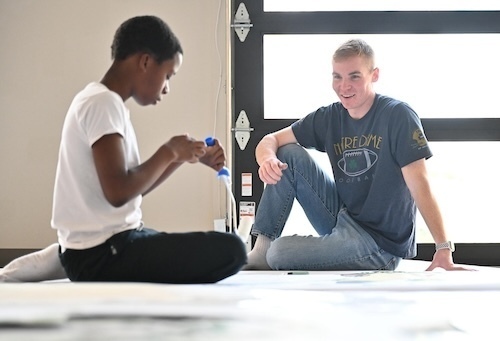
<p>As part of this effort, RCLC students have taken on a unique project: researching, planning, and building birdhouses to be gifted to families moving into Habitat for Humanity homes in South Bend’s Near Northwest Neighborhood. The theme of the project is “what makes a house a home?”</p>
<p>This initiative was inspired by <a href="https://publicaffairs.nd.edu/news/inaugurationbuild2024/">Inauguration Build 2024</a>, a five-day event in September that honored the Inauguration of Notre Dame’s 18th president, Rev. Robert A. Dowd, C.S.C. During the build, nearly 750 University faculty and staff came together to construct five affordable homes on Harrison Avenue.</p>
<p>RCLC Director Susan Devetski recalls the students’ curiosity about the massive project happening in their community.</p>
<p>“Our students are curious about everything,” she said. “While we couldn’t participate directly in building houses, we wanted to provide them with a meaningful experience. We thought a birdhouse would be a perfect way to introduce the ideas of shelter, community, and doing for others.”</p>
<p>The birdhouse, which will be presented to Habitat families as gifts in the spring, was a collaboration between Devetski and Jason Carley, assistant professor in Notre Dame’s Design Department. Together, they created the project which merged technical learning with community service. They decided on the birdhouse idea as it symbolizes the need for shelter and housing.</p>
<p>“The RCLC students learned about technical drawings and construction techniques, starting with research on bird habitats, and brainstorming what features an ideal birdhouse might have,” Carley says.</p>
<p>Students first created 2D sketches of their birdhouse designs, which were then transformed into wooden templates in the West Lake Makerspace on campus. Carley returned with the pre-cut materials for assembly, and the students eagerly put their creations together.</p>
<p>“It was important for them to physically build something they designed and to understand the fluidity of the design process” Carley adds. “They had a blast going through the assembly steps and piecing together the kits like puzzles, using tools like rulers, clamps, and screwdrivers.”</p>
<p>Devetski was struck by how deeply the students were engaged with the project.</p>
<p>“They were so hands-on, and it gave them a sense of accomplishment. It’s one thing to talk about engineering and design concepts, but it’s entirely different to build something with your own hands,” she says.</p>
<p>As the final phase of the project, students will paint their birdhouse in bright colors to protect them from the elements. Once completed, it will be distributed to families moving into Habitat homes, adding a special touch of welcome to their new beginnings.</p>
<p>“This project goes beyond building a birdhouse,” Devetski reflects. “It’s about teaching our students to give back and create something meaningful for others.”</p>
<p>The collaborative project was funded by a grant from Americorps.</p>
<p><script src="https://artdept.nd.edu/javascripts/lb.js?v=2023-05-17" defer></script><ul id="gallery-683" class="gallery-lb gallery-683" data-count="7"><li><a href="https://publicaffairs.nd.edu/assets/592708/fullsize/mc_92724_rclc_birdhouses_10_1_jpg.jpg" title="Students in the Robinson Community Learning Center's after school program assembled birdhouses for the homes on Harrison St. in South Bend" data-title="Students in the Robinson Community Learning Center&#39;s after school program assembled birdhouses for the homes on Harrison St. in South Bend"><img src="https://publicaffairs.nd.edu/assets/592708/300x300/mc_92724_rclc_birdhouses_10_1_jpg.jpg" alt="Students in the Robinson Community Learning Center&#39;s after school program assembled birdhouses for the homes on Harrison St. in South Bend" width="300" height="300" loading="lazy"></a></li><li><a href="https://publicaffairs.nd.edu/assets/592711/fullsize/mc_92724_rclc_birdhouses_03jpg.jpg" title="RCLC's Susan J. Devetski works with after school program student Tylisa Brelsford. Students in the Center's after school program assembled birdhouses for the homes on Harrison St. in South Bend" data-title="RCLC&#39;s Susan J. Devetski works with after school program student Tylisa Brelsford. Students in the Center&#39;s after school program assembled birdhouses for the homes on Harrison St. in South Bend"><img src="https://publicaffairs.nd.edu/assets/592711/300x300/mc_92724_rclc_birdhouses_03jpg.jpg" alt="RCLC&#39;s Susan J. Devetski works with after school program student Tylisa Brelsford. Students in the Center&#39;s after school program assembled birdhouses for the homes on Harrison St. in South Bend" width="300" height="300" loading="lazy"></a></li><li><a href="https://publicaffairs.nd.edu/assets/592710/fullsize/mc_92724_rclc_birdhouses_02jpg.jpg" title="The finished birdhouse" data-title="The finished birdhouse"><img src="https://publicaffairs.nd.edu/assets/592710/300x300/mc_92724_rclc_birdhouses_02jpg.jpg" alt="The finished birdhouse" width="300" height="300" loading="lazy"></a></li><li><a href="https://publicaffairs.nd.edu/assets/592712/fullsize/mc_92724_rclc_birdhouses_04jpg.jpg" title="Zayra Montoya tries to hold the pieces tightly together as the glue sets" data-title="Zayra Montoya tries to hold the pieces tightly together as the glue sets"><img src="https://publicaffairs.nd.edu/assets/592712/300x300/mc_92724_rclc_birdhouses_04jpg.jpg" alt="Zayra Montoya tries to hold the pieces tightly together as the glue sets" width="300" height="300" loading="lazy"></a></li><li><a href="https://publicaffairs.nd.edu/assets/592714/fullsize/mc_92724_rclc_birdhouses_07jpg.jpg" title="Jason Carley instructs RCLC after school program students on how to build the birdhouses" data-title="Jason Carley instructs RCLC after school program students on how to build the birdhouses"><img src="https://publicaffairs.nd.edu/assets/592714/300x300/mc_92724_rclc_birdhouses_07jpg.jpg" alt="Jason Carley instructs RCLC after school program students on how to build the birdhouses" width="300" height="300" loading="lazy"></a></li><li><a href="https://publicaffairs.nd.edu/assets/592716/fullsize/mc_92724_rclc_birdhouses_09jpg.jpg" title="RCLC after school program student Tylisa Brelsford works on her birdhouse" data-title="RCLC after school program student Tylisa Brelsford works on her birdhouse"><img src="https://publicaffairs.nd.edu/assets/592716/300x300/mc_92724_rclc_birdhouses_09jpg.jpg" alt="RCLC after school program student Tylisa Brelsford works on her birdhouse" width="300" height="300" loading="lazy"></a></li><li><a href="https://publicaffairs.nd.edu/assets/592709/fullsize/mc_92724_rclc_birdhouses_01jpg.jpg" title="The birdhouse template pre-cut " data-title="The birdhouse template pre-cut "><img src="https://publicaffairs.nd.edu/assets/592709/300x300/mc_92724_rclc_birdhouses_01jpg.jpg" alt="The birdhouse template pre-cut" width="300" height="300" loading="lazy"></a></li></ul><script>document.addEventListener("DOMContentLoaded", function(){var lightbox = new Lightbox({showCaptions: true,elements: document.querySelector(".gallery-683").querySelectorAll("a")});});</script></p>
<p> </p>
<p class="attribution">Originally published by <span class="rel-author">Colleen Wilcox</span> at <span class="rel-source"><a href="https://publicaffairs.nd.edu/news/building-connections-rclc-students-design-birdhouses-for-habitat-families/">publicaffairs.nd.edu</a></span> on <span class="rel-pubdate">November 07, 2024</span>.</p>]]>
    </content>
    <link rel="enclosure" type="image/jpeg" href="https://artdept.nd.edu/assets/619666/mc_92724_rclc_birdhouses_05jpg.jpg" title="Jason Carley is the Assistant Professor of Art, Art History, and Design at Notre Dame"/>
    <author>
      <name>Colleen Wilcox</name>
    </author>
  </entry>
  <entry>
    <id>tag:artdept.nd.edu,2005:News/175095</id>
    <published>2025-09-19T14:03:20-04:00</published>
    <updated>2025-09-22T12:50:52-04:00</updated>
    <link rel="alternate" type="text/html" href="https://artdept.nd.edu/news-and-events/news/fighting-for-faster-virus-detection/"/>
    <title>What Would You Fight For?: Industrial design professor helps create device that sniffs out avian flu</title>
    <summary type="text">
      <![CDATA[…]]>
    </summary>
    <content type="html">
      <![CDATA[<figure class="image image-full"><img src="https://artdept.nd.edu/assets/631073/1000x/screenshot_2025_09_19_at_124903_pm_1200x.jpg" alt="Two men with arms crossed stand in front of a whiteboard with design sketches.  The man on the left wears glasses and a navy polo shirt with a Notre Dame logo.  The man on the right wears a similar navy polo shirt." width="600" height="269">
<figcaption>Nosang Myung, left, is the the Bernard Keating-Crawford Professor of Engineering and James Rudolph, right, is the Paul Down Assistant Professor of Industrial Design.</figcaption>
</figure>
<p>Highly pathogenic avian influenza, commonly known as bird flu, is a virus that spreads among birds and livestock. The virus infects chickens, hens, ducks, geese, water birds, pigeons, sparrows, cows, and, on occasion, humans. It can be spread through direct contact with a sick animal; contact with animal byproducts like saliva, mucus, or feces; or, perhaps most nerve-racking, through airborne transmission.</p>
<p>Bird-to-person transmission is rare, and typically only results from close, unprotected exposure to an infected bird — but for egg producers like Hertzfelds Poultry Farms in rural Ohio, that is a fear. What's more, given how contagious the disease is, if one bird is infected, the entire flock needs to be depopulated.</p>
<p>To protect the safety of their flock and employees, the Hertzfelds sprang into action with enhanced biosecurity measures, such as building a large truck wash and blacktopping the driveway to reduce the number of puddles. The fourth-generation egg farmers also found they needed to start regularly monitoring and testing their birds for infection.</p>
<figure class="image image-right"><img src="https://artdept.nd.edu/assets/631244/oneair_physical_devices_600x.jpg" alt="OneAir air quality monitor shown in handheld and continuous monitoring modes. The handheld mode shows a small white and purple device with light blue streams of air flowing into it and a phone displaying air quality readings.  The continuous monitoring mode shows a wall-mounted device with accompanying tablet displaying disease detection alert and air quality metrics." width="600" height="338"></figure>
<p>University of Notre Dame researchers <a href="https://engineering.nd.edu/faculty/nosang-myung/">Nosang Myung</a> and <a href="https://artdept.nd.edu/people/james-rudolph/">James Rudolph</a> — featured in NBC’s “What Would Fight For?” <a href="https://youtu.be/XhSn5da8xP4">video</a> series during Notre Dame’s football game against Purdue on Sept. 20 — are working together to develop an “electronic nose” that would sense the infection. Myung, the Bernard Keating-Crawford Professor of Engineering, is creating the technology for the sensor, while Rudolph, the Paul Down Assistant Professor of Industrial Design, is contributing to the practicality of using it.</p>
<p>“Technologists develop the technology to be able to measure, look at things, to do things that humans can't do,” Rudolph said. “As a designer, my role is to make that technology accessible, usable, safe, and a good experience for users.”</p>
<p>Rudolph is <a href="https://al.nd.edu/news/latest-news/progress-via-people-products-and-ideas-notre-dame-professor-brings-concepts-from-designing-breakthrough-medical-tech-into-to-the-classroom/">known for his work</a> in designing solutions for complex health care challenges. He has worked on everything from robotics to drug delivery devices to wearable monitors.</p>
<p>With Myung, he interviewed nearly 100 potential users to see what they would want and need in a sensor. They learned how time-consuming the standard swabs were. They learned about how feathers could clog a sensor. They learned the device would need changeable filters. And they learned that the interface needed to be simple and user-friendly for busy farmers so they don't need to bring in technicians. The result is two small, straightforward prototypes, Rudolph said. One is for larger farms and can be mounted in a barn, almost like a smoke detector, to provide continuous monitoring. The other is a handheld device for smaller farms or backyard enthusiasts. Neither format requires swabs; they instead continually sniff the air for scents of sickness.</p>
<p>“If you can't translate the research into something that's useful and impactful and could be used safely, like medical devices,” Rudolph said, “then you're not going to generate the impact, the positive change.”</p>
<p><a href="https://fightingfor.nd.edu/stories/fighting-for-faster-virus-detection/" class="btn">Read the full story</a></p>
<p><iframe width="1200" height="673" src="https://www.youtube.com/embed/XhSn5da8xP4" allowfullscreen="allowfullscreen"></iframe></p>]]>
    </content>
    <link rel="enclosure" type="image/jpeg" href="https://artdept.nd.edu/assets/631245/a003c002_250717_r52q00_00_13_15still001_1200x.jpg" title="A man with short graying hair, wearing a dark polo shirt, looks attentively at a person out of focus in the foreground."/>
    <author>
      <name>Office of Brand Content</name>
    </author>
  </entry>
  <entry>
    <id>tag:artdept.nd.edu,2005:News/173341</id>
    <published>2025-05-28T08:00:00-04:00</published>
    <updated>2025-07-11T10:58:20-04:00</updated>
    <link rel="alternate" type="text/html" href="https://artdept.nd.edu/news-and-events/news/notre-dame-rising-senior-rocio-colon-cotto-named-2025-beinecke-scholar/"/>
    <title>Notre Dame rising senior Rocío Colón Cotto named 2025 Beinecke Scholar</title>
    <summary type="text">
      <![CDATA[University of Notre Dame rising senior Rocío Colón Cotto has been awarded a Beinecke Scholarship worth $35,000 in support of her graduate education. She is Notre Dame’s 10th Beinecke Scholar overall and second since 2023.]]>
    </summary>
    <content type="html">
      <![CDATA[<p>University of Notre Dame rising senior Rocío Colón Cotto has been awarded a Beinecke Scholarship worth $35,000 in support of her graduate education. She is Notre Dame’s 10th Beinecke Scholar overall and second since 2023.</p>
<p>Colón Cotto worked closely with the <a href="https://cuse.nd.edu">Flatley Center for Undergraduate Scholarly Engagement</a> (CUSE) in applying for the award, which is available to juniors at participating institutions in the U.S.</p>
<p>“Congratulations to Rocío. Over the past two years, I have had the pleasure of watching her passion for art conservation develop,” said Emily Buika Hunt, assistant director of scholarly development at CUSE. “The decisions she has made about her coursework, research projects and extracurriculars have been guided by her genuine intellectual curiosity and artistic talent. These wise decisions have put her in the position to become a future leader in her field.”</p>
<p>Colón Cotto is an art history and Chinese major with a studio art minor from San Juan, Puerto Rico.</p>
<p>A <a href="https://cuse.nd.edu/sorin-scholars/">Sorin Scholar</a>, she is a research assistant in the <a href="https://rarebooks.library.nd.edu/">Rare Books &amp; Special Collections section</a> of the <a href="https://www.library.nd.edu/">Hesburgh Libraries</a>; a teaching assistant to Professor <a href="https://chemistry.nd.edu/people/bahram-moasser/">Bahram Moasser</a> in the <a href="https://chemistry.nd.edu/people/bahram-moasser/">Department of Chemistry and Biochemistry</a>; a student programming committee member at the <a href="https://raclinmurphymuseum.nd.edu/">Raclin Murphy Museum of Art</a>; and a technical lead and announcer for WSND, the student-run campus radio station.</p>
<p>Away from campus, she participated in an immersive summer language program through Princeton University in China and studied abroad in the United Kingdom through Notre Dame London, where she served as a program and engagement team intern with the Dulwich Picture Gallery, the oldest public art gallery in England.</p>
<p>As an artist and researcher, she is interested in the utility of paper as a medium. She is also interested in how paper ages with time and exposure to the environment, from water and heat to light and humidity.</p>
<p>Under the tutelage of <a href="https://artdept.nd.edu/people/tatiana-reinoza/">Tatiana Reinoza</a>, the Notre Dame du Lac Assistant Professor of Art History, she researched the cover of “La cortada,” a handmade book published in Cuba and housed in Rare Books &amp; Special Collections. She also experimented with papier-mâché sculpture, drawing and various printmaking techniques.</p>
<p>Building on these experiences, she plans to pursue a graduate degree in paper conservation, connecting her interest in paper and art history with her passion for Mandarin Chinese as a way to preserve ink, watercolor and other traditional East Asian artwork.</p>
<blockquote>
<p>“I’m beyond excited to pursue a career in art conservation, a field where I can make meaningful contributions as an artist and researcher."</p>
</blockquote>
<p>Following that, she intends to become an East Asian art conservator, exploring the intersection of studio art, art history and Mandarin while safeguarding access to East Asian culture and history for future generations. She will also continue to explore and advance paper techniques in her own work.</p>
<p>“In a world that faces constant environmental and political challenges, it’s vital for us to value and preserve our global cultural heritage,” Colón Cotto said. “I’m beyond excited to pursue a career in art conservation, a field where I can make meaningful contributions as an artist and researcher. Thanks to the Beinecke Scholarship, my goal of pursuing graduate studies in conservation is now achievable. I am profoundly grateful to the CUSE staff, my family, friends and professors for their unwavering support.”</p>
<p>Established by the board of directors of the Sperry and Hutchinson Co. in 1971, the Beinecke Scholarship seeks to encourage and enable highly motivated students to “be courageous in the selection of a graduate course of study in the arts, humanities and social sciences.”</p>
<p>For more on this and other scholarship opportunities, visit <a href="https://cuse.nd.edu">cuse.nd.edu.</a></p>
<p><em>Originally published by <span class="rel-author">Erin Blasko</span> at <span class="rel-source"><a href="https://news.nd.edu/news/notre-dame-rising-senior-rocio-colon-cotto-named-2025-beinecke-scholar/">news.nd.edu</a></span> on <span class="rel-pubdate">May 28, 2025</span>.</em></p>]]>
    </content>
    <link rel="enclosure" type="image/png" href="https://artdept.nd.edu/assets/619661/img_6048.png" title="Rocío Colón Cotto headshot of a young person with tight, dark curly hair, brown eyes, and a broad smile against a plain gray background."/>
    <author>
      <name>Erin Blasko</name>
    </author>
  </entry>
  <entry>
    <id>tag:artdept.nd.edu,2005:News/172770</id>
    <published>2025-05-16T08:00:00-04:00</published>
    <updated>2025-05-21T15:55:10-04:00</updated>
    <link rel="alternate" type="text/html" href="https://artdept.nd.edu/news-and-events/news/spring-2025-thesis-awards/"/>
    <title>Spring 2025 Thesis Awards</title>
    <summary type="text">
      <![CDATA[Spring 2025 Thesis Awards MFA Awards Walter Beardsley Award (presented by the Raclin Murphy Museum of Art)Thomas Callahan The Eugene M. Riley Prize in PhotographyThomas Callahan Senior BFA Awards…]]>
    </summary>
    <content type="html">
      <![CDATA[<h2 dir="ltr">Spring 2025 Thesis Awards</h2>
<h3 dir="ltr">MFA Awards</h3>
<p><strong>Walter Beardsley Award (presented by the Raclin Murphy Museum of Art)</strong><br>Thomas Callahan</p>
<p><strong>The Eugene M. Riley Prize in Photography</strong><br>Thomas Callahan</p>
<h3 dir="ltr">Senior BFA Awards</h3>
<p><strong>Emil Jacques Medal for Excellence in Studio Art</strong><br>Marin Mowat</p>
<p><strong>Emil Jacques Medal for Excellence in Design</strong><br>Samantha Schiederman</p>
<p><strong>Mabel L. Mountain Memorial Prize in Painting</strong><br>Marin Mowat</p>
<p><strong>The Greif Prize in Studio Art or Design</strong><br>Sophia Ochoa</p>
<p><strong>Radwan and Allan Riley Prize in Studio Art</strong><br>Rosario Murillo</p>
<p><strong>Radwan and Allan Riley Prize in Art History</strong><br>Sofia D'Agostino</p>
<p><strong>Radwan and Allan Riley Prize in Design</strong><br>Sophia Ochoa</p>
<p><strong>Judith A. Wrappe Memorial Award</strong><br>Marin Mowat<br>Sophia Ochoa</p>
<p><strong>Bill and Connie Greif Art Award</strong><br>Victoria Gillespie<br>Marin Mowat<br>Rosario Murillo<br>Sophia Ochoa<br>Samantha Schiederman</p>
<h3 dir="ltr">Senior BA Honors Awards</h3>
<p><strong>Father Anthony J. Lauck, C.S.C. Awards<br></strong></p>
<p>Taylor Dellelce<br>Paulina Rosiles</p>
<p> </p>]]>
    </content>
    <author>
      <name>Dept. Staff</name>
    </author>
  </entry>
  <entry>
    <id>tag:artdept.nd.edu,2005:News/171289</id>
    <published>2025-04-01T08:00:00-04:00</published>
    <updated>2025-04-01T16:35:37-04:00</updated>
    <link rel="alternate" type="text/html" href="https://artdept.nd.edu/news-and-events/news/unreliable-narrator-jason-lahrs-solo-exhibition-on-masculinity-and-identity/"/>
    <title>Unreliable Narrator: Jason Lahr’s Solo Exhibition on Masculinity and Identity</title>
    <summary type="text">
      <![CDATA[Experience Unreliable Narrator, a solo exhibition by Jason Lahr exploring masculinity, identity, and digital culture through a fusion of painting, text, and imagery. On view at the Morris Graves Museum of Art from March 29–May 18, 2025. Don’t miss the opening reception on April 5!]]>
    </summary>
    <content type="html">
      <![CDATA[<p><strong>Morris Graves Museum of Art<br></strong><strong>Eureka, CA</strong></p>
<p><strong> </strong></p>
<p><strong><em>Unreliable Narrator: Jason Lahr<br></em></strong><strong>March 29–May 18, 2025<br></strong><strong style="color: var(--gray-dark);">Reception: Saturday April 5, 6–9pm</strong></p>
<p>In his solo exhibition <em>Unreliable Narrator, </em>Associate Professor of Painting and Director of Graduate Studies<em> </em>Jason Lahr presents a compelling body of work that explores painting as a contemporary narrative form, blending text that he writes, appropriated imagery, and diverse visual languages to investigate the complexities of working-class American masculinity. Drawing from narrative theory, contemporary and postmodern fiction, semiotics, feminism, and film theory, Lahr’s paintings<em> </em>challenge conventional perceptions of gender, class, and identity.</p>
<p>At the heart of Lahr’s practice is a dynamic interplay between digital and analog methodologies. Traditional oil and acrylic techniques converge with digital tools such as Illustrator, Photoshop, and computer cut vinyl stencils, to create a layered, intertextual network of meaning. The visual language of digital culture—ranging from video games and early computer graphics to .jpg glitches—merges with references to illustration, print media, and graphic design to explore generational shifts in masculinity from Generation X and beyond. Integrating digital aesthetics and processes that are realized through traditional painting methods, Lahr’s work examines the narratives and assumptions that shape contemporary masculinity through a diverse and evolving visual vocabulary.</p>
<p><em>Unreliable Narrator</em> invites viewers to consider the ways in which cultural narratives influence identity formation. This innovative approach not only bridges the gap between painting traditions and digital culture but also sparks critical conversations about gender, class, and the visual lexicon of modern society.</p>
<p><em>Unreliable Narrator </em>is accompanied by a full-color catalog with an essay by Dominic Molon, the Richard Brown Baker Curator of Contemporary Art and Interim Chief Curator at the RISD Museum.</p>
<p>This exhibition is made possible in part by support from the Franco Family Institute for Liberal Arts and the Public Good, and the Department of Art, Art History &amp; Design at the University of Notre Dame.</p>
<p><strong> </strong></p>
<p><strong>More information available at:</strong></p>
<p><a href="https://humboldtarts.org/upcoming-exhibitions">https://humboldtarts.org/upcoming-exhibitions</a></p>
<p><a href="https://www.jasonlahr.net">www.jasonlahr.net</a></p>]]>
    </content>
    <link rel="enclosure" type="image/jpeg" href="https://artdept.nd.edu/assets/611444/hissyfit2025_2_.jpg" title="Surreal painting on a lime green background. A spider hangs from a web in the upper left corner.  Orange dots are scattered across the canvas. A black gorilla roars in a bright blue circle, chained at the ankles. Blue streaks drip below the circle.  Text near the bottom left reads, &quot;Even with all of this,&quot; he swept his arm to indicate the chops that filled the room, &quot;you're still not the sharpest tool in the shed are you?&quot; Crossed wrenches appear below the text.  A small, dark figure floats in the upper right."/>
    <author>
      <name>Dept. Staff</name>
    </author>
  </entry>
  <entry>
    <id>tag:artdept.nd.edu,2005:News/170579</id>
    <published>2025-02-26T08:00:00-05:00</published>
    <updated>2025-03-07T09:59:52-05:00</updated>
    <link rel="alternate" type="text/html" href="https://artdept.nd.edu/news-and-events/news/art-art-history-and-design-department-launches-art-conservation-track/"/>
    <title>Art, art history and design department launches art conservation track</title>
    <summary type="text">
      <![CDATA[The track accompanies the art history major and trains students across colleges   In response to student interest and a gap in subject matter, the department of art, art history and design launched an art conservation track this fall to accompany the art history major. This track joins…]]>
    </summary>
    <content type="html">
      <![CDATA[<h2>The track accompanies the art history major and trains students across colleges</h2>
<p> </p>
<p>In response to student interest and a gap in subject matter, the department of art, art history and design launched an art conservation track this fall to accompany the art history major. This track joins other art history offerings, including the major, major with honors, supplementary major and minor. Art history professor of the practice Elyse Speaks directs the department’s undergraduate studies.</p>
<p>According to Speaks, creating the track was about a year-long process and was inspired by the popularity of the cross listed art history and chemistry course titled “Only Connect Chemistry and Art.” The course is taught by chemistry associate teaching professor Bahram Moasser and art history professor Michael Schreffler.</p>
<div class="d-block inline-ad my-4 mr-0 mr-md-4 text-center d-print-none border-top border-bottom py-4">
<div class="ad rectangle">
<div id="div-gpt-ad-1723819842383-3" data-google-query-id="CNeF3c-b-IsDFRuSpgQdg5spkg">
<div id="google_ads_iframe_/148877694/2024-rectangle_3__container__"></div>
</div>
</div>
</div>
<p>“It is almost always our first class to fill these days, and students just really enjoy it. And so I thought, ‘Wow … this is an area that we should encourage,’” Speaks said. “And at the same time, I know how many of our students are interested in working at the museum and thinking about sort of the practical application of arts study … I started talking to people across campus, and the chemistry department was really excited to collaborate.”</p>
<p>The track includes classes across colleges, in both the College of Arts and Letters and the College of Science. When asked about difficulty collaborating across colleges, Speaks said there was none, only excitement.</p>
<p>“Everyone was very amenable and excited to think about ways to collaborate across the arts and sciences, and so I think they’re really excited,” Speaks said. “There’s a capstone project that our majors would do, and we already have our first major signed up, and the professors … in the sciences are really excited to potentially be advisers for these projects and to work more closely with students who are housed in Arts and Letters.”</p>
<p>As opposed to the regular art history major which is 30 credit hours, the major with the track is 45 credit hours. The major and track require students to take eight art history courses, two studio art courses, organic chemistry and the corresponding lab, three other science courses with corresponding labs and a capstone project or internship.</p>
<p>“This is a track that kind of allows you to explore both avenues and potentially might lead to some kind of conservation position, but really is meant to generate a conversation between the arts and sciences at Notre Dame,” Speaks said.</p>
<p>According to Speaks, she designed the track with practical considerations, such as requirements for art conservation master’s programs, in mind.</p>
<div class="d-block inline-ad my-4 mr-0 mr-md-4 text-center d-print-none border-top border-bottom py-4">
<div class="ad rectangle">
<div id="div-gpt-ad-1723819842383-4" data-google-query-id="CNiF3c-b-IsDFRuSpgQdg5spkg">
<div id="google_ads_iframe_/148877694/2024-rectangle_4__container__"></div>
</div>
</div>
</div>
<p>“We have a student who went through our program, who just finished a master's in art conservation at NYU, and so I've been talking to her quite a bit about what the most useful classes that she took at Notre Dame were, and that’s largely how I designed the coursework,” Speaks said.</p>
<p>Very few universities offer undergraduate art conservation programs, with the University of Delaware being one of them. Junior Rocío Colón-Cotto, who is majoring in art history and Chinese with a minor in studio art, was considerate of this when applying to undergraduate schools. Ultimately, Colón-Cotto decided to attend Notre Dame because she was unsure if she would like art conservation and wanted to attend a school where other programs were “well-known” as well.</p>
<p>Colón-Cotto received an email about the track opening this past fall after discussing art conservation graduate school requirements the prior school year with Speaks. While Colón-Cotto is on the track, she noted she is still not entirely sure about her future in art conservation.</p>
<p>“I think my interest in it stems from the fact that I love museum work. I’m passionate about museums. I love studio art. I love making art. And I kind of am curious about how I can put those two together,” Colón Cotto said. “And in my head, the best way to kind of contribute to preservation of cultural patrimony and museum work is through my studio art skills, and then through art conservation, I can bridge those two things together.”</p>
<p>Although Colón-Cotto’s prior art history and studio art courses made switching into the track easier, she will not take the track’s four required science courses and labs until next school year. Colón-Cotto was abroad in London in the fall, so she was unable to take any science courses this spring because of the sequencing that accompanies the courses.</p>
<p>“It is daunting in the sense that I’m in my junior year, and I haven’t taken a hardcore science course since … junior year of high school. So, it’s starting up again,” Colón-Cotto said. “I need to learn how to learn science, and I can only do that my senior year.”</p>
<p>Colón-Cotto has not, however, taken her University science and technology requirements, so two of the track’s science courses will count towards the core curriculum.</p>
<p>“It’s just daunting in the sense that I have to fit in four science courses with labs my senior year of Notre Dame,” Colón-Cotto said. “But since it’s a career I'm genuinely interested in, it’s something I'm willing to sacrifice.”</p>
<p>Freshman Francie Surdyke arrived at Notre Dame with a plan to double major in physics and art history. However, this semester, Surdyke switched out of the College of Science and into the College of Arts and Letters as just an art history major.</p>
<p>Surdyke discovered the art conservation track on the department’s website when she was considering switching majors.</p>
<p>“It's a good sort of midway point, and having that first semester in College of Science has kind of helped because I've got a head start on some of those science courses that you need to take in a specific order,” Surdyke said.</p>
<p>Surdyke plans to attend graduate school for a degree in art conservation. Most art conservatorships require individuals to have received their master’s degrees.</p>
<p>“I’ve always found the idea interesting, and I always liked the idea of getting into art conservation and working in a museum, maybe,” Surdyke said. “So this seemed like the best way to do that. And I’ve always loved art, and this is more practical … My parents feel better about an art history degree than a studio.”</p>
<p>With all that talk of the future however, the art conservation track is only in its first year and has only a few students actually on it.</p>
<p>“It’s a bit nerve wracking, but I think it’s also going to be cool, just because we’ll get to build it out to see what works best,” Surdyke said, “It’s just gonna be an interesting experience to figure it out alongside Rocío and professor Speaks and everything.”</p>
<p>Colón-Cotto also expressed optimism about the new academic track.</p>
<p>“I just hope it’s a program that continues to develop over time and that it’s something that Notre Dame keeps and something they can be proud of in the future because I think it’s a very important field that doesn’t get enough attention,” Colón-Cotto said. “And there’s not a lot of places in the US that offer undergraduate opportunities to delve into art conservation, so it’s really cool that we get to be one of those first, or some of the only institutions that are kind of like making paths for people interested.”</p>
<p><em>Originally published by The Observer at <a href="https://www.ndsmcobserver.com">ndsmcobserver.com</a> on February 26, 2025.</em></p>]]>
    </content>
    <link rel="enclosure" type="image/jpeg" href="https://artdept.nd.edu/assets/608058/artconservation.jpg" title="A person wearing a black t-shirt, khaki pants, and a face mask sits on scaffolding while restoring a large mural. They hold a palette and brush, carefully working on the upper section of the painting. Below, the mural depicts a vivid battle scene with soldiers on horseback, engaging in combat."/>
    <author>
      <name>Grace Tadajweski</name>
    </author>
  </entry>
  <entry>
    <id>tag:artdept.nd.edu,2005:News/169140</id>
    <published>2025-01-08T15:17:00-05:00</published>
    <updated>2025-01-08T15:17:48-05:00</updated>
    <link rel="alternate" type="text/html" href="https://artdept.nd.edu/news-and-events/news/notre-dame-crucifix-initiative-opens-submissions-for-second-student-art-competition/"/>
    <title>Notre Dame Crucifix Initiative opens submissions for second student art competition</title>
    <summary type="text">
      <![CDATA[The Initiative will accept submissions through March 18, 2025, with winners expected to be announced by Easter 2025.  Launched in 2019, the Initiative aims to reinforce the universalism of Catholicism and the internationalism of Notre Dame through an expanding collection of diverse international…]]>
    </summary>
    <content type="html">
      <![CDATA[<p>The Initiative will accept submissions through March 18, 2025, with winners expected to be announced by Easter 2025. </p>
<p>Launched in 2019, the Initiative aims to reinforce the universalism of Catholicism and the internationalism of Notre Dame through an expanding collection of diverse international crucifixes, including unique pieces from Australia, Japan, Peru, Ukraine, Angola, Ireland, Chile, and more. Through its student art competition, it hopes to fulfill another important aspect of its mission: to connect Catholicism, the arts, and student research, including creative work.</p>
<p>The contest seeks original student artwork that is well-crafted, aesthetically impressive, and meaningful, telling a story about a particular artistic style or religious theme. Submissions may be two- or three-dimensional, but they should be durable and theologically appropriate. The Initiative hopes to offer an open forum for creativity, expression, and reflection, encouraging student involvement in its work and engagement with its mission. Winning pieces will join the Initiative’s collection, including being displayed on campus and featured on the website, as well as earn a monetary prize of up to $500.</p>
<figure class="image image-right"><img src="https://campuscrucifixes.nd.edu/assets/575243/mustillo_crucifix_resized.jpg" alt="Mustillo Crucifix" width="600" height="746">
<figcaption>Elijah Mustillo created the runner-up crucifix from the 2024 student competition, now displayed in Room 110 of O’Shaughnessy Hall.</figcaption>
</figure>
<p>This second competition follows the successful inaugural student art contest last spring, in which students K. Mae Harkins and Elijah Mustillo were selected for their detailed and thoughtful works. Their pieces are now displayed in O’Shaughnessy Hall Rooms 115 (Harkins) and 110 (Mustillo), and more details about their submissions can be found in the winner <a href="https://campuscrucifixes.nd.edu/news/notre-dame-crucifix-initiative-announces-winners-of-inaugural-student-art-competition/">announcement article</a>.</p>
<p><strong id="docs-internal-guid-66376f13-7fff-6688-1afe-a7c7366fc626"><br>More information on this year’s competition can be found on the Initiative’s website at <a href="https://campuscrucifixes.nd.edu/contest">campuscrucifixes.nd.edu/contest</a>. Interested students can also sign up to receive deadline reminders through this <a href="https://docs.google.com/forms/d/e/1FAIpQLScDDsWeqORY1fW9_8fYqg93qn5A18XjXIfHAcx1W73MNwWa1A/viewform">form</a>. </strong></p>
<p class="attribution">Originally published by <span class="rel-author">Keira Stenson</span> at <span class="rel-source"><a href="https://campuscrucifixes.nd.edu/news/notre-dame-crucifix-initiative-opens-submissions-for-second-student-art-competition/">campuscrucifixes.nd.edu</a></span> on <span class="rel-pubdate">January 08, 2025</span>.</p>]]>
    </content>
    <link rel="enclosure" type="image/jpeg" href="https://artdept.nd.edu/assets/599632/harkins_crucifix_resized.jpg" title="Harkins Crucifix"/>
    <author>
      <name>Keira Stenson</name>
    </author>
  </entry>
  <entry>
    <id>tag:artdept.nd.edu,2005:News/169600</id>
    <published>2024-10-17T08:00:00-04:00</published>
    <updated>2025-01-29T09:18:08-05:00</updated>
    <link rel="alternate" type="text/html" href="https://artdept.nd.edu/news-and-events/news/a-place-for-play-a-place-for-community-foundry-field/"/>
    <title>A Place for Play, A Place for Community: Foundry Field</title>
    <summary type="text">
      <![CDATA[…]]>
    </summary>
    <content type="html">
      <![CDATA[<p style="padding-left: 80px;"><img src="https://youtu.be/NNyz9jr9XSE?feature=shared" alt=""><iframe width="560" height="315" src="https://www.youtube.com/embed/NNyz9jr9XSE?si=rqGN8RYEtPZyEZ31" title="YouTube video player" frameborder="0" allow="accelerometer; autoplay; clipboard-write; encrypted-media; gyroscope; picture-in-picture; web-share" referrerpolicy="strict-origin-when-cross-origin" allowfullscreen="allowfullscreen"></iframe></p>
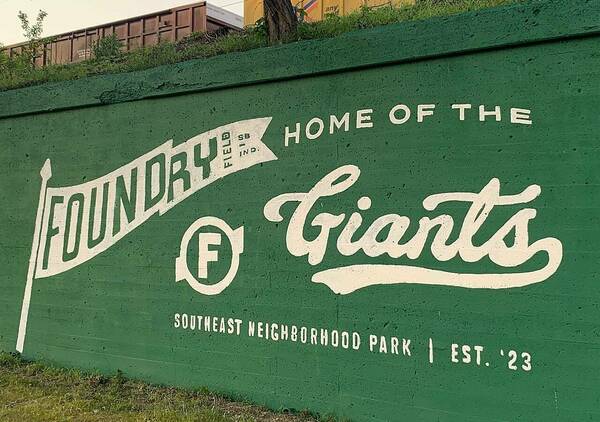
<p>How do we take the work that we do in a class and not just leave it in a class. History is active. Baseball has long been known as “America's pastime,” but not every culture sees themselves in the sport. That's where Katherine Walden and Clinton Carlson come in. The Notre Dame professors—Walden teaches in the Department of American Studies and Carlson in the Department of Art, Art History, and Design—have focused their research and teaching on uncovering and sharing the histories of teams like the Foundry Giants, a local team of Black players working in the Studebaker factory’s foundry. Their work makes up part of the living museum that is Foundry Field at Southeast Neighborhood Park, a quality public-access baseball field for children and adults in South Bend’s urban core. It's a collaborative community project led by the Sappy Moffitt Field Foundation, the University of Notre Dame’s Center for Social Concerns, the Indiana University South Bend Civil Rights Heritage Center, and South Bend Venues Parks and Arts. Learn more about Professors Walden &amp; Carlson's work: <a class="yt-core-attributed-string__link yt-core-attributed-string__link--call-to-action-color" href="https://www.youtube.com/redirect?event=video_description&amp;redir_token=QUFFLUhqa2xKc1BfUGY0MHJIUHFxV3QtWENCREVsTTAxUXxBQ3Jtc0tsYWZpaERqUVZvMnltaHVZYWltM3ZRTzV4Zmp0WVJIVFhsMUI3aTdNT2lFMEY0aHpZYW8zR2ZVR1hMQVIzRWVVeXZCNkdUR3RWdGdDS0J0cmRjamlFbXFIUVQwRW5wLVd1UlFVX0dDc1pNMzRSUmpJQQ&amp;q=https%3A%2F%2Fgo.nd.edu%2Fead6e9&amp;v=NNyz9jr9XSE" rel="nofollow noopener" target="_blank" force-new-state="true" tabindex="0">https://go.nd.edu/ead6e9</a> Learn more about Foundry Field: <a class="yt-core-attributed-string__link yt-core-attributed-string__link--call-to-action-color" href="https://www.youtube.com/redirect?event=video_description&amp;redir_token=QUFFLUhqbTUzT2thU2RSa1JFb2FOMUdtcUZ1ODlZRDV0UXxBQ3Jtc0ttc0xjNmduV1FWMzU4RFVUd1dwNjVDZnV1dkMzQ0hfdE1zSV94ZmdTb0xGQ0VmNFpQZU84dVhoNV9HYU5sMm4tc3dGcEZZV0w2bC1VaWV0SWxNRFdIOUZnbjNvR1VvMFlFTUhGcGstQVlxUDZwdEl2bw&amp;q=https%3A%2F%2Ffoundryfield.org%2F&amp;v=NNyz9jr9XSE" rel="nofollow noopener" target="_blank" force-new-state="true" tabindex="0">https://foundryfield.org/</a></p>]]>
    </content>
    <author>
      <name>Dept. Staff</name>
    </author>
  </entry>
  <entry>
    <id>tag:artdept.nd.edu,2005:News/167423</id>
    <published>2024-10-10T08:30:00-04:00</published>
    <updated>2025-01-08T15:30:20-05:00</updated>
    <link rel="alternate" type="text/html" href="https://artdept.nd.edu/news-and-events/news/from-miami-to-milan-designer-ryan-twardzik-16-showcases-his-furniture-that-makes-people-happy/"/>
    <title>From Miami to Milan: Designer Ryan Twardzik ’16 showcases his furniture that makes people happy</title>
    <summary type="text">
      <![CDATA[Ryan Twardzik…]]>
    </summary>
    <content type="html">
      <![CDATA[<figure class="image image-right"><img src="https://al.nd.edu/assets/589805/ryantwardzikby_paulbarbera_600x.jpg" alt="Ryan Twardzik, presenting as a white male with long brown hair wearing a pinstripe suit, stands next to his blue furniture piece." width="400" height="600">
<figcaption>Ryan Twardzik pairs sleek aluminum chairs with random forms of pooling paint in his Drip collection. Photo by Paul Barbera</figcaption>
</figure>
<p>Lego bricks were a childhood favorite of <a href="https://www.unformstudio.com/about">Ryan Twardzik</a> ’16; he used the interlocking plastic pieces to give form to his creative ideas.</p>
<p>These days, some of his furniture pieces — which have been featured in shows from Miami to Milan — give a nod to those building blocks. Like Legos, his bold furniture is fun to interact with.</p>
<p>“It’s wild to show off furniture you made that brings joy to people,” said Twardzik, who earned a <a href="https://artdept.nd.edu/undergraduate/design/requirements/#BFA_industrial">BFA in design</a> with a concentration in industrial design at the <a href="https://www.nd.edu/">University of Notre Dame</a>. “These are pieces that beckon to be touched, to be used. They just say, ‘Sit on me!’”</p>
<h3><strong>Form, fun, and function </strong></h3>
<p>Since Twardzik founded <a href="https://www.unformstudio.com/">Unform Studio</a> in 2021, he’s produced three polished seat collections and has been featured by multiple media outlets, including <a href="https://www.nytimes.com/2024/04/15/arts/design/milan-design-week-furniture.html"><em>The New York Times</em></a>.</p>
<p>He likes to design seating — chairs, in particular — because people forge such strong personal connections with them.</p>
<p>“If you sit down on something, if the design attracts you, if the comfort level is there, if there’s this tactility and this form that you can touch and enjoy, that's a seating experience that will always make you happy” he said.</p>
<p>His <a href="https://www.unformstudio.com/pop-up-collection">Pop-Up collection</a> is a<strong> </strong>systemized approach to lounge seating; modular fabric cushions fit onto a gridded metal frame, which can be expanded or contracted to make a sofa, ottoman, or lounge chair.</p>
<p>The Spherae collection uses brass, wood, and upholstery — traditional furniture materials — in unusual ways. Similar to the Pop-Up collection, people can interact with and manipulate the highly tactile product to form a stool or ottoman.</p>
<p>And with his debut <a href="https://www.unformstudio.com/drip-collection">Drip collection</a>, Twardzik explored improvisation within furniture design by pairing sleek aluminum chairs<strong> </strong>and small tables<strong> </strong>with random forms of dripping and pooling paint.</p>
<p>“It’s this fun sense of energy and contrast,” he said, “between this sheer industrial process mixed with random organic chaos.”</p>
<h3><strong>Family, football, and design</strong></h3>
<p>As a young boy, Twardzik dreamed of attending <a href="https://www.nd.edu/">Notre Dame</a> like his grandfather, Ted ’51, the founder of <a href="https://www.mrstspierogies.com/">Mrs. T’s Pierogies</a>, and his father, Tim ’81, who handled marketing for the family business.</p>
<figure class="image image-left"><img src="https://al.nd.edu/assets/589803/unform_studio_un10_pop_up_lounge_blue_velvet_3_600x.jpg" alt="A blue velvet lounge chair from the Pop-Up collection." width="600" height="410">
<figcaption>A blue velvet lounge chair from the Pop-Up collection.</figcaption>
</figure>
<p>“I grew up going to Notre Dame football games and having a great time,” he said, “and I always envisioned myself going there.”</p>
<p>At the same time, Twardzik was infatuated with design, including<strong> </strong>inventor Philippe Starck’s products, which range from furniture to lighting to bicycles.</p>
<p>Twardzik had positive family influences, too. His great-uncle owned a textile company and garment workshop; his grandmother had a flair for interior design; and his mother, a creative teacher, encouraged him to explore through crafts and activities.</p>
<p>In middle school, Twardzik’s interests in the Fighting Irish and in design began to coalesce. During a football weekend in South Bend, Twardzik met with <a href="https://news.nd.edu/news/in-memoriam-robert-pierce-sedlack-jr-associate-professor-of-visual-communication-and-design/">Robert Sedlack</a>, the late professor of visual communication design in the <a href="https://artdept.nd.edu/">Department of Art, Art History &amp; Design</a>.</p>
<p>“We sat down with him, and I talked about what I might want to do,” Twardzik said. “I told him what I liked, and he said, ‘Oh, that’s industrial design. We have it — and we’re very good at it.’”</p>
<h3><strong>Building a broad base</strong></h3>
<p>Once immersed in courses from sketching to advanced product design, Twardzik learned firsthand how good the department was.</p>
<p>He also appreciated the opportunity to learn traditional woodworking methods in <a href="https://architecture.nd.edu/faculty/robert-brandt/">Robert Brandt</a>’s furniture design course in the <a href="https://architecture.nd.edu/">School of Architecture</a>.</p>
<p>For his BFA senior thesis <a href="https://www.ryantwardzik.com/unseat"><em>Unseat</em></a>, Twardzik unveiled three seating arrangements at the Snite Museum of Art.</p>
<p>In addition to honing his design skills, Twardzik received<strong> </strong>an intellectually enriching education in the <a href="https://al.nd.edu/">College of Arts &amp; Letters</a>.</p>
<p>Having a broad knowledge base enables him to successfully build relationships with local manufacturers, manage international shipping regulations, and handle public relations campaigns.</p>
<p>"And knowing <a href="https://romancelanguages.nd.edu/undergraduate/italian/">Italian</a> was really helpful when I was showing in Milan,” he said. “And I can confidently write and speak about my work.”</p>
<h3><strong>Sense of community</strong></h3>
<figure class="image image-right"><img src="https://al.nd.edu/assets/589806/spheraemaple_600x.jpg" alt="Colorful spherical furniture pieces." width="600" height="400">
<figcaption>In his Spherae collection, Ryan Twardzik uses traditional furniture materials in an untraditional way to form a versatile stool/ottoman.</figcaption>
</figure>
<p>Twardzik’s wife Jessica Kim ’19, who also earned a BFA in industrial design at Notre Dame, has been a source of continual support as well as an asset to the business.</p>
<p>“With the 800 jobs he’s doing, I can be a wall that he can bounce ideas off of and we can test things out together,” said Kim, who earned a master’s degree in architecture at Yale University and now designs at a firm in Pennsylvania. “I like to help style his booths at these major shows. It’s been amazing to watch him take the studio from day one to what it is now.”</p>
<p>Twardzik, whose studio is in his home state of Pennsylvania,<strong> </strong>recently signed with the New York gallery <a href="https://www.otrasformas.co/">Otras Formas</a>. He’s currently working on new pieces, including a sofa and a dining set.</p>
<p>The couple is also planning a fall trip to a Fighting Irish football game and are excited to bring hundreds of handmade pierogies and Korean dumplings to share at a tailgate.</p>
<p>“It will be a way to gather and reconnect with our network of friends,” Kim said.</p>
<p>“We love hosting,” added Twardzik. “Football provides a shared culture and a shared experience. Notre Dame gives you such a sense of community.”</p>
<p class="attribution">Originally published by <span class="rel-author">Beth Staples</span> at <span class="rel-source"><a href="https://al.nd.edu/news/latest-news/from-miami-to-milan-designer-ryan-twardzik-16-showcases-his-furniture-that-makes-people-happy/">al.nd.edu</a></span> on <span class="rel-pubdate">October 10, 2024</span>.</p>]]>
    </content>
    <link rel="enclosure" type="image/jpeg" href="https://artdept.nd.edu/assets/589974/ryan_twardzik_1200x.jpg" title="Ryan Twardzik, presenting as a white male with long brown hair wearing a white suit, relaxes on furniture from his Drip collection."/>
    <author>
      <name>Beth Staples</name>
    </author>
  </entry>
  <entry>
    <id>tag:artdept.nd.edu,2005:News/173604</id>
    <published>2024-10-07T08:00:00-04:00</published>
    <updated>2025-06-27T13:33:29-04:00</updated>
    <link rel="alternate" type="text/html" href="https://artdept.nd.edu/news-and-events/news/clinton-carlson-wins-prestigious-design-award/"/>
    <title>Clinton Carlson Wins Prestigious Design Award</title>
    <summary type="text">
      <![CDATA[Clinton Carlson has been honored with an SEGD Global Design Award for his work on Foundry Field: The Story of Race, Representation, Access, and Baseball in South Bend, Indiana. Honored in the Strategy/Research/Planning category, the project illustrates the power of experiential design in…]]>
    </summary>
    <content type="html">
      <![CDATA[<p>Clinton Carlson has been honored with an SEGD Global Design Award for his work on <em>Foundry Field: The Story of Race, Representation, Access, and Baseball in South Bend, Indiana</em>. Honored in the Strategy/Research/Planning category, the project illustrates the power of experiential design in unraveling complex cultural narratives and fostering meaningful community connections.<br><br>The 2024 SEGD awards celebrated 30 exemplary projects, selected from a competitive pool of 292 entries representing 17 countries. Carlson’s achievement underscores his dedication to using design as a catalyst for education and social impact.<br><br>For more information on Carlson's award-winning project, including judges' comments, read more <a href="https://t.e2ma.net/click/poi0if/1lo8up/11ozom" target="_blank" data-saferedirecturl="https://www.google.com/url?q=https://t.e2ma.net/click/poi0if/1lo8up/11ozom&amp;source=gmail&amp;ust=1751129603597000&amp;usg=AOvVaw21KJcVeKxpD8ij2_X90Exb" rel="noopener">here</a>.</p>]]>
    </content>
    <link rel="enclosure" type="image/jpeg" href="https://artdept.nd.edu/assets/620744/clinton_carlson_award.jpg" title="Middle: Clinton Carlson. Three people stand before a black backdrop with event sponsor logos. A man in the center, wearing glasses, a gray sport coat, and jeans, holds a light blue award.  He is flanked by a man in a light blue sport coat and a woman in a navy dress. All three are smiling."/>
    <author>
      <name>Dept. Staff</name>
    </author>
  </entry>
  <entry>
    <id>tag:artdept.nd.edu,2005:News/173601</id>
    <published>2024-10-01T08:00:00-04:00</published>
    <updated>2025-06-27T13:25:06-04:00</updated>
    <link rel="alternate" type="text/html" href="https://artdept.nd.edu/news-and-events/news/wrappe-internship-awarded-2/"/>
    <title>Wrappe Internship Awarded</title>
    <summary type="text">
      <![CDATA[The Wrappe Family Summer Internship began awarding grants in the summer of 2017 to rising seniors who have received an internship offer from a recognized internship program. The endowment was established in 1989 by Sue and Jerry Wrappe. Xiyun "Serene" Wu, a BA Honors student…]]>
    </summary>
    <content type="html">
      <![CDATA[<p>The Wrappe Family Summer Internship began awarding grants in the summer of 2017 to rising seniors who have received an internship offer from a recognized internship program. The endowment was established in 1989 by Sue and Jerry Wrappe.</p>
<p><strong>Xiyun "Serene" Wu</strong>, a BA Honors student in art history, interned at the Metropolitan Museum of Art in New York, working with the Public Programs and Creative Practice team in the Education Department. She helped design events and programs for diverse community groups, exploring new ways to engage with exhibitions and collections. This hands-on experience, collaborating with local artists and communities, greatly enriched her understanding of art-making and community-building within urban environments.</p>
<p><strong>Sammi Scheiderman</strong>, a BFA student in visual communication design, interned with STV, Inc. as a Graphic Design Intern in New York City. She worked with the Corporate Communications team to support the company’s internal and external communications strategy, creating design content for both digital and print platforms in alignment with company goals. Her most significant projects included redesigning the company’s advertisements and leading the overhaul of the intern program. By the end of her internship, Scheiderman received a full-time employment offer for after her graduation in 2025.</p>
<p><strong>Delna Balsara</strong>, a BA student in industrial design, interned with Maverick Design Studio in Lynn, Massachusetts, as a soft goods design intern. She focused on designing interiors and furniture for private airplanes, gaining hands-on experience with design for manufacturing on both small and large scales. Balsara honed her CAD skills and deepened her understanding of design from a marketing perspective. Collaborating with marketing teams gave her fresh insight into consumer preferences, and the internship solidified her confidence and interest in designing systems on a larger scale.</p>]]>
    </content>
    <link rel="enclosure" type="image/jpeg" href="https://artdept.nd.edu/assets/620734/wrappe_award_winners_2024.jpg" title="Headshot triptych of three smiling women. From left, Xiyun &quot;Serene&quot; Wu, Samantha Scheiderman, and Delna Balsara. The first woman wears round glasses and a black sheer top.  The center woman wears a gray cardigan and a small nose ring.  The third woman has curly brown hair and a coral, polka-dotted top."/>
    <author>
      <name>Dept. Staff</name>
    </author>
  </entry>
  <entry>
    <id>tag:artdept.nd.edu,2005:News/173602</id>
    <published>2024-10-01T08:00:00-04:00</published>
    <updated>2025-06-27T13:24:32-04:00</updated>
    <link rel="alternate" type="text/html" href="https://artdept.nd.edu/news-and-events/news/gero-grant-awarded-2/"/>
    <title>Gero Grant Awarded</title>
    <summary type="text">
      <![CDATA[The Gero Family Endowment for Excellence in Studio Art and Art History awards travel grants for AAHD students to study and conduct research outside the United States. The Endowment was established in 2014, by Notre Dame alumna Deborah Gero. Sofia D’Agostino, BA in art history,…]]>
    </summary>
    <content type="html">
      <![CDATA[<p>The Gero Family Endowment for Excellence in Studio Art and Art History awards travel grants for AAHD students to study and conduct research outside the United States. The Endowment was established in 2014, by Notre Dame alumna Deborah Gero.</p>
<p><strong>Sofia D’Agostino</strong>, BA in art history, traveled to Rio de Janeiro and São Paulo, Brazil for a week to obtain a better understanding of Brazilian culture and to dig deeper into why participation and interaction became central aspects of the works made by the Brazilian neo-concrete artists, Hélio Oiticica and Lygia Clark. This trip provided a foundation for her thesis on the subject of participation in Brazilian neo-concrete art, allowing her to have first-hand experience being in the cities that are the subject of her research. D’Agustino’s planning revolved around seeing the major art museums in each city and making time to visit other relevant landmarks or buildings.</p>
<p><strong>Abby O’Connor</strong>, BA in art history, who is currently studying abroad in Toledo, Spain, for the fall semester, has traveled to various historical locations and art museums and exhibits all across Europe to support her preliminary research for the senior thesis in art history. While she was still undecided on a specific thesis topic, she is interested in Irish and Spanish modern art and art in the midst of political and social conflict. O’Connor visited the National Gallery of Ireland and the Irish Museum of Modern Art to discover more Irish artists and artwork. Many of the artworks in the Irish Museum of Modern Art collection relate to the conflict between Ireland and Northern Ireland and the United Kingdom, a topic that she may study further. While she only arrived in Toledo a month ago, she strongly looks forward to her upcoming travel to a variety of cities rich with history and art, including more locations in Spain like the Guggenheim Museum in Bilbao, along with those around Europe such as the Venice Biennale in Italy and the countless museums and art galleries in Paris.</p>
<p><strong>Xiyun "Serene" Wu</strong>, BA Honors in art history, conducted several visits to local archives and exhibitions in Hong Kong during her study abroad semester. This experience provided her with firsthand insights into the contemporary art scene in Asia. The collections of local museums and exhibition sites deepened her interest in researching modern and contemporary art, particularly within the context of the Sinophone urban landscape. Wu attended Art Basel Hong Kong, a memorable experience where she could join special screenings and talks. She also traveled to London to explore a Beijing East Village photography collection at Tate Modern.</p>]]>
    </content>
    <link rel="enclosure" type="image/jpeg" href="https://artdept.nd.edu/assets/620738/gero_grant_award_winners_2024.jpg" title="Three headshot photos of Notre Dame students.  From left, Sofia D'Agostino, Abby O'Connor, and Xiyun &quot;Serene&quot; Wu. One wears a graduation stole with a building in the background. Another smiles brightly.  The third plays a game of chess."/>
    <author>
      <name>Dept. Staff</name>
    </author>
  </entry>
  <entry>
    <id>tag:artdept.nd.edu,2005:News/165198</id>
    <published>2024-08-20T12:19:00-04:00</published>
    <updated>2024-08-20T12:19:43-04:00</updated>
    <link rel="alternate" type="text/html" href="https://artdept.nd.edu/news-and-events/news/michael-schreffler-appointed-director-of-new-notre-dame-arts-initiative/"/>
    <title>Art historian Michael Schreffler appointed director of new Notre Dame Arts Initiative</title>
    <summary type="text">
      <![CDATA[Art historian and College of Arts and Letters Associate Dean for the Arts Michael Schreffler has been named director of the University of Notre Dame’s new Arts Initiative emerging from “Notre…]]>
    </summary>
    <content type="html">
      <![CDATA[<p>Art historian and College of Arts and Letters Associate Dean for the Arts <a href="https://artdept.nd.edu/people/michael-schreffler/">Michael Schreffler</a> has been named director of the University of Notre Dame’s new <a href="https://strategicframework.nd.edu/initiatives/arts/">Arts Initiative</a> emerging from “<a href="https://strategicframework.nd.edu/">Notre Dame 2033: A Strategic Framework</a>.”</p>
<p><a href="https://strategicframework.nd.edu/initiatives/">One of several University-wide priorities outlined in the framework</a>, the Arts Initiative, also known as Arts@ND, will spearhead collaborative research projects in the arts, promote strategic curricular innovation and stage high-visibility events with substantial community outreach.</p>
<p>“Scholars at Notre Dame are producing groundbreaking research and innovative creative work in the arts, and Arts@ND will amplify the impact of this work and foster its growth,” Schreffler said. “We will do this by building on existing areas of strength and advancing the successes of early-stage collaborative projects with colleagues from the sciences, engineering and other parts of the University. Our ultimate goal is for the University to be recognized as a beacon in the landscape of research and creative practice in the arts.”</p>
<p>A key part of the initiative is the establishment of a biennial arts festival that engages faculty, students and staff from all parts of the University and opens Notre Dame’s doors to the local community and the world. The Notre Dame Arts Biennale will include a major exhibition, performances, an academic conference, visiting artists and speakers, curricular tie-ins, and substantial campus and community involvement. Each iteration of it will be thematically aligned with the University’s mission and strategic priorities and with the research goals of Arts@ND. The plan is to announce the theme for the first biennial in spring 2025, with the festival to take place across the spring 2027 semester.</p>
<p>The initiative’s leadership structure includes an <a href="https://strategicframework.nd.edu/initiatives/arts/">executive committee</a>, a research and curricular strategy committee and a biennial committee. These teams of faculty and staff campus arts leaders will work closely with the director to plan the inaugural festival and guide strategic investments. Together they will advance the Arts@ND goals of making the arts an integral part of a Notre Dame education and making the University a preeminent locus of arts research and creative practice.</p>
<p>While the Arts Initiative is new, the University’s commitment to the arts is longstanding and deeply rooted in its Catholic identity and its mission to educate the whole person — mind, body and soul, Schreffler said.</p>
<p>“This effort aligns with the Church’s long and distinguished tradition of placing the arts at the center of devotional and intellectual practice,” he said. “The visual and performing arts invite communal experiences that bring us together physically and emotionally, create shared understanding and sense of meaning, and have the potential to cross social and partisan divides. The arts shed light on complex and sometimes difficult issues and at the same time they inspire and bring joy.”</p>
<p>As a professor in the Department of Art, Art History and Design, Schreffler’s scholarly work focuses on Spanish colonial art and architectural history. His most recent book, “Cuzco: Incas, Spaniards, and the Making of a Colonial City,” <a href="https://al.nd.edu/news/latest-news/schreffler-wins-society-of-architectural-historians-book-award-for-research-on-colonializations-impact-on-peruvian-city/">won the 2023 Spiro Kostof Book Award from the Society of Architectural Historians</a>.</p>
<p>As <a href="https://al.nd.edu/about/people/michael-schreffler/">associate dean for the arts in the College of Arts and Letters</a>, Schreffler oversees the Departments of <a href="https://artdept.nd.edu/">Art, Art History and Design</a>, <a href="https://ftt.nd.edu/">Film, Television and Theatre</a>, and <a href="https://music.nd.edu/">Music</a>, as well as the <a href="https://shakespeare.nd.edu/">Shakespeare at Notre Dame</a> and <a href="https://sacredmusic.nd.edu/">Sacred Music at Notre Dame</a> programs. He will continue in that role during his three-year appointment as director of the Arts Initiative. A search is underway for a full-time managing director for the initiative who will begin work this fall.</p>
<p>The Arts Initiative’s launch comes at an exciting time of increased energy and collaboration among Notre Dame’s arts departments and programs, Schreffler said, pointing to the unified <a href="http://arts.nd.edu">Arts@ND</a> website launched last year and the <a href="https://raclinmurphymuseum.nd.edu/">new Raclin Murphy Museum of Art.</a> The museum anchors <a href="https://www.nd.edu/stories/raclin-murphy-opening/arts-gateway/">the Arts Gateway</a> area at the southern edge of campus, along with the <a href="https://performingarts.nd.edu/">DeBartolo Performing Arts Center</a>, <a href="https://architecture.nd.edu/about/our-new-home/">Walsh Family Hall of Architecture</a> and <a href="https://sacredmusic.nd.edu/about/our-venues/">O’Neill Hall of Music and Sacred Music</a>. Future plans call for the construction of a new building in the Arts Gateway to house the Department of Art, Art History and Design along with additional space for the museum and an administrative office for the biennial, creating more opportunities for synergy.</p>
<p>“The arts at Notre Dame have never been stronger, with remarkable facilities, superb faculty, talented students, dedicated staff and increasing engagement with South Bend and the region,” said <a href="https://provost.nd.edu/people/charles-and-jill-fischer-provost/">John T. McGreevy</a>, the Charles and Jill Fischer Provost. “The challenge in the next generation is to build on our collective resources to create compelling interdisciplinary programs that provide intellectually rich arts experiences to the Notre Dame community and beyond. Under Michael Schreffler’s leadership, the Arts Initiative will help us work together as an institution to do just that.”</p>
<p> </p>
<p class="attribution">Originally published by <span class="rel-author">Kate Garry</span> at <span class="rel-source"><a href="https://news.nd.edu/news/michael-schreffler-appointed-director-of-new-notre-dame-arts-initiative/">news.nd.edu</a></span> on <span class="rel-pubdate">August 20, 2024</span>.</p>]]>
    </content>
    <link rel="enclosure" type="image/jpeg" href="https://artdept.nd.edu/assets/579400/michael_schreffler_300.jpg" title="Michael Schreffler, director of Notre Dame’s Arts Initiative and associate dean for the arts in the College of Arts and Letters"/>
    <author>
      <name>Kate Garry</name>
    </author>
  </entry>
  <entry>
    <id>tag:artdept.nd.edu,2005:News/165072</id>
    <published>2024-08-13T08:00:00-04:00</published>
    <updated>2024-08-14T10:07:59-04:00</updated>
    <link rel="alternate" type="text/html" href="https://artdept.nd.edu/news-and-events/news/notre-dame-kylemore-announces-new-winter-session-for-their-arts-residency-program/"/>
    <title>Notre Dame Kylemore announces new winter session for their Art Residency Program</title>
    <summary type="text">
      <![CDATA[In light of the success of the summer MFA residency program, Notre Dame Kylemore is delighted to announce a new winter session…]]>
    </summary>
    <content type="html">
      <![CDATA[<figure class="image image-right"><img src="https://kylemore.nd.edu/assets/578216/350x/mfa_winter_session.jpg" alt="MFA Winter Session" width="300" height="417"></figure>
<p>In light of the success of the summer MFA residency program, Notre Dame Kylemore is delighted to announce a new winter session for this visual art residency. The 2025 Art Residency Program, in partnership with the New York Academy of Art (NYAA) and the Royal Hibernian Academy (RHA) in Dublin, will take place January 12 to February 8, 2025 and is open to past MFA students from Notre Dame.</p>
<p>Through this program, students will have the opportunity to be exposed to the West of Ireland landscape and connect with fellow artists. The program helps to hone students' technical skills, provides studio practice, and gives them the opportunity to present their work to fellow art residents — culminating in a final public exhibition. Students also receive faculty advice and feedback on their work.</p>
<p>Alumni of the Art Residency at Kylemore are positively influenced by the very special sense of place that exists in Kylemore — see, for example, Jonathan Kusnerek’s testimony:</p>
<p style="padding-left: 40px;">“Each piece is inspired by a specific location or landscape we visited. The images are a collage of the most indelible sights, history, and emotions in each location's experience. This manifested as surreal entities that embody the landscapes we traversed. This work barely scratches the surface of all that I experienced. I will be mining these themes and influences for a long time.”</p>
<p>Heather McLeod wrote:</p>
<p style="padding-left: 40px;">“I can’t express how amazing the last month has been. Thanks to@undkylemore and @newyorkacademyofart I was able to spend four weeks exploring the west coast of Ireland and getting to know an amazing group of artists. Every day was a new adventure and even in our downtime we had the privilege of living and working in Kylemore Abbey, a gorgeous benedictine monastery.…I’m settling back into my routine with a mind overflowing with painting ideas and a profound connection to a new place.”</p>
<h4>How to Apply?</h4>
<p>Interested artists will need to submit 3-5 images of their work and <a href="https://docs.google.com/forms/d/e/1FAIpQLScsc__ppSNMGr0hsnB_TwhuO2rRXalh9wTlHVQEJzYy7WphAA/viewform?usp=sf_link">complete the application</a>.</p>
<p>For more information, visit our <a href="https://kylemore.nd.edu/programs/residency-programs/master-of-fine-arts-art-residency-program/">website</a>.</p>
<p class="attribution">Originally published by <span class="rel-author">Notre Dame Kylemore</span> at <span class="rel-source"><a href="https://kylemore.nd.edu/news-stories/news/notre-dame-kylemore-announces-new-winter-session-for-their-arts-residency-program/">kylemore.nd.edu</a></span> on <span class="rel-pubdate">August 13, 2024</span>.</p>]]>
    </content>
    <link rel="enclosure" type="image/jpeg" href="https://artdept.nd.edu/assets/578295/mfa_winter_session_news.jpg" title="MFA Winter Session News"/>
    <author>
      <name>Notre Dame Kylemore</name>
    </author>
  </entry>
  <entry>
    <id>tag:artdept.nd.edu,2005:News/164658</id>
    <published>2024-08-02T09:41:00-04:00</published>
    <updated>2024-08-02T09:41:45-04:00</updated>
    <link rel="alternate" type="text/html" href="https://artdept.nd.edu/news-and-events/news/design-professors-work-highlighting-foundry-field-community-baseball-project-earns-awards-for-excellence-and-social-impact/"/>
    <title>Design professor’s work highlighting Foundry Field community baseball project earns awards for excellence and social impact</title>
    <summary type="text">
      <![CDATA[“It's also been incredible to make connections with community members whose families were part of this history,” said Clinton Carlson. “To see and hear their excitement for the stories of their father or grandfather being shared makes me really grateful to be a part of Foundry Field.”]]>
    </summary>
    <content type="html">
      <![CDATA[<p>A University of Notre Dame professor has won two global awards for his visual designs that showcase the creation of a community baseball field in South Bend and celebrate early 20th-century Black baseball players in the city.</p>
<p><a href="https://artdept.nd.edu/people/clinton-carlson/">Clinton Carlson</a>, the Robert P. Sedlack, Jr. Associate Professor in the <a href="https://artdept.nd.edu/">Department of Art, Art History &amp; Design</a>, earned a first-place <a href="https://www.printmag.com/print-awards/print-awards-2024-spotlight-winners-in-type-illustration-logos-book-design-social-impact-more/">PRINT Award for Design for Social Impact</a> and a <a href="https://www.commarts.com/">Communication Arts</a> Award of Excellence for his designs, which include the <a href="https://foundryfield.org/">Foundry Field</a> logo and posters of the <a href="https://www.nd.edu/stories/in-the-presence-of-giants/">Foundry Giants</a>.</p>
<p>“These awards do give the project some validation and credibility in the design world, but more importantly, I hope it exhibits an alternative way in which designers can work with communities,” he said.</p>
<p>To generate knowledge about and excitement for the project, Carlson created designs for the Foundry Field <a href="https://foundryfield.org/">website</a>, brochures, <a href="https://www.instagram.com/foundryfield/">social media</a>, shirts, and other promotional items, such as a label for local brewery Crooked Ewe’s small-batch beer, Foundry Field Porter.</p>
<figure class="image image-left"><img src="https://al.nd.edu/assets/576936/clinton_carlson.jpg" alt="A man with glasses and a beard looks at the camera." width="600" height="600">
<figcaption>Clinton Carlson</figcaption>
</figure>
<p>The PRINT award is for the outfield murals, public art, and workshops, and the Communication Arts award recognizes the entire package of 30-plus designs.</p>
<p><a href="https://clintoncarlson.com/">Carlson</a>’s love and knowledge of the game informed his period-based reproductions and materials.</p>
<p>“I grew up with a dad who told stories of the Brooklyn Dodgers, and I have always observed and studied the historical artifacts of baseball — uniforms, stadiums, logos, typography, and advertising,” he said.</p>
<p>“That interest in the ways in which design was intersecting with baseball at historical points has really helped guide the design for Foundry Field.”</p>
<p>Students in a Baseball in America course taught by <a href="https://americanstudies.nd.edu/faculty/katherine-walden/">Katherine Walden</a>, assistant teaching professor of <a href="https://americanstudies.nd.edu/">American studies</a>, researched those historical points, as well as the Giants, a team of Black players working in the Studebaker factory’s foundry who played in South Bend in the 1920s and ’30s. The students also explored questions of identity, power, and representation in the sport.</p>
<figure class="image image-right"><img src="https://al.nd.edu/assets/576939/foundry_baseball_murals_05jpg.jpg" alt="A youth in a shite T-shirt and a Notre Dame student in a blue T-shirt sit on the floor." width="500" height="341">
<figcaption>A youth in the Boys &amp; Girls Club of St. Joseph County works on a paper cutout with a Notre Dame student. Photo by Matt Cashore</figcaption>
</figure>
<p>Carlson and Notre Dame design students Kenny Garrett, Neve Harrison, Kiaya Jones, Taylor Li, Catie Procyk, and Jennifer Santana utilized that research to create posters of Giants ballplayers with children at the Boys &amp; Girls Club of St. Joseph County. The posters are now on the outfield wall.</p>
<p>“This project has shown the value of students working alongside the community, contributing to something that will exist in the community for years to come,” Carlson said.</p>
<p>“They feel a real sense of contribution.”</p>
<p>So, too, does Carlson, who said he’s never worked on a project that was more integrated into the community, or more attentive to its needs and wishes.</p>
<p>“It's also been incredible to make connections with community members whose families were part of this history,” he said.</p>
<figure class="image image-left"><img src="https://al.nd.edu/assets/576937/foundry_logo.jpg" alt='"Foundry Field, Home of the Giants" logo is on a green wall.' width="600" height="422">
<figcaption>Clinton Carlson's love and knowledge of the game informed his period-based reproductions and materials.</figcaption>
</figure>
<p>“To see and hear their excitement for the stories of their father or grandfather being shared makes me really grateful to be a part of Foundry Field.”</p>
<p>Carlson and Walden continue to be part of the evolving project.</p>
<p> Their Foundry Field research proposal was one of five inaugural 2024 <a href="https://al.nd.edu/news/latest-news/five-interdisciplinary-research-proposals-selected-for-inaugural-arts-letters-research-innovation-labs/">Research Innovation Labs</a> selected by the <a href="https://al.nd.edu/">College of Arts &amp; Letters</a>’ <a href="https://isla.nd.edu/">Institute for Scholarship in the Liberal Arts</a> to conduct thought-provoking cross-disciplinary research that has a lasting impact.</p>
<p>They’ll use the ballpark and its public art as the starting point “to foster greater engagement with historical and contemporary issues of race, representation, and access in South Bend.”</p>
<p class="attribution">Originally published by <span class="rel-author">Beth Staples</span> at <span class="rel-source"><a href="https://al.nd.edu/news/latest-news/design-professors-work-highlighting-foundry-field-community-baseball-project-earns-awards-for-excellence-and-social-impact/">al.nd.edu</a></span> on <span class="rel-pubdate">August 02, 2024</span>.</p>]]>
    </content>
    <link rel="enclosure" type="image/jpeg" href="https://artdept.nd.edu/assets/576961/foundryfieldmcjpg.jpg" title="Paper cutouts of Black baseball players on a green outfield wall."/>
    <author>
      <name>Beth Staples</name>
    </author>
  </entry>
</feed>